In the ancient days, when evil was rising and Dharma (righteousness) was declining, Lord Vishnu, the preserver of the universe, incarnated in various forms to restore balance. One of his most powerful and dramatic avatars is Narasimha Avatar – the half-man, half-lion form taken to protect his devotee Prahlada and destroy the demon king Hiranyakashipu.
The Rise of Hiranyakashipu
Long ago, there were two powerful demon brothers – Hiranyaksha and Hiranyakashipu. Lord Vishnu destroyed Hiranyaksha in his boar-like Varaha Avatar as he tried to drown Mother Earth in the cosmic ocean.
Hiranyakashipu, filled with rage and sorrow at his brother’s death, vowed revenge. He decided to become so powerful that no god could defeat him. He went into deep meditation and performed intense penance for thousands of years, standing on one leg, focusing on Lord Brahma.
At last, Brahma showed up and gave him a blessing, pleased by his penance. When Hiranyakashipu requested immortality, Brahma responded that no creature could receive it. So, the demon king cleverly asked for a boon that would make him nearly invincible:
- He shouldn’t pass away at any time of day or night.
- Not indoors or outdoors
- Not on earth or in the sky
- Not by any man or animal
- Not by any weapon, living or inanimate
Brahma granted the boon. Believing he could not be killed by anyone, Hiranyakashipu grew arrogant. He declared himself to be God, and forced everyone to worship him. He waged war on the Devas, defeated them, and spread his rule across the three worlds.

Prahlada: The Devotee Son
Ironically, Hiranyakashipu’s own son, Prahlada, became a devout devotee of Lord Vishnu.
Even as a child, Prahlada would chant, “Om Namo Narayanaya” and speak about the greatness of Vishnu in his father’s court. This enraged Hiranyakashipu.
He made every effort to thwart Prahlada’s devotion. He scolded him, threatened him, and even tried to kill him:
- He was thrown from a mountain – but survived.
- He was put among snakes – but they did not bite him.
- He was given poison – it had no effect.
- He was in a fire with his aunt Holika; Prahlada was not hurt, but Holika was.
Time after time, Prahlada was protected by Lord Vishnu because of his pure devotion and faith.
The Challenge
One day, in great anger, Hiranyakashipu asked Prahlada:
“Where is your Vishnu? Show me! Is he in this pillar?”
With serene devotion, Prahlada retorted, “He is everywhere – even in this pillar.”
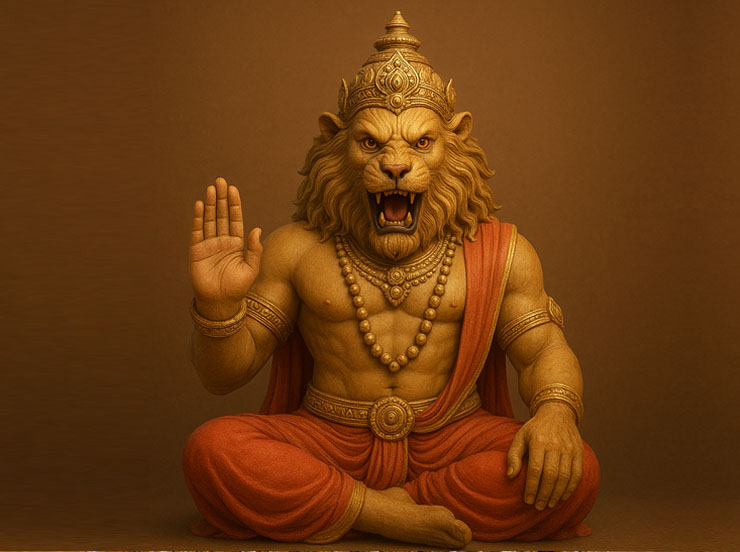
In his fury, Hiranyakashipu struck the pillar with his mace to break it. To everyone’s shock, a terrifying form emerged from the pillar – Lord Vishnu in the form of Narasimha, a being with the body of a man and the head and claws of a lion.
The Killing of Hiranyakashipu
Being neither human nor animal, Narasimha’s look disregarded every requirement of Brahma’s grant. He took hold of Hiranyakashipu, held him in his lap, sat at the palace’s entrance (not inside nor outside), and at dusk (not day nor night).
Narasimha then put an end to Hiranyakashipu’s reign of terror by tearing open his chest with his razor-sharp claws. He destroyed the evil king despite maintaining the boon’s terms.
After the Battle
Narasimha’s rage persisted even after slaying the monster. The gods, sages, and even Brahma feared him. Finally, little Prahlada stepped forward, folded his hands, and sang hymns in praise of the Lord.
Narasimha relaxed after hearing his devotee’s earnest prayers. He praised Prahlada after lightly placing his hand on his head.
He made Prahlada the next king and promised to always protect his devotees.
Symbolism and Meaning
The Narasingha Avatar teaches us several deep lessons:
- God is everywhere: Even in a pillar, the Lord can appear if called with faith.
- Devotion wins: No matter how powerful evil becomes, true bhakti (devotion) defeats it.
- Divine Justice: Evil cannot escape its consequences, no matter how clever the tricks.
- Faith over Fear: Prahlada’s fearless devotion inspires all seekers of truth.

Narasimha’s Forms
There are many divine forms of Narasimha worshiped across India:
- Ugra Narasimha – Fierce form at the time of Hiranyakashipu’s death
- Lakshmi Narasimha – Peaceful form with Goddess Lakshmi
- Yoga Narasimha – Meditative form
- Bhakta Narasimha – Protective and loving form
- Jwala Narasimha: An angry and fiery form

Celebration: Narasimha Jayanti
People celebrate Narasimha Jayanti, the day that Narasimha initially emerged, on the fourteenth day of the month of Vaishakha (April–May).Along with repeating mantras like these and reading the Narasimha Katha,, devotees follow fasting.
“Ugram Veeram Maha Vishnum Jvalantam Sarvato Mukham
Narasimham Bhishanam Bhadram Mrityur Mrityum Namamyaham”
Famous Temples
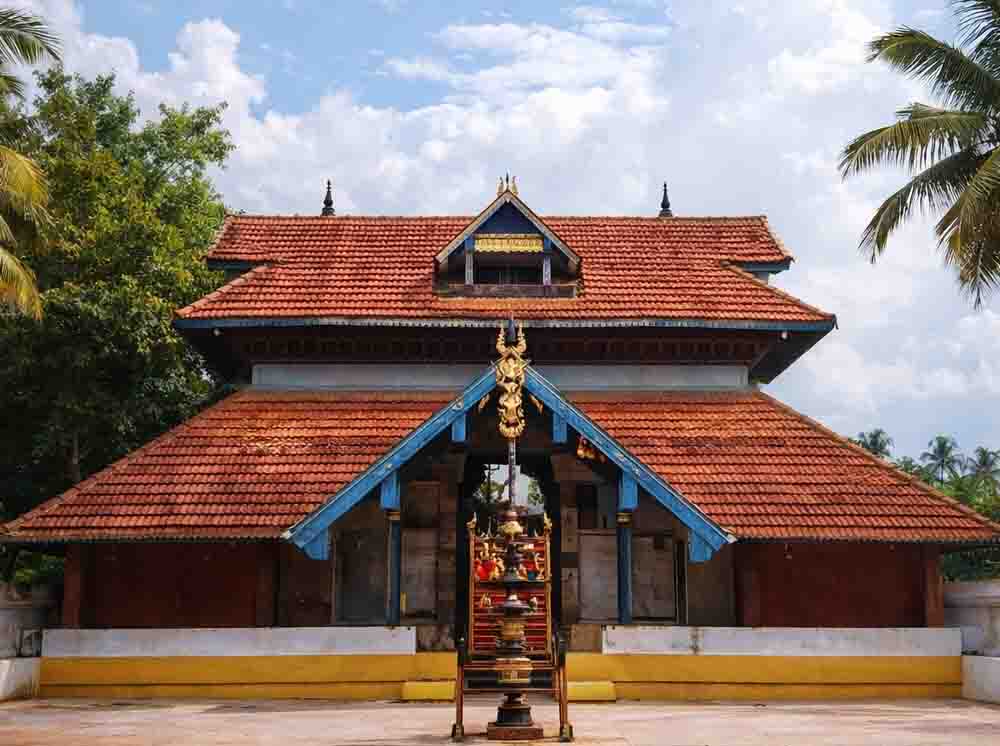
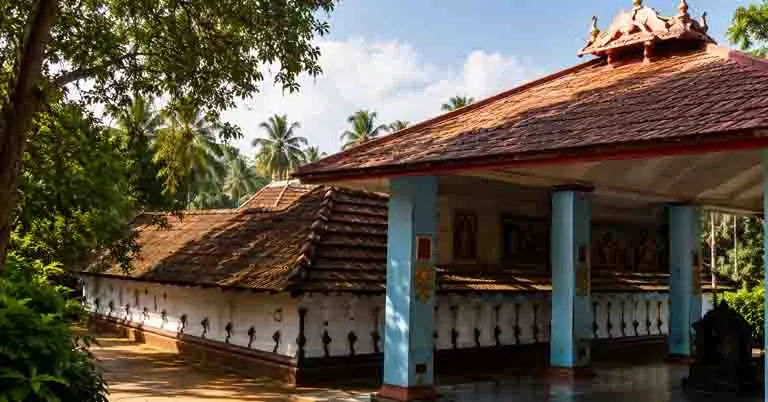
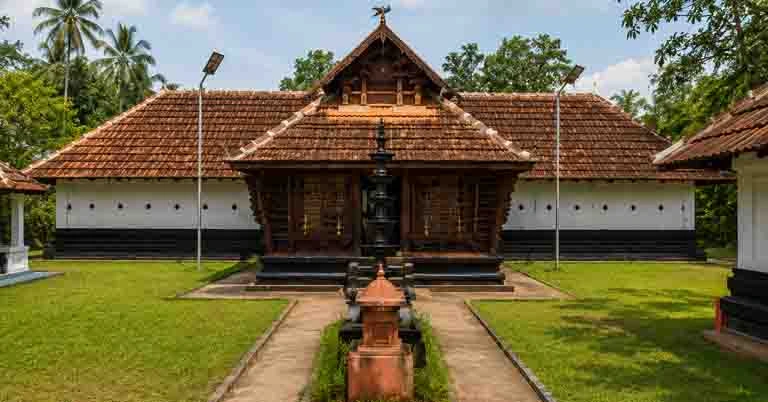
Many temples are dedicated to Lord Narasimha, especially in South India. Some famous ones include:
- Ahobilam (Andhra Pradesh)
- Simhachalam (Visakhapatnam)
- Yadagirigutta (Telangana)
- Sholingur (Tamil Nadu)
Conclusion
The Narasimha Avatar Katha has a potent message of justice, faith, and protection in addition to being a story of divine intervention. It shows that God always protects his true devotees, no matter how impossible the situation seems.
Disclaimer
The information provided by Web Arbiter (‘we’, ‘us’, or ‘our’) on https://webarbiter.in/ . The website is for general informational purposes only. All information on the Site is provided in good faith, however we make no representation or warranty of any kind, express or implied, regarding the accuracy, adequacy, validity, reliability, availability, or completeness of any information on the Site. UNDER NO CIRCUMSTANCE SHALL WE HAVE ANY LIABILITY TO YOU FOR ANY LOSS OR DAMAGE OF ANY KIND INCURRED AS A RESULT OF THE USE OF THE SITE OR RELIANCE ON ANY INFORMATION PROVIDED ON THE SITE. YOUR USE OF THE SITE AND YOUR RELIANCE ON ANY INFORMATION ON THE SITE IS SOLELY AT YOUR OWN RISK. Read Full Disclaimer