
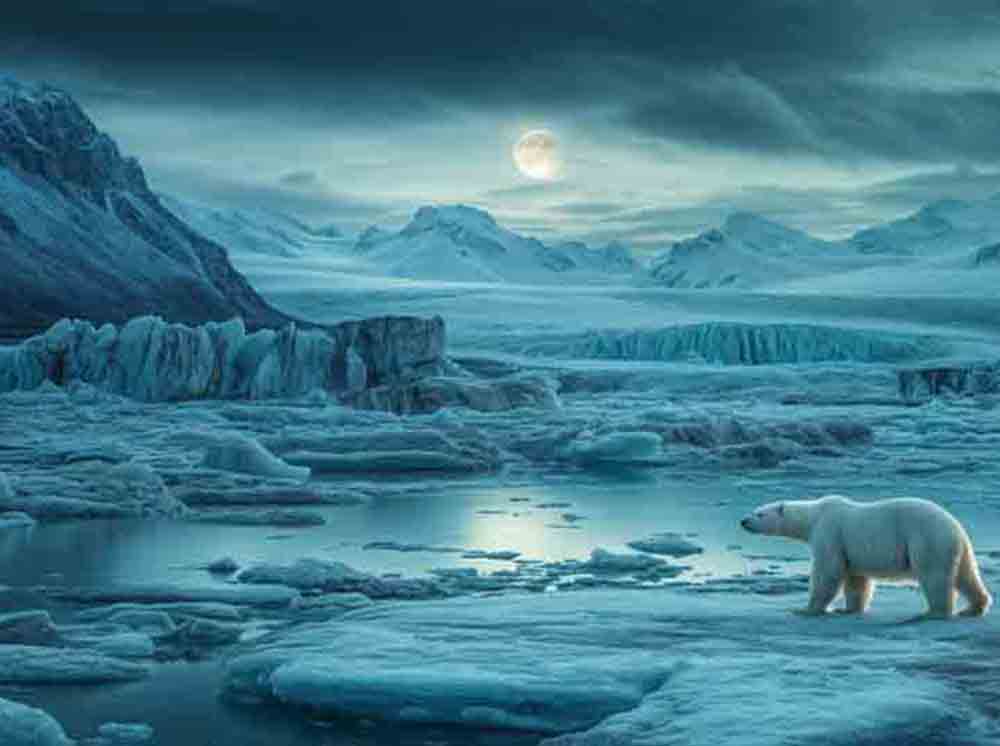

The rapid melting of ice at the Arctic (North Pole) and Antarctic (South Pole) is one of the most alarming indicators of climate change. Polar ice plays a crucial role in regulating Earth’s climate, maintaining sea levels, and sustaining unique ecosystems. Its loss has cascading effects on weather patterns, marine life, coastal communities, and global environmental stability. Below is a comprehensive look at the major impacts of polar ice melt:
1. Rising Sea Levels
One of the most direct effects of polar melting is global sea level rise.
- Greenland’s ice sheet in the Arctic and Antarctica’s glaciers hold most of the world’s freshwater ice. As these melt, billions of tons of water flow into the oceans.
- According to climate studies, sea levels could rise by 0.5 to 1 meter by 2100, threatening coastal cities like Mumbai, New York, and Dhaka.
- Low-lying island nations such as the Maldives and Tuvalu are at risk of submersion, leading to potential climate refugees and geopolitical conflicts over displaced populations.
2. Disruption of Ocean Currents
Melting polar ice dilutes seawater with fresh water, affecting ocean salinity and density.
- Thermohaline circulation—the global conveyor belt of ocean currents—depends on temperature and salinity differences. Disruption can weaken or alter currents like the Gulf Stream, which moderates Europe’s climate.
- A slowed Gulf Stream could result in colder winters in Europe, disrupted monsoons in Asia, and unstable weather systems worldwide.
3. Extreme Weather Events
The poles influence global atmospheric circulation.
- Loss of Arctic sea ice reduces the temperature difference between the poles and the equator, destabilizing the jet stream—a fast-flowing air current that steers weather systems.
- A wavier, slower jet stream can cause persistent heatwaves, droughts, and floods by locking weather patterns in place.
- For example, some scientists link unusual cold snaps in North America and prolonged monsoons in South Asia to changes in Arctic ice patterns.
4. Impact on Polar Ecosystems
The poles host unique species adapted to icy habitats.
- Arctic: Polar bears, walruses, seals, and Arctic foxes depend on sea ice for hunting and breeding. Melting ice reduces hunting grounds for polar bears, leading to starvation and increased human-wildlife conflict as bears move inland.
- Antarctic: Penguins, such as Emperor and Adélie species, depend on sea ice for breeding and access to krill. The loss of ice affects krill populations, disrupting the entire food web.
- Rapid changes also affect migratory birds, fish stocks, and plankton.
5. Threats to Indigenous Communities
In the Arctic, indigenous peoples such as the Inuit and Sámi depend on predictable ice conditions for hunting, fishing, and travel.
- Thinner and less stable sea ice makes traditional hunting routes dangerous, leading to accidents and reduced food security.
- Changing ecosystems threaten cultural traditions tied to ice-based activities.
- Infrastructure in polar regions—such as homes, roads, and pipelines built on permafrost—is at risk of collapse as the ground thaws.
6. Release of Greenhouse Gases from Permafrost
Permafrost—permanently frozen soil in the Arctic—locks away massive amounts of carbon dioxide (CO₂) and methane (CH₄).
- As permafrost melts, these greenhouse gases are released, accelerating global warming in a feedback loop.
- Methane is particularly potent, trapping 25 times more heat than CO₂ over a century, amplifying climate change effects.
7. Ocean Acidification and Marine Life
Increased freshwater runoff from melting glaciers changes ocean chemistry and temperature.
- This can affect plankton growth, fish populations, and coral reefs far from the poles.
- Warmer and fresher waters may disrupt marine food chains, impacting fisheries that feed billions of people worldwide.
8. Economic and Geopolitical Implications
The retreat of sea ice in the Arctic is opening new shipping routes, such as the Northern Sea Route, reducing travel time between Europe and Asia.
- While this benefits trade, it increases the risk of oil spills, accidents, and geopolitical tensions over resource-rich polar regions.
- Melting ice exposes untapped oil, gas, and mineral deposits, prompting territorial disputes among nations like Russia, Canada, and the U.S.
- The environmental risks of exploiting these resources are significant, given the fragile ecosystems.
9. Impact on Global Climate Systems
The poles act as Earth’s “refrigerators,” reflecting sunlight with their bright ice surfaces (high albedo).
- As ice melts, darker ocean water or land absorbs more sunlight, amplifying warming—this is known as the albedo effect.
- This positive feedback loop accelerates warming globally, increasing the frequency of wildfires, droughts, and storms elsewhere.
10. Biodiversity Loss and Food Security Risks
As polar ecosystems destabilize, cascading effects can reach distant ecosystems:
- Declining fish stocks in polar seas can affect predators and global fisheries.
- Changes in ocean currents can disrupt nutrient cycling, harming phytoplankton—the base of the marine food chain.
- This threatens global food security, especially in regions dependent on fish as a primary protein source.
11. Rising Costs of Natural Disasters
Flooding of coastal megacities, damage to ports, and agricultural disruption increase the financial burden on governments and insurers.
- For example, damages from coastal flooding are projected to reach hundreds of billions of dollars annually by mid-century if current trends continue.
- Insurance premiums and disaster recovery costs will rise, affecting global markets and economies.
12. Potential for Irreversible Tipping Points
Scientists warn of possible tipping points where polar ice loss becomes self-sustaining.
- If enough ice melts, the climate could shift into a new state where restoring previous ice levels would be impossible even with reduced emissions.
- This could accelerate other feedbacks, like Amazon rainforest dieback or changes in monsoon systems.

Conclusion
The melting of the North and South Poles is not an isolated regional issue but a global crisis with far-reaching consequences. Rising sea levels threaten millions in coastal areas, while disrupted weather patterns create more frequent and severe storms, floods, and droughts. Polar wildlife faces extinction risks, and indigenous communities lose their cultural and economic foundations. Economically, new shipping lanes and resource access create opportunities but also heighten environmental and geopolitical risks. The release of greenhouse gases from melting permafrost and the loss of reflective ice surfaces further amplify climate change.
Addressing these challenges requires urgent global action: reducing greenhouse gas emissions, protecting polar ecosystems, strengthening climate adaptation policies, and investing in renewable energy. The poles are a critical part of Earth’s climate system—protecting them is essential for the stability and survival of life worldwide.
Disclaimer
The information provided by Web Arbiter (‘we’, ‘us’, or ‘our’) on https://webarbiter.in/ . The website is for general informational purposes only. All information on the Site is provided in good faith, however we make no representation or warranty of any kind, express or implied, regarding the accuracy, adequacy, validity, reliability, availability, or completeness of any information on the Site. UNDER NO CIRCUMSTANCE SHALL WE HAVE ANY LIABILITY TO YOU FOR ANY LOSS OR DAMAGE OF ANY KIND INCURRED AS A RESULT OF THE USE OF THE SITE OR RELIANCE ON ANY INFORMATION PROVIDED ON THE SITE. YOUR USE OF THE SITE AND YOUR RELIANCE ON ANY INFORMATION ON THE SITE IS SOLELY AT YOUR OWN RISK. Read Full Disclaimer