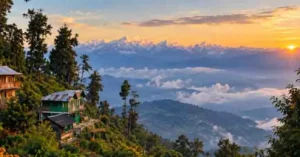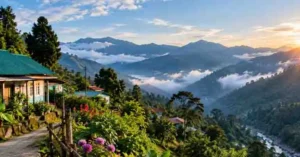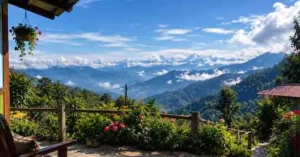


There are some places in the mountains that become memorable because of their famous viewpoints, busy markets or luxury resorts. And then there are places where the mountains themselves are enough.
Pedong is one of those places.
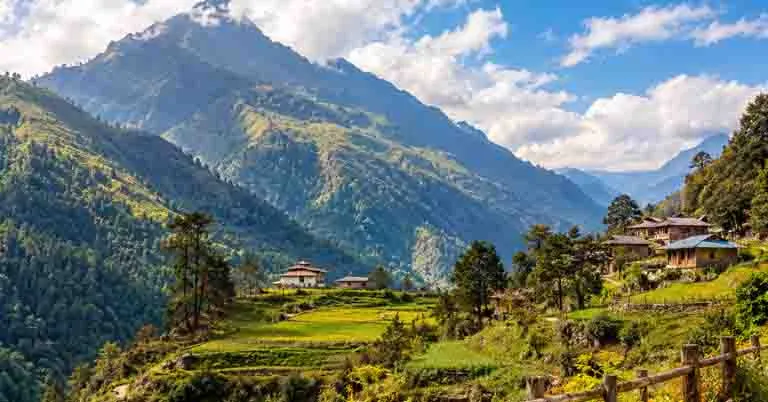
Perched in the hills of Kalimpong, North Bengal, Pedong is a peaceful mountain settlement surrounded by pine forests, green valleys and distant Himalayan peaks. Located roughly 20–21 kilometres from Kalimpong, the town sits along the historic route that once connected the Himalayan region with Tibet through the Jelepla Pass.
Today, Pedong offers something very different from the crowded hill stations. Life here feels slower. The roads are quieter, the forests are close, and villages scattered across the surrounding hills give the area a distinctly local character.
If you are looking for a mountain holiday where you can enjoy nature, history and village life without rushing from one tourist spot to another, Pedong is worth discovering.
Where Is Pedong?
Pedong lies in the eastern part of the Kalimpong hills in West Bengal. The settlement sits on a mountain ridge, with valleys and forested slopes falling away on either side.
Its location makes it particularly interesting for travellers who want to explore the eastern side of the Kalimpong region. Places such as Lava, Lolegaon, Rishop, Sillery Gaon and the Rishi Valley can be included in a longer trip around the area.
The elevation is commonly given at around 4,000–5,000 feet depending on the part of the Pedong region being described, so the climate is generally pleasant compared with the plains.
But numbers don’t really explain the place.
You understand Pedong when you stand on a quiet hillside in the morning and watch clouds moving slowly between the mountains.
The First Impression of Pedong
Pedong doesn’t feel like a traditional tourist town.
There are no large shopping streets packed with visitors and no constant stream of sightseeing vehicles. Instead, you find small houses, village roads, forests, homestays and occasional viewpoints opening towards the mountains.
The surrounding pine forests give the landscape a distinct Himalayan feel.
On a clear day, distant snow-covered peaks may appear above the surrounding ridges. When clouds arrive, the entire view can change within minutes.
Sometimes the mountains disappear completely.
And then, almost as quickly, they return.
Part of the appeal is the weather’s unpredictability.
A Place With a Story
Pedong is not only about scenery.
The area has a long connection with the old Himalayan trade routes. The historic route through this region linked the plains of Bengal with Tibet via the Jelepla Pass, making Pedong an important location in the history of movement and trade across the mountains.
This history can still be felt in some of the places around Pedong.
Perhaps the most interesting example is Damsang Fort.
Damsang Fort: A Walk Through History
Hidden among the forest near Pedong are the remains of Damsang Fort, a historic site associated with the Lepcha kingdom.
The fort was built in 1690 and later became connected with the conflicts involving the Lepchas, Bhutanese forces and, eventually, the British period. After the Anglo-Bhutan War, the fort gradually fell into ruin.
Today, there isn’t a grand palace waiting at the end of the trail.
Instead, there are ruins surrounded by trees and forest.
And strangely enough, that makes the place more interesting.
Walking through the forest towards the old fort, you can imagine how different these hills must have looked centuries ago. The surrounding greenery has slowly reclaimed much of the site, giving the ruins an almost mysterious atmosphere.
For anyone who enjoys history, Damsang is one of the places that should not be skipped.
Sangchen Dorjee Monastery
Another important part of Pedong’s character is its Buddhist heritage.
Sangchen Dorjee Monastery, also known as Sangchen Dorjee Gumpa, is one of the historic monasteries in the Pedong-Kalimpong region. The monastery dates back to the early 1700s and has strong connections with the Bhutanese Buddhist tradition.
The atmosphere around the monastery is peaceful.
You don’t need to be a religious traveller to appreciate the place. The architecture, prayer flags, quiet surroundings and mountain setting make it an interesting stop for anyone curious about the cultural history of the region.
If you visit, spend some time quietly looking around rather than treating it as just another sightseeing stop.

Cross Hill
Cross Hill is another place that adds a different layer to Pedong’s history.
A cross was erected here in the late nineteenth century by the French missionary Fr. Augustine Desgodins. The site is associated with missionaries who travelled towards Tibet and is regarded as an important religious location by local Christians.
The hilltop setting is peaceful, and the surrounding mountain landscape makes it worth visiting even for travellers interested primarily in scenery.
It is a good example of how different cultural and religious histories have come together in the eastern Himalayan region.
The Views Around Pedong
Of course, you cannot come to Pedong without spending time looking at the mountains.
The town and surrounding ridges offer beautiful views of the Himalayan landscape, with Kanchenjunga visible on clear days.
Early morning is usually the best time to look for distant mountain views.
The air feels cleaner, the light is softer and clouds are often less dominant.
But don’t worry if you don’t get a clear view.
Pedong is beautiful even when the mountains are hidden.
Mist drifting through the forests, clouds resting on the ridges and occasional patches of sunlight can create a landscape just as memorable as a perfectly clear mountain panorama.
Rishi Khola: A Riverside Escape
For travellers who want to get closer to the river, a drive downhill towards Rishi Khola is a wonderful addition to a Pedong trip.
Rishi Khola lies near the Bengal-Sikkim border, where the river forms part of the natural boundary between the two states.
The atmosphere here is very different from the hilltop.
Instead of looking down into a valley, you are surrounded by water, rocks and forest.
It’s a great spot to take a leisurely stroll, enjoy a picnic, or just relax by the river.
What to Do in Pedong
You don’t need a complicated itinerary.
A relaxed Pedong holiday can include:
- Walking through the surrounding villages
- Exploring forest trails
- Visiting Damsang Fort
- Spending quiet time at Sangchen Dorjee Monastery
- Visiting Cross Hill
- Enjoying mountain viewpoints
- Taking a trip to Rishi Khola
- Birdwatching
- Photography
- Trying local food
- Spending an evening at a homestay
The area also offers opportunities for activities such as mountain biking, rock climbing and archery, although availability can depend on local operators and conditions.
Stay in a Homestay
Perhaps the best way to enjoy Pedong is to stay at a homestay.
Instead of staying somewhere that feels disconnected from the destination, a local homestay lets you experience the mountains through the people who actually live there.
Even though the rooms are basic, the experience might be far more unforgettable.
Wake up early, step outside with a cup of tea and watch the morning light reach the opposite hills.
Have breakfast slowly.
Ask your host about nearby villages.
Find out which walking trail is worth taking.
By the end of your stay, Pedong begins to feel less like a tourist destination and more like a place you temporarily called home.
Food in Pedong
Don’t expect a big restaurant scene when you visit here.
Pedong is better suited to simple, homemade food.
Depending on where you stay, you may find rice, dal, vegetables, momos, noodles, local pickles and other comforting mountain dishes.
The cuisine might be simple, yet following a lengthy hike through the hills, a warm home-cooked meal can be precisely what you need.
And, of course, tea is never far away.
A cup of hot tea with a mountain view may become one of your favourite memories of the trip.
Best Time to Visit Pedong
Pedong can be visited throughout much of the year, and every season has something different to offer.
Spring brings fresh greenery and pleasant weather.
Summer is comfortable compared with the heat of the plains and is suitable for exploring the surrounding areas.
Monsoon makes the hills intensely green. Waterfalls and streams become fuller, but heavy rain can also affect mountain roads and walking trails.
Autumn is particularly attractive for travellers who enjoy clearer skies and distant mountain views.
Winter brings cold mornings and evenings, so warm clothing is important.
If you enjoy mist and dramatic weather, visit during the wetter months. If mountain views are your priority, a clearer season may suit you better.
How to Reach Pedong
The easiest way for most travellers is by road from New Jalpaiguri or Bagdogra.
Both are major gateways to North Bengal, and taxis are available for the journey into the hills. Local tourism information also lists New Jalpaiguri as the nearest railway station and Bagdogra as the nearest airport.
Pedong is also well connected by road with Kalimpong and other nearby hill destinations.
If you’re planning to explore several places around Pedong, hiring a private vehicle can make the trip much easier.
How Many Days Are Enough?
For Pedong itself, two nights can give you a good introduction.
But if you are combining it with Rishi Khola, Lava, Lolegaon or other nearby destinations, three to four nights would allow you to travel at a more comfortable pace.
Try not to fill all your time with sightseeing.
Leave some time for the village.
Leave some time for the mountains.
And give yourself time to do nothing.

Final Thoughts
Pedong isn’t the sort of destination that tries to impress you immediately.
It grows on you.
First, you notice the mountains.
Then you notice the forests.
Then you start noticing the small things—the sound of birds in the morning, prayer flags moving in the wind, a narrow road disappearing around a hillside, smoke rising from a village kitchen or the sudden appearance of a snow-covered peak between two clouds.
Its history adds another layer to the experience, while the surrounding villages and rivers keep the landscape feeling alive.
For travellers who want something quieter than the famous hill stations, Pedong offers a refreshing change.
Come here without a packed schedule.
Walk slowly.
Talk to the locals.
Eat homemade food.
Watch the clouds.
Explore an old fort.
Sit beside the river.
And let the mountains decide the pace of your holiday.
Pedong is not just a place to visit. It is a place to slow down—and sometimes, that is exactly what a mountain escape should be.
Disclaimer
The information provided by Web Arbiter (‘we’, ‘us’, or ‘our’) on https://webarbiter.in/ . The website is for general informational purposes only. All information on the Site is provided in good faith, however we make no representation or warranty of any kind, express or implied, regarding the accuracy, adequacy, validity, reliability, availability, or completeness of any information on the Site. UNDER NO CIRCUMSTANCE SHALL WE HAVE ANY LIABILITY TO YOU FOR ANY LOSS OR DAMAGE OF ANY KIND INCURRED AS A RESULT OF THE USE OF THE SITE OR RELIANCE ON ANY INFORMATION PROVIDED ON THE SITE. YOUR USE OF THE SITE AND YOUR RELIANCE ON ANY INFORMATION ON THE SITE IS SOLELY AT YOUR OWN RISK. Read Full Disclaimer