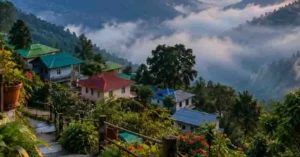


There are hill destinations where people go looking for busy markets, famous viewpoints and a long list of sightseeing spots. Then there is Sittong.
Spread across the forested hills of Darjeeling district, Sittong feels more like a collection of quiet mountain villages than a conventional tourist destination. Its biggest attraction is something much simpler—nature, village life and, during winter, thousands of orange trees filled with bright fruit.
Often called the Orange Village of North Bengal, Sittong has slowly found its place on the map of offbeat travel. The area is known for its orange orchards, green hills, forest roads, mountain views and welcoming homestays. The tourism department of the Gorkhaland Territorial Administration also describes Sittong as a cluster of villages in the Kurseong subdivision, particularly known for its orange cultivation and relatively untouched rural surroundings.
But oranges are only one part of the story.
Sittong is a place to wake up slowly, walk along village roads, drink tea while looking at the hills and spend an evening listening to the sounds of the countryside.
Where Is Sittong?
Sittong is located in the Darjeeling hills of West Bengal, within the Kurseong subdivision. It is not one compact village. Instead, the name Sittong covers a wider area made up of several villages and settlements spread across the hills.
This is worth knowing before booking a stay because two homestays described as being in Sittong can be quite far apart.
The landscape changes as you move between different parts of the region. Some areas are surrounded by orange orchards, while others are closer to forests, viewpoints or river valleys.
That scattered village character is actually part of Sittong’s charm. There is no busy central town where everyone gathers. Life here moves at a much slower pace.
Why Is Sittong Called Orange Village?
The orange orchards are what first made Sittong famous among travellers.
During the fruiting season, the green hills take on a completely different appearance. Orange trees stand around village homes and along hillside paths, with bright fruit contrasting against the leaves.
The main orange season generally falls during the late autumn and winter months, with November to January being particularly attractive for seeing the orchards full of fruit. December is often considered the peak period, although the exact timing can vary from year to year.
Walking through an orchard is a very different experience from simply buying oranges at a market. You get to see how the fruit is grown and how closely agriculture is connected with everyday life in the villages.
One crucial point to keep in mind is that these are operational farms. Don’t pick oranges without permission, step into restricted areas or damage the plants. If you want to explore an orchard, ask the owner or your homestay host about access.
Sittong Beyond the Oranges
The biggest mistake would be to visit Sittong only for the oranges.
Outside the fruiting season, the orchards remain green and the surrounding countryside is still beautiful. Forests cover the hills, small roads wind between villages and distant mountain views appear whenever the weather opens up.
The quietness is one of Sittong’s greatest attractions.
There are no large shopping complexes or noisy tourist streets. Instead, you may see villagers working around their homes, children walking to school, farmers tending their crops and birds calling from the nearby forest.
For travellers who enjoy slow tourism, this everyday scenery can be more memorable than a conventional sightseeing attraction.
Ahaldara Viewpoint
Ahaldara is one of the places worth including in a Sittong itinerary.
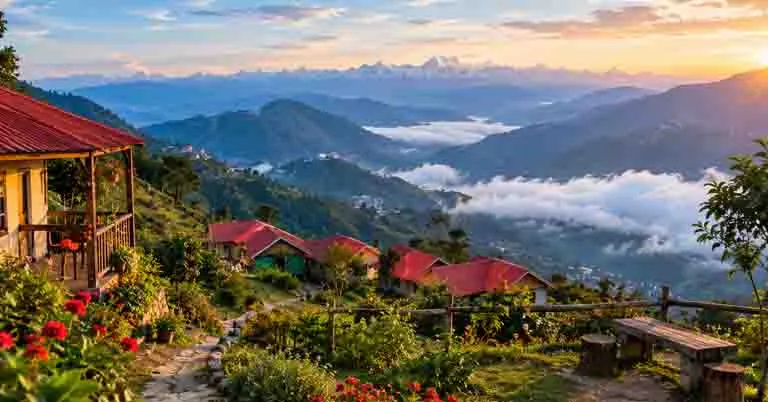
Located in the upper part of the Sittong area, the viewpoint offers wide views of the surrounding hills and valleys. On a clear day, the Himalayan landscape opens up beautifully, and there can be views towards the Kanchenjunga range.
Usually, the best time to try to see mountains clearly is in the early morning hours when there are fewer obstacles in the way.
The weather in the hills can change quickly, though. You might arrive expecting a spectacular panorama and find the mountains covered in clouds. After a while, the clouds could scatter and reveal the entire view.
That unpredictability is simply part of travelling in the mountains.
Village Walks in Sittong
You don’t need a special trekking plan to enjoy Sittong.
A slow walk around the village can be one of the nicest things to do here. Take a road leading away from your homestay and see where it goes. You will likely pass small houses, gardens, farms and patches of forest.
The roads are generally quiet, making walking much more enjoyable than in the larger hill stations.
Morning walks are especially pleasant. The air is cool, the hills are usually quieter and the soft light makes the surrounding landscape look almost completely different from the afternoon.
If you want to explore forest trails or lesser-known routes, it is better to take guidance from your homestay or a local person rather than wandering into unfamiliar areas on your own.
Latpanchar and the Forests
Sittong also works well as a base for exploring nearby forested areas such as Latpanchar.
The surrounding forests are particularly interesting for nature lovers and birdwatchers. The quieter environment makes it easier to notice birds and other small signs of wildlife that are often missed in busy tourist destinations.
For birdwatching, start early and carry binoculars if you have them. Avoid loud music and unnecessary noise so that you don’t disturb the forest.
Sittong’s attraction for nature lovers comes from this combination of orchards, forests, villages and open mountain landscapes rather than from one single landmark.

Jogighat and the Riyang River
Another interesting excursion from the Sittong area is Jogighat, where the Riyang River flows through a scenic valley.
The river passes through rocky stretches surrounded by greenery, creating a peaceful place to sit and enjoy the natural surroundings. In the drier months, the transparent, shallow water and the rocks that are exposed make the riverside especially appealing.
It is a good place for a relaxed picnic or a short break during sightseeing.
As always with mountain rivers, conditions can change considerably during heavy rain. Avoid entering the water when the current is strong or when local conditions are considered unsafe.
Staying in Sittong
Accommodation in Sittong is mostly centred around homestays and small nature stays rather than large hotels.
That is actually one of the reasons the destination feels different.
A good homestay can give you an opportunity to experience local food, talk with the family running the property and learn more about the surrounding villages.
Some properties are surrounded by orange trees, while others offer views across forests and hills. Because Sittong is spread out, check the exact location of your accommodation before booking. Your choice of homestay can make a significant difference to how easily you can explore the area.
Orange Tree Homestay and Orange Valley Homestay Sittong are examples of accommodation options located within the Sittong area.
Food in Sittong
Don’t come to Sittong expecting a long restaurant list.
The better food experience is usually at the homestay.
Meals are generally simple and home-cooked, with rice, dal, vegetables, chicken, eggs and local preparations commonly forming part of the menu. Depending on the property, you may also get regional dishes prepared by the host family.
After spending the morning hiking through the hills, even a simple hot lunch can taste surprisingly delicious.
If you have dietary restrictions, let your host know before arrival.
Best Time to Visit Sittong
Sittong is open for visitors all year round, with each season providing a unique experience.
November to January is the most attractive period if your main interest is the orange orchards. This is when the fruiting season gives Sittong its distinctive appearance.
February to April brings comfortable weather and fresh greenery. The orchards may no longer have the same abundance of fruit, but the landscape remains beautiful.
Summer is pleasant compared with the plains and works well for a quiet hill escape.
Monsoon makes the countryside lush and green, but heavy rain can affect roads and sightseeing. If travelling during the rainy season, keep your itinerary flexible.
Autumn is another excellent period, with clearer skies and pleasant temperatures.
If mountain views are important to you, early mornings are generally worth prioritising regardless of the season.
How to Reach Sittong
Sittong is accessible by road from the Siliguri, Bagdogra, Kurseong and Darjeeling side.
Travellers arriving by train generally use New Jalpaiguri, while those flying usually arrive at Bagdogra Airport. From there, a reserved car is the most convenient option, particularly because Sittong covers a fairly large area and local public transport can be limited.
The exact driving route depends on which part of Sittong you are staying in.
Because the destination is spread across several villages, give your driver the precise name and location of your homestay rather than simply saying “Sittong.”
Things to Do in Sittong
A Sittong holiday is best kept relaxed.
- Walk through the orange-growing villages.
- Visit an orchard with the owner’s permission.
- Watch sunrise from Ahaldara.
- Explore nearby forest areas.
- Spend time walking through village lanes.
- Visit Jogighat and the Riyang River.
- Try local food at your homestay.
- Enjoy birdwatching and nature photography.
- Spend an evening simply sitting outside your homestay.
There is no requirement to occupy every hour.
In fact, leaving a few hours completely free is probably the best way to experience Sittong.
A Few Travel Tips
Carry comfortable walking shoes because some village roads and paths can be uneven.
Keep warm clothes with you, particularly between November and February.
Don’t enter private orchards without permission.
Avoid littering, especially around forests and rivers.
During monsoon, check road conditions before setting out for sightseeing.
If you’re planning to visit several attractions, ask your homestay host to suggest the most practical route. Distances on a mountain map can be misleading because winding roads take longer than they appear.
Final Thoughts
Sittong doesn’t try to compete with Darjeeling or other famous hill stations, and that is exactly what makes it appealing.
Its beauty is quieter.
It is found in orange trees glowing in the winter sun, mist hanging over the forest, a narrow road disappearing around a hillside and a cup of tea enjoyed on a homestay veranda.
Come during orange season and the orchards will give you a memorable introduction to the place. Come outside the season and you’ll discover that Sittong has much more to offer than its nickname suggests.
For anyone looking for an offbeat North Bengal getaway, Sittong is a place where the best part of the trip may simply be slowing down and enjoying the village life around you.

Disclaimer
The information provided by Web Arbiter (‘we’, ‘us’, or ‘our’) on https://webarbiter.in/ . The website is for general informational purposes only. All information on the Site is provided in good faith, however we make no representation or warranty of any kind, express or implied, regarding the accuracy, adequacy, validity, reliability, availability, or completeness of any information on the Site. UNDER NO CIRCUMSTANCE SHALL WE HAVE ANY LIABILITY TO YOU FOR ANY LOSS OR DAMAGE OF ANY KIND INCURRED AS A RESULT OF THE USE OF THE SITE OR RELIANCE ON ANY INFORMATION PROVIDED ON THE SITE. YOUR USE OF THE SITE AND YOUR RELIANCE ON ANY INFORMATION ON THE SITE IS SOLELY AT YOUR OWN RISK. Read Full Disclaimer