
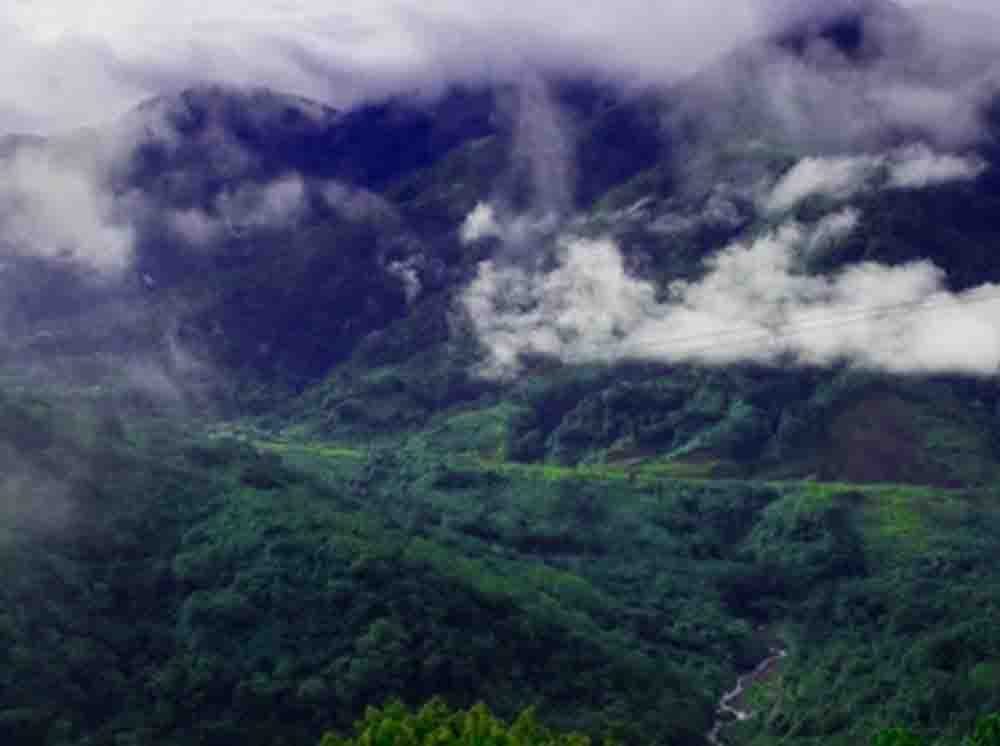

Nestled in the serene hills of Assam, near the town of Dima Hasao, lies a small, seemingly tranquil village that has baffled scientists, ornithologists, and paranormal enthusiasts for decades — Jatinga. This unassuming village, surrounded by lush forests and misty landscapes, is infamous for a phenomenon so bizarre that it has earned the nickname “The Village of Bird Suicides.”
From September to November every year, hundreds of birds are said to descend upon the village at night and crash into buildings, trees, and even the ground, appearing to deliberately end their lives. This strange occurrence has fascinated researchers worldwide and has given Jatinga an eerie reputation as one of India’s most mysterious places. Locals and visitors alike speak of an almost supernatural energy that seems to compel the birds toward death, blending natural mystery with a sense of the paranormal.

Geographical and Environmental Background
Jatinga is located at an altitude of approximately 1,200 meters above sea level in the hills of Assam. The village is surrounded by dense forests, tea gardens, and rolling hills, creating a perfect habitat for various bird species. The topography of the area — narrow valleys, cliffs, and winding streams — contributes to the strange bird behavior.
The village itself is small, home to roughly 500 residents, mostly indigenous tribal communities. Despite its remote location, Jatinga has drawn bird watchers, researchers, and thrill-seekers from across India and abroad due to its mysterious reputation.
The Phenomenon: Bird “Suicides”
The most fascinating and chilling aspect of Jatinga is the annual bird mortality phenomenon. Every year, during September to November, when the moon is full and nights are foggy, hundreds of birds — particularly migratory species — are seen flying toward the village and plummeting to their deaths.
- The phenomenon occurs between 6:00 PM and 9:00 PM, typically during calm and misty nights.
- Birds crash into lampposts, walls, windows, and trees, often unable to regain flight.
- Locals describe the birds as appearing disoriented, almost hypnotized, as if following some invisible force.
Species affected include the Indian nightjar, great hornbill, drongo, warblers, and sparrows, among others. Ornithologists have observed that adult birds and juveniles alike are equally susceptible, suggesting the phenomenon is not due to age or inexperience.
Historical Background and Local Beliefs
The first documented accounts of Jatinga’s bird phenomenon date back to the early 20th century. However, local legends suggest that the occurrence has been happening for centuries, with villagers describing it in folklore as a mysterious curse or supernatural event.
- Locals believe the village is haunted by spirits of fallen warriors or angry deities who command the birds to descend.
- Some tribal communities consider the event a sign of impending misfortune or divine intervention.
- Historically, villagers would collect the fallen birds for ritual offerings or use them as a food source, believing that the phenomenon was guided by mystical forces.
The local explanation adds a layer of mystique: the birds are thought to be lured by spiritual energy or the resonance of unseen vibrations, giving the village its reputation as a haunted and mysterious place.
Scientific Investigations
While folklore attributes the phenomenon to supernatural forces, several scientific investigations have sought to explain the bird deaths through natural and environmental factors.
1. Disorientation by Magnetic Fields
Researchers suggest that the birds’ internal magnetic navigation systems are disrupted in Jatinga. The valley’s steep slopes, dense fog, and magnetic anomalies may confuse the birds during migration, causing them to fly toward illuminated areas such as village lamps and homes.
2. Influence of Artificial Lights
Artificial lights in the village are believed to attract and disorient the birds. This phenomenon, known as phototaxis, is common in many bird species. The combination of misty nights and bright lights leads birds to miscalculate flight paths, causing fatal collisions.
3. Weather and Atmospheric Conditions
The months of September to November coincide with post-monsoon climatic changes. The region experiences cool nights, dense fog, and reduced visibility, which further disorients nocturnal birds. Sudden gusts of wind in the narrow valleys can also contribute to the phenomenon.
4. Migratory Patterns
Many birds affected are migratory species traveling from northeast Asia to India. Jatinga lies along a major migratory route, and birds unfamiliar with the terrain are easily confused by topography and artificial lights.
While these explanations shed light on the environmental causes, the consistency and specificity of the bird suicides — happening only in Jatinga, during the same months and hours — remain puzzling to scientists, adding to its mysterious allure.
The Village’s Haunted Reputation
Jatinga’s reputation as a haunted village is fueled not only by bird suicides but also by local paranormal legends:
- Whispering Forests:
Locals claim that the surrounding forests emit whispering sounds during the bird season, which seem to guide the birds toward the village. - Phantom Lights:
Mysterious lights are often seen moving along the hills at night, which villagers believe are spirits of past generations or supernatural forces influencing the birds. - Restless Souls:
Folklore suggests that souls of warriors who died in ancient battles inhabit the hills, influencing the migration paths and behavior of birds.
These supernatural narratives, combined with the inexplicable natural phenomenon, make Jatinga a unique convergence of science and folklore, drawing curiosity from across the globe.
Tourism and Research Activities
Despite its eerie reputation, Jatinga has become a hub for bird watchers, researchers, and adventure tourists. Each year, from September to November, enthusiasts flock to witness the phenomenon, while ornithologists conduct detailed studies to document species behavior and environmental conditions.
- Bird Watchers: Equipped with cameras and binoculars, tourists observe the nocturnal descent of birds, often finding both beauty and tragedy in the spectacle.
- Researchers: Institutions like the Bombay Natural History Society have studied Jatinga to understand migratory patterns, nocturnal disorientation, and the impact of artificial lights.
- Tourism Boost: The phenomenon has helped the village economically, as locals provide homestays, guided tours, and souvenirs to visitors, though they maintain respect for the mysterious nature of the event.
It’s worth noting that the bird suicides are seasonal, and outside the migration period, the village is a peaceful, scenic retreat with lush hills, tea gardens, and traditional Assamese culture.
Conservation Concerns
While Jatinga attracts tourists and researchers, it also raises ethical and ecological questions:
- Impact on Bird Populations:
The deaths, though natural, affect local bird populations. Conservationists urge minimal human interference and discouraging unnecessary handling of fallen birds. - Responsible Tourism:
Artificial lights, loud noises, and human presence may exacerbate the phenomenon, causing more birds to disorient and die. Sustainable tourism practices are essential. - Preservation of Habitats:
Forested areas surrounding Jatinga must be preserved to maintain the natural environment that birds rely on, ensuring that the mystery continues without ecological damage.
Cultural and Spiritual Significance
For the indigenous communities in Jatinga, the bird phenomenon is more than a scientific curiosity — it is deeply spiritual. Some of the cultural beliefs include:
- Sacred Birds: Certain species are considered sacred and believed to carry messages from ancestors.
- Ritual Offerings: Villagers perform rituals and prayers to appease the spirits and honor the birds’ sacrifice.
- Mythical Interpretations: Stories of birds guided by unseen forces are passed down through generations, blending natural observation with folklore.
This cultural context enhances the village’s mystique, making it both a scientific wonder and a spiritual symbol.
Real-Life Testimonies
Visitors and researchers have documented numerous accounts:
- A British Ornithologist: Witnessed hundreds of birds crashing simultaneously and described the sight as “both horrifying and mesmerizing.”
- Local Villagers: Claim that during the season, they can hear the fluttering of wings and faint cries as the birds approach the village.
- Tourists: Some report feeling an unsettling energy, a “tangible force” in the air during the bird suicides, adding to the haunted reputation.
Why Jatinga Remains Mysterious
Even with scientific studies and rational explanations, Jatinga’s phenomenon continues to puzzle experts:
- It occurs only in this specific village along the migratory route.
- It happens during the same months and specific hours each year.
- Birds of multiple species are affected, not just a single type, suggesting a complex interaction of environmental and perhaps unknown factors.
This combination of regularity, geographical specificity, and the scale of deaths ensures that Jatinga retains its status as one of India’s most mysterious and haunted places.
Tourist Guidelines and Visiting Tips
For those wishing to visit Jatinga:
- Best Time to Visit: September to November (migration season).
- Stay in Nearby Towns: Dima Hasao district offers homestays and eco-lodges.
- Photography and Observation: Bring binoculars and cameras; avoid disturbing birds.
- Respect Local Customs: Acknowledge the spiritual and cultural significance of the phenomenon.
- Guided Tours: Hiring a local guide provides safety and insight into both folklore and ecology.
Conclusion
Jatinga, Assam, is a place where nature, mystery, and folklore intertwine in a way that is truly unique. The village’s bizarre phenomenon of bird suicides, combined with local legends of spirits and haunted forests, creates an atmosphere that is both awe-inspiring and unsettling.
For scientists, Jatinga is a natural laboratory to study avian behavior and environmental influences. For spiritual seekers and paranormal enthusiasts, it is a haunted landscape of unexplained energy and spectral presence. For travelers, it is a remote and serene village with a dark secret, a place where every flutter of wings and whisper of wind tells a story older than memory.
Whether the phenomenon is caused by magnetic disorientation, artificial light, or supernatural forces, one thing remains certain: Jatinga is a village where the boundary between life, death, and mystery blurs, earning its place as one of India’s most haunted and mysterious locations.
Standing amidst the hills of Jatinga, as the mist rises and night descends, it is impossible not to feel the silent presence of unseen forces, guiding, warning, or simply observing — a timeless reminder of nature’s mysteries and the human imagination intertwined.
Disclaimer
The information provided by Web Arbiter (‘we’, ‘us’, or ‘our’) on https://webarbiter.in/ . The website is for general informational purposes only. All information on the Site is provided in good faith, however we make no representation or warranty of any kind, express or implied, regarding the accuracy, adequacy, validity, reliability, availability, or completeness of any information on the Site. UNDER NO CIRCUMSTANCE SHALL WE HAVE ANY LIABILITY TO YOU FOR ANY LOSS OR DAMAGE OF ANY KIND INCURRED AS A RESULT OF THE USE OF THE SITE OR RELIANCE ON ANY INFORMATION PROVIDED ON THE SITE. YOUR USE OF THE SITE AND YOUR RELIANCE ON ANY INFORMATION ON THE SITE IS SOLELY AT YOUR OWN RISK. Read Full Disclaimer