

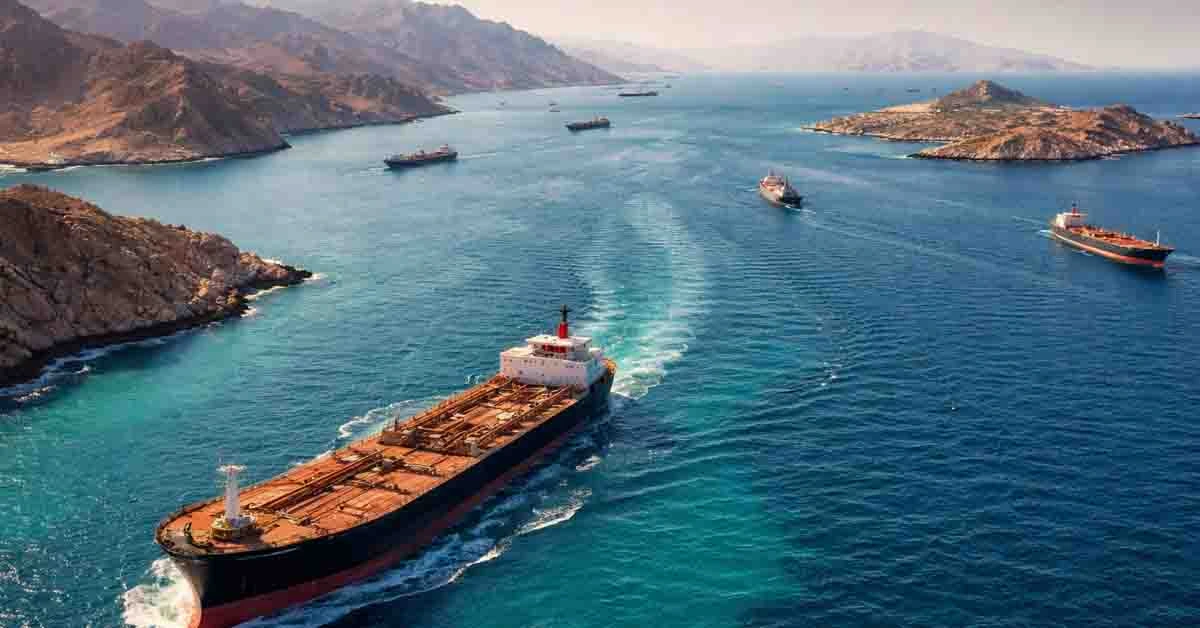

One of the world’s most strategically significant waterways is the Strait of Hormuz. Though narrow in size, this passage has enormous influence over global trade, international politics, and the stability of the world’s energy supply. Connecting the Persian Gulf with the Gulf of Oman and eventually the Arabian Sea, the Strait of Hormuz serves as a gateway through which a significant portion of the world’s oil travels.
Often described as the “lifeline of global energy trade,” this strategic channel sits between Iran to the north and Oman and the United Arab Emirates to the south. Every day, massive oil tankers and cargo ships pass through this narrow corridor, carrying energy resources that power industries, transportation systems, and economies across the globe.
In this comprehensive blog, we will explore the geography, history, geopolitical importance, economic impact, and the ongoing tensions surrounding the Strait of Hormuz.
Geography and Location
The Strait of Hormuz is a narrow waterway approximately 167 kilometers long and only about 33 kilometers wide at its narrowest point. However, the actual shipping lanes are even narrower—about 3 kilometers wide in each direction, separated by a buffer zone.
The strait serves as a natural maritime entry point between the Arabian Sea’s open seas and the Persian Gulf. Because of this geographic position, any vessel leaving oil-producing Gulf nations must pass through this channel.
Countries whose oil exports rely heavily on this passage include:
- Saudi Arabia
- Iran
- Iraq
- Kuwait
- Qatar
- United Arab Emirates
Because of its geographic position, the Strait of Hormuz functions as a maritime bottleneck. Any disruption here can impact global markets almost instantly.
The Significance of the Strait of Hormuz
The importance of the Strait of Hormuz lies primarily in its role in the global oil trade.
Approximately 20–30% of the world’s petroleum supply passes through this narrow waterway every day. According to global energy analysts, nearly 20 million barrels of oil per day travel through the strait.
This makes it the most important oil transit chokepoint on Earth.
Countries in Asia, particularly:
- China
- India
- Japan
- South Korea
depend heavily on oil shipments passing through this route.
If the Strait of Hormuz were blocked or disrupted, oil prices worldwide could rise dramatically, triggering global economic instability.
Historical Significance
The strategic importance of the Strait of Hormuz is not a modern phenomenon. For centuries, this waterway has played a key role in regional trade and maritime navigation.
Historically, merchants from India, Persia, and the Arabian Peninsula used this route to trade spices, textiles, and precious goods.
During the 16th century, the Portugal attempted to control the strait as part of its expanding maritime empire. Later, the United Kingdom also maintained influence over the region to secure trade routes.
However, the strategic value of the strait increased dramatically during the 20th century, especially after oil became the backbone of the global economy.
Military Importance
The Strait of Hormuz is not only an economic corridor but also a major military flashpoint.
Due to its strategic value, multiple naval forces operate in and around the region. The United States Navy frequently patrols the waters to ensure freedom of navigation and to protect international shipping routes.
On the northern side of the strait lies Iran, which has repeatedly stated that it has the ability to close the strait if tensions escalate.
Several military installations and strategic islands, such as:
- Abu Musa
- Greater Tunb
- Lesser Tunb
play an important role in controlling the area.
These islands are heavily contested between Iran and the United Arab Emirates, further adding to regional tensions.
Political Tensions in the Region
The Strait of Hormuz frequently appears in international headlines due to geopolitical tensions.
Over the years, several incidents have occurred in the region, including:
- Tanker seizures
- Naval standoffs
- Drone surveillance
- Oil tanker attacks
The Iran-Iraq War (1980–1988) was one of the most important wars involving the strait. During this period, both sides targeted oil tankers in what became known as the Tanker War.
More recently, tensions between Iran and the United States have raised concerns about the possibility of disruptions in the strait.
Whenever tensions rise in the region, global oil markets react immediately.
Global Economic Impact
The economic importance of the Strait of Hormuz cannot be overstated.
The majority of crude oil exports from the Middle East pass through this narrow channel before reaching global markets.
If the strait were closed, several consequences could follow:
- Sharp increase in oil prices
- Disruption in global energy supply chains
- Economic slowdown in oil-dependent countries
- Increased shipping costs and insurance premiums
Countries like India, which imports a large portion of its oil from the Middle East, would be particularly affected.
A disruption lasting even a few days could cause major fluctuations in the global economy.
Alternative Routes and Limitations
Because of the vulnerability of the Strait of Hormuz, several countries have tried to develop alternative routes for transporting oil.
For example, Saudi Arabia has constructed pipelines that transport oil to ports on the Red Sea. Similarly, the United Arab Emirates built the Abu Dhabi Crude Oil Pipeline, which bypasses the strait and delivers oil directly to the Gulf of Oman.
However, these alternatives cannot fully replace the massive volume of oil that moves through the strait each day.
This means the Strait of Hormuz will likely remain a critical chokepoint for decades to come.
Environmental Risks
Another major concern regarding the Strait of Hormuz is environmental vulnerability.
Because thousands of oil tankers pass through the strait every year, the risk of oil spills is significant.
A major accident could damage fragile marine ecosystems in the Persian Gulf and surrounding waters.
The region is home to diverse marine life, coral reefs, and important fishing industries that could be severely affected by environmental disasters.
The Future of the Strait of Hormuz
The future of the Strait of Hormuz will depend on several key factors:
- Regional political stability
- Global demand for oil
- The transition to renewable energy
- International diplomatic relations
As the world slowly moves toward renewable energy sources, the long-term reliance on oil may decrease. However, experts believe the strait will remain strategically vital for many decades.
Even with the growth of renewable energy, global transportation and industry still rely heavily on petroleum.
Why the Strait of Hormuz Is Watched by the World
Whenever tensions rise in the Middle East, global leaders closely monitor the Strait of Hormuz.
This narrow channel represents far more than just a shipping route—it symbolizes the delicate balance between geopolitics, energy security, and global economic stability.
A single incident in the strait can ripple through financial markets, influence international diplomacy, and reshape energy policies worldwide.
Conclusion
The Strait of Hormuz may appear small on the world map, but its influence is enormous. As the primary gateway for Middle Eastern oil exports, it remains one of the most important and sensitive maritime chokepoints on Earth.
From its rich history in ancient trade routes to its modern role in global energy security, the strait continues to shape international relations and economic stability.
With rising geopolitical tensions, growing energy demand, and the world’s increasing focus on strategic security, the Strait of Hormuz will remain at the center of global attention.
Understanding its importance is essential for anyone interested in global economics, geopolitics, and the complex network of forces that power the modern world.

Disclaimer
The information provided by Web Arbiter (‘we’, ‘us’, or ‘our’) on https://webarbiter.in/ . The website is for general informational purposes only. All information on the Site is provided in good faith, however we make no representation or warranty of any kind, express or implied, regarding the accuracy, adequacy, validity, reliability, availability, or completeness of any information on the Site. UNDER NO CIRCUMSTANCE SHALL WE HAVE ANY LIABILITY TO YOU FOR ANY LOSS OR DAMAGE OF ANY KIND INCURRED AS A RESULT OF THE USE OF THE SITE OR RELIANCE ON ANY INFORMATION PROVIDED ON THE SITE. YOUR USE OF THE SITE AND YOUR RELIANCE ON ANY INFORMATION ON THE SITE IS SOLELY AT YOUR OWN RISK. Read Full Disclaimer