

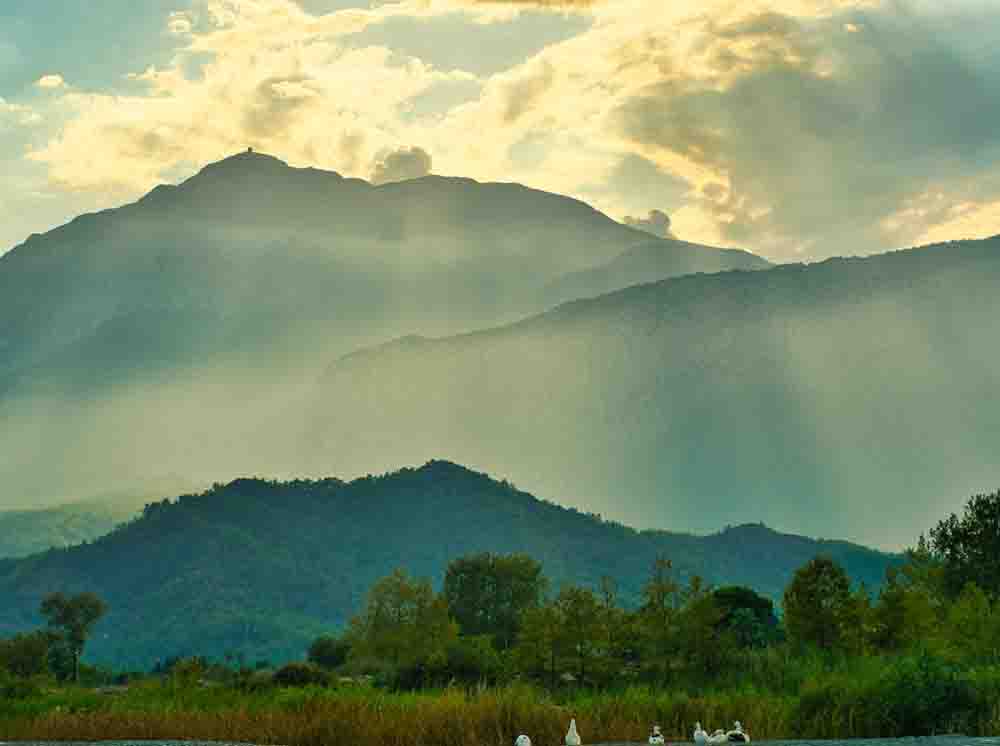

An ignored natural wonder
The Aravalli Hills are one of India’s most ancient yet most neglected natural formations. Stretching over 800 kilometers from Gujarat through Rajasthan to Haryana and Delhi, this mountain range quietly shapes the environment of North India. Unlike the towering Himalayas, the Aravallis are low, broken, and rocky, which often leads people to underestimate their importance. However, the truth is that the survival of millions of people is closely connected to the health of these hills.
One of the oldest mountain ranges on Earth
The Aravalli Range is considered one of the oldest mountain systems in the world, dating back approximately 1.5 to 2.5 billion years. Formed during the Precambrian era, these hills existed long before the Himalayas. Over billions of years, natural forces such as wind, rain, and temperature changes have eroded the mountains, reducing their height and giving them their present rugged appearance. Their age makes them geologically priceless, offering insights into Earth’s early history.
Why the Aravalli’s look weak today
Many people mistake the Aravallis’ low height for weakness. In reality, their worn-down structure is proof of their extreme age. Unlike young mountain ranges that still rise due to tectonic activity, the Aravallis are no longer growing. Continuous erosion has flattened them into hills, ridges, and isolated rocky patches. This does not reduce their ecological value; instead, it highlights their long-standing role in shaping the landscape of western and northern India.

The monsoon myth explained
A common misconception is that the Aravalli Hills block monsoon winds and influence rainfall patterns across North India. Scientifically, this is not true. The Aravallis run southwest to northeast, which is parallel to the Arabian Sea monsoon winds. As a result, they cannot obstruct rainfall in the way the Western Ghats do. However, they still influence local climate by reducing wind speed, trapping moisture in some regions, and supporting vegetation in otherwise dry zones.
A natural barrier against desertification
One of the most critical truths about the Aravalli Hills is their role in preventing the eastward spread of the Thar Desert. These hills act as a natural barrier, slowing down desert winds and sand movement. Regions like Haryana, Delhi, and western Uttar Pradesh benefit directly from this protection. When parts of the Aravallis are destroyed, dust storms increase, temperatures rise, and desert-like conditions expand rapidly.
Impact on climate and air quality
The Aravalli Hills play an important role in maintaining regional climate balance. Forest cover in these hills helps regulate temperature and reduces the intensity of heatwaves. In areas where the Aravallis have been heavily mined or cleared, air pollution and dust levels have increased significantly. The frequent dust storms affecting Delhi-NCR are closely linked to the degradation of Aravalli forests, proving their importance in controlling air quality.
Lifeline for water resources
Water is another crucial aspect of the Aravalli ecosystem. Several important rivers, including the Banas, Luni, Sahibi, and parts of the Sabarmati basin, originate from these hills. The rocky terrain of the Aravallis allows rainwater to seep underground, helping recharge aquifers and maintain groundwater levels. In water-scarce regions of Rajasthan and Haryana, this natural recharge system is vital for agriculture and drinking water supply.
Forests and groundwater connection
The forests of the Aravalli Hills act like natural sponges. Tree roots hold the soil together and slow down rainwater runoff, allowing more water to penetrate the ground. When forests are cut or hills are mined, rainwater flows away quickly, causing floods during monsoons and water shortages during summers. This direct link between deforestation and falling groundwater levels highlights the hidden value of the Aravallis.
Rich but fragile biodiversity
Despite their dry appearance, the Aravalli Hills support a wide range of biodiversity. Leopards, hyenas, jackals, foxes, nilgai, and numerous reptile and bird species depend on these forests. The Aravallis also act as wildlife corridors, connecting fragmented habitats across states. This connectivity is essential for maintaining genetic diversity and ecological balance in the region.
Cultural and historical importance
The Aravalli Hills are deeply connected to Indian history and culture. Ancient civilizations, forts, temples, and trade routes developed along this range. Cities like Udaipur, Ajmer, Alwar, and Mount Abu owe their existence to the natural protection and resources provided by the Aravallis. Mount Abu, the only hill station in Rajasthan, stands as a reminder of the range’s climatic influence.
Human activities and destruction
In recent decades, the Aravalli Hills have faced severe damage due to illegal mining, deforestation, urban expansion, and industrial development. Stone quarrying has flattened entire sections of the hills, especially in Haryana and Rajasthan. Urban growth near Delhi-NCR has further reduced forest cover, turning green zones into concrete landscapes. This destruction is often irreversible.
Legal protection and ground reality
Indian courts have repeatedly declared the Aravalli region as ecologically sensitive and restricted mining and construction activities. However, weak enforcement and policy loopholes have allowed continued exploitation. The gap between legal protection and ground reality remains one of the biggest threats to the survival of the Aravalli Hills.
Consequences of continued neglect
If the degradation of the Aravallis continues, the consequences will be severe. Increased desertification, worsening air pollution, frequent heatwaves, water scarcity, and loss of biodiversity will directly affect millions of people. Cities like Delhi will become hotter, drier, and more polluted, making life increasingly difficult for future generations.
The need for restoration and awareness
Protecting the Aravalli Hills requires more than laws—it needs public awareness, afforestation, sustainable land use, and strict enforcement. Restoring degraded areas through native vegetation and stopping illegal mining can revive the natural functions of the hills. Community participation and responsible development are key to saving this ancient range.
Conclusion – An ancient guardian worth saving
The truth about the Aravalli Hills is that they are not weak or insignificant; they are ancient guardians of North India’s environment. From controlling desert expansion and improving air quality to recharging groundwater and supporting wildlife, their role is irreplaceable. Saving the Aravallis is not just about protecting hills—it is about securing the environmental future of India.
Disclaimer
The information provided by Web Arbiter (‘we’, ‘us’, or ‘our’) on https://webarbiter.in/ . The website is for general informational purposes only. All information on the Site is provided in good faith, however we make no representation or warranty of any kind, express or implied, regarding the accuracy, adequacy, validity, reliability, availability, or completeness of any information on the Site. UNDER NO CIRCUMSTANCE SHALL WE HAVE ANY LIABILITY TO YOU FOR ANY LOSS OR DAMAGE OF ANY KIND INCURRED AS A RESULT OF THE USE OF THE SITE OR RELIANCE ON ANY INFORMATION PROVIDED ON THE SITE. YOUR USE OF THE SITE AND YOUR RELIANCE ON ANY INFORMATION ON THE SITE IS SOLELY AT YOUR OWN RISK. Read Full Disclaimer