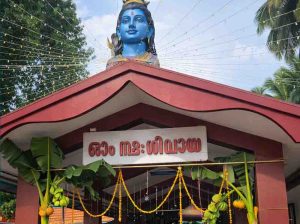


Nestled in the serene village of Udayamperoor, located about 12 kilometers south of Kochi in Kerala’s Ernakulam district, stands the Udayamperoor Ekadasi Perumthrikkovil Temple, one of the most ancient and culturally significant Shiva temples in South India. This majestic temple, often referred to simply as Perumthrikkovil, represents a harmonious blend of mythology, architecture, devotion, and heritage that reflects the soul of Kerala’s spiritual landscape.
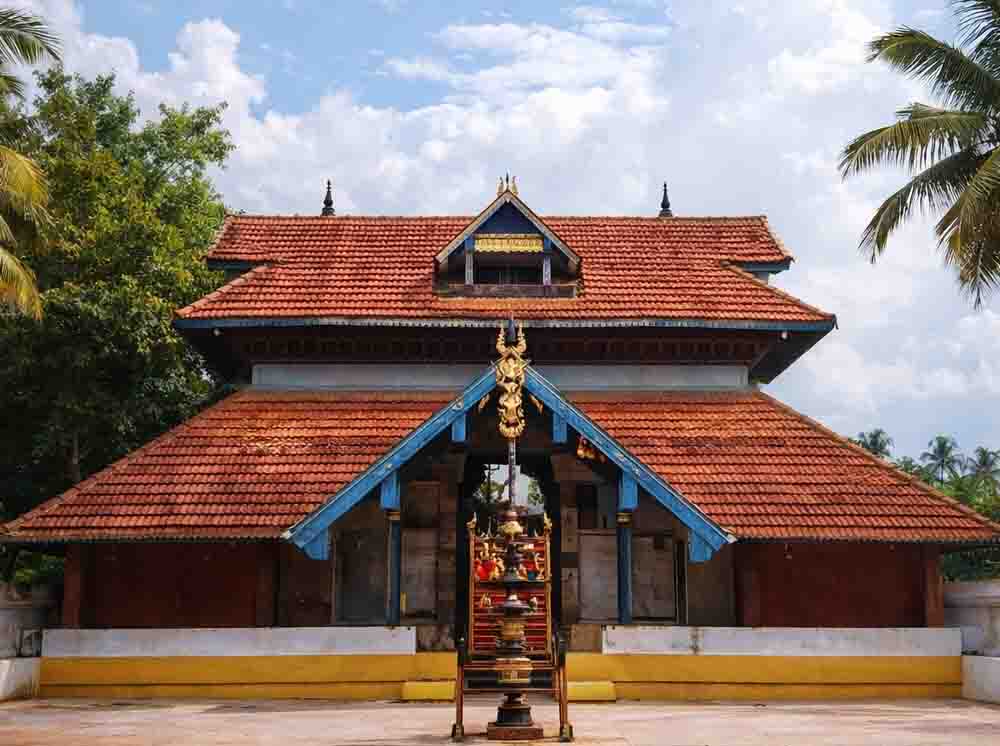
Regarded as one of the 108 Shiva Temples of Kerala, believed to have been consecrated by Lord Parashurama (the sixth incarnation of Vishnu), this temple holds immense religious reverence among Shaivites and historians alike. Known for its magnificent circular sanctum, intricate woodwork, and ancient inscriptions, the temple is a testament to Kerala’s rich Dravidian architectural tradition and enduring devotion to Lord Shiva.
Mythological and Historical Background
The Legend of Parashurama
The foundation of the Udayamperoor Ekadasi Perumthrikkovil Temple is rooted in Kerala’s creation myth. Legend states that Parashurama, after reclaiming Kerala from the sea by throwing his divine axe, established 108 Shiva temples and 108 Durga temples across the land to sanctify it. Udayamperoor was one such sacred site chosen by him for the installation of a Shiva Lingam — symbolizing peace, wisdom, and destruction of ignorance.
Thus, the temple’s origin connects it directly to the divine act of Kerala’s creation, making it an integral part of the spiritual geography of the state.
Ancient Inscriptions and Historical Evidence
Archaeological and epigraphic evidence suggests that the temple has existed since the 12th–13th centuries CE, if not earlier. Inscriptions found within the complex mention donations, land grants, and temple management activities during the Chera and Perumpadappu Swarupam dynasties, which ruled central Kerala.
The temple’s name “Perumthrikkovil” literally means “the great holy temple,” reflecting both its size and spiritual eminence. Historical records also suggest that the temple played a vital role in local administration, education, and community gatherings during medieval times.
Architectural Grandeur
The architecture of Udayamperoor Ekadasi Perumthrikkovil Temple stands as a masterpiece of Kerala’s traditional temple design, which emphasizes harmony with nature, craftsmanship in wood and stone, and spiritual symbolism in spatial planning.
1. Layout and Structure
The temple complex spans several acres, enclosed by massive laterite walls. It features the classical Nalambalam structure — a rectangular courtyard surrounded by corridors, with the Sreekovil (sanctum sanctorum) at its center.
The main shrine is built in the Vatta Sreekovil (circular sanctum) style, an architectural feature unique to important Shiva temples in Kerala. The sanctum has a conical copper-tiled roof and intricately carved wooden ceilings, supported by granite bases.
The sanctum is surrounded by the Namaskara Mandapam, where devotees and priests perform rituals and offerings. The Balikkal Pura (altar) is placed before the sanctum, symbolizing the cosmic connection between the divine and the devotee.
2. Gopuram (Temple Tower)
The temple has a two-tiered gopuram (gateway tower) on the eastern side, showcasing traditional Kerala wooden craftsmanship. Though not as tall as Tamil Nadu’s Dravidian towers, Kerala gopurams are known for their elegance, with sloped tile roofs and intricate carvings that blend naturally with the environment.
3. Subsidiary Shrines
Inside the temple premises, several smaller shrines are dedicated to:
- Lord Ganapathi (Ganesha) – The remover of obstacles, worshipped first in all rituals.
- Goddess Parvati: Lord Shiva’s celestial consort
- Lord Krishna – Representing Vishnu’s presence, symbolizing harmony between Vaishnavism and Shaivism.
- Lord Ayyappa (Sastha) – The deity of balance and dharma.
- Yakshi and Naga Devatas – Representing local deities and serpent worship traditions of Kerala.
This multi-deity worship tradition exemplifies the inclusive spiritual ethos of Kerala’s temple culture.
4. Murals and Carvings
The inner walls of the temple are adorned with ancient mural paintings depicting episodes from Hindu epics like the Mahabharata, Ramayana, and Shiva Purana. The wood carvings on the ceilings and pillars portray celestial beings, floral motifs, and mythical creatures, each symbolizing an aspect of divinity.
5. Koothambalam
Like other major temples in Kerala, Perumthrikkovil also has a Koothambalam (temple theater hall) where traditional art forms such as Koothu and Koodiyattam were historically performed. This highlights the temple’s role not just as a place of worship but also as a center of art and learning.
The Deity and Ritual Practices
The presiding deity of the temple is Lord Shiva, worshipped as a Shivalingam, facing east. The Lingam is believed to be self-manifested (Swayambhu), radiating immense spiritual energy. Devotees regard the deity as “Dakshinamurti,” the divine teacher form of Shiva, who imparts wisdom and enlightenment through silence.
Daily Rituals
The temple follows a strict schedule of rituals in accordance with the Tantrasamuchayam, the canonical text on Kerala temple rituals. The main poojas include:
- Nirmalyam – Early morning offering of flowers and ghee lamp.
- Usha Pooja – Morning prayer invoking the cosmic energy of the rising sun.
- Ucha Pooja – Noon worship for sustenance and balance.
- Deeparadhana – Evening lamp offering, marking the transition from light to darkness.
Priests belonging to the Namboothiri Brahmin community perform the rituals, maintaining purity and continuity of tradition.
Offerings (Vazhipadu)
Devotees offer:
- Abhishekam (ritual bathing of the Shiva Lingam).
- Bilva leaves, ghee lamps, and flowers.
- Pradakshinam (circumambulation) around the sanctum for spiritual cleansing.
Festivals and Celebrations
Festivals at the Udayamperoor Ekadasi Perumthrikkovil Temple are vibrant, deeply symbolic, and rooted in ancient custom. The two most significant celebrations are:
1. Mahashivaratri
This is the most important festival dedicated to Lord Shiva, observed in February–March. Thousands of devotees gather for night-long prayers, chanting, and meditation. The temple glows with thousands of oil lamps, creating an atmosphere of divine serenity. Special abhishekams with ghee, milk, and honey are performed, and devotees fast and stay awake, symbolizing the awakening of consciousness.
2. Annual Temple Festival
The temple’s annual ten-day festival is held in Dhanu Masam (December–January) and culminates with the Arattu (holy bath) ritual in the nearby temple pond. The highlight of the festival includes:
- Caparisoned elephant processions.
- Traditional percussion performances such as Panchavadyam and Melam.
- Illumination of oil lamps and fireworks displays.
The festival brings together the entire community and embodies Kerala’s rich cultural spirit.
3. Ekadasi Celebration
The temple’s name itself contains “Ekadasi,” emphasizing its special observance of Ekadasi days — the 11th day of every lunar fortnight — which are considered highly auspicious for fasting and worship. Devotees visit the temple to seek Lord Shiva’s blessings for spiritual progress and liberation from sins.
Cultural and Social Importance
Beyond its religious dimension, the Udayamperoor Ekadasi Perumthrikkovil Temple serves as a cultural nucleus of the region:
- It supports traditional art forms, Vedic learning, and temple music, keeping Kerala’s spiritual arts alive.
- The temple acts as a community gathering center, hosting charitable activities, feeding the poor (Annadanam), and supporting education.
- The temple’s festivals and rituals play a vital role in preserving Kerala’s intangible cultural heritage — especially the symbiotic relationship between faith, art, and daily life.
The temple also symbolizes religious harmony, as people of all faiths in the area participate in or respect its rituals, making it a unifying force within the community.
Preservation and Conservation
As one of Kerala’s oldest temples, Perumthrikkovil faces challenges in preservation and conservation:
- The wooden structures and tiled roofs require continuous maintenance due to monsoon weather.
- The murals and inscriptions, which provide valuable insights into Kerala’s medieval art and history, are being documented and preserved by the Archaeological Department of Kerala.
- Local temple trusts, supported by devotees, ensure that modernization does not disturb the spiritual purity and traditional charm of the temple.
Efforts are underway to include the temple in Kerala’s heritage conservation initiatives and to promote it as a site of spiritual and cultural tourism.
Visitor Experience
A visit to Udayamperoor Ekadasi Perumthrikkovil Temple is both spiritually uplifting and culturally enriching.
Location & Access
- Location: Udayamperoor village, Ernakulam district, Kerala.
- Distance: ~12 km from Kochi city center; ~3 km from Chottanikkara; ~32 km from Cochin International Airport.
- Nearest Railway Station: Chottanikkara Road or Ernakulam Junction.
Visitor Etiquette
- Traditional attire is mandatory (men: mundu, women: saree/salwar).
- Access to the inner sanctuary may be limited for non-Hindus.
- Photography inside the temple is usually prohibited to maintain sanctity.
- The best time to visit is early morning or during evening Deeparadhana, when the temple is bathed in golden lamplight and Vedic chants echo through the courtyard.
Spiritual Significance
Spiritually, the temple is believed to radiate immense positive energy and divine vibration. Devotees come here seeking:
- Relief from sins and obstacles.
- Peace of mind and inner clarity.
- Success in endeavors and harmony in family life.
It is said that Lord Shiva at Udayamperoor blesses his devotees with knowledge, patience, and liberation (moksha). The temple’s tranquil environment, combined with the rhythmic chants of “Om Namah Shivaya,” offers a deep sense of spiritual awakening.
Conclusion
The Udayamperoor Ekadasi Perumthrikkovil Temple is not just a monument of stone and wood — it is a living embodiment of Kerala’s spiritual identity, where myth and history converge in a continuous rhythm of devotion.
From the scred legends of Parashurama to its architectural brilliance, from the daily rituals that echo centuries of worship to the festivals that unite an entire community — this temple stands as a timeless tribute to Lord Shiva’s eternal presence.
In a rapidly changing world, the Udayamperoor Temple reminds us of the enduring power of faith, the beauty of tradition, and the unbroken thread that connects humanity to the divine. It is not merely a temple — it is a spiritual heritage, a place where one feels the pulse of eternity in every chant, every lamp, and every stone.
Disclaimer
The information provided by Web Arbiter (‘we’, ‘us’, or ‘our’) on https://webarbiter.in/ . The website is for general informational purposes only. All information on the Site is provided in good faith, however we make no representation or warranty of any kind, express or implied, regarding the accuracy, adequacy, validity, reliability, availability, or completeness of any information on the Site. UNDER NO CIRCUMSTANCE SHALL WE HAVE ANY LIABILITY TO YOU FOR ANY LOSS OR DAMAGE OF ANY KIND INCURRED AS A RESULT OF THE USE OF THE SITE OR RELIANCE ON ANY INFORMATION PROVIDED ON THE SITE. YOUR USE OF THE SITE AND YOUR RELIANCE ON ANY INFORMATION ON THE SITE IS SOLELY AT YOUR OWN RISK. Read Full Disclaimer