

Artificial intelligence is no longer a sci-fi movie concept from the future. It is here, it is evolving rapidly, and it is already transforming industries across the globe. From chatbots handling customer queries to AI systems writing content and generating images, automation is becoming deeply integrated into our daily work.
But the big question remains:
Will AI replace jobs?
The answer is not as simple as “yes” or “no.” AI will replace certain tasks, reshape many roles, and create entirely new opportunities. Humans and machines will collaborate in the workplace of the future, not the other way around.
Let’s explore this in detail.

The Rise of Artificial Intelligence
In recent years, companies like OpenAI, Google, Microsoft, and Meta have accelerated AI development. Tools powered by AI can now:
- Write blogs and marketing copy
- Generate high-quality images and videos
- Analyze large datasets in seconds
- Translate languages instantly
- Automate customer support
- Assist in medical diagnosis
- Help developers write code
This rapid growth has naturally created fear among workers worldwide. If AI can do these tasks faster and cheaper, what happens to human jobs?
Jobs Most Likely to Be Affected
AI is especially powerful when it comes to repetitive, rule-based, and predictable tasks. Roles that rely heavily on structured processes are more vulnerable to automation.
These include:
- Data entry operators
- Basic customer service representatives
- Telemarketing executives
- Routine accounting clerks
- Warehouse sorting roles
- Basic content production jobs
For example, AI chatbots can now handle thousands of customer queries simultaneously without breaks. Similarly, AI-powered accounting software can process invoices and track expenses automatically.
However, it is important to understand that AI typically replaces tasks, not entire professions. A customer service executive may still be needed for complex cases, empathy-driven interactions, and relationship management.
Jobs That Are Harder to Replace
While AI is impressive, it still struggles with areas that require deep emotional intelligence, creativity, and complex decision-making.
Jobs that are relatively safer include:
- Teachers and educators
- Doctors and healthcare professionals
- Therapists and counselors
- Business leaders and strategists
- Skilled technicians and engineers
- Creative directors and designers
- Entrepreneurs
AI can assist doctors in analyzing scans, but it cannot replace the human connection between a patient and a physician. AI can suggest marketing strategies, but human creativity and intuition often drive breakthrough ideas.
In short, roles that combine human judgment, empathy, creativity, and adaptability are much harder to automate.
How AI Is Changing — Not Destroying — Work
Work is rarely completely eliminated by technological advances, as history demonstrates. Rather, they change it.
During the Industrial Revolution, machines automated manufacturing tasks. Many feared mass unemployment. Instead, new industries emerged. When computers became common in offices, some clerical jobs changed, but entirely new careers in IT, digital marketing, and software development appeared.
AI is following the same pattern.
Rather than replacing professionals completely, AI is becoming a powerful assistant. Writers use AI to brainstorm ideas. Designers use AI to speed up visual creation. Programmers use AI to debug code more efficiently.
The result? Increased productivity — not total replacement.
New Jobs Created by AI
Interestingly, AI is also creating demand for new skill sets and careers. Some emerging roles include:
- AI prompt engineers
- Machine learning specialists
- Data scientists
- AI ethics consultants
- Automation experts
- Human-AI workflow designers
- AI content supervisors
Companies now need professionals who understand both technology and business strategy. The demand for digital skills is rising rapidly across industries.
The key shift is clear: Jobs are evolving, not disappearing.
The Impact on Developing Economies
In countries like India, where outsourcing, customer service, and IT services play a significant role, AI adoption may initially disrupt certain sectors. However, India’s large pool of tech talent also creates an opportunity.
Upskilling and digital education will play a crucial role in ensuring that workers transition into higher-value roles. Those who learn to work alongside AI tools will likely find themselves more competitive in the global market.
What Skills Will Matter in the AI Era?
To stay relevant, professionals should focus on:
- Digital literacy
- Problem-solving abilities
- Creative thinking
- Emotional intelligence
- Adaptability
- Continuous learning
The future workforce will require a blend of technical understanding and human-centered skills.
Learning how to use AI tools effectively can significantly increase productivity. Instead of viewing AI as competition, professionals should see it as a productivity multiplier.
The Real Question: Replace or Reinvent?
AI will certainly automate some low-skill, repetitive tasks. Some roles may shrink. But completely eliminating human workers across industries is unlikely.
The bigger transformation is job reinvention.
A content writer may become a content strategist who uses AI tools. A customer support agent may become a customer experience manager. An accountant may transition into a financial analyst using AI insights.
The future belongs to people who adapt.
Conclusion: The Future Is Human + AI
So, will AI replace jobs?
Yes — it will replace certain repetitive tasks.
No — it will not eliminate the need for humans.
AI is a tool. Like every major innovation before it, it will reshape the job market. Those who resist change may struggle. Those who embrace AI, upgrade their skills, and learn to collaborate with technology will thrive.
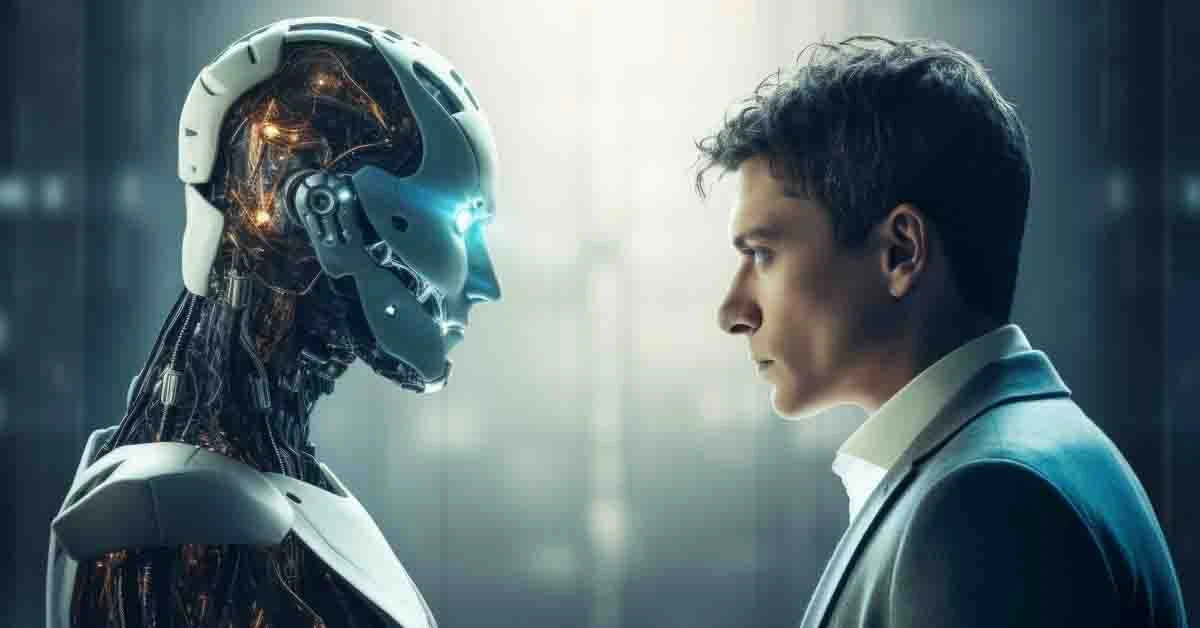
It is not a question of humans versus technology in the workplace of the future.
It is about humans empowered by intelligent machines.
And in that future, the most valuable skill will not be competing with AI — but knowing how to use it wisely.

Disclaimer
The information provided by Web Arbiter (‘we’, ‘us’, or ‘our’) on https://webarbiter.in/ . The website is for general informational purposes only. All information on the Site is provided in good faith, however we make no representation or warranty of any kind, express or implied, regarding the accuracy, adequacy, validity, reliability, availability, or completeness of any information on the Site. UNDER NO CIRCUMSTANCE SHALL WE HAVE ANY LIABILITY TO YOU FOR ANY LOSS OR DAMAGE OF ANY KIND INCURRED AS A RESULT OF THE USE OF THE SITE OR RELIANCE ON ANY INFORMATION PROVIDED ON THE SITE. YOUR USE OF THE SITE AND YOUR RELIANCE ON ANY INFORMATION ON THE SITE IS SOLELY AT YOUR OWN RISK. Read Full Disclaimer