

Nestled in the heart of Delhi’s bustling Connaught Place, hidden behind towering office buildings and busy streets, lies a relic of history that is as enigmatic as it is haunting — Agrasen Ki Baoli. Also known as the Stepwell of Shadows, this ancient water reservoir draws tourists, history enthusiasts, and paranormal seekers alike. By day, it is a fascinating monument of medieval engineering and architectural brilliance. By night, legends of ghostly whispers, eerie shadows, and restless spirits have earned it a reputation as one of India’s most haunted places.
Agrasen Ki Baoli is more than just a stepwell; it is a tangible link to India’s forgotten past, a silent witness to centuries of human life, civilization, and unexplained mysteries. Its dark, narrow corridors and deep chambers evoke a sense of both awe and fear, giving rise to countless stories that blur the line between history and the supernatural.
Historical Background
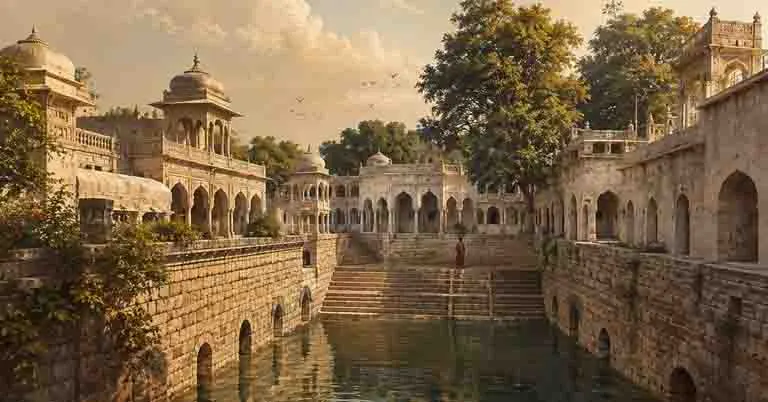
Agrasen Ki Baoli is believed to have been constructed by Maharaja Agrasen, a legendary king of the Mahabharata era, although some historians argue it was rebuilt during the Tughlaq period in the 14th century. The stepwell is part of the ancient water management system of Delhi, designed to store water and provide relief from the city’s intense summer heat.
The structure is approximately 60 meters long, 15 meters wide, and 8 meters deep, consisting of 103 steps descending into the well. The architecture is characteristic of north Indian stepwells, with three distinct levels, arched niches, and stone carvings. Stepwells like Agrasen Ki Baoli were not only functional but also served as social gathering spots, marketplaces, and places of rest during scorching summers.
Over centuries, as Delhi expanded and modernized, the stepwell was gradually neglected and abandoned, eventually becoming a secluded and eerie site. Its isolation, combined with the dark water and narrow, shadowed corridors, set the stage for the mysterious legends that surround it today.
Architectural Features
Agrasen Ki Baoli is a striking example of medieval Indian engineering. Its rectangular shape and precise symmetry reflect both aesthetic and functional considerations.
- Three Levels:
The stepwell has three visible levels, each with rows of arched niches along the walls. These niches once held lamps, providing light for visitors at night. - Stone Carvings:
The walls and steps are made of red sandstone and granite, with occasional intricate carvings of floral and geometric designs, showcasing craftsmanship of the period. - Narrow Corridors:
The corridors between steps are unusually narrow and deep. Visitors descending into the well often find themselves enveloped in shadow, which enhances the eerie atmosphere. - Underground Chambers:
Some researchers believe the stepwell contains hidden chambers, possibly used for storage, meditation, or secret meetings. These chambers have fueled rumors of hidden treasures and supernatural occurrences.
The combination of dark, stagnant water, shadowy niches, and descending steps creates an environment that is both mesmerizing and unnerving, perfectly setting the stage for ghost stories.

Legends and Paranormal Beliefs
Agrasen Ki Baoli is shrouded in mystery and folklore, earning it the title of the “Stepwell of Shadows.” Its haunted reputation has several explanations, ranging from tragic events to unexplained phenomena.
1. The Haunting of Maharaja Agrasen
According to legend, Maharaja Agrasen was a benevolent king who ruled with justice and fairness. He built the stepwell to provide water to his people. However, some versions of the tale suggest that disgruntled laborers or rival kings cursed the site, leading to a lingering supernatural presence.
Visitors often report feeling an oppressive energy, especially when descending the steps into the lower levels. Some claim to hear faint whispers or chanting, as if the spirits of past inhabitants are still present.
2. Ghostly Apparitions
Several paranormal investigators and local residents claim to have seen shadowy figures moving among the steps, particularly after sunset. These figures are usually described as human-like silhouettes that vanish when approached. Some believe they are the spirits of those who worked on the stepwell, while others think they are restless souls of ancient Delhi residents drawn to the well’s dark waters.
3. Strange Sounds
One of the most frequently reported phenomena is unexplained sounds. Visitors often hear:
- Footsteps echoing in empty corridors.
- Whispers and murmurs, sometimes calling out names.
- Water splashes when no one is nearby.
Many paranormal enthusiasts attribute these sounds to echoes and supernatural activity, while skeptics argue they are caused by the structure’s unique acoustics.
Scientific Explanations
While Agrasen Ki Baoli’s haunted reputation is strong, scientists and rationalists offer explanations grounded in physics and psychology:
- Acoustic Phenomena:
The narrow corridors and arched niches amplify and distort sounds, creating the illusion of voices or footsteps. - Psychological Influence:
The mind is susceptible to suggestion. Visitors aware of the stepwell’s haunted history may misinterpret natural sounds as paranormal. - Low Light and Shadow Effects:
The deep, dark levels of the stepwell create optical illusions, making ordinary shadows appear as moving figures. - Stagnant Water and Humidity:
The damp environment can generate mysterious sounds due to water movement or structural settling.
Despite these rational explanations, the mystique of Agrasen Ki Baoli persists, fueled by consistent reports from tourists, locals, and paranormal researchers.
Cultural Significance
- Ancient Water Management::
Stepwells were essential in arid regions of India, providing water storage, cooling, and community gathering spaces. - Architectural Heritage:
The design of Agrasen Ki Baoli demonstrates the ingenuity of medieval Indian engineers and artisans. - Spiritual Beliefs:
Water bodies in India are often considered sacred, and stepwells were sometimes associated with rituals and prayers. The legends of lingering spirits may reflect these spiritual beliefs.
For Delhiites, the baoli is not just a historical site but also a symbol of ancient urban planning and social life.
Modern-Day Dangers and Precautions
While Agrasen Ki Baoli is open to the public, visitors should exercise caution:
- Structural Risks:
Some parts of the stepwell are dilapidated, with uneven steps and slippery surfaces. - Water Hazards:
The stagnant water at the bottom is unsafe for swimming or wading. Avoid direct contact. - Night Visits:
Locals strongly discourage visiting the stepwell after sunset due to both safety concerns and ghost legends. - Photography and Respect:
While photography is allowed, visitors should avoid disturbing the structure or shouting, as the site holds cultural and historical significance.
Tourism and Accessibility
Agrasen Ki Baoli is conveniently located in the heart of Delhi, making it a popular destination for both tourists and locals.
Visiting Information:
- Entry Fee: Minimal or free, depending on government guidelines.
- Timings: Open from 9:00 AM to 5:00 PM. Night visits are prohibited.
- Best Time to Visit: Winter months (October to March) offer pleasant weather and fewer crowds.
- Nearby Attractions: Connaught Place, Jantar Mantar, India Gate, and Gurudwara Bangla Sahib are all close by.
Tourists often combine their visit with a historical walk of Delhi’s old city, exploring nearby colonial-era buildings, temples, and markets.
Agrasen Ki Baoli in Popular Culture
- Acoustic Phenomena:
Several films have featured the stepwell as a spooky or mysterious setting due to its shadowed corridors and eerie ambiance. - Television Shows:
Paranormal series and horror documentaries often include Agrasen Ki Baoli while narrating ghost stories from Delhi. - Travel Blogs and YouTube Channels:
Enthusiasts frequently document their day and night explorations, sharing personal experiences of the stepwell’s haunting energy.
These representations have cemented Agrasen Ki Baoli’s legendary status as both a historical and paranormal landmark.
Why Agrasen Ki Baoli Remains Mysterious
Even with scientific explanations and historical context, Agrasen Ki Baoli retains an air of mystery:
- Depth and Darkness:
Descending into its three levels feels like entering another world, detached from the bustling city above. - Historical Layers:
Built centuries ago, abandoned and restored multiple times, the stepwell carries the memories of generations, making it a natural center for legends. - Cultural and Spiritual Significance:
In India, water is sacred, and places associated with death often invite ghost stories. Agrasen Ki Baoli fits both criteria. - Consistent Reports:
The fact that numerous independent visitors report similar experiences strengthens the belief that something unexplained lingers in the stepwell.
Whether one attributes these occurrences to spirits, acoustics, or imagination, the stepwell remains a place where history and mystery converge.

Conclusion
Agrasen Ki Baoli is not merely a stepwell; it is a portal to Delhi’s past, a relic of medieval ingenuity, and a magnet for stories of the supernatural. Its dark corridors, deep chambers, and reflective waters create an environment where the line between reality and legend blurs.
While rational minds may attribute the haunting to sound echoes, shadows, or psychological influence, the allure of the Stepwell of Shadows lies precisely in its unexplained mysteries. The whispers, the moving shadows, and the ominous energy make it a place that demands respect and cautious curiosity.
For those willing to explore, Agrasen Ki Baoli offers a unique blend of architecture, history, and folklore, making it one of the most compelling sites in India. Standing at its edge, gazing down the ancient steps into the shadowy depths, one cannot help but feel a chill that transcends time, a reminder that some places are forever haunted — not only by ghosts, but by the echoes of history itself.
Disclaimer
The information provided by Web Arbiter (‘we’, ‘us’, or ‘our’) on https://webarbiter.in/ . The website is for general informational purposes only. All information on the Site is provided in good faith, however we make no representation or warranty of any kind, express or implied, regarding the accuracy, adequacy, validity, reliability, availability, or completeness of any information on the Site. UNDER NO CIRCUMSTANCE SHALL WE HAVE ANY LIABILITY TO YOU FOR ANY LOSS OR DAMAGE OF ANY KIND INCURRED AS A RESULT OF THE USE OF THE SITE OR RELIANCE ON ANY INFORMATION PROVIDED ON THE SITE. YOUR USE OF THE SITE AND YOUR RELIANCE ON ANY INFORMATION ON THE SITE IS SOLELY AT YOUR OWN RISK. Read Full Disclaimer