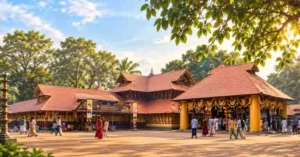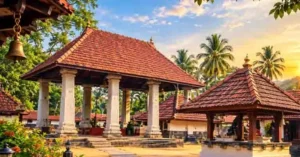


Nestled amid the lush greenery and serene landscapes of Kerala, the Veeranimangalam Mahadeva Temple stands as a timeless symbol of devotion, spirituality, and traditional Kerala temple architecture. Dedicated to Lord Shiva, this ancient temple is revered for its divine energy, cultural heritage, and tranquil ambiance that continues to draw devotees, pilgrims, and history enthusiasts alike.
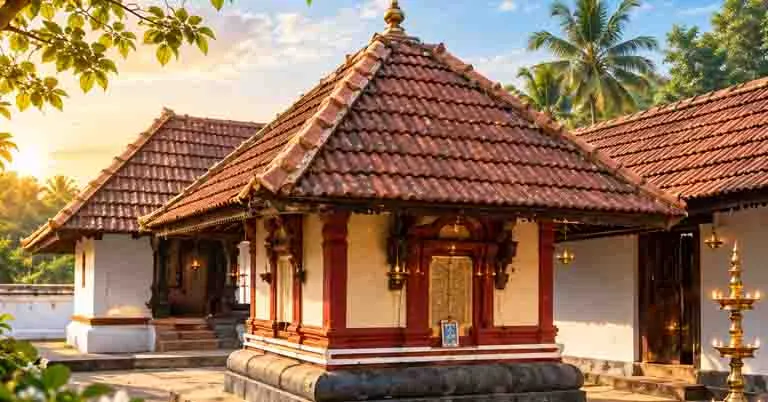
Located in the Pathanamthitta district, a region famed for its rich tapestry of temples and cultural traditions, the Veeranimangalam Mahadeva Temple holds a special place among the Shaivite shrines of Kerala. It is believed to be one of the 108 ancient Shiva temples consecrated by Lord Parasurama, the sixth incarnation of Lord Vishnu, making it an integral part of Kerala’s sacred geography.
Mythological Origins and Legends
According to temple legends, Lord Parasurama, after reclaiming the land of Kerala from the Arabian Sea, established 108 temples dedicated to Lord Shiva across the region to sanctify the land and bless its inhabitants. Veeranimangalam Mahadeva Temple is believed to be one of these sacred sites.
The word “Veeranimangalam” itself is said to have roots in local history — “Veera” means valor and “Mangalam” means auspiciousness. Together, the name signifies the divine blessing of strength, courage, and prosperity that the presiding deity, Lord Shiva, bestows upon his devotees.
Another local legend speaks of a saint who performed intense penance at this site. Deeply moved by the sage’s devotion, Lord Shiva manifested here in the form of a radiant Shivalinga, radiating boundless energy and compassion. The temple is thus considered to house a Swayambhu (self-manifested) Shivalinga, which makes it one of the holiest spots for Shaivites in Kerala.
It is also said that the temple was a spiritual center where many rishis and scholars gathered to practice meditation, recite Vedic hymns, and perform yagnas. The divine aura and calm surroundings made it an ideal setting for spiritual awakening and enlightenment.
The Presiding Deity and Sub-Deities
The presiding deity of the Veeranimangalam Mahadeva Temple is Lord Shiva, worshipped in the form of a Shivalinga facing east. The deity is believed to be in a calm and benevolent posture, radiating compassion and protection toward devotees.
Devotees believe that Lord Shiva here blesses all who come with a sincere heart, removing obstacles, curing ailments, and bestowing peace and spiritual wisdom. The idol is often adorned with sacred bilva leaves, sandal paste, and flowers — offerings that symbolize purity and devotion.
Apart from the main deity, the temple houses several Upadevathas (sub-deities), reflecting the inclusiveness of Hindu worship. These include:
- Lord Ganapathi – The remover of obstacles and bestower of success.
- Lord Subrahmanya (Murugan) – The youthful warrior god and son of Lord Shiva.
- Goddess Parvati (Devi) – The divine consort of Shiva, symbolizing love, fertility, and nurturing energy.
- Naga Devathas (Serpent deities) – Worshipped for prosperity, protection, and fertility.
- Lord Ayyappa – Revered as the protector of righteousness (Dharma).
Each of these sub-deities plays a vital role in the temple’s spiritual ecosystem, offering devotees a holistic divine experience.
Architectural Grandeur
The Veeranimangalam Mahadeva Temple stands as a fine example of Kerala’s traditional temple architecture, which harmoniously blends functionality, aesthetics, and symbolism. Constructed mainly with laterite stones, timber, copper, and tiles, the temple exudes a natural and sacred charm that reflects the cultural essence of the region.
The sreekovil (sanctum sanctorum), which houses the Shivalinga, is circular in shape — a design typical of Kerala’s Shaivite temples. The circular sanctum symbolizes the cyclical nature of creation, preservation, and destruction — the three fundamental aspects governed by Lord Shiva. The sanctum is topped with a copper-plated roof, which gleams beautifully under the sunlight.
Surrounding the sanctum is the nalambalam (inner cloister), where devotees perform pradakshina (circumambulation). The namaskara mandapam, a square hall in front of the sanctum, is exquisitely designed with intricately carved wooden pillars and a ceiling adorned with floral and geometric motifs.
The dwajasthambam (flagstaff), situated in front of the sanctum, is covered with brass and used during festivals for the ceremonial hoisting of the temple flag. The vilakkumadam, a circular stone structure with rows of oil lamps, surrounds the inner sanctum and is lit during evening poojas, transforming the entire temple into a spectacle of divine radiance.

A temple pond (kulam) lies adjacent to the temple, symbolizing purity and spiritual cleansing. Devotees often bathe here before entering the temple, believing that it purifies the mind and body. The pond also plays an essential role in rituals like Aarattu, the ceremonial bathing of the deity at the end of the annual festival.
Rituals and Worship Practices
The daily rituals at Veeranimangalam Mahadeva Temple are conducted according to Tantric and Vedic traditions, strictly adhering to the Agama Shastras. The temple priests (Thantris and Melshanthis) perform poojas with devotion and precision, ensuring the continuity of sacred practices that have been followed for generations.
The daily worship schedule includes:
- Nirmalyam – The early morning ritual involving the removal of the previous day’s decorations and offerings, signifying the awakening of the deity.
- Abhishekam – Ritual bathing of the Shivalinga with water, milk, honey, ghee, and sandalwood paste, symbolizing purification and divine energy.
- Usha Pooja – Morning prayer, accompanied by chanting of the Rudram and other Vedic hymns.
- Ucha Pooja – Midday worship, with offerings of cooked rice, fruits, and sweets.
- Deeparadhana – Evening worship performed with the lighting of lamps, creating a serene and sacred atmosphere.
Special importance is given to Pradosham, observed twice every lunar month, which is believed to be the most auspicious time for worshipping Lord Shiva. Devotees observe fasts and perform Rudrabhishekam to seek forgiveness for past misdeeds and blessings for a prosperous life.
On Mondays, the temple witnesses an especially large gathering, as this day is considered sacred to Lord Shiva. Devotees perform Somavar Vratam, offering milk, bilva leaves, and chanting “Om Namah Shivaya” for divine grace.
Festivals and Celebrations
The Veeranimangalam Mahadeva Temple hosts a variety of religious festivals throughout the year, each reflecting Kerala’s rich cultural and spiritual heritage. The most prominent among them is the Maha Shivaratri, celebrated with grandeur and devotion.
During Maha Shivaratri, the temple is beautifully decorated with lamps and flowers, and devotees observe night-long vigil and prayers. Continuous chanting of Rudram, Chamakam, and Shiva Sahasranama fills the air with vibrations of spiritual energy. Devotees believe that staying awake and worshipping Lord Shiva on this night grants liberation (Moksha).
Other major festivals include:
- Annual Utsavam – Usually lasting for 8 to 10 days, featuring traditional rituals, processions with caparisoned elephants, temple music such as Panchavadyam and Chenda Melam, and the concluding Aarattu ceremony.
- Thiruvathira – Celebrated in honor of Goddess Parvati, featuring devotional songs and traditional dance performances like Thiruvathirakali.
- Navaratri, Karkidaka Vavu, and Mandala Kalam are also observed with fervor, reflecting the temple’s cultural inclusiveness.
Festivals at the temple are not merely religious observances but vibrant cultural gatherings that strengthen community bonds and preserve Kerala’s traditional art forms such as Kathakali, Ottanthullal, and Devotional Music.
Cultural and Social Role
The Veeranimangalam Mahadeva Temple plays a crucial role beyond its religious identity — it serves as a center for cultural preservation, social harmony, and community service. The temple committee actively promotes traditional art, music, and dance by organizing performances during festivals and special occasions.
In addition, the temple is deeply engaged in charitable activities, including:
- Annadanam (free food distribution) for devotees and the needy.
- Educational support programs for underprivileged students.
- Medical camps and environmental initiatives promoting sustainable living.
The temple thus embodies the spirit of “Dharma” — not only as religious duty but as a commitment to humanity and the environment.
Spiritual Experience
A visit to the Veeranimangalam Mahadeva Temple is an experience of peace and inner transformation. The fragrance of burning camphor, the rhythmic chants of Vedic hymns, and the flickering light of thousands of lamps create an atmosphere charged with divine energy.
Devotees often describe a deep sense of calmness upon entering the sanctum, as if time itself slows down in the presence of Lord Shiva. The temple’s natural surroundings — with swaying coconut palms, chirping birds, and the gentle rippling of the temple pond — further enhance its meditative serenity.
Praying here is believed to remove sorrows, dissolve karmic burdens, and lead one toward self-realization. Many devotees testify that the temple’s divine vibrations have helped them overcome obstacles, gain prosperity, and find spiritual clarity.
Temple Administration and Preservation
The Veeranimangalam Mahadeva Temple is managed by the Travancore Devaswom Board, which ensures the proper conduct of rituals, temple maintenance, and preservation of heritage. The board, along with the local temple committee and devotees, undertakes periodic renovation and restoration projects while preserving the temple’s original architectural and cultural integrity.
Special attention is given to maintaining cleanliness, eco-friendly practices, and supporting local artisans who continue traditional temple crafts like mural painting, wood carving, and bell-metal work.

Conclusion
The Veeranimangalam Mahadeva Temple stands not merely as a structure of stone and wood but as a living embodiment of faith, culture, and spiritual wisdom. Through centuries, it has been a beacon of divine energy, guiding devotees toward a path of truth, devotion, and inner peace.
Every ritual, every chant, and every flicker of a lamp in this temple carries forward the eternal rhythm of Lord Shiva — the cosmic dancer, the destroyer of ignorance, and the protector of righteousness.
To visit the Veeranimangalam Mahadeva Temple is to experience the divine harmony between nature, architecture, and spirituality — a journey inward toward the ultimate realization that Shiva resides within every being.
In the sacred stillness of Veeranimangalam, one feels the eternal whisper of the divine — “Aham Brahmasmi” — I am one with the cosmic consciousness.
Disclaimer
The information provided by Web Arbiter (‘we’, ‘us’, or ‘our’) on https://webarbiter.in/ . The website is for general informational purposes only. All information on the Site is provided in good faith, however we make no representation or warranty of any kind, express or implied, regarding the accuracy, adequacy, validity, reliability, availability, or completeness of any information on the Site. UNDER NO CIRCUMSTANCE SHALL WE HAVE ANY LIABILITY TO YOU FOR ANY LOSS OR DAMAGE OF ANY KIND INCURRED AS A RESULT OF THE USE OF THE SITE OR RELIANCE ON ANY INFORMATION PROVIDED ON THE SITE. YOUR USE OF THE SITE AND YOUR RELIANCE ON ANY INFORMATION ON THE SITE IS SOLELY AT YOUR OWN RISK. Read Full Disclaimer