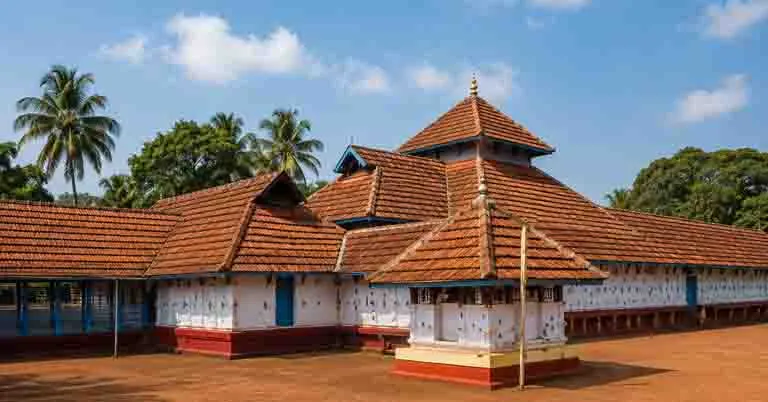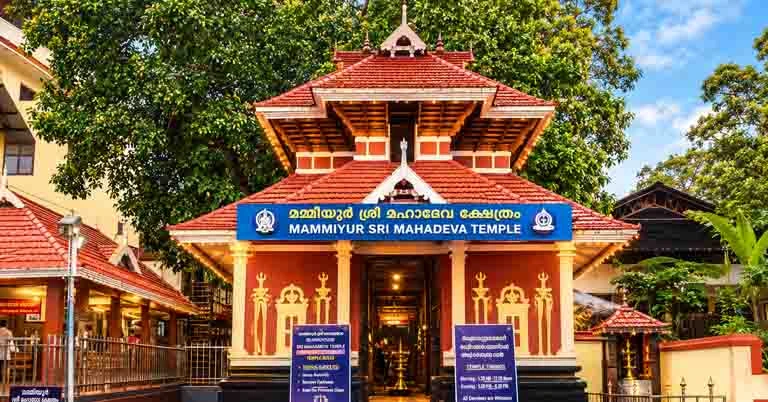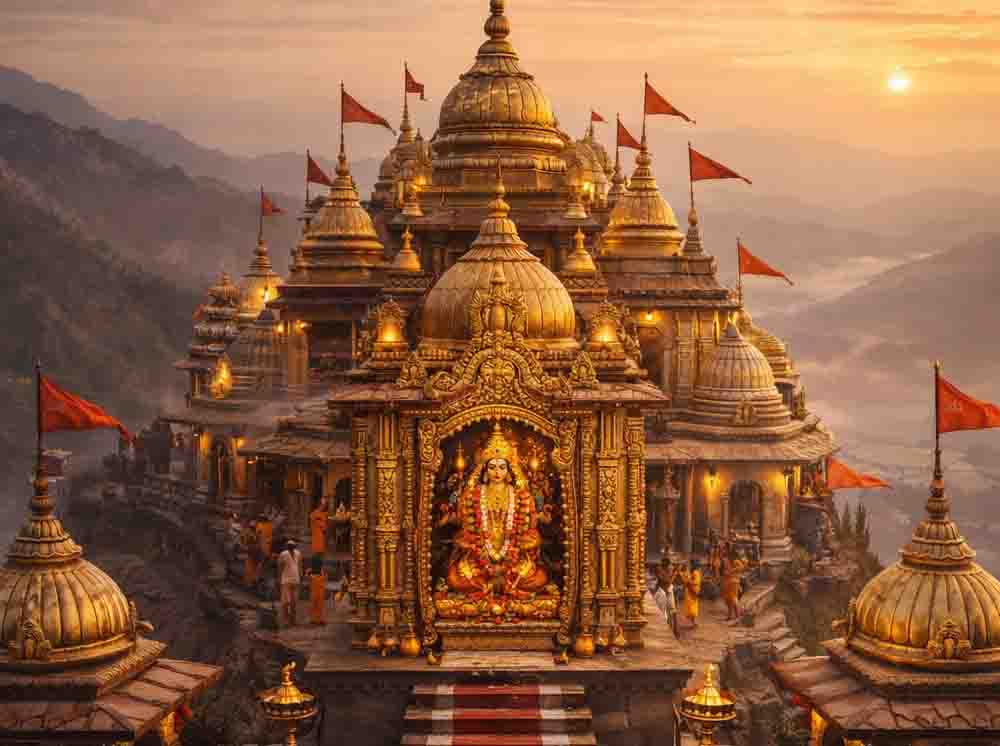
The Thiruvanchikulam Mahadeva Temple, located in Kodungallur in the Thrissur district of Kerala, is one of the most ancient and revered temples dedicated to Lord Shiva in South India. It stands as a timeless testament to Kerala’s spiritual grandeur, architectural brilliance, and cultural legacy. This temple is unique in many aspects — it is believed to be the only temple in Kerala where Lord Shiva and Goddess Parvati are worshipped together in the same sanctum sanctorum (Sreekovil).
The Thiruvanchikulam Temple holds immense importance in the Shaiva tradition, the Chera dynasty’s royal heritage, and the spiritual journey of Sundarar Nayanar, one of the 63 Tamil Shaiva saints. A place that vibrates with divine energy and rich history, Thiruvanchikulam is considered one of the holiest Shiva temples in Kerala and a spiritual jewel of South India.
Historical Background
The Thiruvanchikulam Mahadeva Temple is believed to be over 2000 years old and has a deep association with the Chera dynasty, who ruled ancient Kerala (then known as Cheranadu). The temple was the royal temple of the Cheras, and Thiruvanchikulam itself served as their capital before it was moved to Mahodayapuram (modern Kodungallur).
Ancient Tamil literary works such as Tevaram and Periyapuranam mention Thiruvanchikulam as Tiruvanchikkalam, describing it as a sacred site visited by Sundarar Nayanar (also known as Sundaramurthi Nayanar). It is said that Lord Shiva appeared before Sundarar at this very temple to take him to Mount Kailasa, marking the saint’s ultimate liberation (Moksha). This legend adds immense sanctity to the temple, making it a key pilgrimage site for devotees from both Kerala and Tamil Nadu.
Over the centuries, the temple underwent several renovations and restorations, especially after damage caused by floods and invasions. The Cochin royal family and later the Travancore Devaswom Board took responsibility for preserving its sanctity and maintaining the temple’s ancient traditions.
Mythological Significance
According to Hindu mythology, the temple’s origins date back to the Treta Yuga. It is said that Lord Shiva and Goddess Parvati appeared here after their marriage in Kailasa and chose Thiruvanchikulam as their earthly abode. This divine couple resides here to bless devotees who seek happiness, marital harmony, and spiritual fulfillment.
Another belief states that Parashurama, the sixth incarnation of Lord Vishnu and the legendary founder of Kerala, installed the Shivalinga here as part of his mission to establish 108 Shiva temples across the land. Hence, Thiruvanchikulam is considered one of the 108 Shiva Temples of Kerala and holds a highly auspicious position among them.
The name Thiruvanchikulam is derived from two Malayalam words:
- “Thiru” meaning holy or sacred
- “Anchi Kulam” meaning a sacred pond or lake
Thus, Thiruvanchikulam refers to “the sacred pond where Lord Shiva resides,” highlighting both its natural and divine sanctity.
The Presiding Deity
The principal deity of the temple is Lord Mahadeva (Shiva), worshipped here in the form of a Shivalinga, alongside Goddess Parvati. This joint presence of Shiva and Parvati within a single sanctum (Sreekovil) is unique and symbolizes divine unity — the inseparable nature of masculine and feminine energies, known in Hindu philosophy as Ardhanarishvara Tattva.
The Shivalinga is believed to be Swayambhu (self-manifested), radiating immense spiritual power. The deity here is considered Kailasa Nathar, representing the form of Shiva residing in Mount Kailasa.

Sub-Shrines and Other Deities
The temple complex contains several sub-shrines dedicated to other gods and goddesses, making it a complete spiritual center. The main sub-deities include:
- Lord Ganesha (Ganapathy) – The remover of obstacles, worshipped first before all other deities.
- Lord Subrahmanya (Murugan) – The son of Shiva and Parvati, symbolizing valor and divine knowledge.
- Lord Vishnu – Representing harmony between Shaivism and Vaishnavism.
- Lord Ayyappa – Associated with devotion and celibacy.
- Lord Krishna – A representation of universal love and compassion.
- Goddess Parvati (Bhagavathy) – Worshipped for her grace and motherly blessings.
- Lord Chandikeswara, Lord Nandikeswara, and Lord Dakshinamurthy also have shrines within the temple premises.
The temple pond known as Anchi Kulam lies adjacent to the temple and is considered sacred. Ritual baths in this pond are believed to purify the mind and body.
Architecture
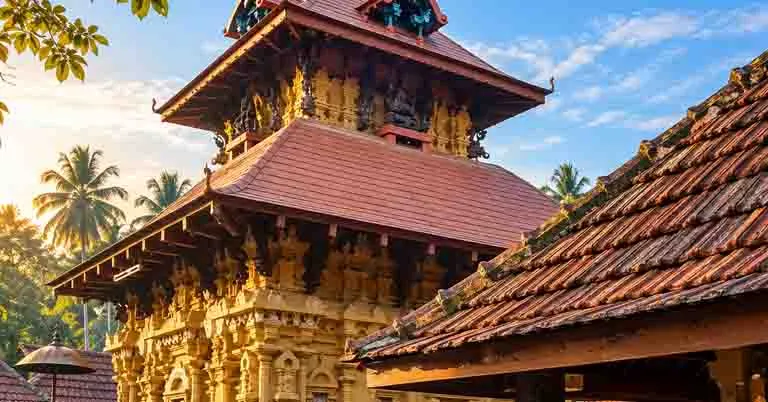
The Thiruvanchikulam Mahadeva Temple is a splendid representation of Kerala’s traditional temple architecture, characterized by intricate wooden carvings, sloping tiled roofs, and stone foundations. The temple follows the Dravidian-Vastu Shastra principles, ensuring spiritual harmony and balance in design.
The Sreekovil (Sanctum Sanctorum) is constructed in the square-shaped Kerala style with a conical copper-plated roof. The sanctum is surrounded by the Namaskara Mandapam (prayer hall), which features beautifully carved wooden ceilings depicting mythological scenes.
The Chuttambalam (outer structure) and Nalambalam (inner enclosure) encompass the sanctum, providing space for circumambulation (Pradakshina). The Dwajasthambam (flag mast) and Deepasthambam (lamp pillar) in front of the sanctum add grandeur to the temple courtyard.
The entrance Gopuram is modest but aesthetically pleasing, reflecting the simplicity and grace typical of Kerala temples. The temple walls are adorned with traditional murals illustrating episodes from Shiva Purana and other Hindu scriptures.
Rituals and Worship
The temple follows Shaiva Tantric rituals and Vedic traditions, conducted by Brahmin priests belonging to hereditary families. The temple opens in the early morning and closes at night after the final pooja.
The daily worship schedule includes:
- Nirmalyam – Removal of the previous day’s decorations and opening rituals.
- Abhishekam – Ritual bathing of the Shivalinga with water, milk, ghee, honey, curd, and sandal paste.
- Usha Pooja – Morning prayers to invoke Lord Shiva’s blessings.
- Ucha Pooja – Noon worship accompanied by food offerings (Nivedyam).
- Deeparadhana – Evening worship with oil lamps illuminating the temple.
- Athazha Pooja – Final offering before closing the sanctum at night.
Special offerings include Rudrabhishekam, Mrityunjaya Homam, Ganapathi Homam, Dhara, Palabhishekam, and Archana. Mondays and Pradosham days are considered especially auspicious for worshipping Lord Shiva.
Devotees also perform Uma-Maheswara Pooja, a special ritual offered by couples for marital harmony and mutual understanding, as the temple symbolizes the divine union of Shiva and Parvati.
Festivals
Festivals at Thiruvanchikulam Temple are celebrated with grandeur, devotion, and traditional rituals that draw devotees from across Kerala and Tamil Nadu.
1. Maha Shivaratri
The most important festival here, celebrated in the Malayalam month of Kumbham (February–March), commemorates Lord Shiva’s cosmic dance and divine union with Goddess Parvati. Devotees observe fasting, night-long prayers, and chanting of Om Namah Shivaya. Special Rudrabhishekam, Alankaram, and cultural performances are held.
2. Thiruvanchikulam Utsavam (Annual Festival)
The temple’s annual festival spans 10 days, usually held in the Malayalam month of Kumbham. The festival includes daily processions (Ezhunnallathu) of Lord Shiva on a caparisoned elephant, accompanied by temple musicians playing Chenda Melam and Panchavadyam. The festivities conclude with the Aarattu (holy bath) ceremony at the temple pond, symbolizing purification and renewal.
3. Thiruvathira
Celebrated mainly by women in the month of Dhanu (December–January), this festival marks the divine union of Lord Shiva and Parvati. Women observe fasting, sing devotional songs, and perform the Thiruvathirakali dance around the temple premises.
4. Navaratri and Deepavali
These festivals are also celebrated with devotion, featuring special poojas, alankarams, and cultural programs.
Connection with Sundarar Nayanar
One of the temple’s most spiritually significant aspects is its association with Sundarar Nayanar, one of the 63 Tamil Shaiva saints and one of the three principal Nayanmars. According to Periyapuranam, Sundarar visited Thiruvanchikulam during his pilgrimage across South India. Moved by his deep devotion, Lord Shiva personally appeared before him and took him along to Mount Kailasa on a white elephant.
This event marks Sundarar’s attainment of salvation (Moksha), and the temple commemorates this divine moment every year with a grand ritual known as Sundarar Moksha Utsavam. This makes Thiruvanchikulam the only temple in Kerala directly associated with the Nayanmar saints.
Spiritual and Cultural Importance
Thiruvanchikulam Temple represents the spiritual ideal of divine coexistence, where Shiva and Parvati dwell together, symbolizing love, balance, and oneness. Devotees believe that praying here brings peace in family life, success in marriage, and spiritual liberation.
The temple is also significant in Kerala’s Shaiva-Vaishnava harmony, as Lord Vishnu is worshipped within the same complex. This coexistence signifies the syncretic religious fabric of Kerala, where multiple deities and traditions are honored together.
Culturally, the temple continues to uphold Kerala’s classical traditions such as Kathakali, Ottanthullal, Panchavadyam, and Chenda Melam, which are performed during major festivals. These art forms have been preserved for centuries through the patronage of the temple.
Administration and Management
The Thiruvanchikulam Mahadeva Temple is managed by the Cochin Devaswom Board, which ensures the proper conduct of rituals, festivals, and maintenance of the temple premises. The board, along with local devotees, plays a crucial role in preserving the temple’s architectural heritage and sacred traditions.
The temple also engages in social activities such as Annadanam (free food distribution) and educational aid, reflecting its commitment to serving the community beyond religious boundaries.
Location and Accessibility
The temple is located around 3 kilometers from Kodungallur town and about 30 kilometers from Thrissur city. It is easily accessible via the NH-66 highway, and the nearest railway station is Irinjalakuda. The Cochin International Airport is approximately 45 kilometers away.
Temple timings generally follow the schedule of 4:00 AM to 12:00 PM and 5:00 PM to 8:00 PM daily. Devotees are advised to follow the traditional dress code — men wearing mundu and women in saree or traditional attire.

Conclusion
The Thiruvanchikulam Mahadeva Temple is not merely a place of worship but a divine confluence of history, devotion, and spiritual realization. Its sanctum, where Lord Shiva and Goddess Parvati reside together, symbolizes the cosmic unity that sustains the universe.
From its association with the Chera kings to its mention in Tamil Shaiva literature and the legend of Sundarar Nayanar, the temple stands as a bridge between Kerala’s and Tamil Nadu’s spiritual worlds.
Visiting Thiruvanchikulam is said to cleanse the mind, awaken inner peace, and draw devotees closer to the eternal truth embodied by Lord Shiva — “The Supreme Consciousness that transcends birth and death.”
For the devout, Thiruvanchikulam remains not just a temple, but a gateway to Kailasa itself — where every chant of Om Namah Shivaya resonates with the divine presence of Mahadeva and his eternal consort Parvati.
Disclaimer
The information provided by Web Arbiter (‘we’, ‘us’, or ‘our’) on https://webarbiter.in/ . The website is for general informational purposes only. All information on the Site is provided in good faith, however we make no representation or warranty of any kind, express or implied, regarding the accuracy, adequacy, validity, reliability, availability, or completeness of any information on the Site. UNDER NO CIRCUMSTANCE SHALL WE HAVE ANY LIABILITY TO YOU FOR ANY LOSS OR DAMAGE OF ANY KIND INCURRED AS A RESULT OF THE USE OF THE SITE OR RELIANCE ON ANY INFORMATION PROVIDED ON THE SITE. YOUR USE OF THE SITE AND YOUR RELIANCE ON ANY INFORMATION ON THE SITE IS SOLELY AT YOUR OWN RISK. Read Full Disclaimer