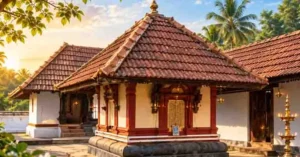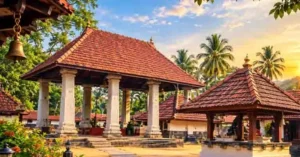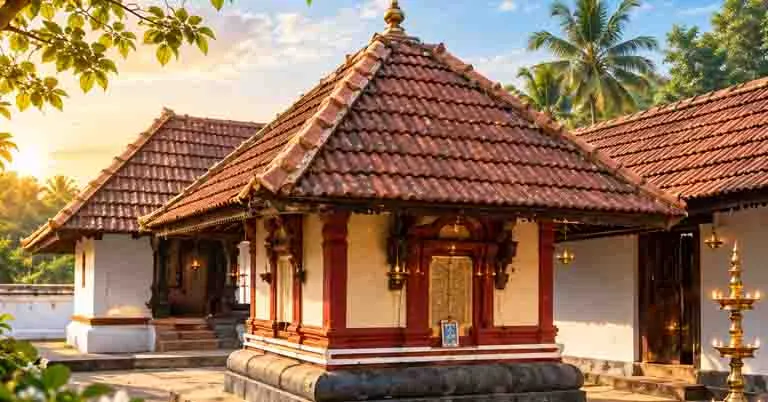


The Kodungallur Bhagavathy Temple, also known as the Sree Kurumba Bhagavathy Temple, is one of the most ancient and powerful temples in Kerala dedicated to Goddess Bhadrakali, a fierce and compassionate form of Goddess Parvati. Situated in Kodungallur, in the Thrissur district, this temple stands as a living testimony to Kerala’s rich spiritual traditions, temple culture, and religious harmony. Revered as one of the foremost Shakti Peethas in South India, the temple is believed to radiate immense divine energy, attracting thousands of devotees from across the country.
Historical and Mythological Background
The origins of Kodungallur Bhagavathy Temple are deeply rooted in Hindu mythology and the early history of Kerala. According to ancient legends, the temple was established by Lord Parashurama, the sixth incarnation of Lord Vishnu, who reclaimed Kerala from the sea. After creating this new land, Parashurama consecrated 64 temples for the welfare of the people and spiritual upliftment. Among them, Kodungallur Bhagavathy Temple holds a preeminent position as a powerful center of Shakti worship.
Another myth links the temple to the Darika Vadham, the slaying of the demon Darika. The demon, blessed with immense boons, wreaked havoc on the universe, defeating even the gods. Lord Shiva then created Bhadrakali from his third eye, imbuing her with his fiery energy to destroy Darika. After vanquishing the demon, the goddess’s ferocity could not be contained, and she continued to radiate uncontrollable energy. To pacify her, Shiva instructed her to reside at Kodungallur, where she would be worshipped by devotees and her energy would be channeled for the protection of the world. Thus, the Kodungallur Bhagavathy Temple became her eternal abode.
Historically, Kodungallur (ancient Muziris) was a flourishing port city and the capital of the Chera dynasty. The temple served as both a spiritual and cultural center during the early Chera period. The Chera kings were ardent devotees of Goddess Bhagavathy and performed grand rituals and festivals in her honor. It is also believed that the temple stood as a royal temple, where the goddess was regarded as the family deity of the ruling dynasty.
Deity and Symbolism
The presiding deity of the temple is Sree Bhadrakali, also worshipped as Sree Kurumba Bhagavathy. She embodies both Ugra (fierce) and Karuna (compassionate) aspects of the Divine Mother. The idol is made of jackfruit wood (daruvigraha) and depicts the goddess with eight hands, each carrying different weapons such as a trident, sword, and shield. Her face radiates strength and protection, symbolizing her power to destroy evil and protect her devotees.
The goddess faces north, a rare and auspicious direction symbolizing victory and prosperity. The idol is adorned with ornaments, red silk garments, and flowers during rituals, reflecting her supreme energy and motherly grace. The temple also houses sub-deities such as Lord Ganapathy, Lord Veerabhadra, and Lord Shiva, creating a harmonious integration of Shaiva and Shakta traditions.
The goddess is believed to fulfill the wishes of her devotees, remove obstacles, and protect them from negativity, misfortune, and fear. She is also worshipped as a guardian deity who protects the land and its people.

Architectural Splendor
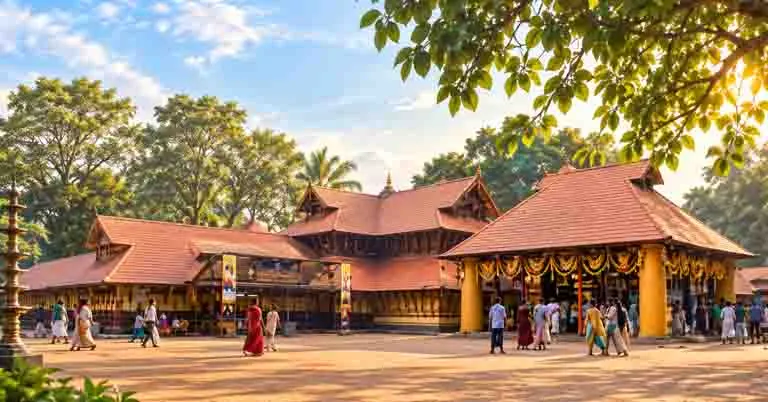
The Kodungallur Bhagavathy Temple exemplifies traditional Kerala temple architecture, with its characteristic wooden structures, sloping tiled roofs, intricate carvings, and copper-sheeted coverings. The temple complex is surrounded by a massive laterite compound wall, symbolizing the protective energy of the goddess.
The Sreekovil (sanctum sanctorum), built in square shape, houses the idol of Goddess Bhadrakali. The inner sanctum is dimly lit with oil lamps, creating an aura of divine mysticism. The Namaskara Mandapam, located in front of the sanctum, is used for daily rituals and offerings.
The temple also contains a Koothambalam, a traditional performance hall where Chakyar Koothu and Koodiyattam (classical Sanskrit theatre) were historically performed. These performances were considered offerings to the goddess and served as instruments of spiritual and moral education. The outer walls feature exquisite carvings depicting episodes from Hindu mythology and floral motifs, showcasing the artistic mastery of ancient Kerala craftsmen.
The temple pond, located near the entrance, is used for ritual purification before entering the sanctum. The serene surroundings, ancient trees, and sacred atmosphere make the temple a place of both spiritual reflection and aesthetic beauty.
Rituals and Worship Practices
The temple follows the Tantric system of worship, adhering to strict traditions passed down through generations. The daily poojas are conducted by priests from the Thazhamon Madom lineage, the hereditary tantric family entrusted with the temple’s rituals.
The main daily rituals include:
- Usha Pooja (morning worship) – offered at dawn to awaken the goddess.
- Ucha Pooja (noon worship) – accompanied by nivedyam (food offering).
- Deeparadhana (evening lamp offering) – where lamps are lit, symbolizing the dispelling of darkness.
- Athazha Pooja (night worship) – concluding the day’s rituals with prayers for protection.
Common offerings include Neyyabhishekam (ghee anointing), Chandattam (turmeric smearing), Pongala (rice offering), and Vilakku (lighting of lamps). Each ritual signifies devotion, purification, and surrender to the divine mother.
Tuesdays and Fridays are considered highly auspicious days for worship, as these are associated with Goddess Shakti. On these days, thousands of devotees throng the temple to seek blessings, perform offerings, and express gratitude.
Kodungallur Bharani Festival – The Festival of Divine Fury and Grace
The Kodungallur Bharani Festival is one of the most ancient and vibrant temple festivals in Kerala, celebrated during the Malayalam month of Meenam (March–April). The festival commemorates the victory of Goddess Bhadrakali over the demon Darika, symbolizing the triumph of good over evil.
The festival is marked by the Kavu Theendal ritual, one of the most unique and striking traditions in Kerala’s temple culture. During this event, Velichappads (oracles)—men and women believed to be possessed by the goddess—enter the temple in a trance, wielding swords, and striking their foreheads as an act of devotion and self-purification. Their rhythmic movements, ecstatic chants, and songs known as Bharani Pattu fill the temple with a raw, spiritual energy that transcends logic and emotion.
The Bharani Pattu, sung in the ancient Malayalam dialect, praises the fierce aspects of the goddess and recounts her victory over demons. Devotees from all walks of life, irrespective of caste or creed, are allowed to participate in the festival, reflecting the temple’s deep commitment to inclusivity and social equality.
During the festival days, the entire town of Kodungallur transforms into a spiritual hub, with processions, drumming (Chenda Melam), and traditional art forms celebrating the goddess’s power. The festival concludes with elaborate rituals and offerings, signifying the restoration of cosmic order and peace.
Other important festivals celebrated at the temple include Thalappoli, Thiruvathira, and Navaratri, each highlighting the goddess’s different attributes—prosperity, love, wisdom, and valor.
Legends and Folklore
The temple’s mythology is rich and multifaceted. One popular legend associates the temple with Kannaki, the heroine of the Tamil epic Silappatikaram. After destroying Madurai in her grief, Kannaki reached Kodungallur, where she transformed into Goddess Bhadrakali. Hence, the temple is often identified as the Kannaki Temple, representing the divine manifestation of womanly strength and virtue.
Another legend tells that Lord Shiva himself resides here in invisible form to witness the power of Shakti. The temple is also said to be connected spiritually to the Sabarimala Ayyappa Temple, where Lord Ayyappa is believed to visit his divine mother, Bhadrakali, after completing his pilgrimage.
Spiritual Significance
Kodungallur Bhagavathy Temple is not merely a place of worship; it is a spiritual powerhouse symbolizing the unity of destruction and creation, fury and compassion, and justice and grace. Goddess Bhadrakali embodies the eternal cosmic energy, or Shakti, that maintains balance in the universe. Her fierce form represents the annihilation of evil and ignorance, while her benevolent aspect symbolizes motherly protection and unconditional love.
The rituals and festivals associated with the temple serve as a form of psychological and spiritual cleansing for devotees. The goddess’s worship encourages self-discipline, courage, and emotional release, reinforcing the belief that divine energy resides within every living being.
Cultural Influence and Artistic Legacy
The Kodungallur Temple has historically been a cradle of Kerala’s traditional art and culture. The temple’s Koothambalam is one of the oldest in the state, where sacred performances such as Chakyar Koothu and Koodiyattam were staged for centuries. These performances conveyed moral lessons, mythological stories, and spiritual wisdom through drama, dance, and humor.
The temple also played a crucial role in promoting Kerala’s communal harmony. For centuries, people from different communities participated in the temple’s festivals, reinforcing the idea of unity amidst diversity. Even today, the temple is a symbol of Kerala’s inclusive spirituality.
Administration and Preservation
The temple is currently managed by the Cochin Devaswom Board, which oversees its rituals, maintenance, and festivals. Strict adherence to traditional customs ensures that the sanctity of the temple remains intact. Efforts are ongoing to preserve the temple’s ancient architecture, manuscripts, and mural paintings, ensuring its legacy endures for generations.
Visiting the Temple
The Kodungallur Bhagavathy Temple is located about 30 kilometers from Thrissur and is well-connected by road and rail. The nearest railway station is Irinjalakuda, and Cochin International Airport lies approximately 40 kilometers away.
Visitors are expected to maintain traditional decorum—men are advised to remove shirts before entering the sanctum, and women generally wear traditional attire. Photography inside the temple is restricted during rituals to preserve the sanctity of the space.
The temple is open throughout the year, but the best time to visit is during the Bharani Festival, when the temple’s spiritual energy reaches its peak, offering an unforgettable cultural and religious experience.
Conclusion
The Kodungallur Bhagavathy Temple is a majestic symbol of Kerala’s spiritual heritage, representing the convergence of devotion, mythology, and culture. Here, Goddess Bhadrakali reigns supreme as the protector, destroyer of evil, and benevolent mother to her devotees.
Beyond its grandeur and rituals, the temple embodies a deeper philosophy—that divinity exists in both ferocity and compassion, and that surrendering to the divine brings ultimate liberation. For devotees, the Kodungallur Bhagavathy Temple is not just a sacred destination but a spiritual journey into the heart of divine energy—a place where faith transforms into power, and where the Mother Goddess continues to watch over her children with infinite strength and grace.
Disclaimer
The information provided by Web Arbiter (‘we’, ‘us’, or ‘our’) on https://webarbiter.in/ . The website is for general informational purposes only. All information on the Site is provided in good faith, however we make no representation or warranty of any kind, express or implied, regarding the accuracy, adequacy, validity, reliability, availability, or completeness of any information on the Site. UNDER NO CIRCUMSTANCE SHALL WE HAVE ANY LIABILITY TO YOU FOR ANY LOSS OR DAMAGE OF ANY KIND INCURRED AS A RESULT OF THE USE OF THE SITE OR RELIANCE ON ANY INFORMATION PROVIDED ON THE SITE. YOUR USE OF THE SITE AND YOUR RELIANCE ON ANY INFORMATION ON THE SITE IS SOLELY AT YOUR OWN RISK. Read Full Disclaimer