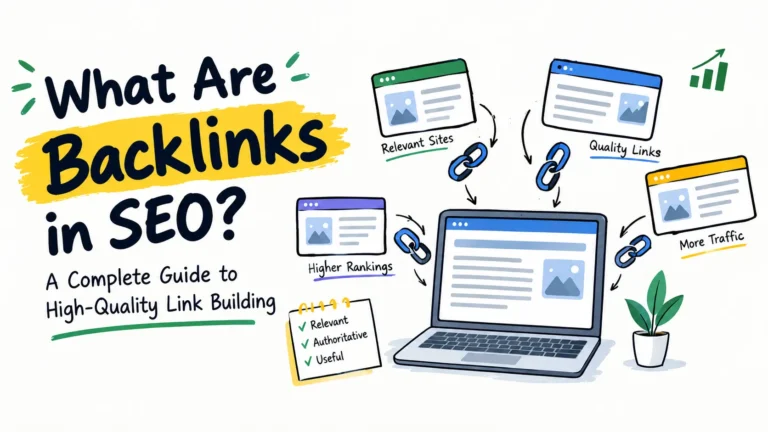

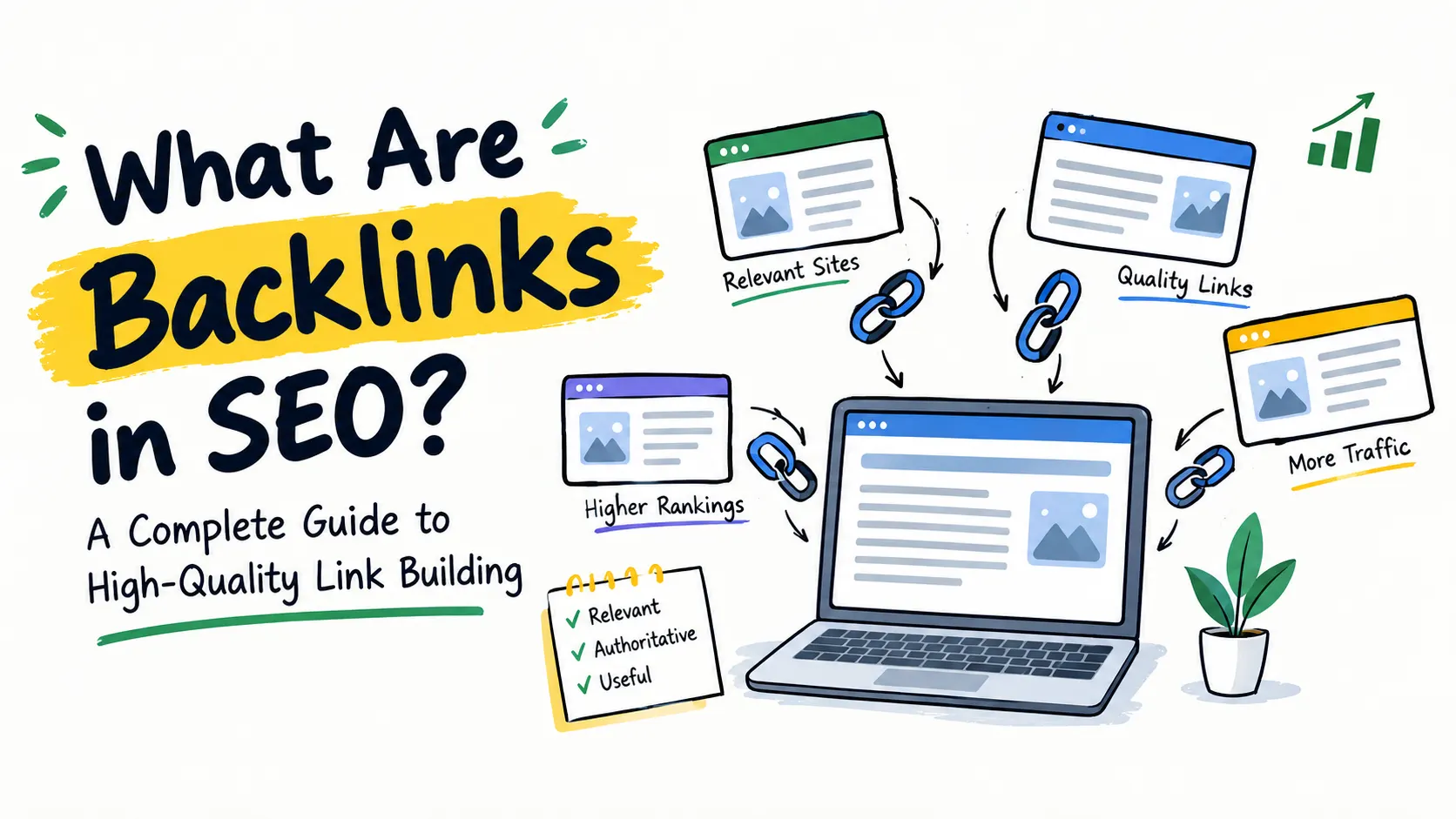

If you want your website to appear higher in search engine results, creating useful content is only part of the job. Search engines also consider how other websites reference and recommend your content. This is the point at which backlinks and link building become essential.
For many years, backlinks have played a key role in SEO. Yet, effective link building today is not about gathering the highest possible number of links. Search engines have greatly improved their ability to assess the quality, relevance, and context of links.
One pertinent link from a reputable site may be worth more than dozens of poor-quality links from sites that are unrelated.
In this guide, we’ll explain what backlinks are, why they matter, how backlinks affect SEO, what makes a backlink valuable, how to build backlinks naturally, where free backlinks can come from, and how to use a backlink checker to monitor your website’s link profile.
What Are Backlinks?
A backlink refers to a hyperlink that points from one website to another.
For instance, suppose a marketing website posts an article on content marketing and includes a link to an in-depth guide on your site. That link counts as a backlink pointing to your website.
Backlinks are sometimes called:
- Inbound links
- Incoming links
- External links
- Links from referring domains
From an SEO perspective, backlinks can act as signals that another website considers a particular page useful enough to reference.
That said, not all backlinks hold equal worth.
A link coming from a pertinent, well-established site that offers valuable related content may carry far more significance than one from an unrelated site built mainly to host links.
This is why contemporary SEO link building emphasizes quality, relevance, and natural acquisition instead of merely boosting the quantity of links.
Why Are Backlinks Important for SEO?
There are multiple ways in which backlinks can help with SEO.
1. Backlinks can assist search engines in discovering pages.
Search engines rely on links to find and crawl websites and web pages.
If a trustworthy website links to a page on your site, search engine crawlers can follow that link and find your content.
This can be particularly useful for newer pages or websites that don’t yet have many links pointing toward them.
Yet, the presence of backlinks does not ensure that a page will get indexed or achieve high rankings. When assessing webpages, search engines take numerous other factors into account.
2. Backlinks Can Support Search Rankings
Search engines may rely on links as one of the signals they use to evaluate a webpage’s authority and relevance.
A website that consistently earns references from relevant and trustworthy sources may build stronger signals than a website that has very few genuine references.
This doesn’t mean you should try to acquire hundreds of links as quickly as possible.
Effective link building is about earning references that make sense for users and the websites linking to you.
3. Backlinks Can Bring Referral Traffic
Building links isn’t done solely for SEO purposes.
Imagine a well-known industry website posts an article that includes a link to one of your resources. Those readers could click the link and come to your website.
That traffic can be valuable even if the link provides little or no direct ranking benefit.
A good backlink therefore has the potential to provide two benefits:
Search visibility + referral traffic
This is among the reasons that relevant links tend to be more valuable than those placed on unrelated sites.
4. Backlinks Can Increase Brand Exposure
When other websites mention your company, site, or content, it gives more people a chance to come across your brand.
For example, a small software company might receive a backlink from an industry publication, business directory, podcast website, or educational resource.
Even visitors who don’t click the link may become familiar with the brand.
What Makes a High-Quality Backlink?
Not all backlinks are equal.
A top-notch backlink typically possesses multiple traits that render it beneficial from both an SEO and user standpoint.
1. Relevance
Relevance is among the most important factors to consider.
Picture yourself running a website focused on digital marketing.
A backlink from a website discussing SEO, content marketing, web development, or online business is naturally relevant.
A link originating from a website that is entirely unrelated and covers a different topic might carry much lower contextual value.
The aim is not to get links from websites just because they possess high authority. You should also think about whether the website and the page are relevant to your audience.
2. Trustworthy Website
A link from a reputable, well-established site can carry more value than one from a website with low credibility.
Before pursuing a link, examine the website itself.
Ask:
- Does the website publish useful content?
- Does it have a real audience?
- Is the content relevant to your industry?
- Does the website appear maintained?
- Does it provide genuine value to visitors?
- Has it previously published an excessive number of promotional links?
Quality is more important than merely focusing on a numerical authority score.
3. Editorial Placement
Editorial links are those added because they provide value to readers.
For example, an article might explain a concept and link to a research study, original source, detailed guide, or useful tool.
These links are generally more natural than links placed solely because someone paid for or exchanged them.
4. Relevant Anchor Text
Anchor text refers to the clickable wording that forms a hyperlink.
For example:
Learn more about technical SEO
The anchor text consists of the phrase “technical SEO”.
Typically, good anchor text should describe the destination in a natural way.
However, if you use the same exact-match keyword as anchor text in hundreds of backlinks, it may appear unnatural.
A natural backlink profile usually contains a mixture of:
- Brand names
- Website names
- Natural phrases
- URL-based anchors
- Topic-related phrases
- Generic phrases such as “learn more”
What matters most is writing with people in mind, instead of trying to manipulate anchor text.
5. Context Around the Link
A link surrounded by useful, relevant content generally makes more sense than a link placed randomly on a page.
For example, a paragraph discussing how to build backlinks could naturally reference a detailed link-building resource.
The surrounding context helps users understand why the link is useful.
What Is Link Building?
Link building is the process of earning or acquiring hyperlinks from other websites to your own website.
The objective isn’t simply to increase the number of URLs pointing to your domain.
Modern link building should focus on creating resources and relationships that make other websites genuinely want to reference your content.
Common link-building methods include:
- Creating original research
- Publishing useful guides
- Digital PR
- Guest contributions
- Resource page outreach
- Broken-link outreach
- Industry directories
- Business citations
- Creating statistics and data resources
- Expert interviews
- Original tools and calculators
- Linkable assets
- Competitor backlink research
The best strategy depends on your industry, website, audience, and available resources.
Backlinks vs. Referring Domains
These two terms are often confused.
A backlink refers to a single link that directs to your website.
A referring domain is a unique website that sends backlinks to your site.
For example, suppose Website A links to your homepage five times and Website B links to your blog twice.
You have:
- 7 backlinks
- 2 referring domains
This distinction is important because having thousands of backlinks doesn’t necessarily mean you have a strong backlink profile.
Many links may come from the same website.
When analyzing your link profile, consider both the number of backlinks and the number and quality of referring domains.
What Is a Backlink Profile?
A backlink profile is the collection of links pointing to your website.
A healthy backlink profile can contain links from different types of websites, pages, and sources.
When evaluating a backlink profile, SEO professionals often look at:
- Number of backlinks
- Referring domains
- Relevance of linking websites
- Quality of linking pages
- Anchor text distribution
- Follow and nofollow attributes
- New and lost backlinks
- Destination pages
- Potentially suspicious or unnatural links
The aim is not to get every metric to appear flawless.
Instead, you want your backlink profile to develop naturally as your website earns attention.
What Are Dofollow and Nofollow Backlinks?
Links can include different attributes that tell search engines how to treat them.
A traditional link without a special rel attribute is often referred to as a “dofollow” link, although “dofollow” is not an actual HTML link attribute.
A nofollow link uses:
rel="nofollow"
There are also attributes such as:
rel="sponsored"
and
rel="ugc"
which can help identify sponsored links and user-generated content.
A nofollow link may not pass ranking signals in the same way as a standard link, but that doesn’t make it useless.
It can still:
- Send referral traffic
- Increase brand visibility
- Help people discover your content
- Generate additional opportunities
- Contribute to a natural-looking link profile
Therefore, don’t evaluate every link solely by whether it is followed.
How to Build Backlinks: 12 Practical Strategies
If you’re wondering how to build backlinks, start by focusing on resources that other websites have a genuine reason to reference.
Here are some practical strategies.
1. Create Original Research
Original research ranks among the most powerful forms of linkable content.
You could publish:
- Industry statistics
- Customer surveys
- Original studies
- Market research
- Data analysis
- Case studies
- Annual reports
For example, if your company surveys 1,000 customers about online shopping habits, other websites may reference your findings when writing their own articles.
This creates opportunities to earn natural backlinks.
2. Publish Comprehensive Guides
When guides address questions comprehensively, they can draw in backlinks.
Instead of creating a short article covering a topic superficially, create a resource that explains:
- Definitions
- Examples
- Step-by-step processes
- Common mistakes
- Expert advice
- Tools
- Frequently asked questions
For example, a comprehensive guide explaining SEO link building can become a resource that other marketers reference.
3. Create Free Tools
Useful tools can naturally attract backlinks.
Examples include:
- Calculators
- Templates
- Checklists
- Generators
- Auditing tools
- Planning tools
- Research tools
A truly valuable free resource gives other websites an incentive to link back to you.
This tends to be more sustainable than requesting links from hundreds of websites.
4. Use Digital PR
Digital PR merges public relations with online content and search engine optimization.
You have the ability to develop information that is newsworthy and present it to journalists, publications, bloggers, and industry websites.
Potential topics include:
- Original research
- Expert commentary
- Industry trends
- Surveys
- New studies
- Interesting data
- Unique business stories
When publications cover your research or expertise, they may link back to your website.
5. Contribute Expert Content
Some websites accept contributions from industry experts.
A high-quality guest contribution can help you:
- Demonstrate expertise
- Reach a new audience
- Build relationships
- Earn relevant backlinks
However, the goal should be useful content—not publishing low-quality articles on hundreds of websites solely to obtain links.
Choose publications where your expertise genuinely fits the audience.
6. Find Broken Links
Broken-link building is the practice of locating outdated or broken links on relevant sites and proposing a valuable alternative.
For instance, imagine an industry website points to a resource that has since been removed.
If you already have an up-to-date resource on the same subject, you can reach out to the website owner and clarify the problem.
They may choose to replace the broken link with your resource.
This approach works best when your replacement genuinely helps the site’s readers.
7. Build Resource Pages
Numerous websites keep resource pages that hold helpful links for their visitors.
For example:
Best SEO Resources
If you possess an SEO resource that is truly valuable, you may reach out to the site owner and propose it for their consideration.
Don’t assume that every resource page will accept your submission.
Your resource’s quality and relevance ought to be the top priority.
8. Claim Unlinked Brand Mentions
Sometimes websites mention your business without linking to your website.
These are called unlinked brand mentions.
You can spot the relevant mentions and reach out to the publisher in a polite manner.
For example:
We noticed that you mentioned our research in your article. If useful for your readers, you could also link to the original study here.
Not every publisher will add the link, but some may do so when the request provides a genuine benefit to readers.
9. Create Statistics Pages
Statistics are highly linkable.
Bloggers and journalists frequently need statistics to support statements in their articles.
A well-organized page containing current, properly sourced industry statistics can attract backlinks over time.
Make sure the information is accurate and clearly identifies its sources.
10. Publish Case Studies
Case studies can demonstrate real-world results and provide original information.
A strong case study could include:
- The problem
- The strategy
- Implementation
- Data
- Results
- Lessons learned
If the findings are useful to other businesses, industry publications may reference the case study.
11. Use Business Directories Carefully
Business directories can provide legitimate links and citations.
Examples may include:
- Local business directories
- Professional associations
- Industry organizations
- Chamber of commerce websites
- Relevant business listings
Don’t submit your website to hundreds of low-quality directories just to get backlinks.
Choose directories that provide genuine value to users.
12. Build Relationships in Your Industry
One of the most overlooked link-building strategies is relationship building.
Connect with:
- Industry experts
- Journalists
- Bloggers
- Researchers
- Business owners
- Podcast hosts
- Community managers
When you build genuine professional relationships, opportunities for collaboration and natural mentions can emerge.
What Are Free Backlinks?
Free backlinks are links you can obtain without directly paying another website for link placement.
Some legitimate sources include:
- Business profiles
- Professional associations
- Relevant directories
- Community profiles
- Social profiles
- Local listings
- Resource submissions
- Original content
- Expert contributions
- Unlinked brand mentions
However, “free” doesn’t automatically mean “good.”
A backlink that is free and comes from an irrelevant, low-quality site might offer minimal value.
In the same way, generating hundreds of automated profile links cannot replace the creation of valuable content.
Consider the website’s purpose and the value that the link offers to its audience.
Are Paid Backlinks Safe?
Purchasing links with the specific aim of manipulating search rankings may breach search-engine spam policies.
There is an important distinction between:
Paying for advertising or sponsorship
and
Paying for links intended to manipulate organic rankings.
If a link is part of an advertisement or sponsorship, it should be appropriately identified using relevant link attributes.
The most reliable strategy is to concentrate on acquiring links, since your content is worthy of being cited.
What Is a Backlink Checker?
A backlink checker is an SEO tool that helps you analyze links pointing to a website.
Depending on the tool, you may be able to see information such as:
- Referring domains
- Backlinks
- Anchor text
- Linking pages
- Target pages
- Follow/nofollow information
- New backlinks
- Lost backlinks
- Link growth
- Potentially suspicious links
A backlink checker can be useful for both your own website and competitor research.
How to Use a Backlink Checker
You can use a backlink checker as part of your regular SEO workflow.
Step 1: Enter Your Domain
Start by entering your website or a specific webpage into your chosen SEO tool.
Step 2: Review Referring Domains
Look at the websites linking to you.
Ask:
- Are they relevant?
- Are they legitimate?
- Are they industry-related?
- Are they providing referral traffic?
Step 3: Identify Your Most Linked Pages
Discover which pages get the highest number of backlinks.
You might find that some types of content tend to draw in more links on their own.
For example:
- Research reports
- Tutorials
- Tools
- Statistics
- Original studies
Step 4: Analyze Anchor Text
Examine the wording websites employ when they link to you.
A naturally developed profile typically contains varied anchor text.
Step 5: Monitor New and Lost Links
Regular monitoring can help you understand how your link profile changes over time.
Losing one backlink isn’t necessarily a problem.
A website may update its content, remove an outdated resource, or restructure its pages.
The important thing is to look at broader trends rather than obsessing over every individual link.
How to Find Backlinks Your Competitors Have
Competitor backlink analysis can provide useful ideas for your own content strategy.
Start by identifying websites that compete with you for important search queries.
Then use a backlink checker to investigate their referring domains.
Look for patterns.
For example, you might discover that competitors consistently receive links from:
- Industry publications
- Resource pages
- Podcasts
- Associations
- News websites
- Research websites
- Relevant directories
Don’t copy competitors blindly.
Instead, ask:
Why did this website link to them?
If the answer is that they published an original study, you might consider conducting your own research.
If the response is that they built a helpful calculator, you could create a superior or more thorough resource.
Competitor backlink analysis should inspire content opportunities rather than encourage link duplication.
Common Link-Building Mistakes to Avoid
Link building can become counterproductive when the focus shifts from users to manipulation.
Here are some common mistakes.
Buying Large Numbers of Low-Quality Links
A package promising thousands of backlinks may sound attractive.
But large quantities of irrelevant or low-quality links can create an unnatural link profile and potentially expose your website to search-engine spam systems.
Quality and relevance matter more than volume.
Excessive Exact-Match Anchor Text
Repeating the same anchor text filled with keywords over and over can come across as unnatural.
Instead, allow anchor text to develop naturally.
Automated Link Building
Automated software can generate large numbers of links quickly.
But those links are often low quality, irrelevant, or spammy.
Automation should not replace genuine content and relationship building.
Private Blog Networks
Certain SEO professionals build networks of websites mainly to influence rankings via links.
This can create significant risk because the websites may exist mainly for link manipulation rather than providing value to users.
Comment Spam
Leaving promotional comments containing keyword-rich links on blogs and forums is not a sustainable SEO strategy.
Participate in communities because you have something useful to contribute—not simply to place links.
Irrelevant Guest Posting
Guest posting can prove beneficial when it offers real expertise along with worthwhile content.
Publishing low-quality articles on unrelated websites purely for backlinks is a very different strategy.
Ignoring Content Quality
You cannot build a strong link profile indefinitely with mediocre content.
If your content isn’t useful enough for someone to reference, outreach becomes much harder.
Link Building vs. Off-Page SEO
Off page SEO refers to activities performed outside your own website that can influence your website’s visibility and reputation.
Link building is an important part of off-page SEO, but the two terms aren’t identical.
Off-page SEO can include:
- Link building
- Digital PR
- Brand mentions
- Online reputation
- Influencer relationships
- Community participation
- Business citations
- Content promotion
In other words:
Building links is one element of off-page SEO.
An effective off-page SEO strategy can encompass far more than just earning backlinks.
On-Page SEO vs. Off-Page SEO
SEO can generally be broken down into several distinct areas.
On-Page SEO
On-page SEO centers on the components found inside your website.
Examples include:
- Page titles
- Headings
- Content
- Internal linking
- Image optimization
- Search intent
- URL structure
- Meta descriptions
- Content organization
Technical SEO
Technical SEO centers on the technical groundwork of your website.
Examples include:
- Crawlability
- Indexability
- Site architecture
- Structured data
- Page performance
- Mobile usability
- Canonicalization
Off-Page SEO
Off-page SEO focuses on signals and activities outside your website.
Examples include:
- Backlinks
- Digital PR
- Brand mentions
- Online relationships
- Citations
A strong SEO strategy generally considers all three areas rather than relying exclusively on backlinks.
How Many Backlinks Do You Need?
There is no universal number.
Having more backlinks than all of your competitors isn’t always a requirement.
The more useful question is:
What type of backlinks would help my website become a stronger resource?
A small website may benefit significantly from earning a few relevant links from respected industry websites.
A large national website may naturally have thousands or millions of backlinks.
The appropriate number depends on:
- Industry
- Competition
- Website age
- Content quality
- Search demand
- Brand visibility
- Audience
- Existing authority
Focus on building a useful website and earning relevant references rather than chasing a specific backlink count.
How Long Does Link Building Take?
Link building is usually a long-term SEO activity.
Some links can be earned quickly.
For example, a business directory listing or profile might be created relatively quickly.
Other links can take weeks or months because they depend on:
- Publishing content
- Building relationships
- Conducting research
- Outreach
- Editorial review
- Digital PR opportunities
SEO link building should therefore be treated as an ongoing process rather than a one-time campaign.
How to Produce Content That Draws Backlinks Organically.
If you want backlinks without constantly asking for them, create content worth referencing.
Below are a number of content formats that tend to perform well.
Original Data
Publish research that doesn’t exist elsewhere.
Definitive Guides
Create comprehensive resources that answer a topic thoroughly.
Free Templates
Make useful templates people can download and use.
Visual Resources
Charts, diagrams, and original graphics can make complex information easier to understand.
Industry Statistics
Maintain accurate and useful statistics pages.
Tools
Create free tools designed to address a particular problem.
Case Studies
Share original results and lessons.
Expert Roundups
Collect genuine insights from relevant professionals.
The common factor is usefulness.
People link to resources because those resources help them educate their audience, support an argument, explain a concept, or solve a problem.
A Simple Link-Building Outreach Process
Once you’ve created a valuable resource, you can promote it through outreach.
Step 1: Identify Relevant Websites
Find websites that publish content related to your resource.
Step 2: Research the Content
Read the page before contacting the publisher.
Identify why your resource would be useful.
Step 3: Write a Personalized Message
Refrain from sending the same generic email to hundreds of websites.
Cite the particular article and clarify how your resource could enhance it.
Step 4: Keep It Short
Website owners receive many emails.
Clearly explain:
- What you found
- What you’ve created
- Why it may help their readers
Step 5: Don’t Pressure the Publisher
The decision to link should be theirs.
Good outreach is about suggesting a useful resource, not demanding a backlink.
A Practical Backlink Strategy for Beginners
If you’re new to SEO, don’t try every link-building strategy simultaneously.
Start with a simple system.
Month 1: Build the Foundation
Create several high-quality resources around important topics in your industry.
Improve your existing content and make sure your website is technically sound.
Month 2: Promote Your Best Content
Identify websites, publications, communities, and organizations that might find your resources useful.
Start targeted outreach.
Month 3: Expand Your Linkable Assets
Create something more valuable, such as:
- Original research
- A free tool
- A statistics page
- A comprehensive guide
- A detailed case study
Then promote it.
As more individuals come across your content over time, your website may start gaining links organically.
How to Measure Link-Building Success
Don’t measure your SEO link-building campaign only by the number of backlinks acquired.
Track multiple metrics.
Referring Domains
How many unique websites link to you?
Relevant Backlinks
How many links come from websites that are related to your industry?
Referral Traffic
Are people actually clicking your links?
Organic Visibility
Are your target pages gaining search visibility?
Organic Traffic
Is traffic from search engines increasing?
Brand Mentions
Are more websites and publications discussing your brand?
Content Performance
Which pages attract the most links?
These metrics give you a much clearer picture of whether your strategy is working.
Frequently Asked Questions About Backlinks
Are backlinks still important for SEO?
Yes, backlinks remain one of the signals used in SEO, but their value depends heavily on context, relevance, and quality. When deciding search rankings, search engines rely on numerous other signals.
What is a good backlink?
A quality backlink is usually relevant, editorially appropriate, and placed on a trustworthy site where the link provides value to users.
Are free backlinks useful?
That is possible. Genuine free backlinks obtained from pertinent directories, business profiles, organizations, communities, and valuable content can be beneficial. Yet being free does not necessarily indicate high quality.
Can I build backlinks myself?
Yes. You can create useful resources, submit legitimate business listings, contribute expert content, conduct outreach, promote original research, and build relationships with relevant websites.
How can I check my backlinks?
Use a reputable backlink checker or SEO platform to analyze referring domains, links, anchor text, target pages, and link changes over time.
Are all backlinks good for SEO?
No. Backlinks vary significantly in terms of quality and relevance. Some may provide little value, while manipulative or spammy link-building practices can bring SEO risks.
Should I buy backlinks?
Buying links specifically to manipulate organic search rankings can violate search-engine guidelines. A safer approach is to earn relevant links through valuable content, digital PR, partnerships, and legitimate promotion.
How do backlinks and internal links differ from each other?
A backlink is a link that originates from an external website and points to your own site.
An internal link is a connection between one page of your website and another page within the same site.
Both are useful, but they serve different purposes.
Final Thoughts: Focus on Quality, Not Quantity
Backlinks remain an important part of SEO, but successful link building has changed.
The goal shouldn’t be to collect the largest possible number of links.
Rather, concentrate on producing content that is worthy of being cited.
Publish original research. Build useful tools. Create comprehensive guides. Share valuable data. Contribute genuine expertise. Build relationships with relevant publishers and organizations.
When you consistently provide value, backlinks can become a natural result of your broader marketing and off page SEO strategy.
Remember these core principles:
- Relevance matters.
- Quality matters more than quantity.
- Useful content attracts attention.
- Natural links are preferable to manipulative links.
- Backlinks obtained at no cost can be beneficial if they originate from trustworthy sources.
- A backlink checker allows you to keep track of and make sense of your link profile.
- Link building for SEO ought to be viewed as a long-term endeavor.
- Don’t create links just to satisfy search engines—create resources that people truly want to cite.
Ultimately, the strongest backlink strategy is not about finding shortcuts. It’s about becoming a website that other people naturally want to cite, recommend, and share.
Disclaimer
The information provided by Web Arbiter (‘we’, ‘us’, or ‘our’) on https://webarbiter.in/ . The website is for general informational purposes only. All information on the Site is provided in good faith, however we make no representation or warranty of any kind, express or implied, regarding the accuracy, adequacy, validity, reliability, availability, or completeness of any information on the Site. UNDER NO CIRCUMSTANCE SHALL WE HAVE ANY LIABILITY TO YOU FOR ANY LOSS OR DAMAGE OF ANY KIND INCURRED AS A RESULT OF THE USE OF THE SITE OR RELIANCE ON ANY INFORMATION PROVIDED ON THE SITE. YOUR USE OF THE SITE AND YOUR RELIANCE ON ANY INFORMATION ON THE SITE IS SOLELY AT YOUR OWN RISK. Read Full Disclaimer