Introduction
Parenting is one of the most important responsibilities in life, yet the way parents raise their children has changed dramatically over the years. From strict household rules and outdoor play in the past to digital devices and gentle parenting techniques today, every generation approaches parenting differently.
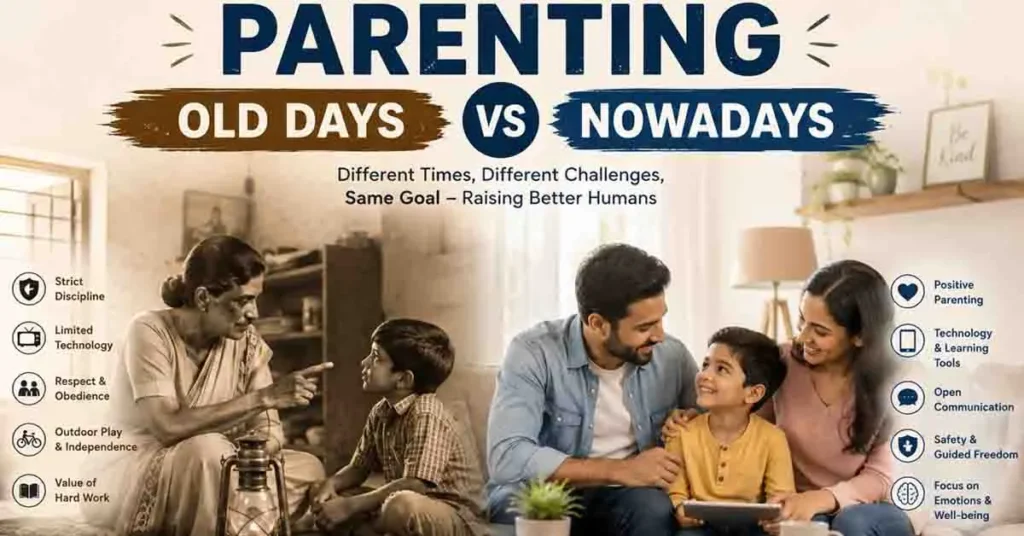
While older generations often believe that parenting was simpler and more effective in their time, modern parents face unique challenges that never existed before. The truth is that both old-school and modern parenting styles have their strengths and weaknesses.
In this article, we explore the key differences between parenting in the old days and parenting in today’s world.
1. Discipline: Strict Rules vs Gentle Guidance
Old Days
Traditional parenting was often based on authority and discipline. Children were expected to obey their parents without questioning decisions.
Common characteristics included:
- Strict household rules
- Limited discussions or negotiations
- Punishments for disobedience
- Respect for elders as a top priority
Many parents believed that discipline built character and responsibility.
Nowadays
Modern parenting focuses more on understanding a child’s emotions and explaining the reasons behind rules.
Today’s parents often:
- Encourage open conversations
- Listen to children’s opinions
- Use positive reinforcement
- Avoid harsh punishments
The goal is to develop emotional intelligence and self-discipline rather than obedience through fear.
2. Technology and Screen Time
Old Days
Children spent most of their time outdoors.
Activities included:
- Playing with friends in neighborhoods
- Cycling
- Sports and physical games
- Reading books and comics
Due to the lack of leisure options, creativity and social interaction were unavoidably encouraged.
Nowadays
Children’s lives are significantly impacted by technology.
Modern kids grow up with:
- Smartphones
- Tablets
- Video games
- Social media
- Streaming platforms
While technology provides educational opportunities, excessive screen time has become a major concern for parents worldwide.
3. Communication Between Parents and Children
Old Days
Parent-child communication was often one-sided.
Parents spoke.
Children listened.
Many children were hesitant to express their feelings or disagreements openly.
Nowadays
Modern families encourage communication.
Parents are more likely to:
- Discuss emotions
- Encourage questions
- Talk about mental health
- Involve children in decision-making
Children that use this method gain self-assurance and develop closer emotional bonds with their parents.
4. Education and Academic Pressure
Old Days
Education was important, but children generally faced less competition.
Most parents focused on:
- Basic education
- Good manners
- Stable careers
Career choices were often limited to a few respected professions.
Nowadays
From a young age, children are subjected to fierce academic competition.
Parents invest heavily in:
- Coaching classes
- Online learning platforms
- Skill development programs
- Extracurricular activities
As a result, many children experience increased pressure to perform and succeed.
5. Freedom and Independence
Old Days
Children enjoyed greater physical freedom.
They often:
- Walked to school alone
- Played outside until sunset
- Solved problems independently
- Learned through real-life experiences
Parents trusted communities and neighbors more.
Nowadays
Safety concerns have made parenting more protective.
Many parents closely monitor:
- Children’s locations
- Online activities
- Friendships
- Daily routines
While this improves safety, some experts argue that it can reduce independence and resilience.
6. Family Structure and Support Systems
Old Days
Joint families were more common.
Children grew up surrounded by:
- Grandparents
- Uncles and aunts
- Cousins
Parenting responsibilities were shared among family members.
Nowadays
Nuclear families are increasingly common.
Parents often:
- Manage work and parenting alone
- Have less family support
- Depend on daycare or babysitters
This can create additional stress for working parents.
7. Mental Health Awareness
Old Days
Mental health discussions were rare.
Children were often told to:
- Be strong
- Ignore emotional struggles
- Focus on responsibilities
Emotional issues were frequently misunderstood or overlooked.
Nowadays
Mental health has become an important part of parenting.
Modern parents are more aware of:
- Anxiety
- Depression
- Stress
- Emotional well-being
Many actively seek professional support when needed.
8. Work-Life Balance and Parenting
Old Days
Typically, one parent stayed home while the other worked.
More family time and supervision were frequently made possible by this arrangement.
Nowadays
In many households, both parents work.
Challenges include:
- Limited family time
- Busy schedules
- Increased stress
- Managing childcare responsibilities
Modern parents must balance career growth with quality parenting.
What Can Old-School Parenting Teach Contemporary Parents?
While parenting styles have evolved, some traditional values remain valuable:
- Teaching respect and responsibility
- Encouraging outdoor activities
- Building resilience
- Limiting unnecessary distractions
- Strengthening family bonds
These lessons can complement modern parenting techniques.
What Can Contemporary Parenting Teach Older Generations?
Modern parenting also offers important benefits:
- Better emotional support
- Improved communication
- Mental health awareness
- Positive discipline methods
- Respect for children’s individuality
These practices help create healthier parent-child relationships.
Conclusion
Parenting has evolved significantly over the years, and both traditional and modern approaches bring valuable lessons to the table. Earlier generations often prioritized discipline, accountability, and self-reliance, while today’s parents place greater emphasis on emotional support, open communication, and nurturing individual growth.
The best strategy might be to combine the advantages of both styles rather than considering one to be superior to the other. By combining timeless values such as respect, responsibility, and resilience with modern insights into mental health and emotional development, parents can help children grow into confident, compassionate, and capable individuals.
In the end, successful parenting is not about adhering to the practices of a certain age. It is about creating a supportive environment where children feel loved, understood, and equipped with the skills they need to navigate life successfully.
Disclaimer
The information provided by Web Arbiter (‘we’, ‘us’, or ‘our’) on https://webarbiter.in/ . The website is for general informational purposes only. All information on the Site is provided in good faith, however we make no representation or warranty of any kind, express or implied, regarding the accuracy, adequacy, validity, reliability, availability, or completeness of any information on the Site. UNDER NO CIRCUMSTANCE SHALL WE HAVE ANY LIABILITY TO YOU FOR ANY LOSS OR DAMAGE OF ANY KIND INCURRED AS A RESULT OF THE USE OF THE SITE OR RELIANCE ON ANY INFORMATION PROVIDED ON THE SITE. YOUR USE OF THE SITE AND YOUR RELIANCE ON ANY INFORMATION ON THE SITE IS SOLELY AT YOUR OWN RISK. Read Full Disclaimer