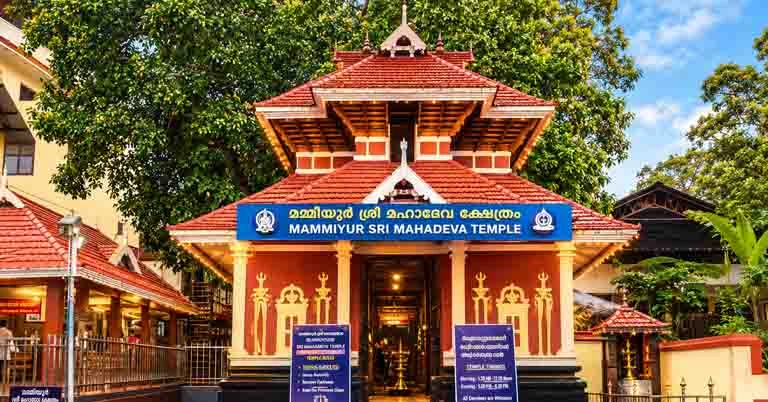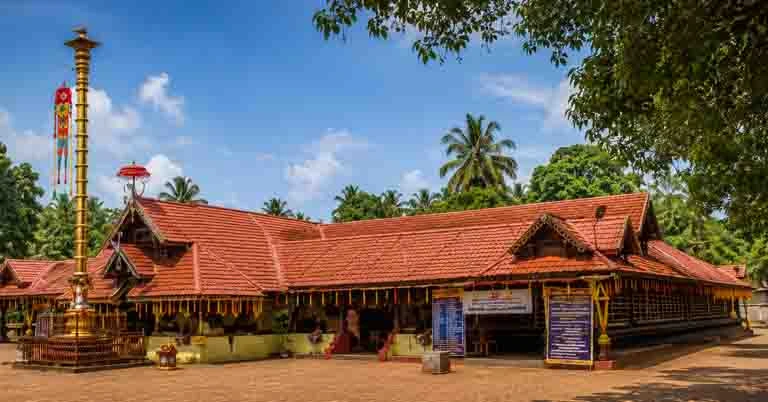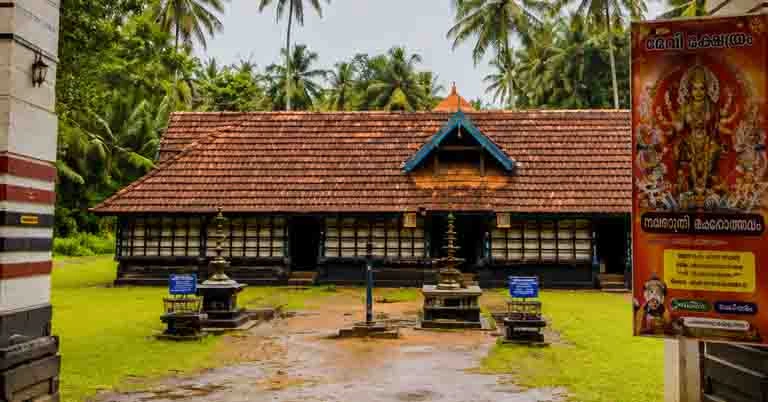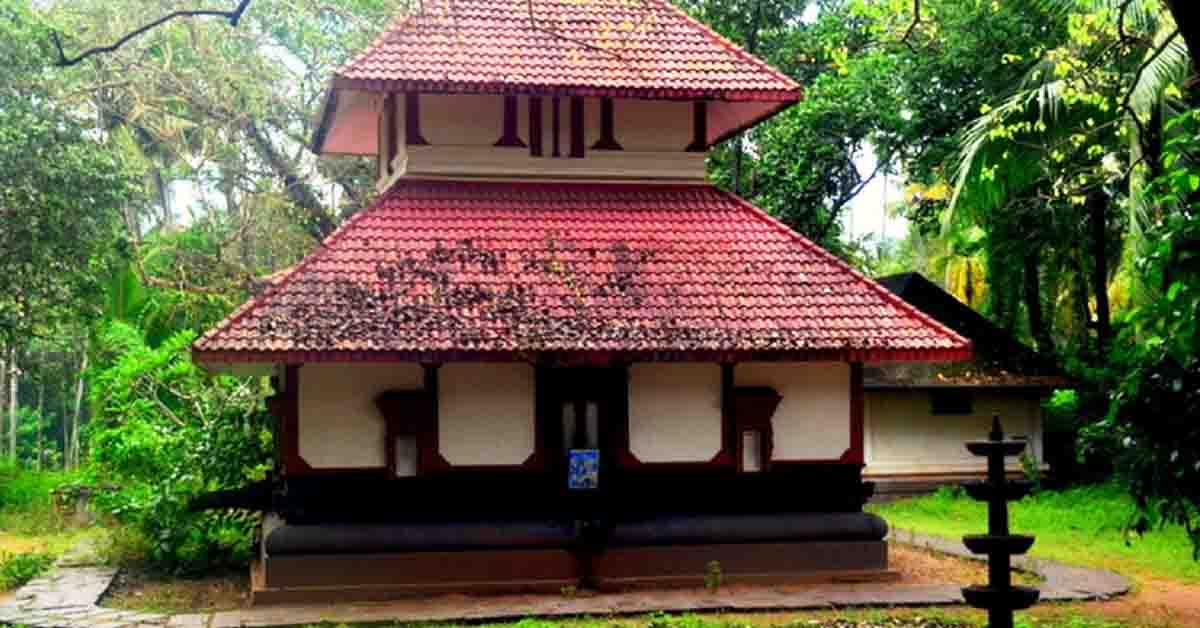
Situated in the heart of Thrissur city, Kerala’s cultural capital, the Raviswarapuram Siva Temple (also known as Ravishwarapuram Mahadeva Temple) is one of the oldest and most venerated shrines dedicated to Lord Shiva. It stands gracefully near the southern side of Thekkinkadu Maidanam, the vast open ground that encircles the famous Vadakkunnathan Temple.
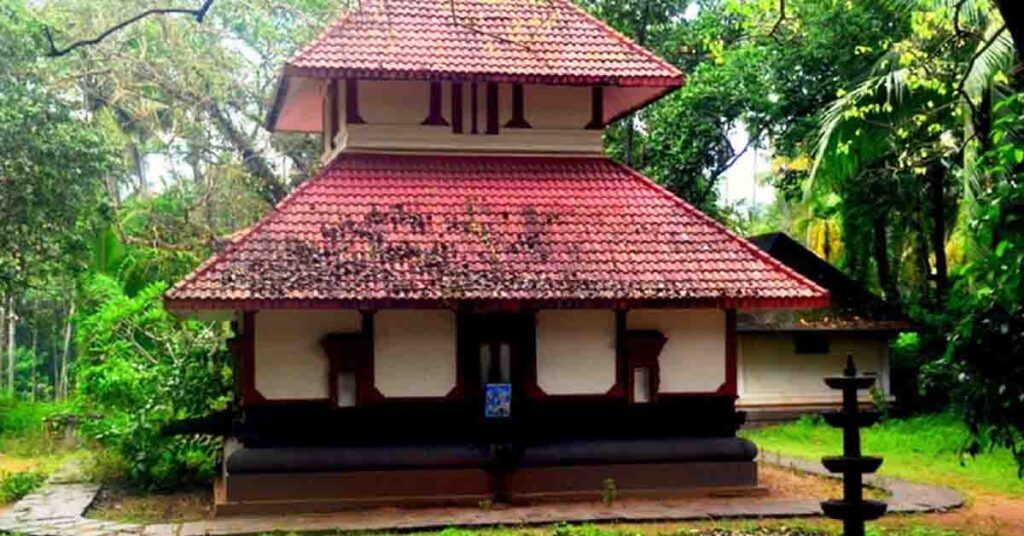
Although smaller in scale compared to its more renowned neighbor, the Raviswarapuram Siva Temple holds a distinct spiritual identity and deep historical resonance. It is one of the 108 ancient Shiva temples of Kerala believed to have been installed by Lord Parashurama, the legendary sage-warrior who is said to have reclaimed the land of Kerala from the sea.
Historical Background
The Raviswarapuram Siva Temple carries a rich historical lineage that intertwines with Kerala’s evolution as a center of Hindu devotion, art, and culture.
The Parashurama Connection
According to traditional belief, Lord Parashurama consecrated 108 Shiva temples across Kerala to protect the land and establish spiritual sanctity. The Raviswarapuram temple is counted among these sacred sites, symbolizing Lord Shiva as the cosmic light — the destroyer of darkness and ignorance.
This mythological connection gives the temple immense sanctity among devotees. It is said that Parashurama selected specific locations where spiritual energy was strongest, ensuring each temple represented a different form or aspect of Lord Shiva.
Medieval Period and Thrissur’s Rise
During the medieval period, Thrissur rose as a major spiritual and cultural hub under the Chera and Perumpadappu Swarupam dynasties. The Raviswarapuram Temple was patronized by local rulers, who granted land and wealth for its upkeep. Inscriptions found nearby indicate royal endowments, suggesting that it served not only as a place of worship but also as a center of local administration and community gatherings.
With the growth of Thrissur as a temple town, Raviswarapuram became an integral part of the region’s “temple circuit,” alongside the Vadakkunnathan, Paramekkavu, and Thiruvambady temples.
Mythological and Spiritual Significance
The Radiance of Lord Ravi-Ishwara
The presiding deity, Lord Shiva as Raviswara, is worshipped as a fusion of the solar and Shaiva energies — representing light, wisdom, and transcendence. This form signifies that Shiva is not merely the destroyer but also the source of illumination, akin to the sun’s power to dispel darkness.
It is believed that worshipping the Lord at this temple removes inner ignorance and negative karma, just as sunlight clears shadows. Many devotees perform Surya Namaskaram (Sun salutations) along with Shiva chanting as a symbolic union of solar and divine energy.
Connection to the Sun God
Legends also associate the temple with Surya Deva (the Sun God), who is said to have performed penance here to gain Shiva’s blessings. Hence, the temple’s energy is believed to be particularly powerful during sunrise, when the morning rays touch the sanctum, signifying the union of Shiva and the Sun’s radiance.
Architectural Splendor
The Raviswarapuram Siva Temple is a classic example of Kerala’s traditional temple architecture, known for its simplicity, natural harmony, and intricate craftsmanship.
1. Layout and Orientation
The temple follows the Vastu Shastra principles, facing east — allowing the first rays of the rising sun to fall directly upon the deity. The layout features the traditional Nalambalam structure (four surrounding halls) enclosing the Sreekovil (sanctum sanctorum).
2. The Sanctum Sanctorum (Sreekovil)
The Sreekovil is circular (Vatta Sreekovil) in shape, symbolizing eternity and the cosmic cycle of creation and dissolution. It is constructed with laterite and granite at the base and a conical copper-plated roof, reflecting the Dravidian influence adapted to Kerala’s climatic conditions.
Inside the sanctum resides the Shiva Lingam, aniconic and highly revered, representing the infinite aspect of divinity. The sanctum’s interior remains dimly lit, with oil lamps and the fragrance of sandalwood and incense creating a deeply meditative atmosphere.
3. Namaskara Mandapam and Balikkal Pura
The Namaskara Mandapam (prayer hall) stands before the sanctum, supported by ornately carved wooden pillars featuring depictions of celestial beings, flowers, and mythic scenes. In front lies the Balikkal Pura, the altar for ritual offerings to the guardian deities of the temple.

4. Subsidiary Shrines
Within the temple precincts, smaller shrines are dedicated to:
- Lord Ganapathi (Ganesha) – the remover of obstacles.
- Lord Subramanya (Murugan) – the son of Shiva, symbolizing valor and divine wisdom.
- Goddess Parvati – representing the Mother Divine, Shakti.
- Lord Ayyappa and Naga Devatas (Serpent Gods) – linked with Kerala’s native worship traditions.
This multiplicity of deities showcases the inclusive spiritual ethos of Hinduism as practiced in Kerala.
5. The Temple Pond and Surroundings
A serene temple pond lies adjacent to the complex, used for ritual purification and temple festivals. The entire temple area is shaded by ancient banyan and peepal trees, adding to the tranquil, meditative setting.
Rituals and Daily Worship
Raviswarapuram Siva Temple follows the Tantric and Agamic traditions of worship as outlined in Kerala’s Tantrasamuchayam. The rituals are performed by Namboothiri priests, maintaining centuries-old purity and precision.
Daily Pooja Schedule
- Nirmalyam – The early-morning ritual of cleansing and offering flowers from the previous day.
- Usha Pooja – Morning prayer to invoke the awakening of cosmic energy.
- Ucha Pooja – Noon ritual symbolizing balance and nourishment.
- Deeparadhana – Evening worship with rows of oil lamps, accompanied by temple bells and chanting.
- Athazha Pooja – The final night worship before the sanctum is closed.
Offerings (Vazhipadu)
Devotees perform several popular offerings:
- Abhishekam with milk, ghee, and tender coconut.
- Bilva leaf archana, considered sacred to Shiva.
- Mrityunjaya homam and Rudrabhishekam for longevity and health.
- Pradakshinam (circumambulation) around the sanctum for purification.
Each ritual connects the devotee with the five elements — earth, water, fire, air, and ether, embodying Shiva’s cosmic presence.
Festivals and Celebrations
Festivals are the soul of Kerala temples, and Raviswarapuram is no exception. Every celebration here is a blend of devotion, music, color, and community spirit.
1. Mahashivaratri
The most important festival of the temple, Mahashivaratri, is celebrated with unmatched devotion. The temple remains open throughout the night as devotees chant “Om Namah Shivaya,” light thousands of lamps, and perform Rudra Abhishekam.
The night symbolizes the triumph of light over darkness — ignorance giving way to wisdom. Spiritual discourses, classical music, and Chenda Melam (traditional percussion) fill the air, creating an atmosphere of sacred energy.
2. Annual Festival (Utsavam)
The annual temple festival, usually held in the Malayalam month of Kumbham (February–March), spans several days. Rituals such as Kodiyettam (flag hoisting), Seeveli (procession of deities around the temple), and Arattu (holy bath ceremony) are performed.
Caparisoned elephants, temple musicians, and colorful processions turn the temple grounds into a visual and devotional spectacle. The festival culminates with fireworks and deepa aradhana, symbolizing spiritual illumination.
3. Pradosham
The Pradosham days — the 13th evening of every lunar fortnight — are considered especially auspicious for Shiva worship. Devotees observe fasts and offer prayers seeking liberation from past karma.
4. Ekadasi and Mondays
As Monday is sacred to Lord Shiva, large crowds visit the temple to perform special abhishekams and prayers. Likewise, Ekadasi days (11th lunar day) are observed with fasting and chanting, believed to grant inner purity and spiritual growth.
Cultural and Artistic Importance
Raviswarapuram Siva Temple is not merely a site of worship but also a cultural hub deeply linked to Thrissur’s artistic identity.
- Koothambalam (Temple Theater): The temple once hosted Koothu and Koodiyattam performances — Kerala’s oldest Sanskrit theater traditions.
- Temple Music: The rhythmic Chenda Melam and Panchavadyam are integral to every festival, symbolizing Kerala’s living musical heritage.
- Community Center: The temple continues to support traditional art forms and serves as a gathering place for cultural discussions and charity programs.
In this way, Raviswarapuram acts as a bridge between spirituality and cultural expression, embodying the soul of Thrissur’s temple heritage.
Preservation and Modern Role
In recent years, temple authorities and devotees have undertaken restoration projects to preserve the sanctum’s woodwork, murals, and tiled roofing. The Kerala Devaswom Board oversees daily administration and ensures that modernization respects traditional architecture.
Despite being in the bustling heart of the city, the temple retains its calm, meditative ambiance — a refuge of peace amid urban life. It continues to draw not only worshippers but also historians, architects, and travelers interested in Kerala’s sacred art and heritage.
Visitor Information
- Location: Raviswarapuram, Thrissur, Kerala.
- Nearest Landmarks: Thekkinkadu Maidanam, Vadakkunnathan Temple, and Swaraj Round.
- Accessibility: Easily reachable by road, 1.5 km from Thrissur Railway Station, and about 55 km from Cochin International Airport.
- Timings: Generally open from 4:30 AM – 11:30 AM and 5:00 PM – 8:00 PM.
- Dress Code: Traditional attire required; men usually wear mundu, women saree or salwar.
The best times to visit are during early morning prayers or the evening Deeparadhana, when the temple glows with lamps and Vedic chants echo across its ancient walls.
Spiritual Essence
The temple’s spiritual vibration is profound. Many devotees report feeling a deep sense of calm and focus as they enter the sanctum. Worship at Raviswarapuram is said to bestow:
• Mental clarity and peace.
• Relief from planetary afflictions.
• Blessings for health, prosperity, and longevity.
• Progress on the path of self-realization.
The Lord here is believed to answer prayers with compassion — especially those offered with sincere faith during sunrise or the sacred hour of Pradosham.
Conclusion
The Raviswarapuram Siva Temple stands as a timeless spiritual landmark — a place where faith, art, and history meet. Its modest exterior conceals a powerful inner sanctity that has endured through centuries of devotion.
It is not merely a structure of stone and wood; it is a living embodiment of Kerala’s spiritual heritage, echoing the eternal mantra “Om Namah Shivaya.”
In the radiant presence of Raviswara, the light of the Sun merges with the stillness of Shiva, reminding every visitor that true enlightenment comes not from the outside world, but from the inner illumination of the soul.

Disclaimer
The information provided by Web Arbiter (‘we’, ‘us’, or ‘our’) on https://webarbiter.in/ . The website is for general informational purposes only. All information on the Site is provided in good faith, however we make no representation or warranty of any kind, express or implied, regarding the accuracy, adequacy, validity, reliability, availability, or completeness of any information on the Site. UNDER NO CIRCUMSTANCE SHALL WE HAVE ANY LIABILITY TO YOU FOR ANY LOSS OR DAMAGE OF ANY KIND INCURRED AS A RESULT OF THE USE OF THE SITE OR RELIANCE ON ANY INFORMATION PROVIDED ON THE SITE. YOUR USE OF THE SITE AND YOUR RELIANCE ON ANY INFORMATION ON THE SITE IS SOLELY AT YOUR OWN RISK. Read Full Disclaimer