
Nestled along the picturesque coast of Karnataka, India, the Mahabaleshwar Temple in Gokarna is one of the most revered shrines dedicated to Lord Shiva. Gokarna, meaning “Cow’s Ear” in Sanskrit, is a small coastal town renowned for its pristine beaches, serene landscapes, and spiritual significance. The Mahabaleshwar Temple is considered one of the Pancha Kshetras—the five sacred pilgrimage sites of Shiva—and is believed to house the original Atmalinga, making it a highly venerated destination for devotees across India and beyond. Its spiritual aura, historical legacy, and architectural grandeur render it a centerpiece of Shaivism and a hub of cultural heritage in the region.
Historical Background
The Mahabaleshwar Temple has a rich history that traces back several centuries. Though exact records of its construction are difficult to ascertain, local legends and historical texts suggest that the temple existed during the early medieval period and has since been a significant center of devotion. According to legend, the Atmalinga was brought to Gokarna by the demon king Ravana, who worshipped Lord Shiva to attain invincibility. Lord Shiva agreed to grant him the Atmalinga on the condition that it must not touch the ground until he reached his destination. The gods, fearing that Ravana would become too powerful, devised a plan that caused the Atmalinga to fall at Gokarna, which then became a permanent sacred site.
Over the centuries, the temple has been patronized by various dynasties, including the Chalukyas, Hoysalas, and Vijayanagara rulers, who contributed to its renovation, expansion, and preservation. Its enduring legacy reflects the devotion of countless generations and the temple’s pivotal role in the religious and cultural life of coastal Karnataka.

The temple is mentioned in several ancient scriptures and local texts, emphasizing its spiritual importance as a site where devotees can seek blessings for health, prosperity, liberation, and the removal of obstacles. The Atmalinga enshrined here is considered a self-manifested (Swayambhu) representation of Lord Shiva, enhancing the temple’s sanctity and making it a focal point of pilgrimage.
Architectural Features
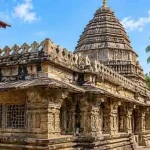
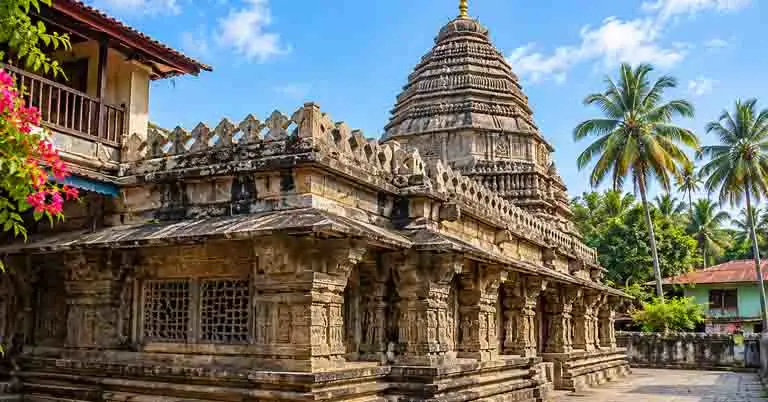
The Mahabaleshwar Temple is an exemplar of traditional South Indian temple architecture, with unique features reflecting the region’s cultural and religious heritage. The temple is constructed primarily using stone and laterite, with intricate carvings and sculptures adorning its walls, pillars, and entrance. Its architecture combines the stylistic elements of Chalukyan and Vijayanagara design, including elaborately carved doorways, sculpted pillars, and ornamental motifs depicting mythological narratives.
The temple complex is enclosed by high stone walls and comprises several shrines, courtyards, and halls. The central sanctum houses the Atmalinga, which is the most sacred element of the temple. The garbhagriha (sanctum sanctorum) is simple yet spiritually charged, emphasizing devotion over ornate embellishments. Devotees are allowed to offer their prayers from a designated distance, maintaining the sanctity of the Atmalinga.
The rajagopuram (main entrance tower) is modest in height but intricately carved with depictions of various deities, celestial beings, and mythological scenes. The temple courtyard accommodates smaller shrines for Lord Vishnu, Ganapati, Parvati, and Kartikeya, reflecting the inclusive nature of Hindu worship. The temple also features a sacred tank (Kalyani) used for ritual purification before entering the main sanctum.
A unique feature of Mahabaleshwar Temple is its alignment with the cardinal directions, allowing natural light to illuminate the sanctum at specific times of the day, symbolizing divine presence and cosmic harmony.
Religious Significance and Beliefs
The Mahabaleshwar Temple is of immense religious importance to devotees of Lord Shiva. It is believed that worship at this temple bestows spiritual merit, cleanses sins, and grants blessings related to health, prosperity, knowledge, and liberation. The Atmalinga is considered a powerful source of divine energy, and its presence reinforces the temple’s status as one of the holiest Shiva shrines in India.
Pilgrims often undertake rigorous spiritual practices at the temple, including fasting, meditation, and chanting of Shiva mantras. Special significance is given to performing rituals at sunrise and sunset, times believed to maximize the spiritual benefits of worship. Devotees also tie sacred threads, offer bilva leaves, and participate in ceremonial abhishekam, which includes bathing the Shivalinga with milk, water, honey, and other sacred substances.
The temple is also a center for spiritual learning and discourse. Historically, sages and scholars have visited Mahabaleshwar Temple to meditate, teach, and propagate Shaivism, making it not only a place of worship but also a hub of knowledge and religious education.
Daily Rituals and Worship Practices
The daily worship at Mahabaleshwar Temple follows traditional Shaiva Agama rituals, performed with precision and devotion. The rituals are designed to maintain the sanctity of the Atmalinga and facilitate the spiritual engagement of devotees.
Key daily rituals include:
- Mangala Arati: Early morning worship involving the ceremonial opening of the temple and invocation of Lord Shiva.
- Abhishekam: Ritualistic bathing of the Shivalinga with water, milk, honey, and other sacred offerings.
- Usha Pooja: Morning prayers accompanied by the offering of flowers, incense, and bilva leaves.
- Nada Thurakkal: Opening of temple doors for devotees, accompanied by conch blowing and bell ringing.
- Deepa Aradhana: Evening lamp offering, symbolizing the removal of darkness and the presence of divine light.
- Athazha Pooja: Night-time ritual marking the formal closure of the temple with prayers for protection and blessings.
Devotees visiting the temple are encouraged to maintain discipline, purity, and reverence during worship. Observing fasting, chanting mantras, and participating in abhishekam enhances the spiritual merit of their visit.
Major Festivals and Celebrations
The Mahabaleshwar Temple is renowned for its vibrant festivals that attract devotees from across India. The most prominent festival is Maha Shivaratri, celebrated with immense devotion and grandeur. Devotees observe fasting, stay awake throughout the night, and perform special rituals to honor Lord Shiva. The temple is decorated with lights, flowers, and ceremonial offerings, and spiritual discourses are conducted to educate and inspire pilgrims.
Another significant festival is Karthika Masam, during which devotees perform rituals and offerings throughout the month. The temple also celebrates Pradosham, Navaratri, and regional festivals that combine religious devotion with cultural performances. Devotees often participate in processions, cultural programs, and community gatherings, strengthening the spiritual and social fabric of the region.
The festivals at Mahabaleshwar Temple are not only religious events but also cultural occasions that preserve and promote traditional art forms such as Yakshagana, classical music, and folk performances, reflecting the temple’s role as a hub of both spirituality and cultural heritage.
Pilgrimage Experience
A visit to Mahabaleshwar Temple offers a holistic pilgrimage experience. Devotees can combine worship with meditation, reflection, and exploration of the surrounding natural beauty. Gokarna’s scenic coastline, coconut groves, and serene beaches provide a tranquil backdrop for spiritual activities, making the pilgrimage both spiritually and mentally rejuvenating.
Pilgrims often undertake a journey by foot or through traditional routes connecting other nearby Shiva shrines, enhancing the sense of devotion and pilgrimage. The town of Gokarna itself is steeped in religious history, with several other temples and holy sites adding to the richness of the spiritual journey.
Cultural and Social Significance
Mahabaleshwar Temple has historically been more than a place of worship; it is a center of cultural, educational, and social life. The temple fosters the preservation of local art forms and traditions, hosting performances during festivals and celebrations. It has also served as a hub for community gatherings, religious discourse, and spiritual education.
The temple administration engages in charitable and social welfare activities, including support for education, healthcare, and relief efforts, reflecting the traditional role of Indian temples as institutions that nurture both spiritual and social well-being.
Preservation and Modern Developments
Over time, the temple has undergone careful restoration to maintain its structural integrity and accommodate the needs of modern devotees. Renovations have respected the traditional architectural style while incorporating modern amenities such as lighting, sanitation, and accessibility features.
Environmental sustainability is emphasized, with eco-friendly practices adopted during festivals and large gatherings. This balance of tradition and modernity ensures that the temple continues to serve as a spiritual sanctuary while preserving its cultural and historical heritage.

Conclusion
Mahabaleshwar Temple in Gokarna stands as a timeless symbol of devotion, spiritual heritage, and cultural continuity. Its historical roots, spiritual significance, and vibrant religious practices make it a cornerstone of Shaivism in Karnataka. From the sacred Atmalinga and elaborate rituals to the serene natural surroundings and colorful festivals, the temple offers devotees an immersive experience that combines devotion, reflection, and cultural enrichment.
For pilgrims and visitors, the Mahabaleshwar Temple provides an opportunity to connect with Lord Shiva, seek blessings for personal and communal well-being, and engage with the rich spiritual and cultural traditions of South India. The temple continues to inspire generations of devotees, maintaining its sacred legacy while nurturing the spiritual, cultural, and social fabric of the community.
Through centuries of devotion, rituals, and cultural continuity, Mahabaleshwar Temple remains a living testament to Lord Shiva’s enduring presence and spiritual significance, inviting all who visit to experience its divine energy, partake in sacred rituals, and immerse themselves in the timeless serenity of this ancient holy site.
Disclaimer
The information provided by Web Arbiter (‘we’, ‘us’, or ‘our’) on https://webarbiter.in/ . The website is for general informational purposes only. All information on the Site is provided in good faith, however we make no representation or warranty of any kind, express or implied, regarding the accuracy, adequacy, validity, reliability, availability, or completeness of any information on the Site. UNDER NO CIRCUMSTANCE SHALL WE HAVE ANY LIABILITY TO YOU FOR ANY LOSS OR DAMAGE OF ANY KIND INCURRED AS A RESULT OF THE USE OF THE SITE OR RELIANCE ON ANY INFORMATION PROVIDED ON THE SITE. YOUR USE OF THE SITE AND YOUR RELIANCE ON ANY INFORMATION ON THE SITE IS SOLELY AT YOUR OWN RISK. Read Full Disclaimer