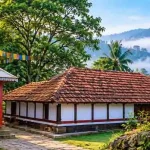
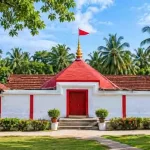
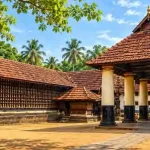
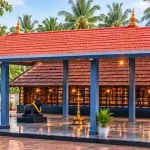
Amidst the serene surroundings of Vazhappally village near Changanassery in Kottayam district, stands the Vazhappally Maha Siva Temple, one of the most ancient and spiritually powerful shrines in Kerala dedicated to Lord Shiva. This temple holds a unique position in the religious, historical, and cultural landscape of Kerala, being one of the 108 Shiva temples believed to have been consecrated by Lord Parasurama, the legendary incarnation of Lord Vishnu who reclaimed the land of Kerala from the sea.
The Vazhappally Temple is not just a place of worship but a living heritage site that reflects the evolution of Kerala’s architecture, language, governance, and devotion. It is also famous for the Vazhappally Copper Plate Inscription, considered one of the oldest historical records in Malayalam script, proving the temple’s existence and importance since at least the 8th–9th century CE.

Historical Background
The origins of the Vazhappally Maha Siva Temple trace back thousands of years, with legends linking it directly to the divine mission of Lord Parasurama, who established 108 Shiva temples and 108 Durga temples across Kerala to maintain cosmic balance and spiritual energy. Vazhappally is said to have been one of the earliest among them, symbolizing the presence of Lord Mahadeva as the eternal, all-encompassing consciousness.
Archaeological evidence and historical inscriptions confirm that Vazhappally was an established temple center during the Chera dynasty. The Vazhappally Copper Plates (Vazhappally Cheppedu), discovered in the temple premises, record an important royal decree issued by Kulasekhara Varman, a Chera ruler, in the 9th century CE. These copper plates contain the earliest known form of written Malayalam and demonstrate the temple’s administrative importance, where even royal proclamations were made in the divine presence of Lord Shiva.
The temple was not merely a religious site but also a socio-political hub where community decisions, grants, and rituals were managed under royal supervision. This makes the Vazhappally Temple a cornerstone in the study of Kerala’s cultural evolution.
The Presiding Deity – Lord Mahadeva
The presiding deity of the temple is Lord Shiva, worshipped here as Vazhappally Mahadevan in the form of a Swayambhu Shivalinga (self-manifested). The Linga is believed to emit powerful spiritual vibrations, symbolizing the union of creation and dissolution — the essence of Lord Shiva.
The idol faces east, and the sanctum is designed to channel divine energy through sunlight during dawn rituals, symbolizing enlightenment and divine grace. The deity here is worshipped as Dakshinamurthi, the silent teacher, who bestows wisdom and spiritual insight upon devotees.

It is widely believed that Lord Shiva at Vazhappally grants Jnana (knowledge), Bhakti (devotion), and Mukti (liberation) to those who pray with pure heart and surrender. Devotees also worship here to overcome obstacles, illnesses, and karmic suffering.
The temple also houses sub-deities such as Lord Ganapathi, Subramanya Swami, Sastha (Ayyappa), Durga Devi, and Naga Devatas, representing the complete cosmic family (Parivar Devatas) of Lord Shiva.
Architectural Splendor
The Vazhappally Maha Siva Temple is a classic example of Kerala-style temple architecture (Vastu Vidya) — simple yet profound, designed to embody cosmic principles through structure, geometry, and symbolism. The temple layout adheres strictly to the Tantra Samuchaya and Manushyalaya Chandrika, ancient architectural treatises of Kerala.
The Sreekovil (sanctum sanctorum) is circular (Vatta Sreekovil), representing the infinite cosmic universe. The sanctum’s roof is copper-sheeted, and its walls are adorned with murals depicting scenes from Shaiva Puranas — including Daksha Yaga, Tripurantaka, and Ananda Tandava. The Namaskara Mandapam, located directly in front of the sanctum, is supported by wooden pillars exquisitely carved with divine motifs and mythological figures.
The Dwajasthambham (flagstaff) made of polished brass stands proudly in the courtyard, symbolizing the spiritual connection between heaven and earth. The Balikkal (altar), positioned before it, is where daily offerings are made to the deities and the guardian spirits (Upa Devatas).
Surrounding the sanctum is the Chuttambalam (outer hall), enclosed by a tiled cloister that allows devotees to perform Pradakshinam (circumambulation). The temple compound includes smaller shrines, sacred groves (Sarpakavu), and an ancient temple tank (Ambala Kulam) used for ritual purification.
The Gopuram (entrance tower), though modest in height compared to Dravidian styles, is beautifully proportioned and intricately decorated, embodying Kerala’s temple aesthetics that blend spirituality with simplicity.
Legends and Myths
According to ancient lore, Vazhappally was once a dense forest where sages meditated in search of divine truth. Lord Shiva, pleased by their devotion, appeared as a brilliant light and manifested as a Swayambhu Linga on the very spot where the temple now stands. The name “Vazhappally” is derived from “Vazha” (to live) and “Palli” (temple or abode), signifying “the abode where the Eternal One lives.”
Another legend connects Vazhappally to the Daksha Yaga episode, where Lord Shiva’s fierce energy manifested across various places in Kerala. Vazhappally is believed to be one of the sacred spots sanctified by that divine fire, symbolizing the purging of ignorance and the triumph of wisdom.
Local tradition also recounts that the great saint Parasurama performed severe penance here to appease Lord Shiva, who granted him the divine axe (Parasu), empowering him to restore dharma. Thus, Vazhappally came to be revered as one of the earliest Shiva Kshetras established in Kerala.
Daily Rituals and Worship Practices
The Vazhappally Maha Siva Temple follows ancient Tantric and Vedic traditions that have been preserved for centuries. The temple priests belong to the traditional Thantri and Namboothiri lineages, maintaining ritual purity and continuity.
The temple opens before sunrise with Nirmalyam, where the remnants of the previous day’s offerings are removed, followed by Abhishekam (ritual bathing) using water, milk, honey, and ghee. The fragrance of sandalwood and camphor fills the air as the morning Usha Pooja begins, invoking the divine blessings of Lord Mahadeva.
The main daily rituals include:
- Usha Pooja (Morning) – Awakening the Lord’s energy.
- Ucha Pooja (Noon) – Symbolizing sustenance and prosperity.
- Deeparadhana (Evening Lamp Ceremony) – Worship through light and music.
- Athazha Pooja (Night) – Final offering of peace before rest.
Special poojas such as Rudrabhishekham, Mrityunjaya Homam, Swayamvara Archana, and Palabhishekam are conducted regularly. Mondays, Pradosham days, and Shivaratri are particularly auspicious for worship.
The temple also observes Sankalpa Poojas for health, wealth, and spiritual progress. Devotees perform Vilwarchana (offering of Bilwa leaves) and Dhara (continuous pouring of liquids) over the Shivalinga, symbolizing surrender to the divine.
Festivals and Celebrations
The temple’s annual festival (Mahotsavam), celebrated in the Malayalam month of Kumbham (February–March), is a grand spiritual and cultural event that attracts thousands of devotees. The festival lasts for ten days, culminating in the Arattu (holy bath of the deity) at the temple pond amidst Vedic chants and musical processions.
The most important festival is Maha Shivaratri, which transforms the temple into a sea of devotion. The entire temple remains illuminated throughout the night with thousands of oil lamps, and continuous abhishekams, bhajans, and Rudra Parayanam (recitation of the Rudram) are conducted. Devotees fast and meditate through the night, seeking Lord Shiva’s divine grace for liberation.
Other significant festivals include:
- Pradosham: Bi-monthly observance for dissolving sins and negativity.
- Thiruvathira: Celebrated mainly by women, honoring Parvathi Devi’s penance to unite with Lord Shiva.
- Navarathri and Mandala Kalam: Observed with Vedic recitations, cultural programs, and devotional music.
- Sivarathri Vilakku: Lighting of thousands of lamps symbolizing enlightenment and the dispelling of darkness.
During these occasions, the temple complex reverberates with Chenda Melam, Nadaswaram, and Vedic chants, preserving Kerala’s artistic and spiritual traditions.
Cultural and Historical Significance
Beyond its religious importance, the Vazhappally Maha Siva Temple has immense cultural and historical value. It is considered the cradle of Malayalam’s written history, owing to the discovery of the Vazhappally Copper Plates. These plates, inscribed in a mix of early Malayalam and Vatteluttu script, detail temple administration, tax grants, and royal patronage. They provide invaluable insight into Kerala’s early polity, language, and temple governance.
The temple also functioned as an educational center for Vedas, Sanskrit, and Ayurveda, attracting scholars and saints. The temple’s Koothambalam (theatre hall) once hosted performances of Koothu and Koodiyattam, ancient Sanskrit drama forms dedicated to temple rituals.
Even today, the temple stands as a hub of social unity, where people from all walks of life participate in festivals, annadanam (free food service), and temple upkeep, reflecting Kerala’s inclusive spiritual culture.
Preservation and Modern Management
Over the centuries, the Vazhappally Maha Siva Temple has undergone several renovations, most notably under the Travancore Devaswom Board. Traditional architects and artisans have ensured that each restoration maintains the sanctity and authenticity of the original structure.
Special attention has been given to preserving the murals, copper roofing, and wooden carvings, many of which are centuries old. The temple’s management also actively engages in eco-friendly initiatives, including waste management and maintaining the temple pond and sacred groves.
The Divine Experience
A visit to the Vazhappally Maha Siva Temple is a deeply spiritual journey. As one enters through the eastern Gopuram, the rhythmic beats of the Chenda, the chanting of Vedic hymns, and the gentle fragrance of jasmine flowers create an atmosphere of tranquility and reverence.
Standing before the sanctum, one feels the divine presence of Lord Mahadeva — calm, eternal, and compassionate. The cool breeze from the temple pond, the soft glow of oil lamps, and the sound of bells together awaken the inner spirit. Devotees often describe a visit here as an experience of oneness — where time stands still, and the soul feels united with the cosmic consciousness.
During monsoon evenings, when rainwater gently flows across the temple courtyard, devotees perceive it as nature performing abhishekam for the Lord — a moment of divine grace that connects heaven and earth.

Conclusion
The Vazhappally Maha Siva Temple stands as a sacred testament to Kerala’s spiritual heritage, architectural brilliance, and cultural depth. It is not merely a temple but a living chronicle of devotion, wisdom, and artistic excellence that has endured through ages.
As one of the earliest centers of Shaivism in Kerala, Vazhappally continues to radiate the timeless energy of Lord Shiva, guiding devotees toward peace, purity, and enlightenment. The divine Linga, the ancient copper plates, and the echo of prayers together make this temple a bridge between the past and the eternal.
For the faithful and the seeker alike, the Vazhappally Maha Siva Temple is more than a destination — it is an awakening, a sacred space where the self dissolves, and only the infinite remains.
Disclaimer
The information provided by Web Arbiter (‘we’, ‘us’, or ‘our’) on https://webarbiter.in/ . The website is for general informational purposes only. All information on the Site is provided in good faith, however we make no representation or warranty of any kind, express or implied, regarding the accuracy, adequacy, validity, reliability, availability, or completeness of any information on the Site. UNDER NO CIRCUMSTANCE SHALL WE HAVE ANY LIABILITY TO YOU FOR ANY LOSS OR DAMAGE OF ANY KIND INCURRED AS A RESULT OF THE USE OF THE SITE OR RELIANCE ON ANY INFORMATION PROVIDED ON THE SITE. YOUR USE OF THE SITE AND YOUR RELIANCE ON ANY INFORMATION ON THE SITE IS SOLELY AT YOUR OWN RISK. Read Full Disclaimer