Nestled in the serene village of Changankulangara, near Karunagappally in Kollam district, Kerala, the Changankulangara Mahadeva Temple stands as one of the most sacred and ancient shrines dedicated to Lord Shiva. With its divine aura, traditional Kerala-style architecture, and deep historical and spiritual roots, the temple is revered as a significant Shaiva center of worship in southern Kerala.
Believed to have been consecrated by Lord Parasurama, the sixth incarnation of Lord Vishnu who is said to have established 108 Shiva temples and 108 Durga temples across Kerala, Changankulangara occupies a vital position in this sacred network. Over the centuries, the temple has been a beacon of faith, culture, and learning — a place where spirituality blends harmoniously with Kerala’s living traditions.

Mythological Origins and Legends
The mythology of the Changankulangara Mahadeva Temple is deeply connected to the legend of Lord Parasurama. According to tradition, after reclaiming Kerala from the sea, Parasurama sought to sanctify the new land by consecrating shrines to Lord Shiva and Goddess Durga. He performed intense penance and requested Lord Shiva to manifest in various sacred places to protect the devotees and the land. The site of Changankulangara was one such chosen spot where Lord Shiva manifested as a Swayambhu (self-manifested) Shiva Linga, radiating immense divine power.
It is believed that the name “Changankulangara” is derived from two Malayalam words — “Changan,” referring to a nearby ancient family or settlement, and “Kulam,” meaning pond, symbolizing the sacred temple pond (Ambala Kulam) situated near the shrine. The pond is said to have divine origins and is believed to have healing properties.
Another popular legend says that a sage named Atri Maharshi once meditated in this region, invoking Lord Shiva’s blessings for the welfare of humanity. Pleased by his devotion, Shiva appeared before him and promised to reside here eternally in the form of a Linga. The temple was thus established to enshrine this divine presence, which continues to bless devotees with peace, health, and prosperity.

Historical Significance
The Changankulangara Mahadeva Temple is considered one of the oldest temples in the Kollam region. Though its exact date of origin remains uncertain, archaeological and architectural studies suggest that the temple’s core sanctum and layout date back over a thousand years.
Inscriptions and palm-leaf manuscripts found in the vicinity reveal that the temple played a central role in the religious and social life of the local community. Ancient records mention the temple’s involvement in land grants, festivals, and educational activities under royal patronage during the reigns of the Travancore and Venad dynasties.
It is said that the temple’s administration was once supervised by prominent Namboothiri families of the region, who maintained the rituals, discipline, and upkeep of the temple in accordance with Agama Shastra and Tantric traditions. Even today, the temple retains much of its ancient structure, rituals, and cultural values, making it an important living heritage site.
Presiding Deity – Lord Shiva as Changankulangara Mahadevan
The principal deity of the temple is Lord Shiva, worshipped here as Changankulangara Mahadevan. The Lord is enshrined in the form of a Swayambhu Shiva Linga, symbolizing the eternal, formless, and infinite nature of the Supreme. The deity faces east, representing enlightenment and spiritual awakening.
The Shiva Linga is of medium height, placed on a circular Peedam (pedestal) inside the Sreekovil (sanctum sanctorum). The Lord is believed to manifest here in a calm and benevolent form, blessing devotees with inner peace, wisdom, and protection from negative energies.
Alongside the main deity, the temple houses several Upa Devatas (sub-deities), including:
- Lord Ganapathi, the remover of obstacles, worshipped before any ritual begins.
- Lord Subramanya (Murugan), representing valor and divine knowledge.
- Sree Parvathi Devi, the consort of Lord Shiva, worshipped for marital harmony and prosperity.
- Lord Ayyappa (Sastha), the guardian deity.
- Naga Devatas, associated with fertility and ancestral blessings.
Together, these deities represent the cosmic family (Parivar Devatas) of Lord Shiva, signifying balance between creation and destruction, knowledge and devotion, power and compassion.
Architectural Grandeur
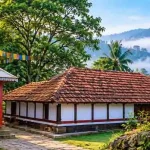
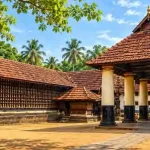
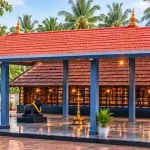
The Changankulangara Mahadeva Temple is a masterpiece of Kerala-style temple architecture, reflecting both aesthetic beauty and spiritual symbolism. Constructed primarily with laterite, wood, and copper tiles, the temple adheres to the principles of Vastu Vidya and Tantra Shastra, ensuring harmony between the divine energy within and the natural surroundings outside.
The Sreekovil, which houses the main deity, is circular (Vatta Sreekovil), representing the infinite universe and the cyclical nature of time. The roof is copper-sheeted, and the sanctum walls are adorned with intricate carvings depicting episodes from Shaiva mythology, such as Tripurantaka, Ardhanarishvara, and Dakshinamurthy.
In front of the sanctum lies the Namaskara Mandapam, supported by beautifully carved wooden pillars. The Dwajasthambham (flagstaff), plated with brass, rises majestically before the sanctum, symbolizing the connection between the material and spiritual realms.
The Chuttambalam (outer hall) surrounds the sanctum, offering devotees space for Pradakshinam (circumambulation). The temple also includes a Koothambalam (theatre hall) for performing ritual arts such as Koothu and Koodiyattam, and a sacred temple pond to the north, used for purification rituals and temple festivals.
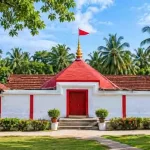
The main entrance, adorned with a modest yet elegant Gopuram (gateway tower), reflects Kerala’s architectural grace — blending simplicity with sacred geometry. The temple’s overall design harmonizes with the lush greenery and water bodies surrounding it, embodying the ancient Kerala philosophy of living in tune with nature and divinity.
Daily Rituals and Worship Traditions
The daily poojas at Changankulangara Mahadeva Temple are conducted according to Tantric and Vedic traditions, preserving centuries-old rituals that connect devotees to the divine consciousness.
The main rituals include:
- Nirmalyam (early morning) – Removing the previous day’s garlands and offerings, followed by Abhishekam.
- Abhishekam (ritual bathing) – Performed with water, milk, ghee, honey, and sandalwood paste.
- Usha Pooja – The morning worship invoking Shiva’s cosmic energy.
- Ucha Pooja – Noon worship symbolizing sustenance and balance.
- Deeparadhana (evening lamp ceremony) – Worship with lights and chants at sunset.
- Athazha Pooja (night offering) – Final ritual before the temple closes, signifying rest and peace.
Special poojas such as Rudrabhishekam, Mrityunjaya Homam, Pradosha Pooja, and Palabhishekam are performed regularly. Mondays and Pradosham days are considered particularly auspicious for Shiva worship.
The temple is also known for its Vilwarchana (offering of Bilwa leaves) and Dhara rituals, believed to purify the mind and body, removing all afflictions and sins. Devotees from across Kerala visit the temple to perform Swayamvara Archana, Sarpa Bali, and Graha Shanti for relief from planetary doshas.
Festivals and Celebrations
The annual festival (Mahotsavam) of Changankulangara Mahadeva Temple is celebrated in the Malayalam month of Meenam (March–April), lasting for ten days. The festival begins with the ceremonial Kodiyettam (flag hoisting) and concludes with the Arattu (holy bath) of the deity in the temple pond.
During the festival days, the temple becomes a center of devotion, music, and art. Rituals such as Utsavabali, Sreebali, and Pallivetta are conducted with grandeur, accompanied by traditional Chenda Melam, Nadaswaram, and Thayambaka performances.
The most important observance is Maha Shivaratri, when devotees fast and keep vigil throughout the night, offering continuous Abhishekam and chanting Om Namah Shivaya. Thousands gather to seek Lord Shiva’s blessings for liberation and peace.
Other notable festivals include:
- Thiruvathira – Celebrated mainly by women, honoring Parvathi Devi’s penance for Shiva.
- Pradosham – Observed twice a month for spiritual cleansing.
- Mandala Kalam and Navarathri – Marked with special poojas and cultural programs.
During festival nights, the temple and its surroundings glow with hundreds of oil lamps, symbolizing divine light dispelling darkness.
Cultural and Spiritual Significance
The Changankulangara Mahadeva Temple has long been a center for the preservation of Vedic learning, traditional arts, and temple culture. The temple once served as a Vidyalaya (school) for teaching Vedas, Sanskrit, and Tantra Shastra to young scholars. The Koothambalam was a stage for ritual performances like Chakyar Koothu and Koodiyattam, which conveyed moral and spiritual stories from Hindu scriptures.
The temple’s festivals bring together people of all backgrounds, symbolizing Kerala’s inclusive spirituality. The Annadanam (free food service) during festival days is considered an act of highest devotion, feeding hundreds of devotees and pilgrims daily.
For locals, the temple remains the heart of community life — a place for spiritual solace, cultural expression, and social harmony. Its calm surroundings, sacred pond, and ancient banyan trees add to the tranquil, divine atmosphere that continues to draw seekers of peace and devotion.
Preservation and Administration
The Changankulangara Mahadeva Temple is managed under the supervision of the Travancore Devaswom Board, which ensures the preservation of its rituals, heritage, and infrastructure. Renovations are carried out carefully to retain the temple’s original architectural style and sacred energy.
Conservation efforts include restoring old murals, maintaining the temple pond, and preserving the sacred groves (Sarpakavu) within the premises. The temple management also encourages environmental awareness, ensuring the temple remains eco-friendly and spiritually vibrant.
Spiritual Experience
Visiting the Changankulangara Mahadeva Temple is a deeply moving experience. As one walks through the eastern gate, the rhythmic sounds of Chenda, the fragrance of incense, and the serene sight of the sanctum evoke a sense of timeless devotion.
Standing before the Swayambhu Shiva Linga, one feels the tranquil yet powerful presence of Lord Mahadeva — the eternal consciousness that pervades all creation. The reflection of oil lamps on the sanctum walls, the chanting of Rudram, and the soft rustle of temple bells create an atmosphere of profound serenity.
Many devotees describe a visit here as transformative — a moment where worldly worries dissolve and the soul feels connected to the divine essence of Shiva. Whether one seeks spiritual enlightenment, inner peace, or divine blessings, the Changankulangara Mahadeva Temple offers a sanctuary of light, faith, and tranquility.

Conclusion
The Changankulangara Mahadeva Temple stands as a magnificent symbol of Kerala’s ancient Shaiva tradition, architectural brilliance, and enduring devotion. With its mythical origins, historical depth, and spiritual grace, the temple continues to inspire countless devotees and travelers alike.
As the centuries pass, the sacred presence of Lord Shiva at Changankulangara remains unchanging — a guardian of truth, a source of strength, and a beacon of wisdom. The temple not only embodies Kerala’s spiritual soul but also serves as a living testament to the harmony between humanity, nature, and divinity.
To visit the Changankulangara Mahadeva Temple is to experience the eternal — where the divine still whispers through the rustling banyan leaves, where the pond reflects the heavens, and where Lord Shiva continues to bless all who seek him with an open heart.
Disclaimer
The information provided by Web Arbiter (‘we’, ‘us’, or ‘our’) on https://webarbiter.in/ . The website is for general informational purposes only. All information on the Site is provided in good faith, however we make no representation or warranty of any kind, express or implied, regarding the accuracy, adequacy, validity, reliability, availability, or completeness of any information on the Site. UNDER NO CIRCUMSTANCE SHALL WE HAVE ANY LIABILITY TO YOU FOR ANY LOSS OR DAMAGE OF ANY KIND INCURRED AS A RESULT OF THE USE OF THE SITE OR RELIANCE ON ANY INFORMATION PROVIDED ON THE SITE. YOUR USE OF THE SITE AND YOUR RELIANCE ON ANY INFORMATION ON THE SITE IS SOLELY AT YOUR OWN RISK. Read Full Disclaimer