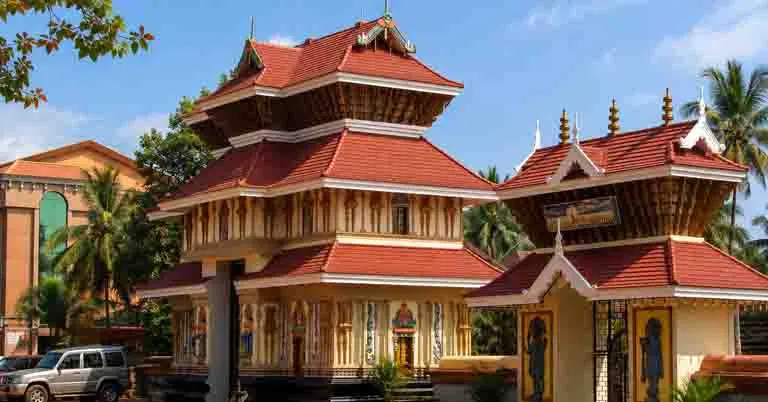
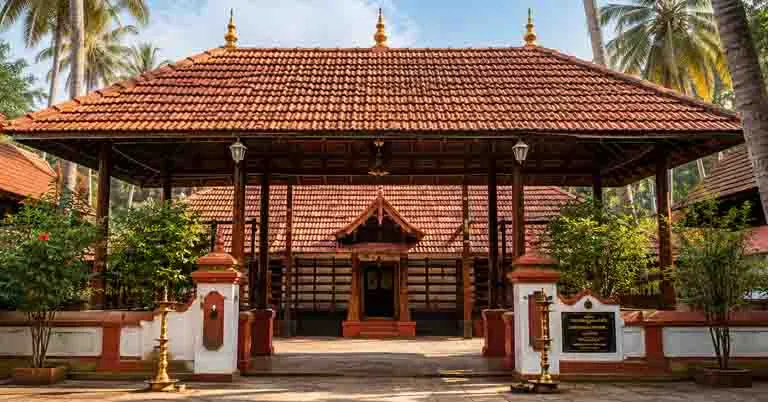
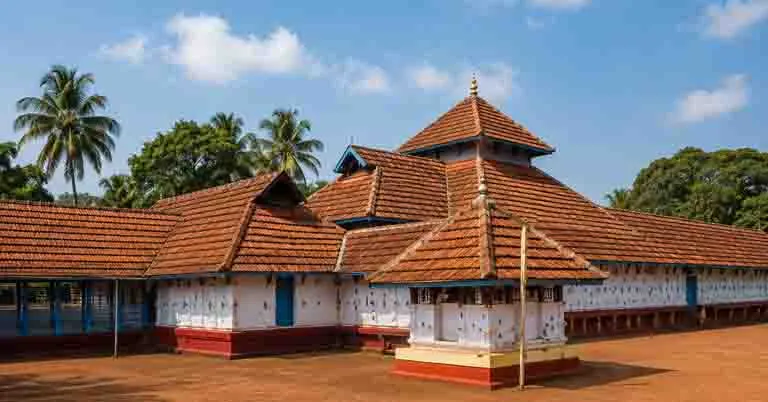
The Annamanada Mahadeva Temple, located in the Thrissur district of Kerala, is a magnificent example of the region’s timeless spiritual tradition and architectural brilliance. Dedicated to Lord Shiva, the temple is one of the oldest in Kerala and holds a significant place among the sacred shrines believed to have been consecrated by Lord Parasurama, the legendary sage-warrior who reclaimed the land of Kerala from the sea.
Nestled on the serene banks of the Chalakudy River, the temple exudes an atmosphere of divine peace and devotion. Known locally as Annamanada Appan, the deity here is worshipped in the rare and powerful form of Lord Kirathamoorthy, depicting Shiva as a hunter — a unique manifestation not commonly found in most other Shiva temples.
Mythological Significance
According to Hindu mythology, the temple’s presiding deity — Lord Kirathamoorthy — represents an episode from the Mahabharata. The legend recounts that the Pandava prince Arjuna, in his quest to acquire the Pashupatastra, the divine weapon of Lord Shiva, engaged in deep penance and meditation in a dense forest. To test Arjuna’s devotion and valor, Lord Shiva appeared before him in the guise of a Kirata (hunter), accompanied by Goddess Parvati in the form of a huntress.
When a wild boar attacked Arjuna during his meditation, both he and the hunter shot arrows at it simultaneously. This led to an argument between the two about who had slain the boar. A fierce battle ensued between Arjuna and the hunter, in which Arjuna was ultimately defeated. Realizing that his opponent was none other than Lord Shiva, Arjuna fell to his knees in reverence. Pleased with his devotion, Lord Shiva blessed him with the Pashupatastra, symbolizing the triumph of devotion, humility, and divine grace.
It is believed that the Annamanada Mahadeva Temple stands at the very site where Lord Shiva manifested as Kirathamoorthy, making it one of the few temples in India to worship this rare form of the deity.

Historical Background
The history of the Annamanada Mahadeva Temple is deeply intertwined with Kerala’s ancient dynasties and religious traditions. The temple is believed to date back to the early medieval period, around the 9th to 11th century CE, when temple architecture and Shaiva worship flourished in the region.
Inscriptions and copper plate records suggest that the temple received generous patronage from local chieftains and royal families, particularly those of the Chera and Perumpadappu Swaroopam dynasties. It was a major center for Shaiva-Vaishnava harmony, where rituals for both Lord Shiva and Lord Vishnu were occasionally performed, symbolizing the philosophical unity of the divine.
Over the centuries, the temple underwent renovations while maintaining its traditional architectural integrity. The Cochin Devaswom Board currently manages the temple, ensuring the preservation of its rituals, heritage, and festivals.
Architectural Excellence
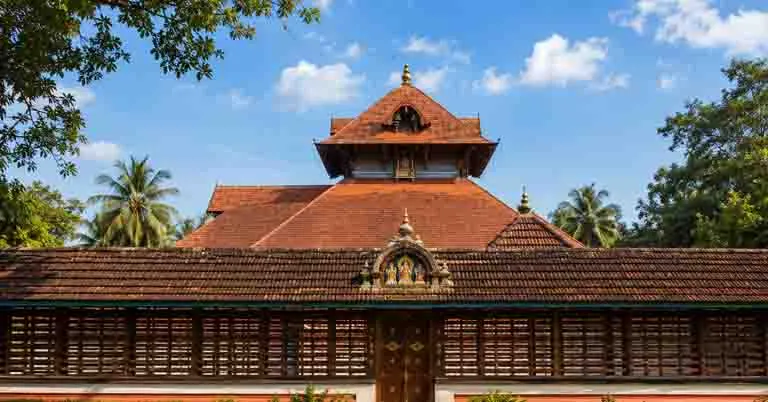
The Annamanada Mahadeva Temple is a classic representation of Kerala’s Dravidian temple architecture, blending simplicity with spiritual depth. Constructed primarily from laterite, granite, and wood, the temple complex showcases the architectural precision and artistry for which Kerala temples are renowned.
1. The Sreekovil (Sanctum Sanctorum)
The sanctum, or Sreekovil, is circular in shape (Vatta Sreekovil), signifying completeness and eternity. Within it resides the Shivalinga, representing Lord Shiva in his infinite form. The idol is said to be self-manifested (Swayambhu), radiating immense spiritual energy. The sanctum’s wooden roof, adorned with brass sheets, protects it from Kerala’s monsoon rains while preserving its sacred energy.
2. Namaskara Mandapam
In front of the sanctum lies the Namaskara Mandapam, a beautifully carved wooden pavilion supported by ornate pillars. This is where devotees and priests perform rituals and prostrations before the deity. During festivals, this mandapam becomes the heart of ceremonial activities, glowing with hundreds of oil lamps.
3. Nalambalam and Chuttambalam
The Nalambalam (inner quadrangle) and Chuttambalam (outer corridor) encompass the Sreekovil, forming the sacred boundary of the temple. The walls are adorned with murals and carvings depicting episodes from the Puranas and Itihasas (epics), particularly stories of Lord Shiva and Parvati.
4. Temple Pond (Kulam)
A serene temple pond is situated adjacent to the main shrine. Devotees use it for ritual cleansing before entering the temple, symbolizing purification of body and soul. The reflection of the temple in its tranquil waters enhances the sanctity and visual beauty of the site.
Spiritual Importance and Deity
The main deity, Lord Kirathamoorthy (Shiva as the Hunter), is a rare and powerful form symbolizing divine strength, humility, and compassion. This form of Shiva embodies the balance of destruction and preservation, reminding devotees that even the fiercest trials in life can lead to spiritual awakening.
Devotees believe that prayers offered at the Annamanada Temple bring victory over obstacles, courage during hardships, and inner peace. It is also a place where people seek relief from mental stress and karmic afflictions.
The temple is considered especially auspicious for warriors, athletes, and students, symbolizing Arjuna’s devotion and determination in the Mahabharata.
Sub-Shrines and Other Deities
In addition to the main sanctum of Lord Shiva, the temple complex houses several smaller shrines dedicated to other deities, emphasizing the inclusiveness of Hindu worship. These include:
- Goddess Parvathi – Consort of Lord Shiva, representing the divine feminine power (Shakti).
- Lord Ganesha: A symbol of good beginnings and a remover of barriers.
- Lord Subramanya (Murugan) – The god of valor and wisdom, often associated with Shiva temples in South India.
- Lord Ayyappa – The divine son of Shiva and Vishnu (in Mohini form), revered for his spiritual discipline.
- Naga Devatas (Serpent Gods) – Worshipped in the temple’s sacred grove, symbolizing fertility and protection of nature.
Rituals and Worship Practices
The Annamanada Mahadeva Temple follows the Tantric tradition of worship (Tantra Vidhi), a distinctive ritual practice found in Kerala’s ancient Shaiva temples. The daily poojas are performed by well-trained Tantric priests, adhering to precise timings and Vedic chants.
The daily rituals include:
- Nirmalyam (early morning purification)
- Abhishekam (ritual bathing of the deity)
- Usha Pooja (morning worship)
- Ucha Pooja (midday worship)
- Deeparadhana (evening lamp offering)
- Athazha Pooja (night prayer)
During Pradosham (the 13th lunar day), special abhishekams are performed with sacred substances like milk, honey, and ghee, believed to remove sins and grant blessings.
Festivals and Celebrations
The Annamanada Mahadeva Temple is renowned for its grand festivals that blend devotion with Kerala’s cultural vibrancy.
1. Maha Shivaratri
The most significant festival celebrated here is Maha Shivaratri, marking the cosmic dance of Lord Shiva. Devotees fast, chant “Om Namah Shivaya,” and participate in night-long prayers. The temple is illuminated with thousands of lamps, and the air resonates with bhajans and Rudram chants, creating an atmosphere of divine ecstasy.
2. Annual Utsavam (Temple Festival)
The annual temple festival, lasting for 8–10 days, features traditional elephant processions, Panchavadyam (temple orchestra), Chenda melam (drum performance), and Kathakali dance dramas depicting stories of Lord Shiva. The highlight is the Arattu (holy bath of the deity), symbolizing purification and renewal.
3. Pradosham, Thiruvathira, and Navratri
These festivals are celebrated with equal devotion, each emphasizing different aspects of divine worship — Shiva’s benevolence, Parvati’s grace, and the victory of good over evil.
Cultural and Social Role
The Annamanada Mahadeva Temple is not only a religious center but also a cultural and social hub for the local community. It plays a vital role in preserving traditional Kerala art forms like Kathakali, Ottamthullal, and Chakyarkoothu, which are performed in the temple premises during festivals.
The temple also promotes Annadanam (free food distribution), Vedic education, and community welfare programs, embodying the spirit of seva (service) and dharma (righteousness).
For centuries, it has served as a spiritual anchor, fostering moral values, unity, and peace among the people.
Architectural Conservation and Management
Today, the temple is maintained by the Cochin Devaswom Board, which oversees rituals, festivals, and restoration work. Preservation efforts are ongoing to maintain the temple’s wooden carvings, murals, and structural elements without compromising their historical authenticity.
Special attention has been given to restoring the roof tiles, brass fixtures, and the pond, ensuring that the temple continues to stand as a symbol of Kerala’s sacred heritage.
Visiting the Temple
The Annamanada Mahadeva Temple is located about 10 km from Chalakudy and 35 km from Thrissur, easily accessible by road and rail. The tranquil environment, flanked by the river and paddy fields, makes it an ideal destination for spiritual retreat and introspection.
The temple welcomes visitors of all faiths who come to experience its calm aura and timeless spirituality. Morning and evening hours are considered the most auspicious times for darshan.

Conclusion
The Annamanada Mahadeva Temple stands as a shining emblem of Kerala’s ancient devotion, architectural artistry, and cultural depth. Dedicated to Lord Kirathamoorthy, it is not just a temple but a spiritual experience that transcends religion and time.
From its mythological roots in the Mahabharata to its serene presence by the river, the temple continues to inspire faith, humility, and inner transformation. It reminds devotees that true victory lies not in power or pride but in surrendering to divine will — just as Arjuna did before Lord Shiva.
To this day, the temple remains a sacred confluence of faith, heritage, and harmony, making it one of the most revered Shiva temples in Kerala and a must-visit destination for every spiritual seeker.
Disclaimer
The information provided by Web Arbiter (‘we’, ‘us’, or ‘our’) on https://webarbiter.in/ . The website is for general informational purposes only. All information on the Site is provided in good faith, however we make no representation or warranty of any kind, express or implied, regarding the accuracy, adequacy, validity, reliability, availability, or completeness of any information on the Site. UNDER NO CIRCUMSTANCE SHALL WE HAVE ANY LIABILITY TO YOU FOR ANY LOSS OR DAMAGE OF ANY KIND INCURRED AS A RESULT OF THE USE OF THE SITE OR RELIANCE ON ANY INFORMATION PROVIDED ON THE SITE. YOUR USE OF THE SITE AND YOUR RELIANCE ON ANY INFORMATION ON THE SITE IS SOLELY AT YOUR OWN RISK. Read Full Disclaimer