
Imagine standing in the middle of a vast desert, surrounded by towering red sandstone formations, naturally sculpted rock bridges, and dramatic landscapes stretching as far as the eye can see. Welcome to Arches National Park in Utah, one of the most remarkable natural destinations in the United States.
Famous for its extraordinary collection of natural stone arches, this national park offers a wonderful combination of scenic drives, hiking trails, photography opportunities, and peaceful desert views. Whether you are an adventure enthusiast, a nature lover, or someone planning a memorable road trip through Utah, Arches National Park deserves a place on your travel list.
Located just a few miles from the town of Moab, the park is home to more than 2,000 documented natural stone arches, along with towering sandstone fins, balanced rocks, and fascinating geological formations.
Let’s explore what makes Arches National Park such a special destination and how you can make the most of your visit.

Where Is Arches National Park Located?
Arches National Park is situated in southeastern Utah, approximately five miles north of Moab along US Highway 191. Its convenient location makes it an excellent destination for travelers exploring Utah’s famous red rock country.
Moab serves as the main gateway to the park, offering hotels, restaurants, shops, guided tours, and other visitor facilities. The town is also an ideal base for exploring nearby attractions such as Canyonlands National Park and Dead Horse Point State Park.
The park is easily accessible by car, and its scenic entrance road leads visitors into a spectacular desert environment filled with remarkable sandstone formations.
Why Visit Arches National Park?
The primary draw of Arches National Park is its stunning natural scenery. Thousands of years of erosion, weathering, and geological changes have shaped the sandstone landscape into unusual formations that look almost unreal.
Unlike many national parks that are known primarily for mountains, forests, or lakes, Arches offers a landscape dominated by red and orange rock formations.
Visitors can enjoy:
- More than 2,000 natural sandstone arches.
- Beautiful desert landscapes and panoramic viewpoints.
- Scenic drives through remarkable geological formations.
- Hiking trails for different experience levels.
- Spectacular sunrise and sunset photography.
- Incredible opportunities for stargazing.
Every corner of the park offers a different perspective, making it a rewarding destination for both first-time visitors and experienced travelers.
Best Places to Visit in Arches National Park
The park contains numerous remarkable locations that are well worth visiting. Although you can experience much of its beauty from the main scenic road, getting out and exploring the trails makes the visit even more memorable.
1. Delicate Arch
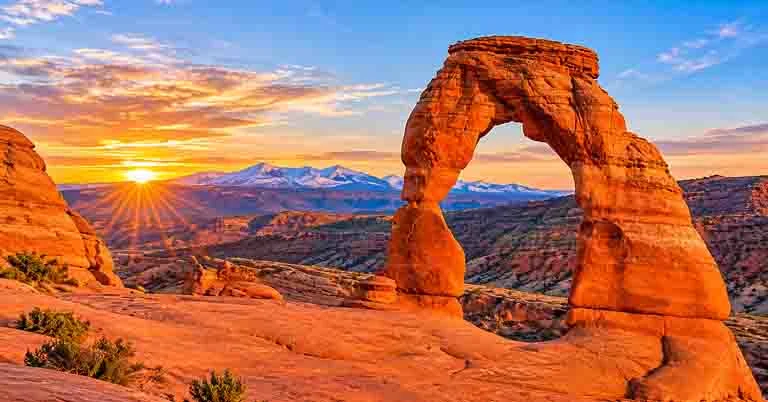
Delicate Arch is unquestionably the most well-known feature in Arches National Park. This magnificent freestanding sandstone arch has become one of the most recognizable natural landmarks in Utah.
Standing against an open desert landscape with the La Sal Mountains in the background, Delicate Arch creates an unforgettable sight, especially during sunset when the surrounding rocks glow with warm golden and reddish colors.
The hike to Delicate Arch is approximately three miles round trip and includes an uphill climb. Visitors who prefer an easier experience can enjoy distant views from the Lower or Upper Delicate Arch Viewpoint.
This spot is among the top places in the park for capturing landscape photographs.
2. Landscape Arch
Situated in the Devils Garden region, Landscape Arch stands as one of the most remarkable natural arches globally.
Its long, delicate sandstone structure stretches across the desert landscape, creating a fascinating example of how nature gradually shapes rock over thousands of years.
The trail to Landscape Arch is a popular choice for visitors who want to experience the park’s natural beauty without committing to an extremely difficult hike.
The surrounding sandstone formations and open desert scenery make this area particularly attractive for photographers and nature enthusiasts.
3. The Windows Section
The Windows Section ranks among the most frequented sightseeing spots in Arches National Park. It features several enormous natural rock openings that resemble windows overlooking the desert.
North Window, South Window, and Turret Arch are the main attractions in this area.
The walking trails are relatively short, making this section suitable for families and travelers who want to explore multiple formations within a limited amount of time.
Early morning and late afternoon are especially beautiful here, when sunlight brings out the rich colors of the sandstone.
4. Double Arch
Double Arch is another fascinating natural formation that deserves a place on your itinerary.
Unlike traditional single-opening arches, this landmark features two enormous arches connected at a common base. Its unique design renders it one of the most remarkable features in the park.
The path from the parking lot is brief and fairly straightforward, allowing access to a wide range of visitors.
Standing near this remarkable formation gives you a wonderful sense of the scale and beauty of Utah’s sandstone landscape.
5. Balanced Rock
Balanced Rock is among the most easily recognized geological formations in Arches National Park.
As its name suggests, this unusual formation consists of a large sandstone boulder that appears to balance on a much narrower rock pedestal.
Although the formation looks fragile, it is a natural result of millions of years of erosion.
A brief walking path loops around the formation, letting visitors appreciate it from various angles. It is also an excellent stop for photography.
6. Park Avenue
Park Avenue offers a completely different experience from the park’s famous arches.
Here, towering sandstone walls rise dramatically on both sides of a desert trail, creating scenery that resembles the skyscrapers of a giant natural city.
The trail provides beautiful views of impressive rock formations, including the Three Gossips and the Organ.
For travelers who enjoy walking through dramatic landscapes, Park Avenue is one of the most rewarding places to explore.
Best Things to Do in Arches National Park
Beyond sightseeing, there are several ways to enjoy the park’s extraordinary natural surroundings.
Hiking: Explore popular routes such as Delicate Arch, Landscape Arch, and Park Avenue. Trails range from short walks to longer and more challenging adventures.
Photography: Capture the striking contrast between red sandstone, blue skies, and distant mountain scenery. Sunrise and sunset offer particularly beautiful lighting.
Scenic Driving: The main park road provides access to many famous attractions, viewpoints, and trailheads. It is a wonderful option for travelers who prefer exploring at a relaxed pace.
Stargazing: Arches holds the designation of an International Dark Sky Park. On clear nights, the desert sky offers spectacular opportunities to observe stars and the Milky Way.
Picnicking: Enjoy a relaxing break at designated picnic areas while taking in the surrounding desert scenery.
Best Time to Visit Arches National Park
The best time to visit Arches National Park is generally during spring and fall, when temperatures are more comfortable for outdoor activities.
Spring (March to May): Spring brings pleasant daytime weather and excellent conditions for hiking and sightseeing. April and May tend to be especially popular months.
Summer (June to August): Summer offers long daylight hours, but temperatures can exceed 100°F. Early morning and evening visits are recommended, especially for hiking.
Fall (September to October): Autumn is another excellent season, with comfortable temperatures and beautiful lighting for photography. It is one of the most enjoyable times to explore the park.
Winter (November to February): Winter brings colder temperatures and occasional snowfall. The red sandstone formations covered with snow create a beautiful contrast, and visitor numbers are generally lower.

How to Reach Arches National Park
Reaching Arches National Park is relatively straightforward, particularly if you are traveling through Utah.
By Air: The nearest major airports include Grand Junction Regional Airport in Colorado and Salt Lake City International Airport in Utah. From there, visitors can rent a car and drive to Moab.
By Road: Moab is approximately five miles from the park entrance. Travelers coming from Salt Lake City can reach Moab via Interstate 15 and US Highway 191, depending on their route.
By Bus: Bus services and regional transportation options are available to Moab, although having a rental car provides greater flexibility when exploring the surrounding region.
Where to Stay Near Arches National Park
Moab is the most convenient place to stay when visiting Arches National Park. The town offers accommodation options for different budgets and travel preferences.
Visitors can choose from budget motels, comfortable hotels, vacation rentals, and luxury resorts.
For travelers who enjoy outdoor experiences, Devils Garden Campground inside the national park is another option. It offers a wonderful opportunity to stay close to the natural surroundings, although advance reservations are required.
Booking accommodation early is recommended during the busy spring and fall travel seasons.
Travel Tips for Visiting Arches National Park
A little preparation can make your visit much more comfortable and enjoyable.
- Carry sufficient drinking water, especially during summer.
- Wear comfortable hiking shoes with good traction.
- Bring sunscreen, sunglasses, and a wide-brimmed hat.
- Start popular hikes early to avoid excessive heat and crowds.
- Check weather forecasts and park alerts before traveling.
- Keep to marked paths in order to safeguard the delicate desert ecosystems.
- Do not climb or walk on natural arches.
- Carry a camera to capture the beautiful scenery.
- Download offline maps because mobile network coverage can be unreliable.
For 2026, advance timed-entry reservations are not required for general park entry. However, entrance fees still apply, and reservations are required for Devils Garden Campground and certain Fiery Furnace experiences. Always check current park conditions before departure.
Nearby Attractions Worth Exploring
If you have extra time in Moab, consider visiting some of the region’s other remarkable destinations.
Canyonlands National Park: Famous for its enormous canyons, dramatic cliffs, and expansive desert views, Canyonlands offers a completely different landscape from Arches.
Dead Horse Point State Park: Known for its spectacular overlook above the Colorado River, this park is particularly beautiful during sunrise and sunset.
Colorado River: The river offers opportunities for rafting, kayaking, and enjoying scenic views of the surrounding red rock landscape.
Combining these attractions with Arches National Park can turn your visit into an unforgettable Utah road trip.
Final Thoughts
Arches National Park is more than just a collection of beautiful rock formations. It is a place where nature showcases its creativity through extraordinary landscapes shaped over millions of years.
From the iconic beauty of Delicate Arch to the impressive formations of the Windows Section and the peaceful atmosphere of its desert trails, every experience offers something different.
Whether you spend a few hours exploring the scenic viewpoints or several days discovering its hiking trails, Arches National Park promises memories that will stay with you long after your journey ends.
If you are planning a trip to Utah, make sure this incredible red rock destination is part of your itinerary.
Disclaimer
The information provided by Web Arbiter (‘we’, ‘us’, or ‘our’) on https://webarbiter.in/ . The website is for general informational purposes only. All information on the Site is provided in good faith, however we make no representation or warranty of any kind, express or implied, regarding the accuracy, adequacy, validity, reliability, availability, or completeness of any information on the Site. UNDER NO CIRCUMSTANCE SHALL WE HAVE ANY LIABILITY TO YOU FOR ANY LOSS OR DAMAGE OF ANY KIND INCURRED AS A RESULT OF THE USE OF THE SITE OR RELIANCE ON ANY INFORMATION PROVIDED ON THE SITE. YOUR USE OF THE SITE AND YOUR RELIANCE ON ANY INFORMATION ON THE SITE IS SOLELY AT YOUR OWN RISK. Read Full Disclaimer