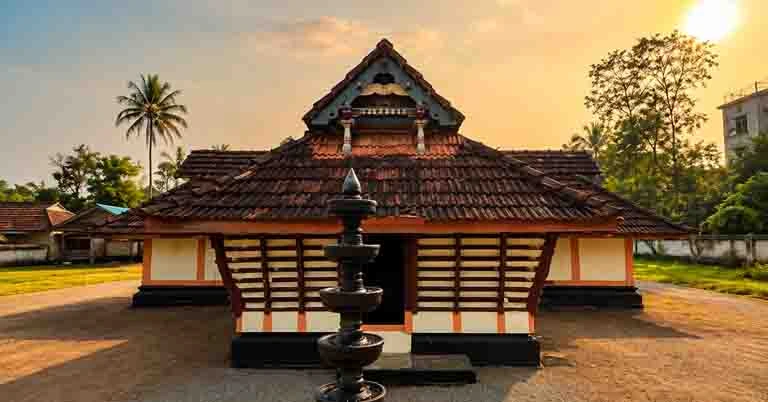


The Ashtamichira Mahadeva Temple, located in Thrissur district, Kerala, is one of the ancient and spiritually potent temples dedicated to Lord Shiva, the Supreme God of destruction and transformation. Nestled amid the serene landscapes of Ashtamichira village, the temple stands as a timeless monument to Kerala’s architectural brilliance, religious devotion, and cultural heritage. Revered for its mystical aura, ancient legends, and sacred energy, this temple continues to draw devotees and spiritual seekers from all over Kerala and beyond.
Historical Background
The origins of the Ashtamichira Mahadeva Temple are steeped in antiquity. Local traditions and palm-leaf records indicate that the temple dates back to the early medieval period, possibly between the 8th and 10th centuries CE. Like many other Shiva temples of Kerala, it is believed to have been consecrated by Lord Parashurama, the sixth incarnation of Lord Vishnu, who reclaimed the land of Kerala from the sea and established 108 Shiva temples across the region to preserve spiritual balance.
Over the centuries, the temple grew under the patronage of local Brahmin families and regional rulers. The temple served not only as a center of worship but also as a hub for Vedic studies, Ayurveda, and classical art forms. Ashtamichira was part of an important spiritual network of temples that formed the backbone of Kerala’s Shaiva tradition.
During the reign of the Perumpadappu Swaroopam, the temple is said to have received land grants and endowments for maintaining daily rituals and annual festivals. These connections ensured the temple’s prosperity and helped preserve its ancient traditions even through periods of socio-political change.
Legends and Mythological Connections
As with most ancient Shiva temples in Kerala, the Ashtamichira Mahadeva Temple has several legends that enrich its sanctity. One popular tale narrates that a devout sage once performed intense penance on the banks of a nearby river, praying to Lord Shiva for enlightenment. Pleased with his devotion, Lord Shiva manifested in the form of a radiant Shivalinga at the spot where the sage meditated. The sage and his disciples later built a shrine to enshrine this divine presence, which came to be known as Ashtamichira Mahadeva Kshetram.
Another legend suggests that during a devastating flood, a Shivalinga was carried by the river’s current and came to rest at Ashtamichira. The local villagers discovered it glowing with divine light, and when they tried to move it, they realized it was immovable — a sign of Lord Shiva’s wish to remain there eternally. This miraculous event led to the construction of the present temple.

The name Ashtamichira is also believed to have originated from the Malayalam words Ashta (eight) and Chira (pond), referring to the eight sacred ponds that once surrounded the area and were used for temple rituals and purification ceremonies.
Architectural Grandeur
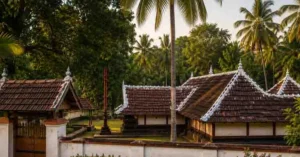
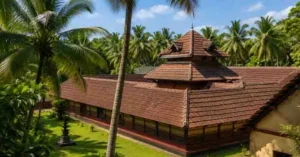
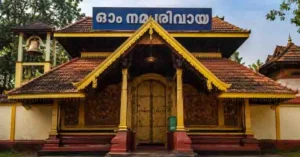
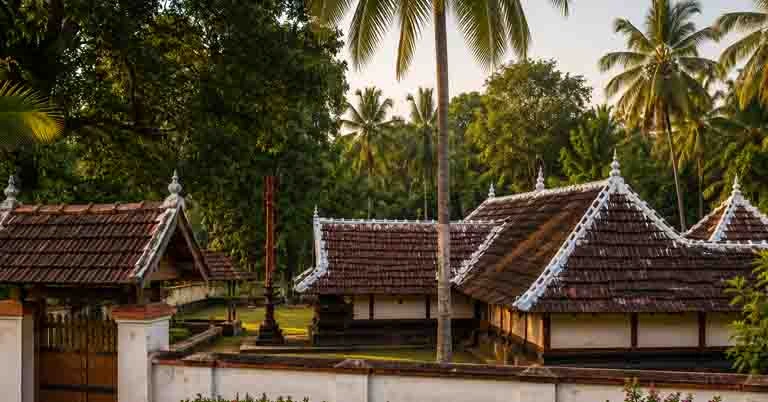
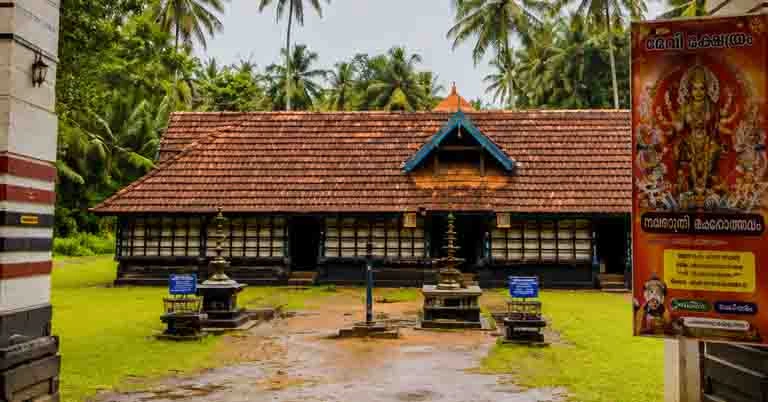
The Ashtamichira Mahadeva Temple is a classic example of Kerala’s traditional temple architecture, blending spiritual symbolism with architectural precision. Constructed primarily of laterite stone, wood, and copper plates, the temple exhibits the distinctive features of the Dravidian-Grantha architectural style adapted to Kerala’s tropical climate.
The Sreekovil (sanctum sanctorum) is circular in shape — a hallmark of Shiva temples — and houses the Shivalinga, which is worshipped as Swayambhu (self-manifested). The sanctum is topped with a copper-clad conical roof and features intricate wooden carvings of mythological scenes from the Puranas and Mahabharata. The sanctum’s calm and dimly lit interior, illuminated by oil lamps, evokes an atmosphere of divine serenity.
In front of the sanctum lies the Namaskara Mandapam, supported by exquisitely carved wooden pillars depicting divine beings, serpents, and lotus motifs. This is where major rituals and poojas take place. The Chuttambalam (circumambulatory passage) allows devotees to perform pradakshina around the sanctum while maintaining focus on meditation and prayer.
The temple also includes subsidiary shrines dedicated to Lord Ganapathy, Lord Subramanya, Goddess Parvati, and Lord Ayyappa, representing the cosmic family of Lord Shiva. The Nandi, Shiva’s divine bull, faces the sanctum in a posture of eternal devotion.
Outside the main sanctum stands the Dwajasthambam (flagstaff), traditionally made of teak and covered with brass, symbolizing the axis connecting heaven and earth. The temple pond (Ambala Kulam) nearby serves ritual purposes, especially during festivals and purification rites.
The temple’s overall design follows Tantric principles, ensuring that every structural element channels cosmic energy in harmony with the natural environment.
Deity and Spiritual Essence
The presiding deity of the temple is Lord Shiva, revered here as Mahadeva, the Great God — the infinite consciousness that governs creation, preservation, and destruction. The Shivalinga is believed to radiate immense positive energy, making the temple a powerful site for meditation and spiritual rejuvenation.
Devotees believe that worship at Ashtamichira removes obstacles, cures ailments, and grants moksha (liberation). The temple is also associated with Mrityunjaya Shiva, the conqueror of death, and performing rituals here is said to bring protection from dangers and longevity.
The deity is worshipped in both his tranquil and fierce aspects — as Dakshinamurthy (the teacher of wisdom) and Rudra (the destroyer of evil). This dual representation signifies the balance between knowledge and power, peace and transformation.
Daily Worship and Rituals
The Ashtamichira Mahadeva Temple follows the strict Tantric and Agamic traditions of Kerala’s Shaiva worship. The daily rituals begin with Nirmalya Darshanam at dawn, followed by Usha Pooja (morning prayer), Ucha Pooja (midday offering), and Deeparadhana (evening worship).
Priests perform Abhishekam with water, milk, honey, sandal paste, and bilva leaves — offerings considered highly sacred to Lord Shiva. Devotees also offer Dhara, where holy water is continuously poured over the Shivalinga to invoke divine grace.
Special poojas include:
- Rudrabhishekam – a powerful ritual invoking Lord Shiva’s blessings through the chanting of Rudra hymns.
- Mrityunjaya Homam – a fire ritual performed for health, longevity, and removal of fear.
- Pradosha Pooja – observed twice a month during the twilight period, considered extremely auspicious for Shiva worship.
The temple priests, traditionally from Tantric Namboothiri families, perform the rituals with deep precision and devotion, maintaining the sanctity of the temple’s ancient customs.
Festivals and Celebrations
The annual temple festival (Utsavam) at Ashtamichira Mahadeva Temple is a grand event celebrated with unmatched enthusiasm and spiritual fervor. Usually held in the Malayalam month of Kumbham (February–March), the festival lasts for several days, beginning with the ceremonial Kodiyettam (flag hoisting) and culminating in the Aarattu (holy bath) of the deity.
The highlight of the festival includes:
- Processions of caparisoned elephants, accompanied by traditional percussion ensembles like Panchavadyam and Melam.
- Cultural performances such as Kathakali, Ottanthullal, and Chenda Melam, showcasing Kerala’s rich art heritage.
- Deeparadhana and Fireworks, marking the festive spirit and divine energy of the event.
The most important occasion at the temple is Maha Shivaratri, dedicated entirely to the worship of Lord Shiva. Devotees observe fasting, night-long vigils, chanting of Om Namah Shivaya, and continuous recitation of Rudram. The entire temple glows with the light of thousands of lamps, creating a breathtaking sight and deeply spiritual atmosphere.
Other important festivals include Thiruvathira, celebrating Goddess Parvati’s penance for Lord Shiva, and Pradosham, which draws large gatherings of devotees seeking divine blessings.
Cultural and Social Significance
The Ashtamichira Mahadeva Temple is more than just a place of worship — it is the cultural heart of the community. The temple plays a vital role in preserving Kerala’s traditional arts, music, and social harmony. It has historically been a center for Vedic education and Ayurvedic practices, emphasizing holistic well-being.
During festivals, the temple becomes a platform for local artisans and performers to display their talent. The temple committee also organizes Annadanam (food donation), distributing meals to devotees and the needy, reinforcing the message of compassion and unity.
Over generations, the temple has remained a symbol of communal harmony, attracting devotees from diverse backgrounds who come together in the spirit of devotion and service.
The Spiritual Experience
Visiting the Ashtamichira Mahadeva Temple is a journey inward — a step away from worldly distractions into the realm of divine peace. The temple’s tranquil setting, surrounded by lush greenery and sacred ponds, makes it an ideal place for meditation and reflection.
As one walks through the gopuram, the rhythmic sound of temple bells, the chanting of Vedic mantras, and the fragrance of incense create an ambiance of sacred vibration. The sight of the glowing oil lamps illuminating the Shivalinga evokes a deep sense of reverence and surrender.
Many devotees report a profound spiritual calm upon visiting the temple — a feeling of being cleansed and connected to the divine essence of Lord Shiva.

Conclusion
The Ashtamichira Mahadeva Temple stands as a living testament to Kerala’s timeless Shaiva tradition — a sacred space where faith, history, and culture converge. With its ancient legends, architectural splendor, and enduring rituals, it continues to inspire countless devotees to seek inner peace and divine wisdom.
Here, Lord Shiva is not merely worshipped as a deity but experienced as pure consciousness, pervading every aspect of creation. The temple’s enduring presence serves as a reminder of humanity’s eternal quest for truth and transcendence.
Whether one visits during the quiet hours of dawn or amidst the grandeur of Maha Shivaratri, the Ashtamichira Mahadeva Temple offers an experience that transcends time — a sanctuary of devotion, where the soul meets the infinite.
Disclaimer
The information provided by Web Arbiter (‘we’, ‘us’, or ‘our’) on https://webarbiter.in/ . The website is for general informational purposes only. All information on the Site is provided in good faith, however we make no representation or warranty of any kind, express or implied, regarding the accuracy, adequacy, validity, reliability, availability, or completeness of any information on the Site. UNDER NO CIRCUMSTANCE SHALL WE HAVE ANY LIABILITY TO YOU FOR ANY LOSS OR DAMAGE OF ANY KIND INCURRED AS A RESULT OF THE USE OF THE SITE OR RELIANCE ON ANY INFORMATION PROVIDED ON THE SITE. YOUR USE OF THE SITE AND YOUR RELIANCE ON ANY INFORMATION ON THE SITE IS SOLELY AT YOUR OWN RISK. Read Full Disclaimer