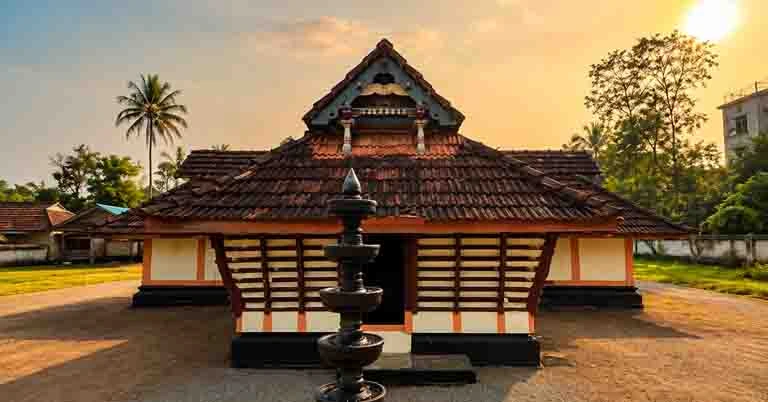


The Chendamangalam Kunnathali Mahadeva Temple, also known as Kunnathur Thali Temple, is one of the most ancient and culturally significant Shiva temples in Kerala. Located in Chendamangalam village of Ernakulam district, this temple is not only a sacred place of worship but also a symbol of Kerala’s deep-rooted spiritual and architectural traditions. Revered for its deity in the rare form of Ardhanarishvara, the temple represents the divine unity of Lord Shiva and Goddess Parvati—symbolizing the inseparable harmony of masculine and feminine energies in the cosmos.
Location and Setting
The Kunnathur Thali Temple is situated at Kizhakkumpurathu, Chendamangalam, in Paravur Taluk, about 5 km from North Paravur town and 30 km from Kochi city. Chendamangalam is a heritage village renowned for its historical coexistence of diverse faiths—housing temples, a synagogue, a church, and a mosque within a small radius. Amidst this cultural harmony stands the Kunnathali Mahadeva Temple, embodying Kerala’s spiritual pluralism.
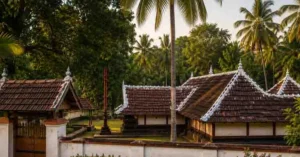
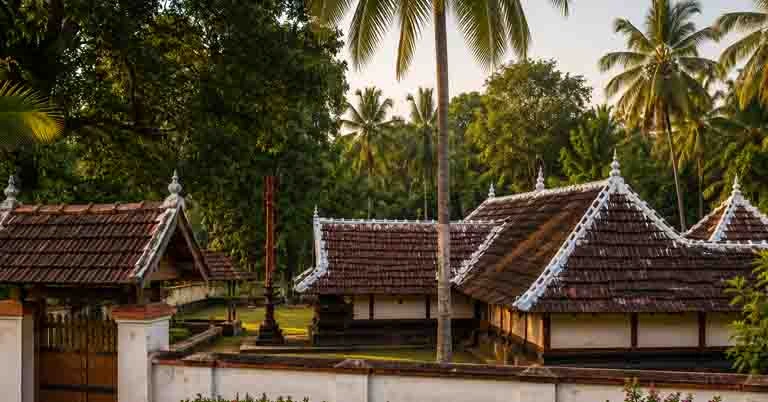
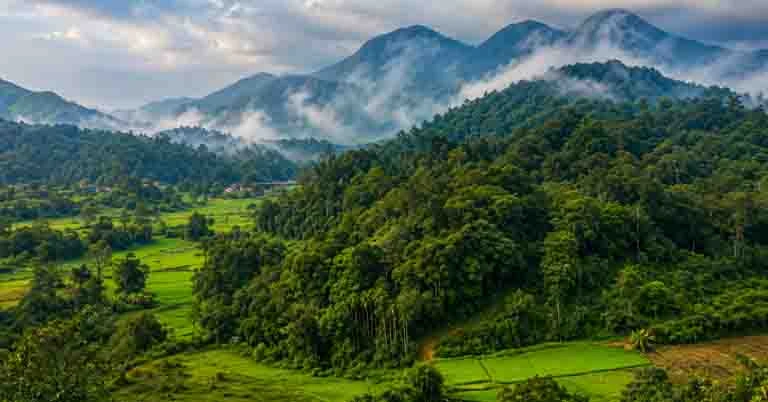
The temple lies on slightly elevated terrain surrounded by coconut groves, paddy fields, and ancient nalukettu houses typical of the Kerala countryside. Its peaceful ambience and traditional layout provide a glimpse of Kerala’s sacred landscape where divinity and nature blend seamlessly.

Deity and Religious Importance
The presiding deity of this temple is Lord Shiva in the form of Ardhanarishvara—a unique representation where the right half of the idol is Shiva and the left half is Goddess Parvati. This dual aspect symbolizes the cosmic balance between creation and destruction, power and compassion, masculine and feminine energies.
This form of Shiva is rare in Kerala temples, making Kunnathali a spiritually powerful and distinctive shrine. According to local belief, worshipping here blesses devotees with harmony in family life, prosperity, and spiritual balance.
In addition to the main sanctum, there are several Upa-Devatas (subsidiary deities) in the temple complex, including:
- Ganapathi (Ganesha) – remover of obstacles
- Bhadrakali – fierce form of the Goddess representing divine protection
- Vishnu and Brahma – highlighting the temple’s syncretic approach
- Dakshinamurthy – the teacher aspect of Shiva
- Durga, Ayyappa, Saptamatrikas, Yakshi, Naga Yakshi, and others
The presence of 13 sub-deities indicates that this temple once served as a regional center for tantric and Vedic worship, incorporating different streams of Hindu philosophy.
Historical Background
The Kunnathur Thali Temple is believed to be over 400 years old, though its foundation may date back much earlier based on temple typology and oral legends. It is one among the 18 ancient Thali temples of Kerala—centres of learning, administration, and spirituality during the Chera and early medieval periods.
Chendamangalam was historically the seat of the Villarvattom Swaroopam, a minor kingdom that existed under the Cochin royal family. Later, the Paliam family, hereditary prime ministers of the Cochin Kingdom, assumed guardianship of the temple. The Paliam Trust continues to play a role in temple management, ensuring continuity of rituals and upkeep.
Historical records indicate that the temple had deep ties with the Paliam Palace and was an important Shaiva centre in the region. The inclusion of Brahma and Vishnu shrines within the compound reveals its ancient role as a Trimurti Kshetram (temple honoring the three supreme deities—Brahma, Vishnu, and Shiva).
Legends and Mythological Significance
According to temple lore, the land where the temple stands was once a dense forest blessed by Lord Shiva. A sage performing penance there had a divine vision of Ardhanarishvara, and following divine instruction, the temple was established on that sacred ground.
The word “Thali” in the temple’s name refers to a seat of learning and royal authority in ancient Kerala. Temples with the title “Thali” (like those in Trikkakara, Peruvanam, and Irinjalakuda) were centers of Vedic education and cultural administration. Thus, Kunnathur Thali was likely one such hub, signifying both spiritual and social leadership.
Another legend tells that Parvati herself manifested in the left half of Shiva’s idol to remind devotees that masculine and feminine principles are incomplete without one another—making this temple a profound site of balance and union.
Architecture and Design
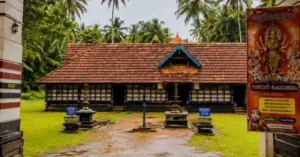
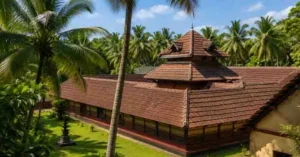
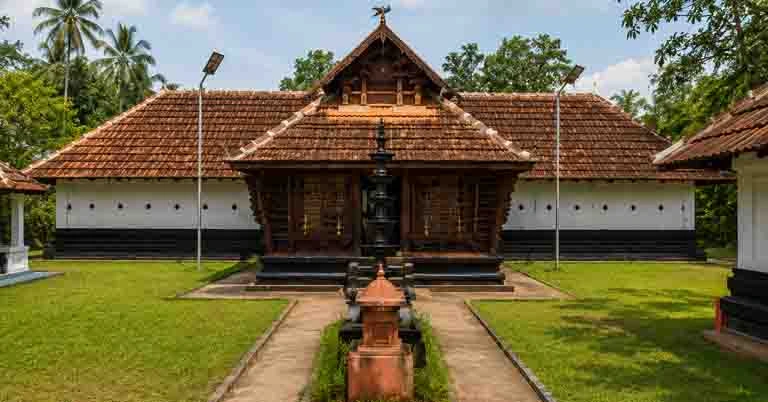
The Kunnathur Thali Temple exemplifies traditional Kerala temple architecture, blending simplicity with sacred geometry.
Main Sanctum (Sreekovil):
- The sanctum is east-facing, allowing the first rays of the morning sun to illuminate the deity.
- It is constructed in the square (Chathura Sreekovil) style, a typical design for Shiva temples.
- The roofing is tiled and supported by intricately carved wooden beams reflecting Kerala’s craftsmanship.
Nalambalam and Chuttambalam:
The Nalambalam (inner courtyard) and Chuttambalam (outer cloistered verandah) surround the sanctum, enabling circumambulation (pradakshina). The Namaskara Mandapam, located in front of the sanctum, serves as the area where offerings and abhishekam rituals are conducted.
Dwaja Stambham (Flagstaff):
A traditional brass-plated Dwaja Stambham stands in the front courtyard, symbolizing the temple’s spiritual axis connecting earth and heaven.
Sub-Shrines and Layout:
The compound accommodates small shrines for all subsidiary deities around the main sanctum, arranged in a clockwise direction, adhering to tantric temple design. The temple pond (Ambala Kulam) on one side is used for ritual purification and the ceremonial bath (Arattu) during festivals.
The materials used—laterite, timber, copper, and clay tiles—follow Kerala’s eco-sensitive architectural ethos, ensuring durability and natural harmony. Despite minor modern restorations, much of the temple retains its original character.
Rituals and Worship
The temple follows Shaiva Agama traditions, infused with Kerala’s Tantric customs. Daily poojas are performed three times a day under the supervision of qualified priests.
Daily Rituals Include:
- Nirmalyam – Early morning unveiling of the deity followed by Abhishekam (ritual bathing)
- Usha Pooja – Morning worship with chanting of Vedic hymns
- Ucha Pooja – Midday offering and Deeparadhana
- Athazha Pooja – Evening prayer followed by closure rituals
Common Offerings:
- Dhara (continuous pouring of water/milk over the lingam)
- Rudrabhishekam
- Pushpanjali (flower offering)
- Vilva leaves (sacred to Shiva)
- Ghee lamps (Deepam) for divine grace and prosperity
Devotees believe performing Rudra Japam and Abhishekam here helps remove doshas (negative karmic effects) and strengthens family unity due to the Ardhanarishvara aspect.
Festivals and Celebrations
The annual festival (Utsavam) is the most important event of the year, celebrated with great fervour.
Major Festivals:
- Annual Utsavam (Dhanu Masam) – Celebrated for five days during December–January, ending with the Arattu (holy bath of the deity) on the day of Thiruvathira Nakshatram, considered auspicious for Lord Shiva.
- Maha Shivaratri – The grand night of Lord Shiva is observed with night-long chanting, bhajans, lamp processions, and cultural performances. Devotees fast and stay awake throughout the night, symbolizing the victory of light over ignorance.
- Navarathri and Pradosham – Observed with special poojas, particularly for the feminine energy (Shakti) aspect of Ardhanarishvara.
- Sarpabali and Yakshi Poojas – Offerings to serpent and yakshi deities for protection, health, and prosperity.
The festival period is marked by the flag-hoisting ceremony (Kodiyettam), processions with decorated elephants, traditional music performances like Panchavadyam and Nadaswaram, and deepa lighting ceremonies that illuminate the temple beautifully.
Cultural and Social Role
The Kunnathali Temple serves as a spiritual nucleus of Chendamangalam’s local community. Its festivals and daily rituals bring together people across castes and occupations, maintaining Kerala’s temple-centered village social fabric.
Given Chendamangalam’s multicultural heritage, the temple stands as a symbol of harmony and continuity. Nearby are the Jewish Synagogue, St. Thomas Church, and a mosque, all within walking distance—showcasing Kerala’s inter-religious coexistence over centuries.
The temple is also a heritage monument, contributing to Kerala’s architectural and historical legacy. Preservation efforts have been initiated to maintain its wooden carvings and structural integrity, given its age and cultural value.
Visiting Information
- Nearest Town: North Paravur (5 km)
- Nearest Railway Station: Aluva (20 km)
- Nearest Airport: Cochin International Airport (25 km)
- Best Time to Visit: November to February (during festival season)
- Temple Timings: Typically open from 5:00 AM to 11:00 AM and 5:00 PM to 8:00 PM (approximate).
Visitors are expected to wear traditional attire—men in mundu and women in saree or salwar—while entering the temple. Photography inside the sanctum is usually restricted.

Significance and Conclusion
The Kunnathali Mahadeva Temple of Chendamangalam is not merely a temple but a living embodiment of Kerala’s sacred tradition. Its uniqueness lies in:
- The Ardhanarishvara deity, rare in Kerala
- Its status as one of the 18 ancient Thali temples
- Its location within a multi-faith heritage town
- The preservation of Kerala’s wooden temple architecture
Spiritually, it teaches the profound lesson of balance—between male and female, energy and stillness, creation and dissolution. The temple’s rituals and legends remind devotees that divinity resides not in separation but in the union of opposites.
Today, the Chendamangalam Kunnathali Temple continues to attract pilgrims, heritage lovers, and seekers of inner harmony. Standing amidst Kerala’s tranquil greenery and historical confluence of faiths, it radiates timeless serenity—an eternal witness to the state’s sacred and cultural unity.
Disclaimer
The information provided by Web Arbiter (‘we’, ‘us’, or ‘our’) on https://webarbiter.in/ . The website is for general informational purposes only. All information on the Site is provided in good faith, however we make no representation or warranty of any kind, express or implied, regarding the accuracy, adequacy, validity, reliability, availability, or completeness of any information on the Site. UNDER NO CIRCUMSTANCE SHALL WE HAVE ANY LIABILITY TO YOU FOR ANY LOSS OR DAMAGE OF ANY KIND INCURRED AS A RESULT OF THE USE OF THE SITE OR RELIANCE ON ANY INFORMATION PROVIDED ON THE SITE. YOUR USE OF THE SITE AND YOUR RELIANCE ON ANY INFORMATION ON THE SITE IS SOLELY AT YOUR OWN RISK. Read Full Disclaimer