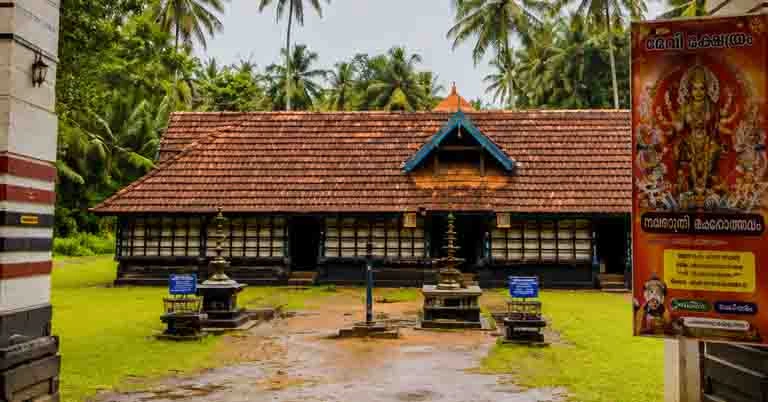
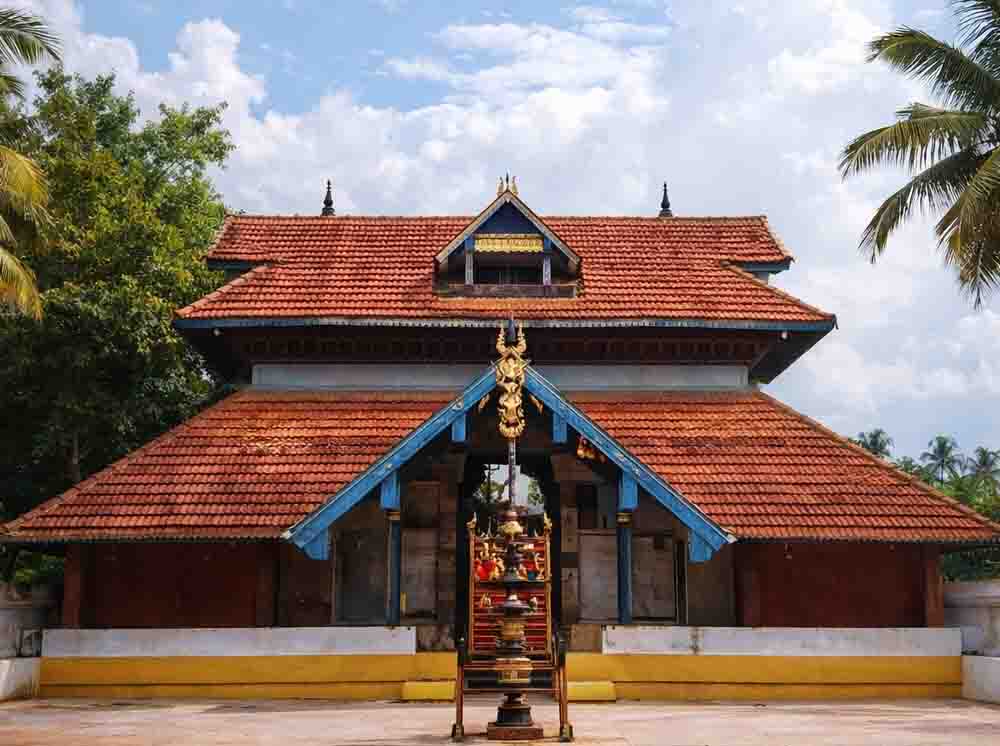
The Chengannur Mahadeva Temple, situated in the tranquil town of Chengannur in Alappuzha district, Kerala, is one of the most sacred and ancient Hindu temples dedicated to Lord Shiva. The temple holds a unique position among Kerala’s holy shrines because it represents not only Lord Shiva in his divine glory but also the goddess Parvati, who is worshipped alongside him as Bhagavathy. This sacred abode is revered as one of the few temples symbolizing the Ardhanareeswara concept — the union of Shiva and Shakti, representing the inseparable masculine and feminine cosmic energies.
Nestled on the banks of the holy Pamba River, the Chengannur Mahadeva Temple is both a spiritual and cultural landmark, drawing thousands of devotees, pilgrims, and art lovers every year. Its history, architecture, rituals, and traditions reflect the depth of Kerala’s Shaiva and Shakta heritage, making it one of the most significant temples in South India.
Historical Background and Legends
The history of the Chengannur Mahadeva Temple dates back several millennia and is woven with divine legends. It is widely believed to be one of the 108 Shiva temples in Kerala consecrated by Lord Parasurama, the sixth incarnation of Lord Vishnu. The temple’s ancient name “Sthanumalaya Mahadeva Temple” indicates its connection to the Trimurti concept, symbolizing the combined form of Sthanu (Shiva), Mal (Vishnu), and Aya (Brahma).
The Legend of Sati’s Rebirth
According to Hindu mythology, the Chengannur Mahadeva Temple is deeply linked to the story of Goddess Sati’s rebirth. When Sati, the consort of Lord Shiva, immolated herself at the Daksha Yaga, the grief-stricken Shiva carried her body across the universe in sorrow. It is believed that the reproductive organ (Yoni) of Sati fell at Chengannur, making it a Shakti Peetha, where the goddess is worshipped as Bhagavathy alongside Lord Shiva. The temple thus represents the divine reunion of Shiva and Shakti after the tragedy of Daksha Yaga.
Divine Manifestation
Another legend narrates that Lord Shiva and Goddess Parvati appeared before a sage who performed penance on the banks of the Pamba River, blessing the land and granting it eternal sanctity. The temple that arose at this spot became a symbol of fertility, prosperity, and marital harmony.
Historically, the temple is believed to have existed for over 2000 years. It received royal patronage from local rulers, including the Travancore kings, who maintained its daily rituals and festivals. The temple continues to be managed under the Travancore Devaswom Board today.
The Deities and Sanctum
The main deity of the temple is Lord Shiva, known here as Mahadeva, in a serene and benevolent form. The Shiva Linga installed in the Sreekovil (sanctum sanctorum) faces east and is considered highly sacred. It symbolizes the universal power of creation, preservation, and dissolution.
Beside the sanctum of Lord Shiva stands the shrine of Devi Parvati, worshipped as Bhagavathy or Devi Annapoorneshwari. Her idol faces west, signifying complementarity and divine union. The presence of both deities in the same temple sanctifies Chengannur as a rare and powerful seat of divine duality and balance.
Within the temple complex, there are also shrines dedicated to Lord Ganesha, Lord Subramanya (Murugan), Lord Sastha (Ayyappa), and Lord Krishna, representing the syncretic spiritual traditions of Kerala.

Unique Rituals – The Thiruppoothu (Menstruation Ceremony)
What truly distinguishes the Chengannur Mahadeva Temple from all others is the unique ritual known as Thiruppoothu, also called the Menstruation Ceremony of Goddess Parvati. It is believed that the goddess undergoes a natural menstrual cycle once in a while, symbolizing the fertility and creative power of the divine feminine.
When this phenomenon is observed — indicated by certain ritual signs on the idol — the temple remains closed for three days, as the goddess is believed to rest. During this period, all regular poojas are suspended. On the fourth day, the goddess is taken to the Pamba River for a ceremonial bath, known as Aarattu, marking the purification and renewal of divine energy. This ritual reflects a profound reverence for womanhood and the cycles of nature, emphasizing the temple’s connection to fertility and creation.
The Thiruppoothu ritual attracts a large number of devotees, especially women, who seek blessings for fertility, marital happiness, and good health.
Temple Architecture
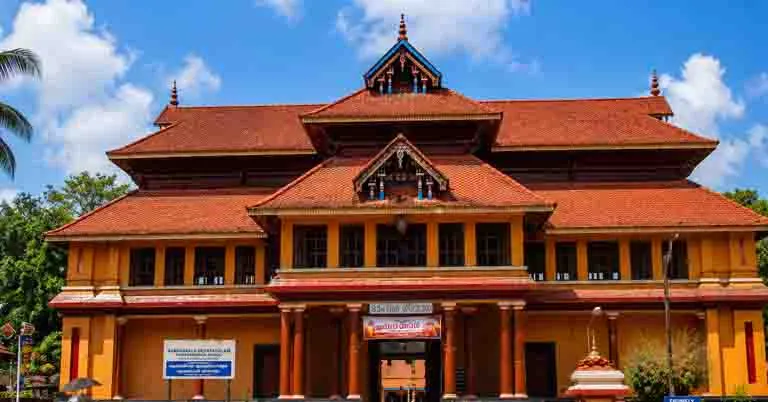
The Chengannur Mahadeva Temple is a stunning example of Kerala’s traditional temple architecture, blending spirituality with structural grace. The temple complex is spread over a vast area, enclosed by massive nalambalam (outer walls) and crowned with the traditional Gopuram (gateway tower).
Sreekovil (Sanctum Sanctorum)
The sanctum housing Lord Shiva is circular in shape — a distinctive feature of Kerala temples — and topped with a copper-plated conical roof. The sanctum is constructed of granite and wood, symbolizing the harmonious fusion of strength and warmth. The interior is dimly lit with oil lamps, creating a divine and meditative atmosphere.
Devi Shrine
The shrine of Devi Parvati stands adjacent to the Shiva sanctum, facing west. Her sanctum is rectangular, symbolizing stability and fertility. The juxtaposition of the two shrines, facing opposite directions, signifies the cosmic balance between Shiva (consciousness) and Shakti (energy).
Other Architectural Features
The temple also houses:
- A Namaskara Mandapam (prayer hall) with beautifully carved wooden ceilings.
- A Koothambalam (temple theater hall) for performances of Chakyar Koothu and Koodiyattam, traditional temple art forms.
- A Balikkalpura (altar hall) and a Deepastambha (lamp tower) at the entrance.
- A holy pond (Ambalakulam) near the temple, used for ritual ablutions.
The entire structure exemplifies Kerala’s temple-building principles of symmetry, sacred geometry, and eco-spiritual harmony.
Daily Poojas and Rituals
The Chengannur Mahadeva Temple follows Tantric Agama traditions and a well-structured schedule of daily rituals conducted by Brahmin priests. The key daily poojas include:
- Nirmalyam – Early morning removal of previous day’s decorations.
- Abhishekam – Holy bathing of the Shiva Linga with milk, ghee, honey, and water.
- Usha Pooja – Morning worship with chanting of Vedic hymns.
- Ucha Pooja – Midday offering of food and flowers.
- Deeparadhana – Evening worship accompanied by lamps and devotional songs.
- Athazha Pooja – Night pooja before temple closure.
Special poojas such as Rudrabhishekam, Mrityunjaya Homam, and Uma-Maheswara Pooja are also conducted on request, believed to remove sins, protect from diseases, and strengthen family harmony.
Festivals and Celebrations
The Chengannur Mahadeva Temple celebrates numerous festivals with grandeur and devotion, combining spiritual rituals with Kerala’s vibrant cultural traditions.
1. Annual Utsavam
The Annual Temple Festival (Utsavam) is celebrated during the Malayalam month of Dhanu (December–January) and lasts for 28 days. The festival begins with Kodiyettam (flag hoisting) and includes Ezhunnallathu (royal processions of the deity) accompanied by caparisoned elephants, Chenda Melam, Panchavadyam, and classical performances like Kathakali and Ottamthullal.
The highlight of the festival is the Aarattu — the ceremonial bathing of the deity in the holy Pamba River — symbolizing purification and the renewal of divine energy.
2 Maha Shivaratri
The Maha Shivaratri festival, the “Great Night of Shiva,” is one of the most important events at the temple. Devotees observe fasting, chant “Om Namah Shivaya,” and participate in night-long prayers and abhishekams. The temple remains open throughout the night, filled with bhajans and lamp-lit rituals, representing spiritual awakening and the triumph of light over darkness.
3. Thiruppoothu Festival
The Thiruppoothu festival, celebrating the menstruation ceremony of the goddess, is a unique event that emphasizes divine femininity and fertility. The entire temple community participates in the rituals and the Aarattu procession on the fourth day, celebrating the regenerative power of nature.
Spiritual and Cultural Significance
The Chengannur Mahadeva Temple is not merely a place of worship but a spiritual and philosophical center symbolizing the union of Purusha (Shiva) and Prakriti (Shakti) — consciousness and matter. Devotees believe that praying at this temple helps balance one’s inner energies, leading to peace, prosperity, and spiritual enlightenment.
The temple is also associated with marital harmony and fertility. Many newly married couples visit the temple to seek blessings from Lord Shiva and Goddess Parvati for a blissful married life. Women, especially, consider the temple highly auspicious for prayers related to conception and motherhood.
Culturally, the temple has played a major role in promoting Kerala’s performing arts. The Koothambalam hosts Chakyar Koothu and Koodiyattam, classical Sanskrit theatrical forms that have been performed here for centuries.
Administration and Community Role
The temple is managed by the Travancore Devaswom Board, which oversees rituals, festivals, and maintenance. It also supports community welfare activities like Annadanam (free meal distribution), medical camps, and educational assistance for the needy. During major festivals, thousands of devotees are fed daily, reflecting the temple’s commitment to compassion and service.
The temple’s surroundings, filled with lush greenery, ancient trees, and the flowing Pamba River, create an ideal environment for meditation and spiritual rejuvenation. It stands as a reminder of Kerala’s harmonious coexistence between spirituality, art, and nature.

Conclusion
The Chengannur Mahadeva Temple stands as a radiant beacon of Kerala’s spiritual and cultural legacy — a place where Lord Shiva and Goddess Parvati are worshipped together, symbolizing the divine balance of cosmic forces. It is a temple that celebrates life, fertility, and universal harmony, where the divine feminine and masculine merge into oneness.
Every element of this sacred temple — from the rhythmic chants and glowing oil lamps to the rituals along the Pamba River — echoes the eternal truth that all creation springs from the union of Shiva and Shakti.
Visiting Chengannur Mahadeva Temple is not merely a religious journey; it is a profound spiritual experience — one that allows the devotee to witness the harmony of divinity, nature, and human devotion in its purest form.
Disclaimer
The information provided by Web Arbiter (‘we’, ‘us’, or ‘our’) on https://webarbiter.in/ . The website is for general informational purposes only. All information on the Site is provided in good faith, however we make no representation or warranty of any kind, express or implied, regarding the accuracy, adequacy, validity, reliability, availability, or completeness of any information on the Site. UNDER NO CIRCUMSTANCE SHALL WE HAVE ANY LIABILITY TO YOU FOR ANY LOSS OR DAMAGE OF ANY KIND INCURRED AS A RESULT OF THE USE OF THE SITE OR RELIANCE ON ANY INFORMATION PROVIDED ON THE SITE. YOUR USE OF THE SITE AND YOUR RELIANCE ON ANY INFORMATION ON THE SITE IS SOLELY AT YOUR OWN RISK. Read Full Disclaimer