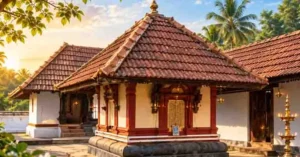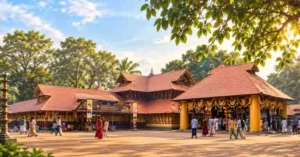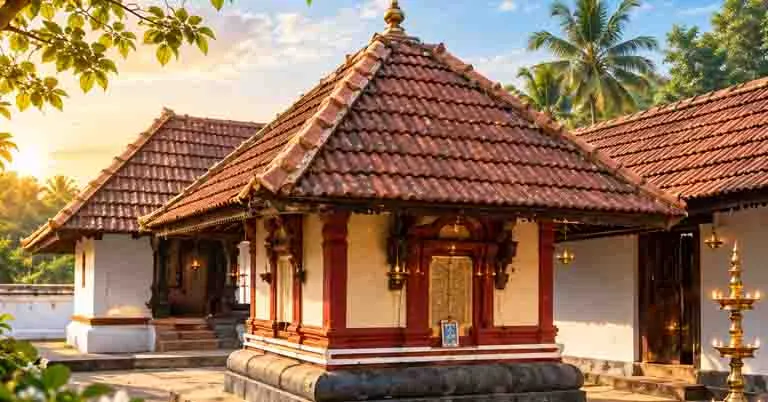


Nestled on the serene banks of the River Periyar, in the tranquil village of Chowwara (also spelled Chovvara) in Ernakulam district, Kerala, stands the ancient Chidambaraswamy Temple, a divine sanctuary dedicated to Lord Shiva. Revered as one among the 108 Shiva Temples of Kerala believed to have been consecrated by Lord Parashurama, this temple holds immense spiritual, cultural, and architectural significance.
With its calm riverine surroundings, sacred rituals, and unique deity manifestation, the Chowwara Chidambaraswamy Temple remains a place where spirituality blends harmoniously with Kerala’s timeless temple traditions.
Historical Background
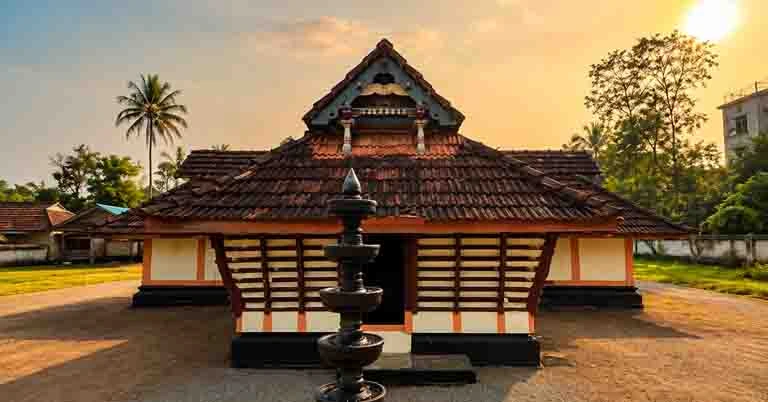
The Chowwara Chidambaraswamy Temple is an ancient shrine that traces its origins to several centuries ago. According to Kerala’s temple lore, it is believed to have been established by Lord Parashurama, the sixth incarnation of Lord Vishnu, who is said to have reclaimed the land of Kerala from the sea and consecrated 108 Shiva temples to sanctify it.
The temple’s deity, Lord Shiva as Chidambaraswamy, symbolizes the cosmic dancer Nataraja, representing the rhythm of creation and destruction — the eternal cosmic cycle. The word “Chidambara” is a combination of “Chit” (consciousness) and “Ambaram” (sky or space), referring to the realm of divine consciousness. This idea connects the temple to the famed Chidambaram Temple in Tamil Nadu, suggesting that this Kerala temple was inspired by or spiritually linked to it.
Historically, the Chowwara region was part of the Cochin kingdom, and the temple likely enjoyed royal patronage from local rulers and Namboothiri families who maintained temple traditions. The temple’s inscriptions and oral legends indicate it has been a center of Shaiva worship for generations, sustaining ancient Vedic rituals, art, and devotion.
Mythological Significance
The temple’s mythology is deeply rooted in Shaivism and Kerala’s spiritual cosmology. According to legend, Parashurama brought the divine energy of Lord Shiva from the sacred Chidambaram Temple in Tamil Nadu and installed it here in Chowwara, thus naming it Chidambaraswamy Temple.
It is said that the site was chosen because it mirrored the tranquil energy of Chidambaram — a place where Lord Shiva is worshipped as the embodiment of consciousness and the eternal cosmic dance. Local myths also describe how the surrounding area was sanctified by sages who meditated on the riverbanks, transforming the place into a center of spiritual learning and penance.
Another popular belief holds that the Periyar River near the temple carries purifying powers, and taking a dip here before entering the temple is equivalent to bathing in the holy Ganga. Hence, devotees often perform ablutions in the river before worshipping Lord Shiva.
Deity and Sanctum
The main deity of the temple is Lord Shiva, worshipped as Sri Chidambaraswamy or Nataraja, the Lord of Dance. The Shiva Lingam represents both the form and formless aspect of divinity — symbolizing the infinite consciousness that governs the universe.
Unlike many temples in Kerala where the deity faces east, the sanctum of Chowwara Chidambaraswamy Temple faces west, while the idol itself faces east — a rare and symbolic alignment representing the union of cosmic energies.
Another unique feature of the temple is the Nandi (the sacred bull and vehicle of Lord Shiva), which is depicted in a standing posture rather than the traditional seated one. This unusual representation signifies alertness and readiness — as if Nandi is waiting for the cosmic dance of Shiva to begin.
The temple does not house many sub-deities, maintaining its spiritual focus entirely on the principal deity. However, some shrines for Lord Ganapathi and Goddess Parvati are believed to have been added in later centuries.
Architecture and Design
The Chowwara Chidambaraswamy Temple showcases the traditional Kerala temple architecture, renowned for its harmony with nature, wooden craftsmanship, and Vastu alignment. Built primarily using laterite stones, timber, and copper-plated roofs, the temple is a fine example of Kerala’s sacred architectural heritage.
Main Features:
- Sreekovil (Sanctum Sanctorum):
The sanctum is either circular or square in shape, as described by different sources. It has a conical, tiled roof and a golden kalasam (finial) on top. The inner walls are decorated with oil lamps (vilakkumadam) and occasionally mural paintings depicting scenes from Shaivite mythology. - Namaskara Mandapam:
Located directly in front of the sanctum, this hall is used for offering prayers and performing rituals. The mandapam is adorned with wooden carvings and has an open structure allowing devotees to witness ceremonies. - Pradakshina Patha (Circumambulatory Path):
The stone-paved path surrounding the sanctum allows devotees to perform pradakshina (circumambulation), symbolizing reverence and surrender. - Gopuram (Entrance Tower):
Unlike the towering gopurams of Tamil temples, the entrance here is modest, in line with Kerala’s aesthetic simplicity. The wooden door panels are often adorned with carvings of divine motifs. - Temple Tank and Riverfront:
The temple’s proximity to the Periyar River enhances its spiritual charm. Devotees bathe in the river before entering the temple, considering it part of the purification process. - Chuttambalam (Outer Structure):
The outer walls are decorated with lamps and mural art, representing the continuity of Kerala’s ancient temple painting tradition.
Overall, the temple’s architecture blends simplicity with spiritual symbolism — representing both physical beauty and metaphysical meaning.
Rituals and Worship Practices
The Chowwara Chidambaraswamy Temple follows the Tantric rituals and Agamic traditions of Kerala Shaiva worship. The daily worship pattern includes:
- Nirmalyam (removal of previous day’s offerings)
- Abhishekam (ritual bathing of the deity with water, milk, and ghee)
- Alankaram (adorning the deity)
- Deeparadhana (worship with lamps)
- Naivedyam (offering of food)
- Athazha Pooja (final evening worship before temple closing)
The temple priests are traditionally from the Namboothiri Brahmin community, well-versed in Shaiva rituals and Sanskrit chants.
Devotees offer bilva leaves, flowers, and oil lamps to Lord Shiva, seeking blessings for peace, health, and spiritual awakening. The singing of “Om Namah Shivaya” echoes throughout the temple, particularly in the early morning hours.

Festivals and Celebrations
The temple’s annual festivals attract large numbers of devotees from across Kerala. The most important among them include:
- Maha Shivaratri
This is the grandest festival at Chowwara Chidambaraswamy Temple, celebrated in February–March (Malayalam month of Kumbham). Devotees fast, meditate, and stay awake throughout the night chanting hymns to Lord Shiva. The temple is beautifully illuminated, and cultural performances, Rudrabhishekam, and special poojas are conducted. - Annual Utsavam (Temple Festival)
Celebrated in the Malayalam month of Makaram (January–February), the festival begins with Kodiyettam (flag hoisting) and lasts for several days. The festivities include seeveli processions, traditional percussion ensembles (chenda melam), and arattu (holy bath of the deity) performed in the Periyar River. The festival concludes with fireworks and deep devotion. - Pradosham
Observed twice every lunar month, Pradosham is considered auspicious for worshipping Lord Shiva. Special abhishekams and lamp offerings are made during this twilight period. - Thiruvathira
Celebrated mainly by women devotees, this festival honors Lord Shiva and Goddess Parvati’s divine union. The temple witnesses Thiruvathirakali (traditional dance), devotional singing, and offerings of sweets.
These celebrations not only reinforce faith but also strengthen the cultural fabric of the local community.
Cultural Importance and Community Role
The Chowwara Chidambaraswamy Temple serves as more than a religious site; it is a cultural nucleus for the region. The temple festivals bring together art forms such as Kathakali, Ottamthullal, Panchavadyam, and traditional music, preserving Kerala’s classical traditions.
It also plays a role in local social life — promoting unity among villagers, supporting charity events, and maintaining temple education and arts. During festival times, the temple becomes a center of community gathering, with devotees contributing through voluntary service (seva).
The temple’s setting near the Periyar River also makes it a place for spiritual rejuvenation and meditation. Many locals begin their day with a short prayer or offering here before heading to work, emphasizing the temple’s continued relevance in modern times.
Unique Features
What sets the Chowwara Chidambaraswamy Temple apart from other Shiva temples are its distinctive elements:
- The deity’s association with Chidambaram, linking Kerala and Tamil spiritual traditions.
- The west-facing temple, with the deity facing east — symbolizing balance between the physical and metaphysical.
- The standing Nandi, a rare depiction in temple iconography.
- Its inclusion in the 108 Shiva Temples of Kerala, each believed to represent one facet of Lord Shiva’s universal form.
These attributes make the temple both spiritually profound and architecturally fascinating.
Visiting the Temple
- Location: Chowwara village, near Aluva, Ernakulam District, Kerala
- Nearest Railway Station: Chowwara Railway Station (about 1 km) and Aluva (8 km)
- Nearest Airport: Cochin International Airport (12 km)
- Dress Code: Modest traditional attire is preferred; men are expected to wear dhotis, and women should dress conservatively.
- Best Time to Visit: Maha Shivaratri and the annual Utsavam season, or early mornings for peaceful darshan.
The temple is open throughout the year and welcomes both locals and pilgrims seeking solace and divine blessings.
Conclusion
The Chowwara Chidambaraswamy Temple stands as a testament to Kerala’s rich spiritual heritage — a place where faith, tradition, and art come together in divine harmony. Its tranquil riverside setting, unique deity form, and timeless rituals continue to attract devotees who seek spiritual awakening and peace.
As one of the sacred 108 Shiva temples consecrated by Parashurama, this temple not only symbolizes divine continuity but also connects Kerala’s present to its ancient spiritual past. The echo of temple bells, the scent of sandalwood, and the glow of oil lamps all merge to create an atmosphere of transcendence — where every visitor feels the divine presence of Lord Chidambaraswamy, the eternal Lord of Consciousness and Dance.
Disclaimer
The information provided by Web Arbiter (‘we’, ‘us’, or ‘our’) on https://webarbiter.in/ . The website is for general informational purposes only. All information on the Site is provided in good faith, however we make no representation or warranty of any kind, express or implied, regarding the accuracy, adequacy, validity, reliability, availability, or completeness of any information on the Site. UNDER NO CIRCUMSTANCE SHALL WE HAVE ANY LIABILITY TO YOU FOR ANY LOSS OR DAMAGE OF ANY KIND INCURRED AS A RESULT OF THE USE OF THE SITE OR RELIANCE ON ANY INFORMATION PROVIDED ON THE SITE. YOUR USE OF THE SITE AND YOUR RELIANCE ON ANY INFORMATION ON THE SITE IS SOLELY AT YOUR OWN RISK. Read Full Disclaimer