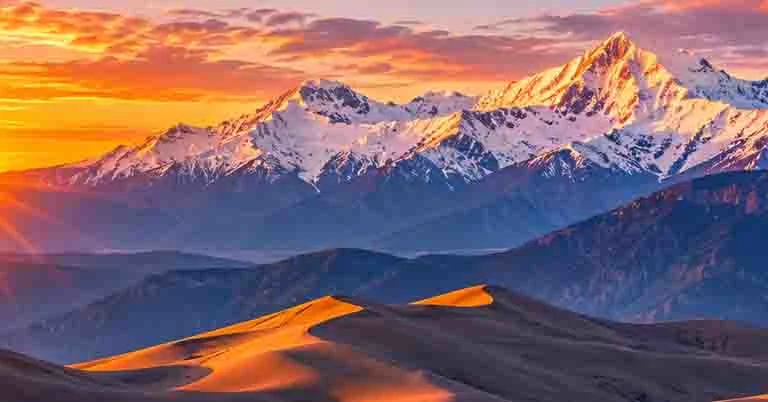

Imagine walking across a vast desert of golden sand with snow-covered mountains rising in the background. The landscape looks almost unreal, yet this remarkable place exists in southern Colorado. Great Sand Dunes National Park and Preserve is home to the tallest sand dunes in North America, offering a rare combination of desert scenery, mountain views, seasonal streams and peaceful wilderness.
Located in the beautiful San Luis Valley, the park is a destination for hikers, photographers, families and adventure lovers. Visitors can climb enormous dunes, try sandboarding, splash in a seasonal creek or spend an evening beneath a sky filled with stars.
If you’re planning a trip to Colorado, Great Sand Dunes National Park is one destination you really shouldn’t skip.

Where Is Great Sand Dunes National Park?
Great Sand Dunes National Park and Preserve is located in south-central Colorado, near the small community of Mosca. It lies within the San Luis Valley, with the impressive Sangre de Cristo Mountains forming a dramatic backdrop.
The park protects a large dune field covering approximately 30 square miles. Beyond the dunes, the landscape includes grasslands, wetlands, forests, mountain lakes and alpine environments.
Alamosa is one of the nearest towns for accommodation, restaurants and essential services. The park is accessible by road, making it a rewarding stop on a Colorado road trip.
Best Things to Do in Great Sand Dunes National Park
1. Explore the Main Sand Dune Field
The main dune field is the highlight of the park. Unlike many hiking destinations, there are no marked trails across the dunes. Visitors can choose their own route, walking over ridges and slopes while enjoying changing views of the surrounding mountains.
The sand is constantly reshaped by the wind, so the landscape can look different from one visit to another. Even a short walk away from the parking area gives you a sense of the dunes’ enormous scale.
Walking on loose sand requires more effort than hiking on a regular trail. Take your time, carry water and avoid climbing during the hottest part of summer days.
2. Take a hike up to High Dune on First Ridge
High Dune on First Ridge ranks among the park’s most popular hiking destinations. Reaching the top involves climbing a series of steep sandy slopes, but the reward is a sweeping view across the dune field and the Sangre de Cristo Mountains.
There is no formal trail or fixed route to the summit. Hikers generally follow the ridgelines and choose a suitable path through the sand.
Although the climb is challenging, it is a good choice for visitors who want a memorable dune-hiking experience without committing to a longer expedition. Start early in warm weather and allow enough time for the return journey.
3. Try Sandboarding and Sand Sledding
One of the most exciting activities at Great Sand Dunes is sliding down the sandy slopes. Visitors can use specially designed sandboards or sand sleds to enjoy the dunes in a completely different way.
You can rent or purchase suitable equipment from retailers in the San Luis Valley before entering the park. Ordinary snow sleds and plastic saucers generally do not work well on dry sand.
Choose a slope with a safe run-out area and stay away from vegetation and other visitors. The first high ridge is a well-liked spot for this activity.
4. Enjoy Medano Creek
Medano Creek creates a seasonal beach-like setting at the base of the dunes. During spring and early summer, melting snow from the surrounding mountains feeds the creek, bringing shallow water across the sandy landscape.
At times, the water forms small rolling waves known as surge flow. Families often visit to splash, play in the sand, build sandcastles or simply relax beside the water.
The creek is seasonal, and its flow changes every year depending on snowpack and weather. Late May and early June are often the best opportunities to experience stronger flow, but checking the park’s current creek forecast is essential.
5. Walk the Montville Nature Trail
If you want a break from climbing sandy slopes, the Montville Nature Trail offers a pleasant alternative. This short loop passes through a shaded area near a small creek and provides views of the dunes and surrounding mountains.
It is a good option for families and visitors looking for an easier walk. The forested setting also offers some relief from the open sun and heat of the dune field.
The trail provides a different perspective on the park’s varied environment and shows that Great Sand Dunes is much more than a desert landscape.
6. Hike the Star Dune
For experienced hikers looking for a bigger challenge, Star Dune is an unforgettable destination. It is one of the tallest dunes in North America and is recognised by its distinctive shape, with several ridges extending from its central summit.
The hike is demanding because of the distance, loose sand and elevation. Reaching the dune and returning can take around five hours, depending on fitness, weather and route.
There are no marked trails across the dune field, so good preparation and navigation are important. Carry enough water and avoid attempting this hike during extreme heat or threatening weather.

7. Visit Zapata Falls
Located just south of the national park on nearby public land, Zapata Falls makes a worthwhile addition to your itinerary. The waterfall is hidden inside a narrow rocky canyon and offers a refreshing change from the open dunes.
The short hike involves walking over uneven ground and crossing rocks, which may be slippery near the water. During warmer months, the cool surroundings make it a popular stop after exploring the sand dunes.
The nearby viewpoint also offers beautiful views across the San Luis Valley towards Great Sand Dunes and the surrounding mountains.
8. Enjoy Stargazing After Dark
Great Sand Dunes is a superb spot for stargazing. Its remote location, high elevation and relatively low light pollution create impressive night-sky views.
On a clear evening, visitors can enjoy countless stars, planets and, under suitable conditions, the Milky Way. The dunes take on a completely different character after sunset, becoming quiet and peaceful beneath the night sky.
Bring warm clothing, as temperatures can drop quickly after dark, even during warmer months.
Best Time to Visit Great Sand Dunes National Park
The park is open all year round, yet every season provides a distinct experience.
Spring (March to May): Spring brings cooler temperatures and the possibility of seasonal water in Medano Creek. Late spring is particularly attractive for visitors hoping to see the creek flowing across the sand.
Summer (June to August): Summer is popular for sandboarding, creek activities and longer daylight hours. However, sand temperatures can become extremely hot, and afternoon thunderstorms are possible. Schedule dune hikes for the early morning or evening hours.
Autumn (September to October): Autumn is an enjoyable season for hiking and taking photographs. Cooler weather and changing colours in the surrounding mountains make the landscape especially attractive.
Winter (November to February): Winter offers a quieter experience, with the possibility of snow on the dunes and nearby mountains. Cold temperatures, wind and occasional storms mean visitors should prepare with warm clothing and check road conditions.
For a combination of creek activities and pleasant weather, late spring is a popular choice. For hiking and quieter exploration, autumn is an excellent option.
How to Reach Great Sand Dunes National Park
Driving is the most convenient way to reach Great Sand Dunes.
- From Alamosa: The park is approximately 35 miles northeast of Alamosa, generally taking around 40–45 minutes by car.
- From Colorado Springs: The drive is roughly 170–180 miles and takes around three hours, depending on traffic and road conditions.
- From Denver: Expect a journey of approximately 230–250 miles, usually taking around four hours or more.
- By air: You can arrive at either Colorado Springs Airport or Denver International Airport. Alamosa also has regional air connections, depending on your route and travel dates.
A rental car is recommended because public transportation to the park is limited.
Where to Stay Near Great Sand Dunes National Park
There are several accommodation options around the San Luis Valley.
Piñon Flats Campground: Located inside the national park, this campground offers an excellent opportunity to stay close to the dunes. Reservations are required, and the campground is seasonal.
Alamosa: Alamosa is a convenient base for visitors who prefer hotels, restaurants and other facilities. It also works well for exploring other attractions in the San Luis Valley.
Mosca and Hooper: These smaller communities offer a quieter rural setting and may have nearby lodging or camping options.
Backcountry camping is also possible in designated areas with the required permit. Check current National Park Service rules before making plans.
Important Travel Tips for Visiting Great Sand Dunes
- Carry enough water: Walking through soft sand is tiring, so bring plenty of drinking water.
- Protect yourself from the sun: Put on sunscreen, sunglasses, and a hat
- Choose suitable footwear: Closed-toe shoes help keep hot sand out, although some visitors prefer lightweight footwear in cooler conditions.
- Check the weather: Afternoon thunderstorms and lightning can develop quickly, especially in summer.
- Rent sand equipment in advance: The National Park Service does not rent sandboards or sleds inside the park.
- Check Medano Creek conditions: Its flow changes from year to year.
- Prepare for temperature changes: Warm days can be followed by surprisingly cold evenings.
- Respect the environment: Stay away from sensitive vegetation and wildlife, and carry out all rubbish.
Final Thoughts
Great Sand Dunes National Park and Preserve is counted among the most remarkable natural attractions in Colorado. The sight of enormous dunes rising against the Sangre de Cristo Mountains is unforgettable, while the seasonal creek, forest trails and dark night skies add even more variety to the experience.
Whether you want to climb High Dune, try sandboarding, enjoy Medano Creek with your family or simply watch the sunset over the landscape, the park offers something special for every kind of traveller.
If you are planning a Colorado road trip, make room for Great Sand Dunes National Park. It is a place where the desert meets the mountains, creating a landscape that feels both peaceful and adventurous.
Disclaimer
The information provided by Web Arbiter (‘we’, ‘us’, or ‘our’) on https://webarbiter.in/ . The website is for general informational purposes only. All information on the Site is provided in good faith, however we make no representation or warranty of any kind, express or implied, regarding the accuracy, adequacy, validity, reliability, availability, or completeness of any information on the Site. UNDER NO CIRCUMSTANCE SHALL WE HAVE ANY LIABILITY TO YOU FOR ANY LOSS OR DAMAGE OF ANY KIND INCURRED AS A RESULT OF THE USE OF THE SITE OR RELIANCE ON ANY INFORMATION PROVIDED ON THE SITE. YOUR USE OF THE SITE AND YOUR RELIANCE ON ANY INFORMATION ON THE SITE IS SOLELY AT YOUR OWN RISK. Read Full Disclaimer