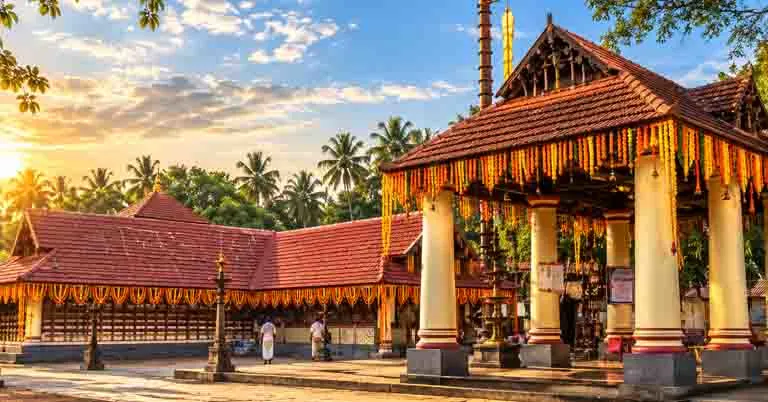
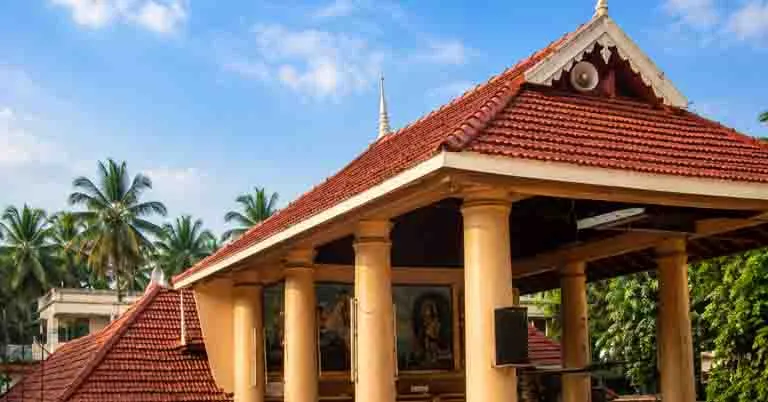
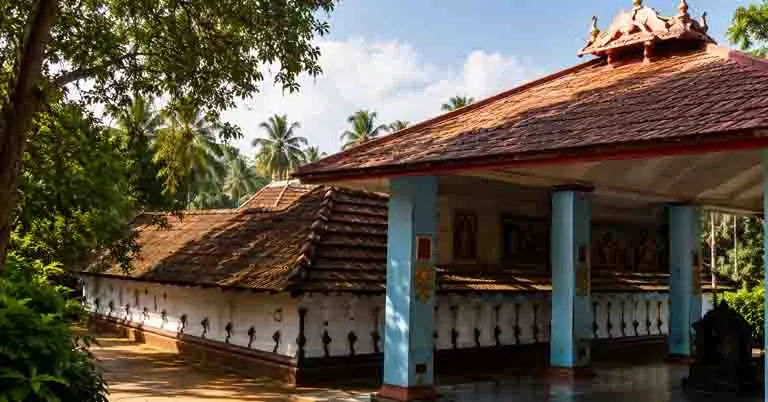
The Kandiyoor Sree Mahadeva Temple, located on the banks of the sacred Achankovil River near Mavelikkara in the Alappuzha district of Kerala, stands as one of the most revered and ancient Shiva temples in South India. Steeped in mythological, historical, and architectural grandeur, this temple is celebrated as one of the 108 Shiva temples in Kerala consecrated by Lord Parashurama, the sixth incarnation of Lord Vishnu. Known for its immense spiritual power, elegant architectural design, and deep-rooted cultural traditions, Kandiyoor Sree Mahadeva Temple remains a vital pilgrimage destination and a testament to Kerala’s rich Shaivite heritage.
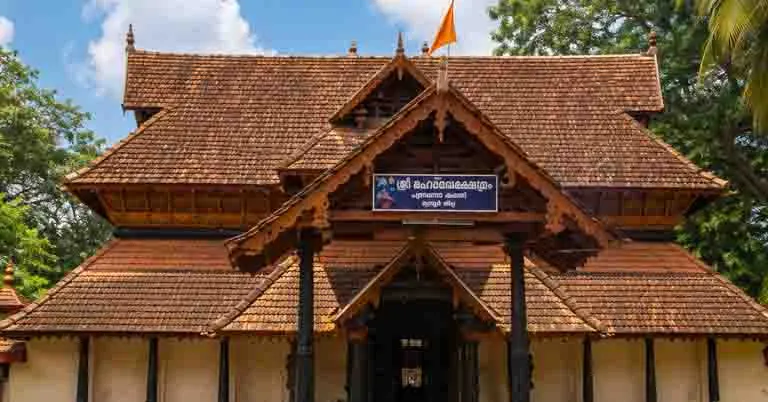
Historical Background
The history of the Kandiyoor Sree Mahadeva Temple traces back thousands of years, intertwining legend, mythology, and recorded history. The temple is believed to have been consecrated by Lord Parashurama, who is said to have reclaimed the land of Kerala from the sea and established 108 temples dedicated to Lord Shiva to sanctify it. Among these, Kandiyoor is considered one of the most prominent, representing the divine and destructive aspect of Lord Dakshinamurthy, the supreme teacher form of Shiva.
Ancient texts and temple chronicles suggest that Kandiyoor was once the site of a Yajna (sacrifice) performed by Lord Brahma himself. Over time, the temple evolved into a major center of Vedic learning, philosophy, and cultural exchange. The temple’s location near the Achankovil River, one of Kerala’s sacred waterways, further enhanced its sanctity. The serene setting and divine aura made it a prime site for penance and meditation for sages and saints.
Archaeological studies indicate that the temple’s origin dates back to the pre-Chera period, with subsequent renovations carried out by various royal dynasties, including the Cheras, Thekkumkoor Rajas, and Travancore kings. These rulers not only contributed to the temple’s upkeep but also expanded its cultural and artistic significance by promoting temple arts, rituals, and education.
An important historical note is that Kandiyoor was once a Buddhist center before being transformed into a Shiva temple. The temple’s structural design and certain carvings still reflect traces of Buddhist art, indicating a period of religious coexistence and gradual transition during Kerala’s ancient spiritual evolution.
Mythological Legends
Like many ancient Shiva temples of Kerala, Kandiyoor Mahadeva Temple is enveloped in divine legends that enrich its sanctity. The most famous among them is associated with Lord Brahma and Lord Shiva.
According to the Skanda Purana, Lord Brahma, the creator of the universe, once became proud of his creative powers. To humble him, Lord Shiva manifested as a fierce cosmic energy and decapitated one of Brahma’s five heads. As a result, Shiva incurred the sin of Brahmahatya (the killing of a Brahmin). To atone for this, Lord Shiva wandered as a mendicant carrying Brahma’s skull (kapala) until he reached the spot where Kandiyoor now stands. Here, the sin left him, and the skull fell off his hand, sanctifying the land.
Thus, Kandiyoor became known as “Brahmahatya Parihara Sthalam”, the place where Shiva was relieved of the sin of killing Brahma.
It is said that the Shiva Lingam at Kandiyoor represents Brahma’s soul merged into Shiva’s cosmic form, symbolizing creation and destruction as two aspects of the same divine consciousness.
Another legend connects the temple to Sage Parashurama, who performed a Yajna at this site and installed the Shiva Lingam to restore the balance of cosmic energies. Devotees believe that Lord Shiva’s divine energy here is particularly powerful for cleansing sins and bestowing wisdom.

Presiding Deity and Sub-Deities
The presiding deity of the Kandiyoor Sree Mahadeva Temple is Lord Shiva, worshipped as Dakshinamurthy, facing west — a rare orientation in Kerala temples. The Shiva Lingam is said to be Swayambhu (self-manifested) and imbued with profound spiritual vibrations.
The temple complex also houses several upadevatas (sub-deities) who symbolize various divine aspects connected to Lord Shiva. They include:
- Goddess Parvati (Devi) – the consort of Shiva and embodiment of divine energy (Shakti).
- Lord Ganapathi (Vinayaka) – remover of obstacles and god of auspicious beginnings.
- Lord Subrahmanya (Murugan) – deity of wisdom and valor.
- Lord Ayyappa – representing harmony between Shaivism and Vaishnavism.
- Naga deities – serpent gods worshipped for fertility and protection.
- Bhagavathy shrine – devoted to the fierce yet benevolent mother goddess.
Each of these sub-deities has dedicated shrines within the temple complex, enhancing the holistic spiritual experience for devotees.
Temple Architecture and Layout
The Kandiyoor Sree Mahadeva Temple exemplifies the brilliance of traditional Kerala temple architecture, known for its harmony with nature, wooden artistry, and spiritual geometry. The design follows the ancient Vastu Shastra and Tantra Vidya, aligning the temple’s structure with cosmic energies.
Sreekovil (Sanctum Sanctorum)
The sanctum, known as the Sreekovil, houses the main Shiva Lingam. It is circular (Vatta Sreekovil), a common feature in Kerala temples dedicated to Shiva. The sanctum is constructed with laterite blocks and copper-plated roofing, symbolizing protection from the elements while maintaining sacred energy. The inner sanctum is adorned with murals and wooden carvings that depict scenes from the Shiva Purana and Ramayana.
Namaskara Mandapam
In front of the sanctum stands the Namaskara Mandapam, a square hall used for offerings and rituals. Intricately carved wooden pillars support its roof, depicting divine beings, mythical animals, and floral motifs. Devotees perform prostrations here to seek Lord Shiva’s blessings.
Chuttambalam and Nalambalam
The Chuttambalam, a covered walkway around the sanctum, allows devotees to perform circumambulation (Pradakshinam). The Nalambalam, the enclosed structure surrounding the sanctum, houses smaller shrines and spaces for temple administration.
Dwajasthambham and Bali Peetha
A tall Dwajasthambham (flagstaff) made of brass-plated wood stands in front of the temple, representing spiritual ascent. The Bali Peetha, or sacrificial altar, lies before it and serves as the point for daily ritual offerings.
Temple Pond (Ambala Kulam)
The temple features a large pond used for ritual purification before prayers. The Aarattu (holy bath) of the deity during annual festivals is conducted here, symbolizing divine rejuvenation. The pond’s calm surface beautifully reflects the temple’s gopuram, adding to the sanctified charm.
Rituals and Daily Poojas
The daily worship at the Kandiyoor Mahadeva Temple is performed according to Tantric and Agamic traditions by Namboothiri priests. The temple’s pooja schedule includes:
- Usha Pooja – the early morning ritual symbolizing the awakening of the divine.
- Ucha Pooja – performed at noon, marking the offering of food (Naivedyam).
- Deeparadhana – the evening ritual of lighting lamps, symbolizing spiritual illumination.
- Athazha Pooja – the night pooja marking the deity’s rest.
Devotees offer Abhishekam (ritual bathing of the Lingam) with water, milk, ghee, honey, and sandal paste. Sacred hymns such as the Rudram, Chamakam, and Shiva Sahasranama are chanted during these rituals.
Special poojas like Pradosha Pooja, Rudrabhishekam, and Swayamvara Archana attract devotees seeking blessings for purification, prosperity, and peace.
Festivals and Celebrations
The Kandiyoor Mahadeva Temple is renowned for its grand festivals that blend religious fervor, artistic excellence, and cultural heritage.

1. Maha Shivaratri
The most significant festival celebrated here is Maha Shivaratri, dedicated to Lord Shiva’s cosmic dance of creation and destruction. Devotees observe fasting, meditate, and chant Om Namah Shivaya throughout the night. The temple is illuminated with oil lamps, and special poojas, including Rudrabhishekam, are performed.
2. Annual Utsavam
The annual temple festival, usually held in the Malayalam month of Kumbham (February–March), lasts for ten days. It begins with the Kodiyettam (flag hoisting) and concludes with the Aarattu procession in the temple pond. Festivities include:
• Elephant processions carrying the idol of Lord Shiva.
• Traditional Kerala temple music like Panchavadyam and Melam.
• Kathakali and Chakyar Koothu performances depicting mythological tales.
• Annadanam (mass feeding) for devotees.
3. Pradosham and Thiruvathira
Pradosham, observed twice a month, is considered auspicious for worshiping Lord Shiva. Devotees believe that prayers during this time wash away sins. Thiruvathira, celebrated especially by women, honors the divine union of Shiva and Parvati.
4. Deepavali and Navaratri
The temple also celebrates Deepavali, symbolizing the victory of light over darkness, and Navaratri, dedicated to the feminine divine energy (Devi).
Cultural and Artistic Significance
Beyond its religious importance, the Kandiyoor Sree Mahadeva Temple is a beacon of Kerala’s artistic and cultural excellence. The temple has historically supported traditional art forms such as Kathakali, Ottanthullal, Koothu, and Thayambaka, with performances taking place during major festivals.
The murals and carvings in the temple complex depict exquisite craftsmanship, illustrating stories from Hindu mythology with vivid detail. These works of art not only serve as devotional symbols but also stand as treasures of Kerala’s cultural heritage.
The temple also serves as a center for Vedic learning, where scholars study Sanskrit scriptures, astrology, and traditional temple rituals. This continuity of knowledge ensures that the spiritual and cultural traditions of Kandiyoor remain alive through generations.
Spiritual Significance
The Kandiyoor Sree Mahadeva Temple is revered as a powerful spiritual center where Lord Shiva’s energy manifests as wisdom, compassion, and liberation. Pilgrims believe that sincere worship here absolves one from sins, particularly the Brahmahatya dosha (sin of killing a Brahmin or committing grave spiritual errors).
The temple’s calm surroundings, combined with the rhythmic chants of mantras and the gentle flow of the Achankovil River, create an environment of inner peace and divine connection. Devotees often meditate on the deity, experiencing deep spiritual awakening and emotional purification.
Accessibility
- Location: Kandiyoor, near Mavelikkara, Alappuzha District, Kerala
- Nearest Town: Mavelikkara (approx. 3 km away)
- Nearest Railway Station: Mavelikkara Railway Station
- Nearest Airport: Cochin International Airport (approx. 120 km away)
- Best Time to Visit: November to March (during festive and pleasant weather seasons)
Conclusion
The Kandiyoor Sree Mahadeva Temple is more than just a shrine — it is a living embodiment of Kerala’s ancient spirituality, architectural excellence, and cultural unity. Its divine legends, serene surroundings, and powerful deity create an atmosphere where the boundaries between the material and spiritual worlds seem to dissolve.
For devotees, Kandiyoor represents Shiva as both destroyer and teacher, the one who removes ignorance and reveals the eternal truth. The temple’s legacy continues to inspire reverence, faith, and harmony among all who visit. Standing as a timeless symbol of devotion, Kandiyoor Sree Mahadeva Temple reminds us that the divine is not distant but ever-present — in the stillness of the sanctum, the rhythm of the temple bells, and the hearts of those who seek truth and enlightenment.
Disclaimer
The information provided by Web Arbiter (‘we’, ‘us’, or ‘our’) on https://webarbiter.in/ . The website is for general informational purposes only. All information on the Site is provided in good faith, however we make no representation or warranty of any kind, express or implied, regarding the accuracy, adequacy, validity, reliability, availability, or completeness of any information on the Site. UNDER NO CIRCUMSTANCE SHALL WE HAVE ANY LIABILITY TO YOU FOR ANY LOSS OR DAMAGE OF ANY KIND INCURRED AS A RESULT OF THE USE OF THE SITE OR RELIANCE ON ANY INFORMATION PROVIDED ON THE SITE. YOUR USE OF THE SITE AND YOUR RELIANCE ON ANY INFORMATION ON THE SITE IS SOLELY AT YOUR OWN RISK. Read Full Disclaimer