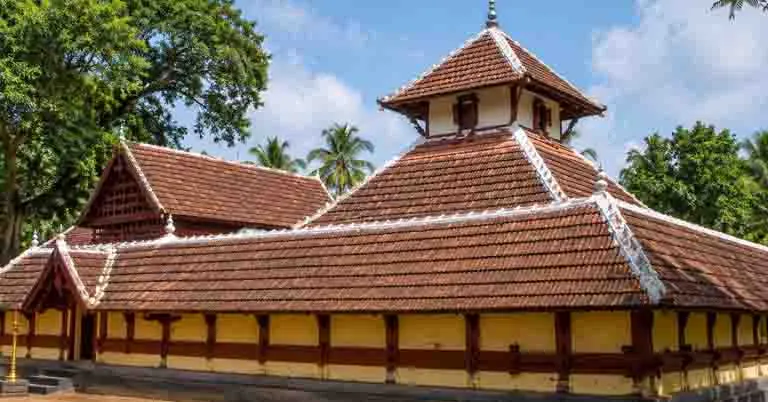
Nestled at the foot of the majestic Kodachadri Hills in the serene village of Kollur, in Udupi district, Karnataka, stands the Kollur Mookambika Temple, one of India’s most ancient and venerated shrines dedicated to Goddess Mookambika, an incarnation of Parvati Devi. This temple is not just a symbol of devotion but also a profound confluence of spirituality, mythology, architecture, and natural beauty.
Kollur Mookambika is considered a sacred Shakti Peetha, a seat of divine feminine energy, where Goddess Parvati is worshipped as the embodiment of wisdom, power, and purity. For centuries, devotees, saints, and scholars from across India — especially from Kerala, Karnataka, and Tamil Nadu — have come here to seek the blessings of Mookambika Devi, revered as the goddess of learning, music, and strength.
Etymology and Meaning
The word “Kollur” is derived from Kolu Ooru, meaning “the place of worship,” and “Mookambika” originates from the Sanskrit words Mooka (meaning dumb or speechless) and Ambika (meaning Mother Goddess). The name signifies the powerful event where Goddess Parvati silenced and destroyed the demon Mookasura, thereby restoring dharma and divine balance. Hence, she came to be known as Mookambika — “the Mother who ended the tyranny of Mooka.”
Mythological Significance
According to Hindu mythology, long ago, a demon named Kaumasura performed severe penance and obtained a boon from Lord Shiva that made him nearly invincible. Empowered by this boon, the demon became arrogant and began tormenting both gods and sages. The sages prayed to Goddess Parvati for relief. When Parvati attempted to slay the demon, he lost his speech and became “Mooka” (mute). She then destroyed him, earning the title Mookambika, the vanquisher of Mookasura.
It is also believed that Lord Parashurama, the sixth incarnation of Lord Vishnu, installed the Swayambhu (self-manifested) Jyotirlinga at this very spot and consecrated the idol of the Goddess. Thus, the temple became a rare site where Shakti (Goddess) and Shiva (Lord) coexist in a single sanctum — symbolizing the union of masculine and feminine divine energies.
Another legend connects the temple to Adi Shankaracharya, the great philosopher-saint. It is said that when he was meditating in Kollur, the Goddess appeared before him and promised to accompany him to Kerala, where he wanted to establish her shrine. However, she put forth one condition — that he should walk ahead without looking back, and she would follow him. When he reached near Kundapur, he heard her anklets stop ringing and looked back out of curiosity. Instantly, the Goddess told him she would remain at Kollur forever, blessing devotees who came to her with pure hearts. Adi Shankaracharya then consecrated her idol at Kollur and performed rituals that continue even today.

Historical Background
The Kollur Mookambika Temple is believed to be over 1200 years old, dating back to the early centuries of the Kali Yuga. The temple has been mentioned in ancient Tamil and Kannada literature and has received royal patronage from kings of the Vijayanagara Empire, the Keladi Nayakas, and later, the Travancore royal family, who were ardent devotees of the Goddess.
Over centuries, the temple has served as a spiritual center not just for worshippers but also for scholars, musicians, and philosophers. It remains one of the most visited pilgrimage sites in southern India, especially for students and artists, who pray to the Goddess before beginning their educational or artistic pursuits.
Spiritual Importance
The presiding deity, Mookambika Devi, is a unique representation of Tridevi (Durga, Lakshmi, and Saraswati) and also embodies the power of Trimurti (Brahma, Vishnu, and Shiva). The Goddess thus represents both creation and destruction, wisdom and power — the totality of divine existence.
The Jyotirlinga in the sanctum is believed to contain two equal halves: the left side symbolizing Parvati (Shakti) and the right side symbolizing Shiva (Shivam). This union, known as Ardhanareeshwara Tattva, signifies the cosmic balance of energy and consciousness.
Architecture of the Temple
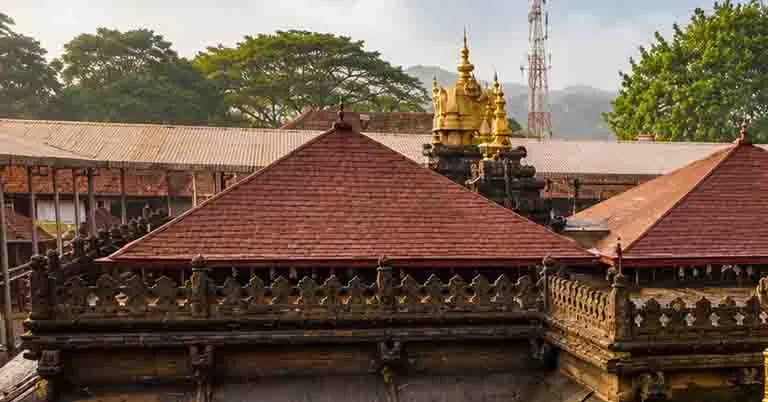
The Kollur Mookambika Temple showcases the traditional Dravidian style of architecture, renowned for its intricate carvings, golden domes, and majestic courtyards. The temple is built using granite and features wooden carvings that depict mythological stories and divine forms.
1. The Sreekovil (Sanctum Sanctorum)
The sanctum houses the idol of Goddess Mookambika, beautifully adorned with gold ornaments and flowers. The idol, made of Panchaloha (five metals), sits gracefully in a meditative posture with a gentle smile symbolizing compassion. Behind the idol, the Swayambhu Jyotirlinga is worshipped with deep reverence, representing both Lord Shiva and Goddess Parvati in a single form.
2. The Dwajasthambham (Flagstaff)
A tall golden flagstaff stands in front of the temple, representing spiritual ascent and divine presence. During festivals, sacred flags are hoisted here, marking the beginning of grand celebrations.
3. The Deepasthambham (Lamp Tower)
The lamp tower is another architectural highlight. When lit in the evening, the lamps create a mesmerizing aura that fills the temple courtyard with divine light and peace.
4. The Temple Tank (Pushkarini)
A sacred temple pond lies nearby, used by devotees for ritual cleansing before entering the sanctum. It is believed that the water has divine healing properties, blessed by the presence of Goddess Parvati herself.
5. Outer Structures
Surrounding the temple are shrines dedicated to Lord Ganapathi, Subramanya, Veerabhadra, Naga Devatas, and Annapoorneshwari. Each shrine holds significance in complementing the main deity’s energy.
Daily Worship and Rituals
The temple follows the Kerala Tantric system of worship, as established by Adi Shankaracharya. The priests perform three main poojas daily — morning, noon, and evening — accompanied by Abhishekam, Archana, Alankaram, and Deeparadhana.
Daily Rituals Include:
- Nirmalya Darshanam (Early Morning) – viewing the deity adorned from the previous night.
- Usha Pooja – morning worship to invoke divine energy.
- Ucha Pooja – midday ritual involving offerings of rice and sweets.
- Deeparadhana – evening lamp worship, accompanied by the melodious chanting of Devi Mahatmyam.
- Athazha Pooja – the final ritual before closing the sanctum for the night.
Special offerings include Thulabharam (weighing offering), Saraswati Pooja, Navagraha Homam, and Chandika Homa, performed to seek blessings for knowledge, prosperity, and health.
Festivals and Celebrations
The Kollur Mookambika Temple comes alive during its grand annual festivals, marked by devotion, music, dance, and illumination. These festivals attract thousands of devotees from across India.
1. Navaratri Festival
The Navaratri (nine nights) festival is the most significant celebration here, dedicated to Goddess Saraswati — the embodiment of wisdom and learning. During these nine days, each form of the Goddess is worshipped with elaborate rituals and artistic performances.
The last three days are particularly special — known as Saraswati Pooja — when books, musical instruments, and tools are placed before the Goddess for blessings. On Vijayadashami, devotees symbolically begin new ventures and children start their education (Vidyarambham) by writing their first letters in rice grains, under the guidance of priests.
2. Rathotsava (Car Festival)
Held annually in February or March, this festival involves the majestic procession of the Goddess’s idol in a beautifully decorated chariot (Ratha), pulled by devotees through the temple streets amid the chanting of hymns and rhythmic percussion.
3. Deepavali and Shivaratri
Deepavali (Festival of Lights) and Maha Shivaratri are also celebrated with great devotion. During Shivaratri, the temple remains open throughout the night with continuous chanting of Shiva Sahasranama and Rudrabhishekam.
4. Sankramana and Chandika Homa
Special poojas and Chandika Homas are performed during Sankramana (solar transitions) to ward off negative energies and seek divine protection.
Connection with Adi Shankaracharya
The Kollur Mookambika Temple holds deep significance in the spiritual journey of Jagadguru Adi Shankaracharya. It is believed that it was here he received the Goddess’s divine vision and blessings. The Sree Chakra installed by him remains at the sanctum even today, symbolizing the unbroken lineage of his worship tradition.
Every year, disciples of Shankaracharya and followers of Advaita philosophy visit the temple to pay homage to the Mother Goddess who, according to legend, granted him spiritual enlightenment and success in spreading Sanatana Dharma across India.
Cultural and Educational Significance
For centuries, the Kollur Mookambika Temple has been considered a sanctuary of learning and creativity. It is common for parents from Kerala, Karnataka, and Tamil Nadu to bring their children here for Vidyarambham (initiation into learning). Musicians, dancers, and scholars often begin their careers with prayers to Mookambika Devi, believing that her blessings bring brilliance and mastery in the arts.
The temple’s influence on South Indian music and classical dance is profound, as many great Carnatic musicians and poets — including Kottarathil Sankunni, Kumaraswami Iyer, and M.D. Ramanathan — were devotees of Mookambika.
The Natural Setting and Pilgrimage Experience
The temple’s natural setting enhances its sanctity. Located on the banks of the Souparnika River, surrounded by dense forests and the misty Kodachadri Hills, the atmosphere is deeply spiritual. The river, said to be blessed by Garuda (Suparna), who performed penance here, is believed to wash away sins and purify the soul.
The journey to Kollur itself is seen as a pilgrimage — winding roads through Western Ghats, lush greenery, and the rhythmic sounds of nature prepare devotees for the divine presence of the Goddess. Many pilgrims extend their visit to Kodachadri Peak, where the Chitramoola Cave is located, believed to be the spot where Adi Shankaracharya meditated and composed hymns to Mookambika Devi.
Administration and Preservation
The temple is managed by the Kollur Mookambika Temple Trust, under the supervision of the Hindu Religious Institutions and Charitable Endowments Department of Karnataka. The trust ensures smooth conduct of daily rituals, upkeep of temple heritage, and organization of charitable activities such as Annadanam (free meals), educational scholarships, and medical aid to pilgrims.
Recent efforts have focused on conserving the temple’s ancient sculptures, murals, and inscriptions, as well as eco-friendly initiatives like plastic-free zones and solar lighting, reflecting the temple’s harmony with nature.

Conclusion
The Kollur Mookambika Temple stands as a radiant beacon of divine motherhood, wisdom, and protection. It unites devotees across languages and regions through a shared sense of reverence and spiritual fulfillment.
Here, the Goddess Mookambika is not merely a deity — she is Jnanam (knowledge), Shakti (power), and Karuna (compassion) incarnate. The temple’s legends, architecture, and rituals reflect the eternal truth that divine energy transcends all boundaries of faith, time, and space.
Visiting Kollur is a transformative journey — a pilgrimage that leads not only to the temple’s sanctum but also into the sanctum of one’s own soul. For those who seek wisdom, purity, and inner strength, the blessings of Mookambika Devi continue to illuminate their path through life’s every storm and silence.
Disclaimer
The information provided by Web Arbiter (‘we’, ‘us’, or ‘our’) on https://webarbiter.in/ . The website is for general informational purposes only. All information on the Site is provided in good faith, however we make no representation or warranty of any kind, express or implied, regarding the accuracy, adequacy, validity, reliability, availability, or completeness of any information on the Site. UNDER NO CIRCUMSTANCE SHALL WE HAVE ANY LIABILITY TO YOU FOR ANY LOSS OR DAMAGE OF ANY KIND INCURRED AS A RESULT OF THE USE OF THE SITE OR RELIANCE ON ANY INFORMATION PROVIDED ON THE SITE. YOUR USE OF THE SITE AND YOUR RELIANCE ON ANY INFORMATION ON THE SITE IS SOLELY AT YOUR OWN RISK. Read Full Disclaimer