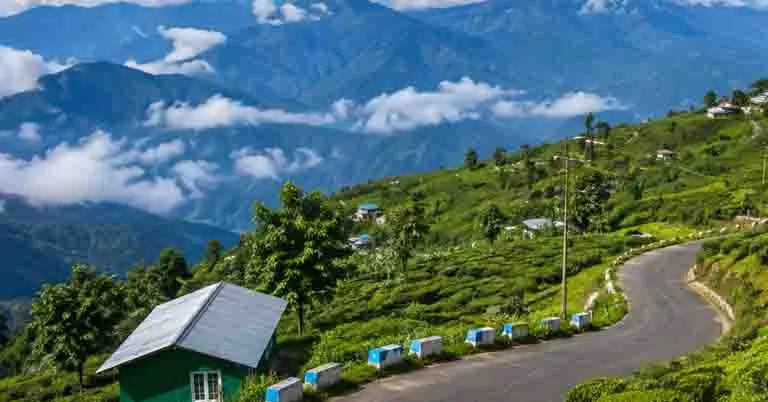


Hidden amidst the misty hills and dense forests of the Kannur district in Kerala, the Kottiyoor Siva Temple, also known as Kottiyoor Mahadeva Temple or Kottiyoor Devasthanam, is regarded as one of Lord Shiva’s oldest and most revered homes. Revered as the “Daksha Yaga Bhoomi”, this temple holds immense mythological, spiritual, and cultural significance. The divine aura of Kottiyoor, nestled on the banks of the serene Bavali River, makes it a unique blend of natural beauty and celestial power — where mythology breathes, and divinity feels tangible.
Kottiyoor is often referred to as “Vaitheeswaram of the South” and is a twin-temple complex, consisting of two sacred shrines — Akkare Kottiyoor and Ikkare Kottiyoor — located on opposite banks of the Bavali River. The temple’s connection to the Daksha Yaga, one of the most powerful episodes in Hindu mythology, gives it unparalleled sanctity among Shiva temples in India.
Historical and Mythological Background
The history of Kottiyoor Siva Temple is deeply intertwined with one of the most profound events in Hindu mythology — the Daksha Yaga and Sati’s self-immolation. According to the Puranas, King Daksha Prajapati, one of the sons of Lord Brahma, organized a grand Yaga (sacrificial ritual) but intentionally did not invite his son-in-law, Lord Shiva, due to his displeasure with Shiva’s ascetic lifestyle and association with ascetics and spirits.
However, Sati, Daksha’s daughter and Shiva’s consort, decided to attend the Yaga against her husband’s advice. When she arrived, she was humiliated by her father’s arrogance and disrespect toward Lord Shiva. Overwhelmed by sorrow and rage, Sati invoked her yogic powers and immolated herself in the Yaga fire.
When Lord Shiva learned of Sati’s death, his fury knew no bounds. In his wrath, he created Veerabhadra, who destroyed Daksha’s Yaga and severed Daksha’s head. Later, Shiva, filled with compassion, restored Daksha’s life by placing a goat’s head upon him and granted him forgiveness. The site where this divine drama unfolded is believed to be Kottiyoor, making it one of the holiest Shiva shrines in India.
The temple’s annual festival, Kottiyoor Vysakha Mahotsavam, reenacts this mythological event, symbolizing the eternal cycle of creation, destruction, and regeneration — the essence of Shiva’s cosmic dance.
Twin Temples: Akkare and Ikkare Kottiyoor
The Kottiyoor temple complex is unique for its two distinct shrines, symbolizing the dual nature of divinity — the unmanifest and the manifest, the ascetic and the householder.

1. Akkare Kottiyoor (Akkara Kshetram)
Situated on the eastern bank of the Bavali River within the dense forests, Akkare Kottiyoor is the Yaga Bhoomi, the sacred site where the original Daksha Yaga took place. Unlike conventional temples, Akkare Kottiyoor has no permanent structures. The main shrine is a natural Swayambhu Shivalinga situated on a small mound known as Manithara, surrounded by river sand and wilderness. The temple remains open only during the Vysakha Mahotsavam, usually between May and June.
The temporary temple complex consists of simple bamboo and thatched structures, in harmony with nature, emphasizing the purity and primal energy of the divine. Rituals here are performed amidst the symphony of river sounds, chants, and rustling leaves — evoking a sense of oneness with the universe.
2. Ikkare Kottiyoor (Thruchherumana Temple)
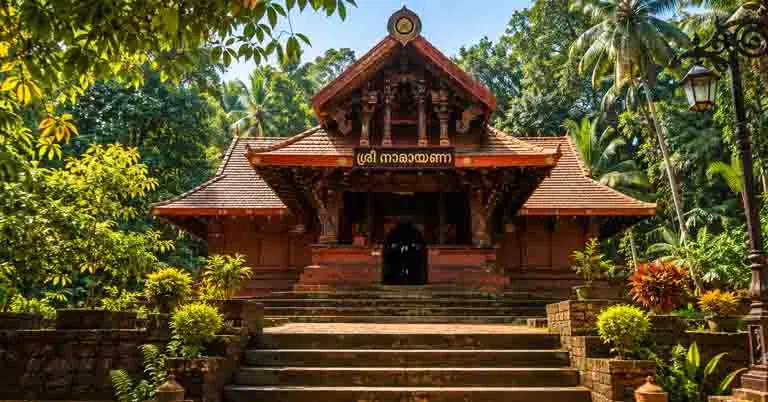
Located on the western bank of the Bavali River, Ikkare Kottiyoor is the permanent temple complex that remains open throughout the year. The presiding deity here is Lord Mahadeva, enshrined in a traditional sanctum built in classic Kerala architectural style. This temple serves as the main center for daily poojas, festivals, and administrative functions.
It is believed that Lord Shiva, in his compassionate form, resides here to bless devotees, while the fierce energy of his cosmic dance remains preserved in the forests of Akkare Kottiyoor.
Architecture and Layout
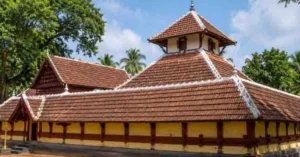
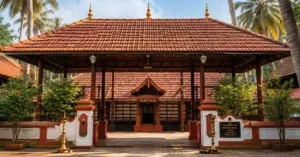
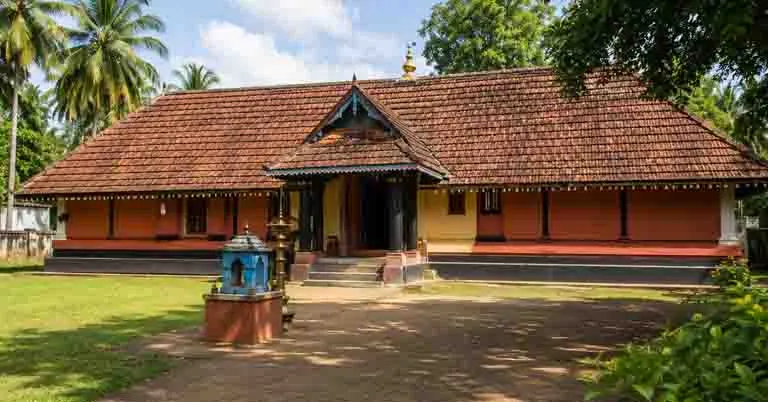
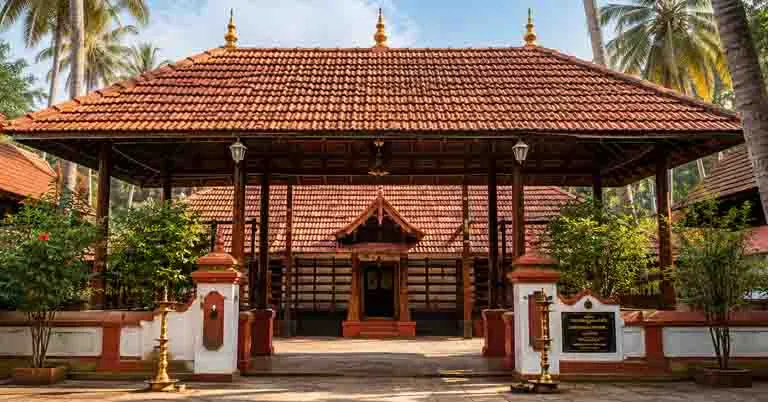
The Ikkare Kottiyoor Temple showcases the elegant Kerala style of temple architecture, characterized by its sloping tiled roofs, wooden carvings, and intricate stonework. The sanctum sanctorum (Sreekovil) is circular, symbolizing eternity, and houses a sacred Shiva Linga. The roof, covered with copper plates, glistens in the sunlight, representing cosmic energy.
The Namaskara Mandapam, Chuttambalam, and Vilakkumadom (lamp structures) are designed with sacred geometry, adhering to Vastu Shastra and Tantric traditions. The temple pond, Thiruvanchira, near the premises, serves for ritual bathing and purification before entering the shrine.
The natural surroundings of the Bavali River, dense forests, and mountain backdrop make Kottiyoor one of the most picturesque pilgrimage sites in India, harmonizing divinity with nature’s splendor.
Rituals and Worship
The rituals at Kottiyoor follow the ancient Shaiva and Vedic traditions, combining elements of Tantric worship and Vedic Yajna rituals. The temple is presided over by the Thanthri, the chief priest, who oversees the complex ceremonies with strict adherence to scriptural precision.
Daily Rituals (at Ikkare Kottiyoor)
- Usha Pooja (Morning) – Performed at sunrise with offerings of flowers, water, and incense.
- Ucha Pooja (Noon) – The main midday ritual, including Abhishekam and Nivedyam.
- Deeparadhana (Evening Lamp Offering) – Lamps are lit around the temple, symbolizing the dispelling of darkness.
- Athazha Pooja (Night) – The final pooja of the day, seeking divine protection.
The special offerings include Rudrabhishekam, Dhara, Mahamrityunjaya Homam, and Ghee Abhishekam, all believed to bestow blessings, peace, and health.
Vysakha Mahotsavam – The Grand Festival of Kottiyoor
The Kottiyoor Vysakha Mahotsavam is one of Kerala’s most sacred and spiritually charged festivals. It commemorates the divine episode of Daksha Yaga and Sati’s sacrifice. The festival begins with Neyyattam, where priests carry sacred ghee from the Kottiyoor Ikkare temple to Akkare Kottiyoor, crossing the Bavali River barefoot. This act symbolizes the beginning of the Yaga rituals.
The festival lasts for 28 days, typically during May–June, and includes a series of Vedic rituals, homams, poojas, and processions. The highlights include:
- Elaneer Vayppu – Offering of tender coconuts into the Yaga fire.
- Rudra Yagam – A sacred fire ritual invoking Lord Shiva’s blessings.
- Bali Tharpanam – Offerings to ancestors performed on the riverbank.
- Rohini Aradhana – Special worship performed on the most auspicious day of the festival.
Thousands of devotees, priests, and ascetics from across India gather in the forest temple, living in simplicity and austerity. The rituals, conducted under the open sky and surrounded by nature, represent the primal connection between man, nature, and divinity.
The festival concludes with Thrikkarthika Aarattu, when the divine energy is ritually transferred back to the permanent temple (Ikkare Kottiyoor), symbolizing the conclusion of the cosmic cycle.
Unique Traditions and Practices
Kottiyoor’s rituals and customs are distinct from those of conventional temples:
- No Permanent Structures at Akkare Kottiyoor:
The temporary nature of the Akkare shrine signifies impermanence — that everything in the material world is transient, while the spirit is eternal. - Use of Natural Elements:
The rituals involve only materials from nature — river sand, tender coconuts, bamboo, and flowers — reinforcing ecological sanctity. - Entry Restrictions:
Women traditionally do not enter Akkare Kottiyoor during the festival period, a custom linked to the myth of Sati’s self-sacrifice, emphasizing purity and respect for divine energy. - No Idol Worship:
Instead of idols, a natural Shivalinga symbolizes Lord Shiva, and the sacred Yaga fire itself is treated as the divine manifestation. - Harmony with Nature:
The temple rituals are performed without disturbing the forest ecosystem, showcasing an ancient ecological philosophy that worships nature as divine.
Cultural and Spiritual Significance
The Kottiyoor Siva Temple is not just a religious site but a living symbol of Kerala’s spiritual heritage, ecological harmony, and cultural unity. It upholds the ideals of:
- Vedic Dharma: through its adherence to ancient Yaga traditions.
- Shaiva Philosophy: celebrating Shiva’s infinite compassion and destructive power.
- Environmental Consciousness: blending worship with ecological respect.
- Community Harmony: involving multiple local communities, tribal groups, and pilgrims.
The temple also holds an important position in Kerala’s temple network, often compared with Sabarimala for its natural setting and sanctity.
Pilgrimage and Natural Setting
A pilgrimage to Kottiyoor is both spiritual and experiential. The journey through the forested roads, the sound of the Bavali River, and the sacred chants create an atmosphere of purification. Devotees believe that taking a dip in the Bavali River washes away sins and brings spiritual clarity.
The surrounding region, known as Kottiyoor Wildlife Sanctuary, adds to the temple’s mystical charm. Pilgrims often describe their experience here as a journey back to the primordial world — untouched, pure, and divine.
Administration and Management
The temple is managed by the Malabar Devaswom Board and follows strict traditional guidelines. During the Vysakha festival, thousands of volunteers and temple staff coordinate the rituals, accommodation, and safety of devotees, maintaining both spiritual discipline and environmental balance.
Spiritual Experience
The Kottiyoor Siva Temple offers a rare spiritual experience — one of deep introspection and communion with the divine. The stillness of the forest, the flowing river, and the rhythmic chanting of Om Namah Shivaya merge into a profound silence that transcends ordinary perception.
Devotees describe the temple as a gateway to self-realization, where the ego dissolves and the soul experiences union with the eternal consciousness of Lord Shiva. The rituals here are not mere ceremonies but a reenactment of the cosmic truth — that destruction and creation are inseparable, and every end leads to a divine renewal.

Conclusion
The Kottiyoor Siva Temple is not merely a temple; it is a living legend, a spiritual ecosystem where mythology, nature, and faith converge. Rooted in the timeless tale of Daksha Yaga, it embodies Lord Shiva’s supreme principles — detachment, compassion, and cosmic balance.
Through its unique rituals, seasonal festivals, and ecological sanctity, Kottiyoor stands as a beacon of spiritual purity and environmental devotion, reminding humanity of the eternal connection between the divine and nature.
For devotees, a visit to Kottiyoor is a pilgrimage not only through sacred land but also into the heart of one’s own soul — where, in the silence of the forest and the flow of the river, one can truly hear the voice of Mahadeva.
Disclaimer
The information provided by Web Arbiter (‘we’, ‘us’, or ‘our’) on https://webarbiter.in/ . The website is for general informational purposes only. All information on the Site is provided in good faith, however we make no representation or warranty of any kind, express or implied, regarding the accuracy, adequacy, validity, reliability, availability, or completeness of any information on the Site. UNDER NO CIRCUMSTANCE SHALL WE HAVE ANY LIABILITY TO YOU FOR ANY LOSS OR DAMAGE OF ANY KIND INCURRED AS A RESULT OF THE USE OF THE SITE OR RELIANCE ON ANY INFORMATION PROVIDED ON THE SITE. YOUR USE OF THE SITE AND YOUR RELIANCE ON ANY INFORMATION ON THE SITE IS SOLELY AT YOUR OWN RISK. Read Full Disclaimer