

Nestled in the divine town of Guruvayur in Kerala’s Thrissur district, the Mammiyoor Mahadeva Temple stands as one of the most spiritually significant shrines dedicated to Lord Shiva. It holds a unique and inseparable connection to the world-famous Guruvayur Sri Krishna Temple, making it a vital part of the pilgrimage circuit in Kerala. According to ancient belief, a visit to Guruvayur remains incomplete without paying homage at Mammiyoor. This temple is not merely a place of worship—it is a living embodiment of faith, myth, tradition, and Kerala’s architectural brilliance.
Mythological Significance
The origin of Mammiyoor Mahadeva Temple is deeply intertwined with the legends surrounding Guruvayurappan (Lord Krishna). According to mythology, after the submergence of Dwaraka, the deity of Lord Krishna (Vishnu) was brought to Kerala by Guru (the preceptor of the Devas) and Vayu (the God of wind). They sought a suitable place to consecrate the idol and eventually reached the sacred site of Guruvayur, which was blessed by Lord Shiva himself.
It is believed that Lord Shiva and Goddess Parvathi, who were residing at that very spot, vacated it to make way for Lord Vishnu’s idol. To ensure their presence remained nearby, Lord Shiva relocated to the adjacent Mammiyoor, where he continues to bless devotees as Mammiyoor Mahadevan. This act symbolizes the divine unity and mutual respect between Shiva and Vishnu, the two principal deities of the Hindu pantheon. Hence, Mammiyoor and Guruvayur temples are considered twin shrines—inseparably linked by divine purpose.

Historical Background
The Mammiyoor Mahadeva Temple is believed to be several centuries old, with references dating back to the medieval period when temple culture flourished in Kerala. Though the exact date of establishment remains uncertain, traditional records and oral histories suggest that it was an ancient shrine even before the Guruvayur temple rose to prominence. The temple was under the administration of local Brahmin families and trustees who preserved its rituals and customs.
During the later periods, the temple became closely associated with the Cochin royal family and regional rulers who contributed generously to its maintenance. Like many ancient temples in Kerala, Mammiyoor suffered occasional damages during periods of foreign invasion but was later restored by local devotees, maintaining its traditional glory.
Architectural Splendor
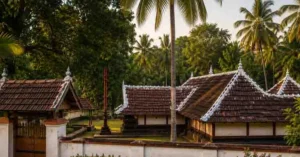
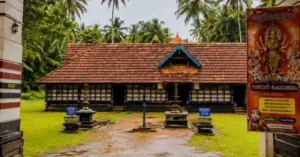
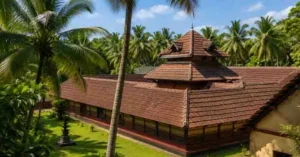
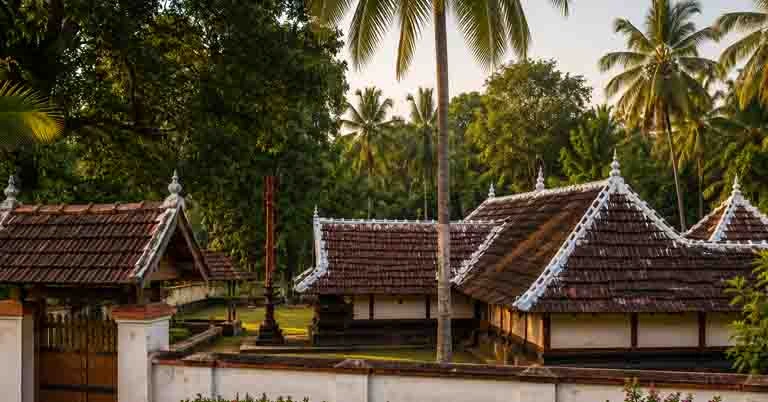
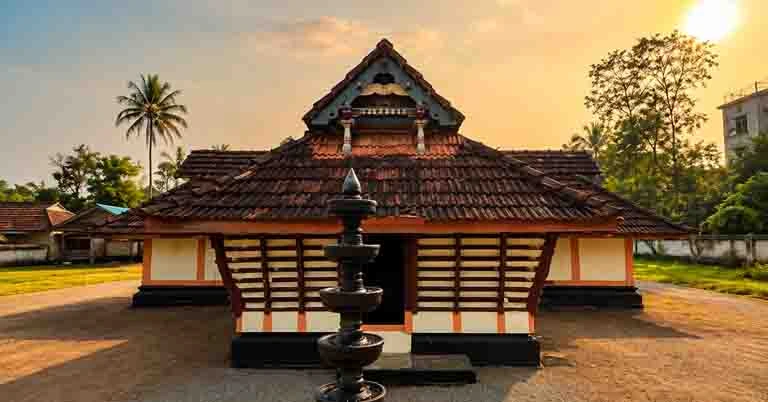
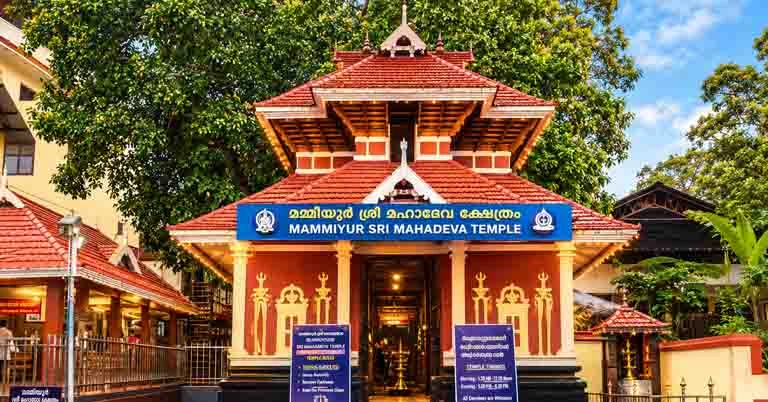
The architecture of Mammiyoor Mahadeva Temple reflects the elegance and simplicity of the traditional Kerala temple style, harmonizing with the region’s climatic and aesthetic sensibilities. The temple is enclosed by thick laterite stone walls with tiled roofing, surrounded by lush greenery and sacred ponds that exude serenity.
At the heart of the complex stands the sreekovil (sanctum sanctorum), housing the Shiva Linga, representing the formless and infinite aspect of Lord Shiva. The sanctum is square in shape with a copper-plated conical roof, adorned with golden finials that glisten in the sunlight. The inner walls are decorated with murals and wooden carvings depicting scenes from Shaivite and Vaishnavite mythology.
In front of the sanctum lies the namaskara mandapam, an elevated wooden platform where daily rituals and offerings take place. The ceiling panels of the mandapam are intricately carved with lotus motifs and celestial figures, showcasing Kerala’s master craftsmanship.
Surrounding the main shrine are several sub-shrines (upadevata temples) dedicated to Lord Vishnu, Goddess Parvathi, Lord Ganapathy, Lord Subramanya, Ayyappa, and Nagaraja. The presence of Lord Vishnu within the premises signifies the divine connection between the two supreme deities, Shiva and Vishnu.
The vilakkumadam (lamp enclosure) that encircles the sanctum comes alive during evenings and festival nights, when thousands of oil lamps are lit, bathing the temple in a warm, golden glow that radiates spiritual bliss.
Deities and Worship
The presiding deity of the Mammiyoor Temple is Lord Shiva, worshiped in the form of a Shiva Linga, symbolizing the cosmic energy and the eternal power of creation and destruction. Alongside him, the temple enshrines Goddess Parvathi, his consort, who represents Shakti, the divine feminine energy.
The temple also gives prominence to Lord Vishnu, who is worshiped here to honor the bond between Guruvayur and Mammiyoor. This dual presence of Shiva and Vishnu is a rare feature, illustrating the syncretic nature of Kerala’s temple traditions, where sectarian divisions dissolve in the spirit of devotion.
Rituals at the temple follow Shaiva Tantric customs, performed by trained priests belonging to traditional Brahmin families. The day begins with the Nirmalyam (removal of the previous day’s offerings), followed by Abhishekam (ritual bathing with water, milk, honey, and ghee), Usha pooja, Noon pooja, and Athazha pooja (evening worship). Each ceremony is accompanied by chanting of Vedic hymns and Rudra mantras, believed to purify both the devotees and the environment.
Special offerings include Rudrabhishekam, Mrithyunjaya Homam, Ganapathy Homam, and Vilakku Maala (lamp garland). Devotees also offer bilva leaves, rudraksha, and ghee lamps, seeking blessings for health, prosperity, and peace.
Festivals and Celebrations
The temple celebrates numerous festivals throughout the year, each filled with devotion, color, and grandeur. Among them, the most important is Mahashivaratri, the sacred night dedicated to Lord Shiva. On this day, devotees observe fasting, meditation, and night-long prayers. The temple becomes a sea of lamps and flowers, and special rituals like Rudrabhishekam, Sreebhootha Bali, and Sivapanchakshara Japam are conducted with great solemnity. Devotees stay awake through the night, chanting hymns and glorifying Shiva’s cosmic dance of creation and dissolution.
The annual temple festival (Utsavam), held in the Malayalam month of Kumbham (February–March), is another major event. The festival lasts for several days, featuring processions of caparisoned elephants, Panchavadyam (orchestra of five traditional instruments), Thayambaka (drum recitals), and cultural performances such as Kathakali and Chakyarkoothu. The highlight is the Arattu (holy bath) of the deity in the nearby pond, marking the conclusion of the celebrations.
Other important festivals include Pradosham, Thiruvathira, and Navaratri, each celebrated with rituals and traditional music. During the festival season, thousands of devotees visiting the Guruvayur temple also make it a point to offer prayers at Mammiyoor, reinforcing the temple’s spiritual bond with Guruvayurappan.
Spiritual Significance
The Mammiyoor Mahadeva Temple embodies the philosophical unity of Shaivism and Vaishnavism. The temple teaches that all deities are manifestations of the same divine consciousness. This inclusiveness has made it a revered site not only for Shaivites but also for Vaishnavites and devotees of other traditions.
Devotees believe that praying to Lord Shiva at Mammiyoor after visiting Lord Krishna at Guruvayur ensures the completion of the pilgrimage (Kshetra Yatra). It is said that those who visit Guruvayur alone receive only part of the divine blessing, while visiting both temples brings full spiritual fulfillment and prosperity. Hence, the saying goes:
“Guruvayur Kannanum Mammiyoorappanum orumichu pooja cheythal sampoornam bhagyam labhikkum”
(“One attains complete fortune by worshiping both Guruvayurappan and Mammiyoor Mahadevan.”)
Cultural Importance
Mammiyoor Mahadeva Temple is not only a spiritual center but also a hub of Kerala’s cultural heritage. The temple supports and promotes traditional art forms such as Kathakali, Ottanthullal, Koodiyattam, and Theyyam, which are performed during festive occasions. It also serves as a venue for Vedic studies, bhajans, and spiritual discourses, attracting scholars, priests, and devotees from across India.
The temple’s rituals and festivals are accompanied by the rhythmic beats of chenda melam and the melodic strains of nadaswaram, creating an atmosphere charged with divine energy. The temple also plays a significant role in local community life, hosting charitable activities, feeding programs (annadanam), and cultural events that strengthen social unity.
Temple Management and Preservation
The temple is managed by the Cochin Devaswom Board, which oversees its daily administration, ritual conduct, and preservation. The temple committee ensures that ancient customs and architectural integrity are maintained even as facilities for devotees improve. Restoration works have been undertaken to preserve murals, wooden carvings, and copper roofing. Strict adherence to traditional dress codes and customs ensures the sanctity of the temple atmosphere.
Despite modernization, Mammiyoor continues to uphold its spiritual austerity—men are required to enter the temple bare-chested and women wear traditional attire, reflecting Kerala’s respect for ritual purity.
Location and Accessibility
The temple is located just 500 meters north of the Guruvayur Sri Krishna Temple, making it easily accessible to pilgrims. The nearest railway station is Guruvayur Railway Station, and Thrissur Railway Station is around 29 kilometers away. The Cochin International Airport (about 80 km) serves as the nearest air connection. The proximity between Guruvayur and Mammiyoor allows devotees to visit both temples conveniently on the same day.
Atmosphere and Devotee Experience
Stepping into the Mammiyoor Temple offers an experience of calm and sanctity. The rhythmic chants, fragrance of sandalwood, and soft glow of oil lamps create an atmosphere conducive to meditation and inner reflection. The temple’s sacred pond and surrounding banyan trees add to its spiritual ambiance, making it a perfect place for seekers of peace.
Pilgrims often express that after visiting both Guruvayur and Mammiyoor, they feel a deep sense of spiritual completeness—as if the blessings of both Vishnu and Shiva have balanced their material and spiritual energies.

Conclusion
The Mammiyoor Mahadeva Temple stands as a profound symbol of harmony, devotion, and divine unity. Rooted in mythology yet vibrant in modern times, it continues to draw countless devotees who seek the grace of Lord Shiva and Goddess Parvathi. Its inseparable connection with Guruvayurappan embodies the essence of universal faith—that all forms of God lead to the same supreme truth.
Through its timeless rituals, splendid architecture, and sacred legends, the temple not only preserves Kerala’s spiritual legacy but also reinforces the message of divine coexistence. A pilgrimage to Guruvayur finds true completion only with a bow at Mammiyoor—where Lord Shiva, the eternal Yogi, continues to radiate his benevolent presence, blessing the faithful with wisdom, peace, and liberation.
Disclaimer
The information provided by Web Arbiter (‘we’, ‘us’, or ‘our’) on https://webarbiter.in/ . The website is for general informational purposes only. All information on the Site is provided in good faith, however we make no representation or warranty of any kind, express or implied, regarding the accuracy, adequacy, validity, reliability, availability, or completeness of any information on the Site. UNDER NO CIRCUMSTANCE SHALL WE HAVE ANY LIABILITY TO YOU FOR ANY LOSS OR DAMAGE OF ANY KIND INCURRED AS A RESULT OF THE USE OF THE SITE OR RELIANCE ON ANY INFORMATION PROVIDED ON THE SITE. YOUR USE OF THE SITE AND YOUR RELIANCE ON ANY INFORMATION ON THE SITE IS SOLELY AT YOUR OWN RISK. Read Full Disclaimer