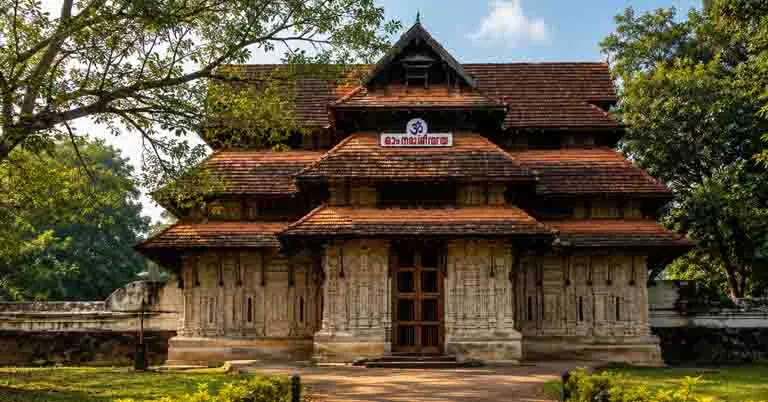
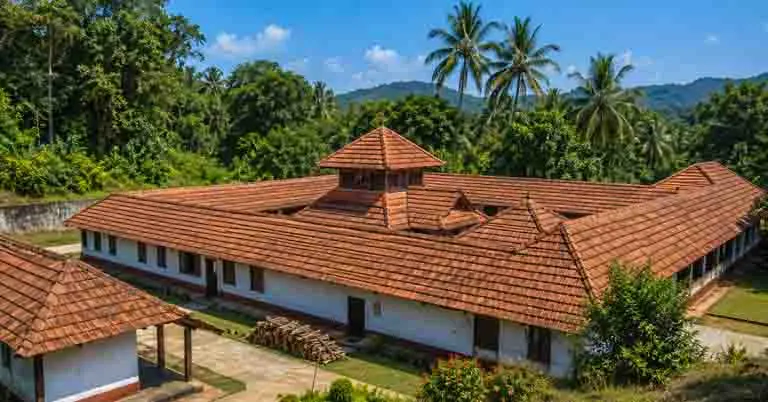
Muthuvara Mahadeva Temple, situated in the serene village of Muthuvara, just a few kilometres from Thrissur city, stands as one of the most ancient and revered Shiva temples in Kerala. The temple is believed to be one of the 108 Shiva Temples consecrated by Lord Parashurama, the legendary sixth incarnation of Lord Vishnu who is said to have reclaimed the land of Kerala from the sea and established numerous temples to sanctify it.
The temple’s uniqueness lies not only in its antiquity but also in its remarkable combination of Shaiva and Vaishnava traditions—it enshrines both Lord Shiva and Lord Vishnu within the same temple complex. This rare architectural and spiritual fusion symbolizes the profound harmony of divine energies and philosophical unity between two great sects of Hinduism.
Location and Setting
The Muthuvara Mahadeva Temple is located about 6 kilometres north of Thrissur, easily accessible by road from the bustling town centre. It lies along the route connecting Thrissur and Kunnamkulam, making it a convenient destination for pilgrims and tourists alike. Despite its proximity to the city, the temple retains a calm, village-like atmosphere surrounded by lush greenery, small ponds, and ancient banyan trees.
The quiet setting enhances its sacred ambiance, allowing devotees to experience an immediate sense of peace upon entering the premises. The temple complex, though modest in scale, radiates spiritual warmth and architectural grace typical of Kerala’s ancient temple heritage.
Legend and Mythological Background
According to temple legend, Lord Parashurama, after creating Kerala, installed 108 Shiva Lingams across the land to protect it from negative energies and to bless its people. The Muthuvara Mahadeva Temple is said to be one of these divine installations.
The Shiva Lingam at Muthuvara is believed to be self-manifested (Swayambhu) and represents Lord Shiva in his Raudra Bhava—a fierce, cosmic form embodying divine energy, power, and destruction of evil. To pacify the intense energy radiating from the Lingam, Lord Parashurama is said to have installed Lord Vishnu in another sanctum within the same temple complex. Thus, both the fierce and the compassionate aspects of divinity coexist here, symbolizing balance and harmony between creation and dissolution.
Another local legend narrates that the temple was once part of a grand forested area where sages performed penance. It is believed that the Lingam emerged from the earth during one such ritual, and divine sounds reverberated across the forest—marking the spot where the temple was later built.
Historical Background
The temple’s origins date back several centuries. While the exact period of construction is unknown, architectural and ritualistic evidence points to the early medieval period (9th–12th century CE). The temple was patronized by local feudal families and community elders of the Thrissur region, which was a cultural hub under the Chera dynasty.
Over time, the temple became an integral part of the region’s spiritual life and was maintained through local donations and community participation. In the modern era, the temple has come under the administration of the Cochin Devaswom Board, which ensures the continuity of traditional rituals, temple maintenance, and annual festivals.
Architecture and Layout
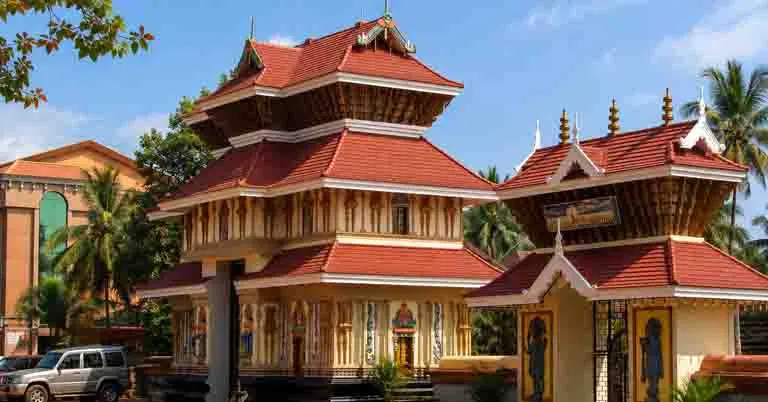
The Muthuvara Mahadeva Temple is a fine example of Kerala’s traditional temple architecture, characterized by wooden carvings, sloping tiled roofs, laterite stone walls, and copper-clad domes. The temple complex houses two main sanctums (Sreekovils)—one dedicated to Lord Shiva and another to Lord Vishnu.

1. The Shiva Shrine
- The main sanctum sanctorum (Sreekovil) enshrines the Swayambhu Shiva Lingam, approximately 2.5 feet tall, facing west.
- The deity is worshipped in the Raudra Bhava (fierce aspect), symbolizing the cosmic energy that destroys ignorance and evil.
- The roof of the sanctum is made of copper plates, and the walls are adorned with ancient murals and wooden panels depicting scenes from Shaiva mythology.
- In front of the sanctum lies the Namaskara Mandapam, where the priests perform poojas and abhishekams daily.
2. The Vishnu Shrine
- The Vishnu shrine is situated within the same temple compound, also facing west.
- Lord Vishnu here is worshipped as Maha Vishnu or Narasimha, representing the pacifying and preserving force of the universe.
- The shrine’s inclusion balances the fiery energy of Lord Shiva with the cooling, compassionate aspect of Lord Vishnu.
3. Other Architectural Features
- Dwaja Stambham (Flag Mast): Positioned before the sanctum, it is used during temple festivals to hoist the ceremonial flag.
- Deepastambham (Lamp Tower): A tall, multi-tiered brass lamp structure lit during evening prayers and festive occasions.
- Pradakshina Patha (Circumambulatory Path): Surrounds the sanctum, allowing devotees to walk around the deity in reverence.
- Temple Tank: Located nearby, it serves for ritual purification and festival processions.
The combination of dual shrines and serene layout makes Muthuvara Mahadeva Temple a spiritual and architectural gem among Kerala’s ancient temples.
Deities and Sub-Shrines
Apart from the main deities—Lord Shiva and Lord Vishnu—the temple complex houses smaller shrines dedicated to:
- Lord Ganapathi (Vighneswara) – remover of obstacles
- Lord Ayyappa (Sastha) – symbol of discipline and devotion
- Naga Devatas – serpent deities, worshipped for fertility and protection
- Durga Devi – the fierce mother goddess who destroys evil forces
The inclusion of multiple deities allows devotees of all backgrounds to participate in worship, reflecting the temple’s inclusive and universal character.
Daily Rituals and Poojas
The temple follows traditional Kerala Tantric customs and conducts several daily poojas under the supervision of qualified priests.
Typical Daily Schedule:
- Nada Thurakkal (Opening): 4:30 AM
- Nirmalyam and Abhishekam: 4:45 AM – ritual purification and offering of water, milk, and ghee over the Shiva Lingam.
- Usha Pooja: 6:30 AM – morning worship to awaken the deity.
- Ucha Pooja: 11:30 AM – noon offering of cooked rice, fruits, and lamps.
- Deeparadhana: 6:00 PM – evening lamp ceremony accompanied by chants and bells.
- Athazha Pooja: 7:30 PM – final worship before closing the sanctum.
Important Offerings (Vazhipadu):
- Dhara (continuous abhishekam) – for peace and prosperity.
- Mrityunjaya Homam – for longevity and overcoming illness.
- Rudrabhishekam – to invoke the blessings of Rudra (Shiva’s fierce form).
- Udayasthamana Pooja – day-long worship symbolizing total devotion.
- Pushpanjali, Lamp offerings, and Vedi Vazhipadu (ritual fire offerings) are also performed regularly.
Festivals and Celebrations
The temple observes several festivals, but the most prominent are Maha Shivaratri and the Annual Utsavam.
1. Maha Shivaratri
Celebrated in the Malayalam month of Kumbham (February–March), Maha Shivaratri is the grandest event at Muthuvara Mahadeva Temple. Throughout the night, devotees sing “Om Namah Shivaya,” fast, and meditate. The temple remains open for 24 hours, and the sanctum is beautifully decorated with lamps, flowers, and sacred ash. The air resonates with bhajans, chenda melam (percussion), and the fragrance of sandalwood and incense.

2. Annual Utsavam
The temple’s annual festival extends over nine days, usually held in February or March. The festival begins with the Kodiyettam (flag hoisting) on the Dwaja Stambham and concludes with the Arattu (holy bath) of the deity in the nearby pond.
Cultural highlights include:
- Processions with caparisoned elephants
- Panchavadyam and Chenda Melam (traditional music ensembles)
- Classical dance performances
- Community feasts (Annadanam)
3. Other Observances
- Pradosham – bi-monthly ritual to remove sins.
- Ayilyam Pooja – special worship for serpent deities.
- Thiruvathira – festival celebrated by women devotees with devotional dance and fasting.
Spiritual Significance
The temple’s greatest spiritual uniqueness lies in the co-existence of Shiva and Vishnu, representing the unity of creation and preservation, and symbolizing the non-duality of the divine. This confluence emphasizes that the Supreme Reality manifests in multiple forms but remains one in essence.
The Raudra Bhava of Lord Shiva is said to absorb negativity, destroy evil tendencies, and purify devotees. The Vishnu shrine, on the other hand, embodies compassion, wisdom, and restoration of balance. Thus, worshipping at Muthuvara Mahadeva Temple is believed to harmonize both aspects of divine energy in one’s life.
Cultural and Social Role
Beyond its religious importance, the temple plays an active role in the social and cultural life of the community:
- Organizes Annadanam (free meal distribution) during festivals.
- Provides educational support to underprivileged students.
- Conducts medical camps and charitable initiatives.
- Hosts music and dance programs promoting Kerala’s traditional art forms.
These initiatives reflect the temple’s mission to blend spirituality with social welfare, sustaining Kerala’s living temple culture.
Visiting Information
- Location: Muthuvara, Thrissur District, Kerala, India
- Nearest Town: Thrissur (6 km)
- Nearest Railway Station: Thrissur Railway Station (6 km)
- Nearest Airport: Cochin International Airport (about 55 km)
- Temple Timings:
- o Morning: 4:30 AM – 12:00 PM
- o Evening: 5:30 PM – 8:00 PM
- Best Time to Visit: Maha Shivaratri and Annual Utsavam (February–March)
Visitor Tips:
- Dress modestly (traditional attire preferred).
- Remove footwear before entering.
- Photography inside the sanctum is prohibited.
- Visit early morning or evening for peaceful darshan.
Conclusion
The Muthuvara Mahadeva Temple is not just a place of worship—it is a spiritual confluence of Shiva and Vishnu, representing unity, balance, and divine grace. Rooted in ancient legend, architectural beauty, and living devotion, the temple continues to be a guiding light for thousands of devotees seeking peace, protection, and enlightenment.
Here, the cosmic energy of Lord Shiva’s fierce aspect is gently balanced by Lord Vishnu’s compassionate presence, reminding every visitor that all divine forces work together in perfect harmony. Amidst the quiet village of Muthuvara, this temple remains a timeless beacon of Kerala’s spiritual heritage—a living testimony to devotion, unity, and eternal truth.
Disclaimer
The information provided by Web Arbiter (‘we’, ‘us’, or ‘our’) on https://webarbiter.in/ . The website is for general informational purposes only. All information on the Site is provided in good faith, however we make no representation or warranty of any kind, express or implied, regarding the accuracy, adequacy, validity, reliability, availability, or completeness of any information on the Site. UNDER NO CIRCUMSTANCE SHALL WE HAVE ANY LIABILITY TO YOU FOR ANY LOSS OR DAMAGE OF ANY KIND INCURRED AS A RESULT OF THE USE OF THE SITE OR RELIANCE ON ANY INFORMATION PROVIDED ON THE SITE. YOUR USE OF THE SITE AND YOUR RELIANCE ON ANY INFORMATION ON THE SITE IS SOLELY AT YOUR OWN RISK. Read Full Disclaimer