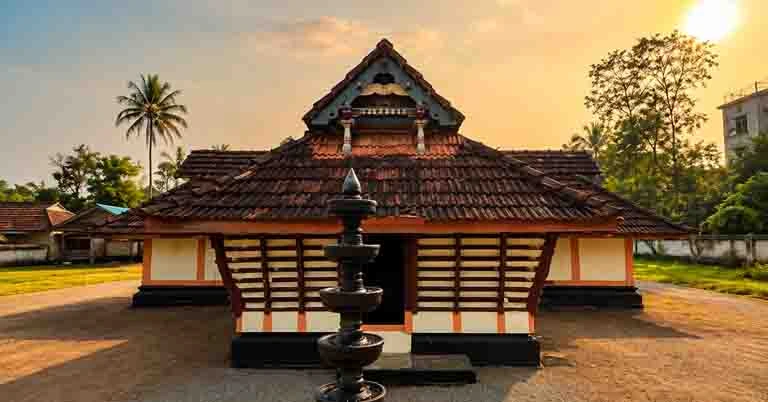


In the heart of Cherthala, a serene town in the Alappuzha district of Kerala, lies one of the state’s most ancient and spiritually powerful temples — the Nalpathaneeswaram Sree Mahadeva Temple. Dedicated to Lord Shiva, this temple holds a unique place in Kerala’s religious landscape due to its legendary origin involving forty-one manifestations of Lord Shiva, symbolizing the infinite and omnipresent nature of the Divine.
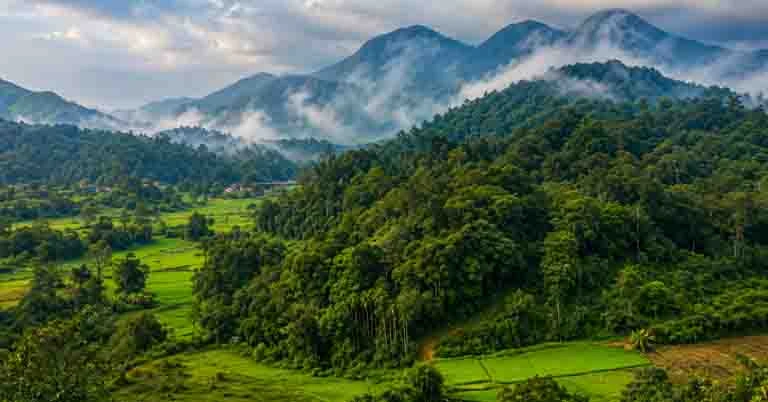
Surrounded by emerald paddy fields, tranquil ponds, and swaying coconut palms, the temple stands as a beacon of faith, history, and divine energy. Known for its intricate rituals, classical temple architecture, and deep-rooted legends, Nalpathaneeswaram is not just a place of worship — it is a living monument that connects the spiritual, cultural, and architectural legacy of Kerala.
Etymology and Mythological Background
The name “Nalpathaneeswaram” translates to “the abode of forty-one Ishwaras (Shivas).” According to ancient tradition, the temple was so named because forty-one Swayambhoo (self-manifested) Shiva Lingas are believed to exist within the temple precincts. Each Linga represents a different aspect or form of Lord Shiva, signifying his all-encompassing presence.
As per legend, Lord Parashurama, the sixth incarnation of Vishnu and the creator of Kerala, consecrated this temple. When Parashurama reclaimed the land from the sea, he established 108 Shiva temples across Kerala to sanctify it. Among these sacred temples, Nalpathaneeswaram is one of the most unique, owing to the presence of multiple Shiva forms, each radiating distinct cosmic vibrations.
Another myth connects the temple to a sage named Neelakanta Maharshi, who performed intense penance here to attain Shiva’s vision. Pleased with his devotion, Lord Shiva manifested in forty-one forms, granting the sage enlightenment. The place where this divine occurrence took place came to be known as Nalpathaneeswaram Kshetram.

Spiritual Significance
The presiding deity of the temple is Lord Mahadeva, represented by a powerful Swayambhoo Shiva Linga that faces east. Lord Shiva here is worshipped as the Supreme Consciousness, the eternal light that governs all creation and dissolution.
The forty-one Lingas within the temple precincts are believed to correspond to the forty-one days of Mandala Vratham, a period of rigorous austerity observed by devotees before visiting Sabarimala. Thus, this temple is often visited by Ayyappa devotees to seek purification and strength before their pilgrimage.
Devotees believe that offering prayers here removes the influence of past karmas, bestows peace of mind, and grants divine blessings for health, prosperity, and spiritual growth. Mondays, Pradosham days, and Maha Shivaratri are particularly significant for worship.
Temple Architecture
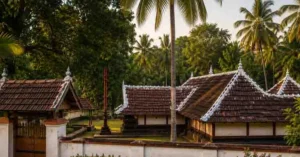
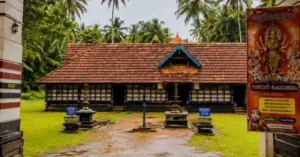
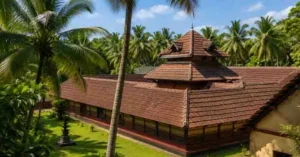
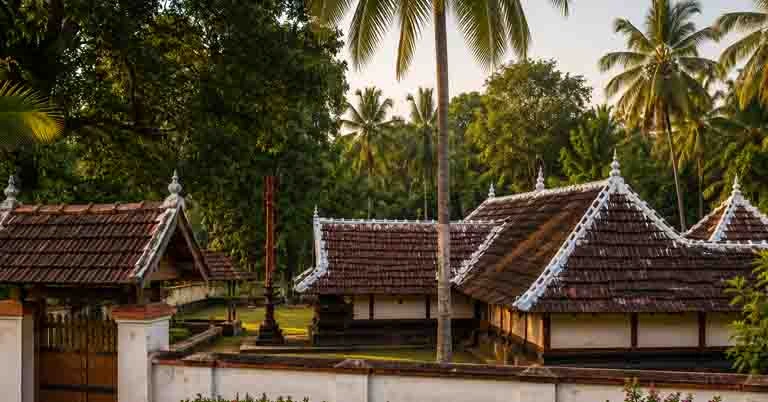
The Nalpathaneeswaram Sree Mahadeva Temple is an exemplary model of traditional Kerala temple architecture, blending aesthetic beauty with spiritual symbolism. The structure follows the ancient architectural texts Tantra Samuchayam and Manushyalaya Chandrika, which guide temple design based on cosmic geometry and ritualistic principles.
1. Sreekovil (Sanctum Sanctorum)
The sanctum houses the main Shiva Linga, which is believed to be Swayambhoo. The Sreekovil is constructed in the Vatta (circular) style with copper roofing and beautifully carved wooden panels. The serene atmosphere inside the sanctum enhances the meditative experience of the devotees.
2. Namaskara Mandapam
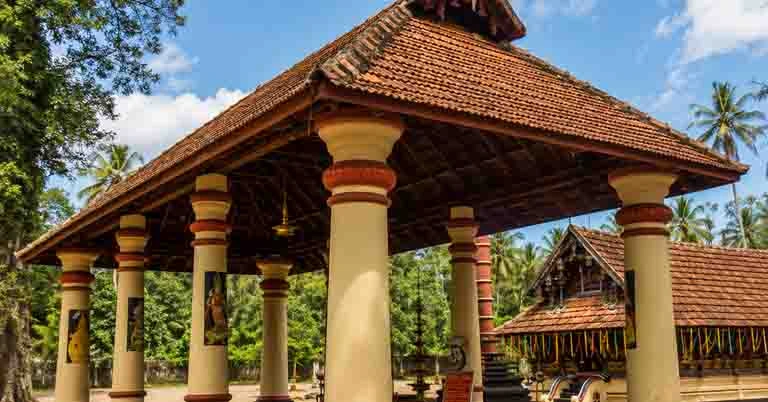
In front of the sanctum lies a square pavilion used for daily poojas and rituals. The Mandapam is adorned with intricate wood carvings of celestial beings and mythological motifs.
3. Nalambalam and Chuttambalam
The inner and outer enclosures surrounding the sanctum are collectively known as Nalambalam and Chuttambalam. The Chuttambalam provides a shaded pathway for devotees to perform pradakshina (circumambulation). The walls are decorated with murals and ancient inscriptions narrating Shiva’s divine exploits.
4. Dwaja Stambham (Flagstaff)
A tall, gold-plated flagstaff rises majestically near the entrance, symbolizing a bridge between the human and the divine. It is here that the ceremonial flag is hoisted to mark the commencement of temple festivals.
5. Temple Tank (Ambalakulam)
To the east of the temple lies a sacred pond, used for ritual purification before entering the sanctum. The reflection of the temple’s gopuram on the calm water adds to its spiritual charm.
6. Gopuram (Entrance Tower)
The temple entrance is crowned by a typical Kerala-style gopuram with tiled roofing, adorned with wooden carvings and floral motifs. The entrance pathway, lined with oil lamps, creates a mesmerizing view during evening Deeparadhana.
Overall, the temple’s architecture embodies both artistic beauty and metaphysical depth, representing the union of Purusha (cosmic consciousness) and Prakriti (nature).
Sub-Deities and Shrines
Apart from the main deity, the temple enshrines several Upa-Devatas (sub-deities), each contributing to the spiritual completeness of the complex:
- Lord Ganapathi: The remover of obstacles, worshipped first before any ritual.
- Lord Subramanya (Kartikeya): The divine commander, symbolizing valor and wisdom.
- Goddess Parvathi: The embodiment of compassion and motherly grace.
- Lord Ayyappa: Representing unity and the spiritual journey of self-realization.
- Naga Devatas (Serpent deities): Worshipped for fertility, protection, and family welfare.
- Bhagavathy: The fierce yet benevolent feminine power of Shakti.
These shrines, distributed across the temple compound, reflect the integrated nature of Hindu worship, where multiple aspects of divinity coexist in harmony.
Daily Rituals and Worship Practices
The daily worship at Nalpathaneeswaram follows the Shaiva Tantric tradition, with rituals conducted under the supervision of a Thantri (chief priest). The day begins before sunrise and ends late in the evening, encompassing multiple stages of worship:
- Nirmalyam: Removal of previous day’s garlands and ornaments from the deity.
- Abhishekam: Ritual bathing of the Shiva Linga with sacred items such as water, milk, curd, ghee, honey, and sandalwood paste.
- Usha Pooja: The first major morning pooja, symbolizing the awakening of divine consciousness.
- Ucha Pooja: Midday offering, performed with cooked rice (Nivedyam), flowers, and lamp offerings.
- Deeparadhana: Evening worship with lamps, accompanied by chants of Om Namah Shivaya.
- Athazha Pooja: The final offering of the day before the sanctum is closed.
Special offerings include Rudrabhishekam, Dhara, Mrityunjaya Homam, and Bilva Archana. Devotees also perform Vazhipadu such as Pushpanjali, Palabhishekam, and Sarpabali to seek relief from specific doshas and attain divine grace.
Festivals and Celebrations
The temple’s festivals are grand occasions that combine ritual sanctity, cultural vibrancy, and community participation. Each festival is celebrated with devotion and artistic splendor, reaffirming Kerala’s temple traditions.
1. Maha Shivaratri
Maha Shivaratri, the great night of Lord Shiva, is the most significant festival at Nalpathaneeswaram. Devotees observe fasting and night-long vigil, chanting Rudram and Namakam while offering continuous Abhishekam to the deity. The temple glows with thousands of lamps, and the divine aura during this night is said to purify even the heaviest of karmas.
2. Annual Utsavam
The temple’s annual festival (Utsavam) takes place during the Malayalam month of Kumbham (February–March). It lasts for ten days, beginning with the Kodiyettam (flag hoisting) and culminating in the Arattu (holy bath of the deity). Rituals include Utsava Bali, Sreebhootha Bali, Pallivetta (symbolic hunt), and Aarattu procession. Traditional art forms like Kathakali, Chenda Melam, and Panchavadyam add grandeur to the celebrations.
3. Pradosham
Observed twice a month, Pradosham is an auspicious occasion dedicated to Lord Shiva. Devotees throng the temple during the twilight hours to perform bilva archana and seek liberation from sins.
4. Mandala and Makara Vilakku
The temple also attracts pilgrims during the Mandala season, when devotees preparing for the Sabarimala pilgrimage visit to offer prayers and seek purification.
Cultural and Social Importance
Beyond its spiritual significance, Nalpathaneeswaram Sree Mahadeva Temple is a vibrant center of art and culture. During festivals, the temple becomes a stage for classical performances such as Ottamthullal, Chakyar Koothu, and Koodiyattam. The rhythmic beats of Chenda Melam and the vibrant processions evoke a deep sense of devotion and community bonding.
The temple also plays a central role in the social life of the region, supporting charitable activities, education, and traditional art preservation. Devotees and locals often come together for Annadanam (mass feeding) during festivals, reinforcing the values of compassion and unity that Lord Shiva embodies.
Location and Accessibility
The Nalpathaneeswaram Sree Mahadeva Temple is located about 3 kilometers from Cherthala town in Alappuzha district, Kerala. The nearest railway station is Cherthala Railway Station, and the Cochin International Airport is approximately 70 kilometers away.
The temple is easily accessible by road, with regular bus services from Kochi, Alappuzha, and nearby towns. Visitors can also find lodging and food facilities in Cherthala. The best time to visit is during early morning hours or during the annual Utsavam and Shivaratri celebrations.

Conclusion
The Nalpathaneeswaram Sree Mahadeva Temple stands as a spiritual gem of Kerala — a place where mythology, devotion, art, and architecture merge seamlessly. The temple’s very name, meaning “the abode of forty-one Ishwaras,” reflects its unique divine nature, representing the countless forms of Lord Shiva who governs all realms of existence.
To stand before the ancient Shiva Linga here is to feel the timeless presence of divinity — calm, powerful, and all-encompassing. The chants of Om Namah Shivaya, the scent of sandalwood, the flickering oil lamps, and the sacred rituals together create an atmosphere that transcends the material and touches the eternal.
Visiting Nalpathaneeswaram is not merely a pilgrimage — it is an inner journey, a reminder that within each soul resides the same divine light that illumines this sacred temple.
Disclaimer
The information provided by Web Arbiter (‘we’, ‘us’, or ‘our’) on https://webarbiter.in/ . The website is for general informational purposes only. All information on the Site is provided in good faith, however we make no representation or warranty of any kind, express or implied, regarding the accuracy, adequacy, validity, reliability, availability, or completeness of any information on the Site. UNDER NO CIRCUMSTANCE SHALL WE HAVE ANY LIABILITY TO YOU FOR ANY LOSS OR DAMAGE OF ANY KIND INCURRED AS A RESULT OF THE USE OF THE SITE OR RELIANCE ON ANY INFORMATION PROVIDED ON THE SITE. YOUR USE OF THE SITE AND YOUR RELIANCE ON ANY INFORMATION ON THE SITE IS SOLELY AT YOUR OWN RISK. Read Full Disclaimer