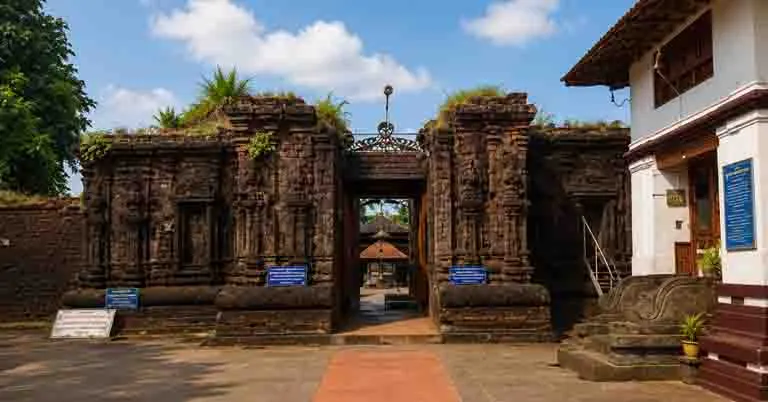
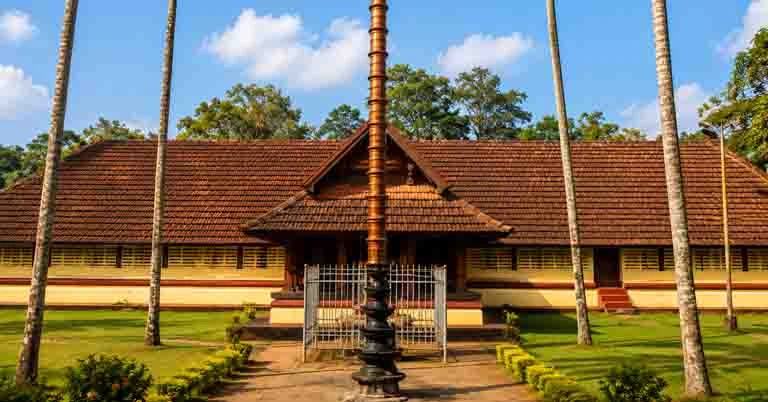
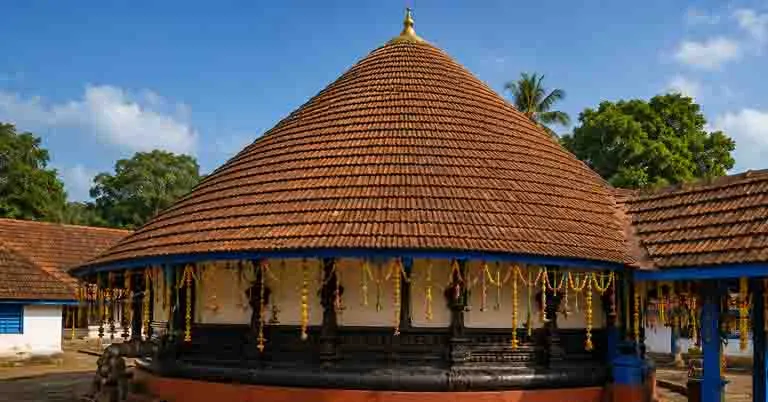
The Palayoor Mahadeva Temple, situated in the serene village of Palayoor near Chavakkad in the Thrissur district of Kerala, stands as a sacred monument that reflects the rich cultural, spiritual, and architectural legacy of the region. Revered as one of the ancient Shiva temples of Kerala, the temple embodies centuries of devotion, mythology, and traditional Kerala temple architecture. The tranquil surroundings, divine ambiance, and historical depth of the Palayoor Mahadeva Temple make it a profound center of worship and an enduring symbol of the state’s Shaiva traditions.
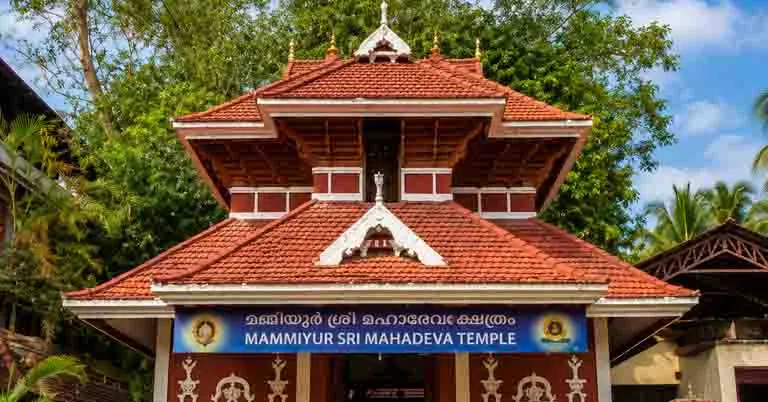
Historical Background
The Palayoor Mahadeva Temple is believed to be one of the 108 ancient Shiva temples of Kerala, consecrated by Lord Parashurama, the sixth incarnation of Lord Vishnu. According to legend, Parashurama reclaimed the land of Kerala from the Arabian Sea and sanctified it by installing idols of Lord Shiva across different regions. Palayoor Mahadeva Temple is said to be one among these divinely consecrated temples, thus holding immense religious significance.
Historically, Palayoor was also one of the earliest settlements in Kerala to flourish as a center of Vedic and spiritual learning. The temple, over the centuries, served as a seat of Shaiva philosophy and cultural activities. Inscriptions, temple manuscripts, and local folklore suggest that the temple received patronage from early Chera kings and other ruling dynasties that valued the spiritual essence of the temple.
Interestingly, Palayoor is also home to the historic St. Thomas Church, believed to have been established by In the first century CE, St. Thomas the Apostle. The proximity of this ancient Christian shrine to the Mahadeva Temple stands as a symbol of religious harmony and coexistence that Kerala has long been known for. This coexistence of faiths highlights Palayoor’s unique position in India’s spiritual and cultural history.
Mythological Legends
The temple’s origin is steeped in divine legends that enhance its sanctity. The most prominent legend narrates that a group of sages performed severe penance in this area to invoke the presence of Lord Shiva. Pleased with their devotion, Lord Shiva appeared before them as a Jyotirlinga (pillar of divine light). The sages then consecrated the spot with a Lingam, which became the central deity of the temple.
Another legend connects the temple directly to Lord Parashurama. After reclaiming Kerala, Parashurama desired to purify the land and make it spiritually powerful. He established 108 Shiva temples across Kerala, of which Palayoor is considered one of the holiest. This temple is believed to represent the divine energy of Lord Dakshinamurthy, the aspect of Shiva as the eternal teacher.
There is also a belief that Sage Agastya once meditated at this temple to balance the cosmic energies between northern and southern India. It is said that his divine austerities intensified the temple’s spiritual power, turning it into a sacred site of immense energy and tranquility.

Presiding Deity and Sub-Shrines
The presiding deity of the Palayoor Mahadeva Temple is Lord Shiva, enshrined as a Swayambhu (self-manifested) Shiva Lingam, facing the east. The Lingam is considered highly powerful and spiritually vibrant, radiating peace and protection to devotees who offer prayers with devotion and purity.
The temple complex also houses several upadevatas (sub-deities), which enrich its spiritual aura. These include:
- Goddess Parvati, consort of Lord Shiva, representing Shakti (divine energy).
- Lord Ganapathi, the remover of obstacles and the deity of auspicious beginnings.
- Lord Subramanya (Murugan), symbolizing valor and divine wisdom.
- Lord Ayyappa, the fusion of Shiva and Vishnu energies.
- Naga deities, worshipped for fertility, protection, and family prosperity.
- Bhagavathy shrine, representing the mother goddess aspect of Devi.
The temple’s rituals and daily poojas are conducted according to the Tantric traditions of Kerala, under the guidance of qualified Namboothiri priests. Devotees believe that performing rituals like Rudrabhishekam, Sahasranamarchana, and Pradosha pooja here brings divine blessings, mental peace, and spiritual upliftment.
Temple Architecture and Design
The Palayoor Mahadeva Temple is a fine example of traditional Kerala temple architecture, renowned for its harmony with nature, intricate woodwork, and spiritual symbolism. Every part of the temple has been designed following Vastu Shastra principles, aligning cosmic energy with architectural form.
Sreekovil (Sanctum Sanctorum)
The sanctum housing the Shiva Lingam is circular in shape (Vatta Sreekovil), a typical feature of Kerala temples dedicated to Lord Shiva. The inner walls are adorned with murals and carvings depicting stories from the Shiva Purana, including Daksha Yaga, Tripurantaka, and Ardhanarishvara. The sanctum is capped with a conical copper-tiled roof, which protects it from Kerala’s monsoon rains while symbolizing the cosmic energy flowing upward.
Namaskara Mandapam
In front of the sanctum lies the Namaskara Mandapam, a square-shaped hall used for rituals and prayers. It is supported by artistically carved wooden pillars that feature mythological motifs, floral designs, and figures of deities. Devotees often kneel here to perform prostrations (namaskaram) to the deity.
Chuttambalam and Nalambalam
The Chuttambalam, or the enclosed walkway surrounding the sanctum, provides a space for circumambulation (pradakshinam). The Nalambalam, which encloses the central shrine, contains small shrines for sub-deities and essential functional spaces like the Vazhipadu counter and Thidappalli (temple kitchen).
Dwajasthambham and Bali Peetha
A tall Dwajasthambham (flagstaff), made of brass-covered wood, stands in front of the temple. It represents the divine axis connecting heaven and earth. In front of it lies the Bali Peetha (sacrificial altar), where daily offerings to the guardian deities are made.
Temple Pond (Ambala Kulam)
The temple has a sacred pond situated near the eastern entrance, used for ritual purification before entering the shrine. It is also the site of the Aarattu (holy bath) ceremony during festivals. The reflection of the temple tower on the pond’s surface creates a serene spiritual atmosphere.
Rituals and Daily Worship
The temple’s daily rituals are performed with precision and devotion. The major daily poojas include:
- Usha Pooja – conducted at dawn to awaken the deity.
- Ucha Pooja – performed at midday, marking the offering of cooked rice and fruits.
- Athazha Pooja – the evening ritual, symbolizing rest for the deity.
- Deeparadhana – the lighting of lamps during sunset, a mesmerizing ceremony symbolizing the triumph of light over darkness.
Devotees also participate in special abhishekams using water, milk, honey, ghee, and vilva leaves, each offering carrying symbolic meaning. Chanting of Rudram and Chamakam, sacred hymns from the Vedas, amplifies the divine vibrations within the temple premises.
Festivals and Celebrations
Palayoor Mahadeva Temple hosts several grand festivals throughout the year, each celebrating the divine grace of Lord Shiva and the cultural richness of Kerala.
1. Maha Shivaratri
The most significant festival is Maha Shivaratri, celebrated with immense devotion. Devotees observe fasting, chant Om Namah Shivaya, and stay awake throughout the night in vigil (Jaagaranam). Special rituals like Rudrabhishekam, Sahasranamarchana, and Alankaram are performed. The temple glows with thousands of oil lamps, symbolizing spiritual awakening and the victory of truth over ignorance.
2. Annual Temple Festival (Utsavam)
The temple’s annual festival, usually held in the Malayalam months of Dhanu or Makaram (December–January), lasts for several days. It begins with the Kodiyettam (flag hoisting) and concludes with the Aarattu (holy bath) ceremony. Highlights include:
- Processions of the deity on caparisoned elephants.
- Traditional temple music like Panchavadyam and Nadaswaram.
- Cultural performances such as Kathakali, Chakyar Koothu, and Thayambaka.
- Annadanam (mass feeding) for devotees.
3. Pradosham
Every fortnight, during the Pradosham period (twilight on the 13th lunar day), devotees perform special Shiva poojas believed to cleanse sins and enhance spiritual progress.
4. Thiruvathira
Celebrated primarily by women, Thiruvathira honors the divine union of Shiva and Parvati. Devotees perform Thiruvathirakali, a graceful dance around oil lamps, symbolizing devotion, love, and marital harmony.
5. Navaratri and Deepavali
The temple also celebrates Navaratri and Deepavali, reflecting the victory of divine light and wisdom. Special lighting (Vilakku) and prayers are conducted during these festivals.
Cultural and Artistic Importance
Apart from its religious significance, the Palayoor Mahadeva Temple has historically functioned as a center of art, learning, and culture. The temple has supported classical art forms such as Kathakali, Ottanthullal, Koodiyattam, and Chakyar Koothu for centuries. The murals and carvings on its walls also stand as masterpieces of Kerala’s artistic heritage.
The temple administration continues to encourage cultural and spiritual education by organizing Vedic recitation camps, Sanskrit studies, and devotional music programs.
Palayoor’s unique position as both a Hindu and Christian pilgrimage site highlights Kerala’s enduring legacy of religious coexistence. This spirit of unity in diversity makes the temple not only a place of worship but also a cultural landmark.
Spiritual Atmosphere
Set amidst lush greenery, coconut palms, and the rhythmic sounds of temple bells, the Palayoor Mahadeva Temple exudes a powerful yet peaceful spiritual energy. The chanting of mantras, the scent of burning incense, and the reflection of lamps on the temple pond create an atmosphere of deep inner calm. Devotees often describe their visit as an experience of serenity, where the divine presence of Lord Shiva is felt in every corner.
The temple’s calm environment makes it an ideal place for meditation, reflection, and spiritual rejuvenation. Pilgrims believe that sincere worship at this temple can remove obstacles, bring prosperity, and lead one toward self-realization.

Accessibility
- Location: Palayoor, near Chavakkad, Thrissur District, Kerala
- Nearest Town: Guruvayur (approx. 5 km)
- Nearest Railway Station: Guruvayur Railway Station or Thrissur Railway Station
- Nearest Airport: Cochin International Airport (around 80 km away)
- Best Time to Visit: November to March (pleasant weather and festival season)
Conclusion
The Palayoor Mahadeva Temple stands as a timeless monument of devotion, spirituality, and artistic excellence. Its ancient roots, divine legends, and traditional rituals continue to draw devotees seeking peace and enlightenment. The temple embodies the essence of Lord Shiva — the eternal, compassionate, and all-pervading consciousness that sustains the universe.
Beyond being a sacred site of worship, the Palayoor Mahadeva Temple is a living symbol of Kerala’s cultural harmony, architectural brilliance, and spiritual depth. Visiting this temple is not just an act of devotion — it is a journey into the heart of timeless faith, where the soul meets the infinite presence of Lord Shiva, the cosmic protector and destroyer of ignorance.
Disclaimer
The information provided by Web Arbiter (‘we’, ‘us’, or ‘our’) on https://webarbiter.in/ . The website is for general informational purposes only. All information on the Site is provided in good faith, however we make no representation or warranty of any kind, express or implied, regarding the accuracy, adequacy, validity, reliability, availability, or completeness of any information on the Site. UNDER NO CIRCUMSTANCE SHALL WE HAVE ANY LIABILITY TO YOU FOR ANY LOSS OR DAMAGE OF ANY KIND INCURRED AS A RESULT OF THE USE OF THE SITE OR RELIANCE ON ANY INFORMATION PROVIDED ON THE SITE. YOUR USE OF THE SITE AND YOUR RELIANCE ON ANY INFORMATION ON THE SITE IS SOLELY AT YOUR OWN RISK. Read Full Disclaimer