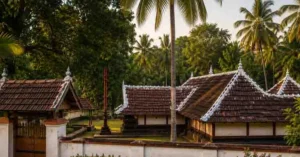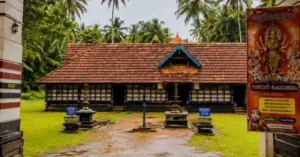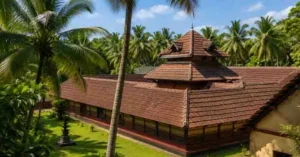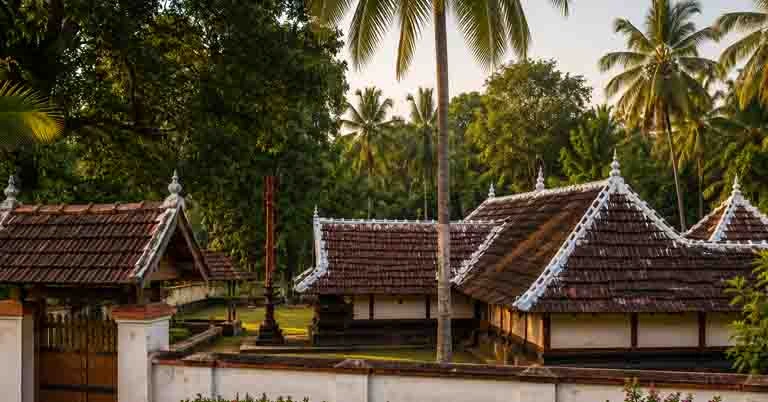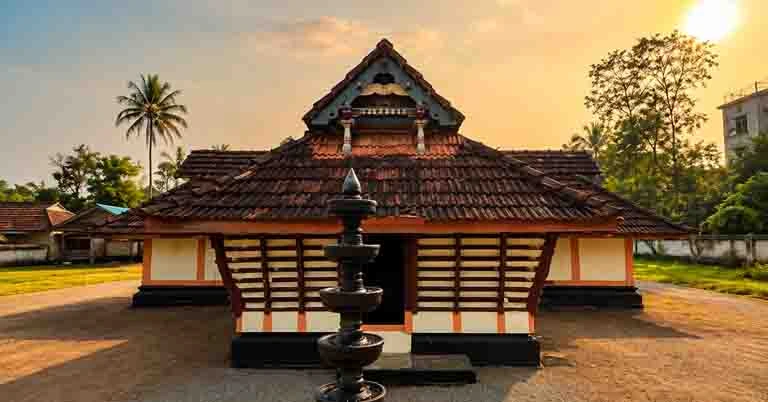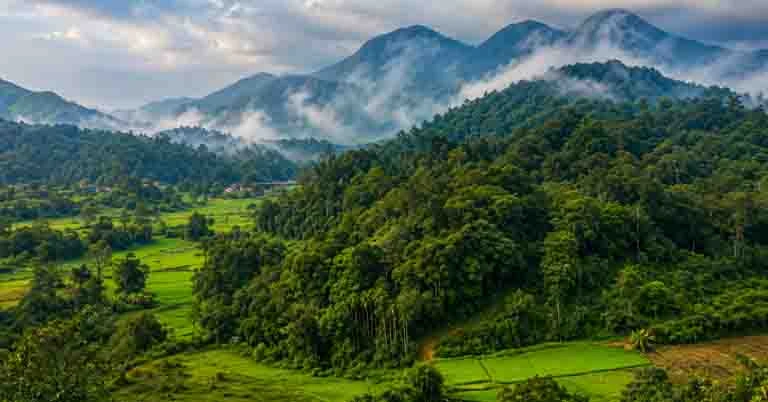


The Pattanakkad Mahadeva Temple, located in Cherthala taluk of Alappuzha district, Kerala, is one of the most ancient and spiritually significant temples dedicated to Lord Shiva. Renowned for its divine energy, traditional Kerala architecture, and serene ambiance, the temple stands as a beacon of Shaiva devotion and a testament to the region’s rich cultural heritage. It is believed that this temple, like many others across Kerala, was established by Lord Parashurama, the sixth incarnation of Lord Vishnu, who is said to have consecrated 108 Shiva temples in Kerala to sanctify the land.
Over the centuries, the Pattanakkad Mahadeva Temple has evolved into a revered spiritual center where devotion, tradition, and art harmoniously blend. The temple’s unique rituals, legends, and festivals continue to attract thousands of devotees each year, making it an integral part of Kerala’s spiritual landscape.
Historical Background
The Pattanakkad Mahadeva Temple is believed to date back to several centuries, with origins rooted in the early medieval period. Ancient palm-leaf manuscripts and local traditions associate the temple’s foundation with the Parashurama Kshetra narrative — the divine sage Parashurama reclaimed Kerala from the sea and installed sacred Shivalingas at different locations to maintain cosmic balance.
Historically, Pattanakkad was an important coastal settlement under the Chera Kingdom, and the temple played a crucial role in the religious and cultural life of the community. The temple was maintained and managed by local Brahmin families, known as Ooralars, who performed daily rituals and ensured the preservation of its traditions. Later, the temple came under the administration of the Travancore Devaswom Board, which continues to oversee its operations and festivals today.
Through the ages, the temple has stood as a silent witness to the region’s changing history — from the rise of maritime trade in Cherthala to the flourishing of temple arts and rituals in Kerala.

Legend and Mythological Significance
According to popular legend, the Pattanakkad Mahadeva Temple was consecrated by Sage Parashurama himself as part of his divine mission to establish Shiva temples across Kerala. It is said that Parashurama installed a Shivalinga here after meditating on Lord Shiva, seeking his blessings to protect the reclaimed land from the wrath of the sea. The Linga that appeared was Swayambhu (self-manifested), symbolizing the eternal presence of the Supreme Being.
Another local legend narrates that Lord Shiva once appeared in the form of a yogi to test the devotion of a local farmer. The farmer, recognizing the divine presence, offered him food and water. Pleased by his humility, the Lord revealed his true form and blessed the land, declaring that he would eternally reside there in the form of a Shivalinga. Thus, the temple came to be established, and Pattanakkad became a sacred site of Shaiva worship.
The name Pattanakkad is said to have originated from the Malayalam words “Pattana” (town or port) and “Kad” (forest or grove), suggesting that the temple area was once a dense grove near an ancient port — a symbol of prosperity and divine grace.
Architectural Grandeur
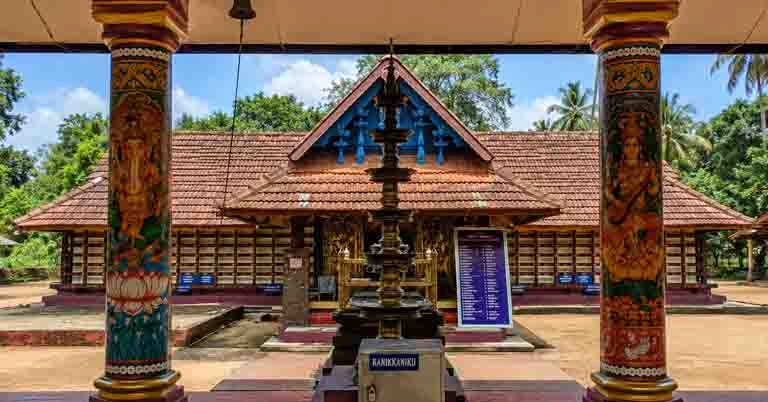
The Pattanakkad Mahadeva Temple exemplifies the traditional Kerala temple architecture, which is a harmonious blend of aesthetic beauty, functional design, and spiritual symbolism. Built primarily of laterite stone, wood, and copper plates, the temple complex is a masterpiece of craftsmanship that has withstood the test of time.
The Sreekovil (sanctum sanctorum) houses the sacred Shivalinga, the presiding deity of the temple. The sanctum follows a circular (Vatta Sreekovil) design — a typical feature of Shiva temples in Kerala. The roof is conical and covered with polished copper sheets that gleam in the sunlight, symbolizing divine brilliance. The inner walls are adorned with intricate wooden carvings depicting mythological tales from the Puranas and Mahabharata.
In front of the sanctum stands the Namaskara Mandapam, an elaborately designed square hall supported by beautifully carved wooden pillars. This is where devotees offer prayers and where important rituals such as Abhishekam, Aarti, and Homam are performed.
The Chuttambalam (circumambulatory passage) surrounds the sanctum, allowing devotees to perform pradakshina (circumambulation) in a meditative manner. The Dwajasthambam (flagstaff), made of brass and gold-plated, stands at the entrance as a symbol of divine connection between heaven and earth.
Within the temple premises, there are sub-shrines dedicated to Lord Ganapathy, Lord Subramanya, Goddess Parvati, and Nandi, Lord Shiva’s celestial bull. The presence of these deities completes the divine family of Lord Shiva, enhancing the temple’s sanctity.
A serene temple pond (Ambalakkulam) nearby adds to the temple’s tranquil beauty. It is used for purification rituals and Aarattu ceremonies during the annual festival. The overall structure reflects harmony with nature — a central tenet of Kerala’s temple design — and radiates an aura of peace and divinity.
Deity and Spiritual Essence
The presiding deity, Lord Shiva, worshipped as Mahadeva, is the supreme consciousness representing destruction and renewal. The Shivalinga at Pattanakkad is believed to be highly powerful and Swayambhu (self-manifested). Devotees consider the temple a center of intense spiritual energy, capable of purifying the mind and body.
Here, Lord Shiva is worshipped in his calm and benevolent aspect — as a giver of blessings, wisdom, and liberation (moksha). The deity is also believed to protect devotees from misfortunes, grant prosperity, and help overcome obstacles. The vibrations of the sanctum are said to be particularly strong during Pradosham and Maha Shivaratri, the most auspicious times for Shiva worship.
Daily Rituals and Worship Practices
The temple follows the Tantric and Agamic traditions of Kerala Shaivism, emphasizing purity, devotion, and ritual precision. Daily worship begins with Nirmalya Darshanam (the first darshan at dawn) and proceeds with multiple poojas throughout the day, including:
- Usha Pooja – Morning worship at sunrise
- Ucha Pooja – Midday offering
- Deeparadhana – Evening ritual when lamps are lit
- Athazha Pooja – Night worship before closing the sanctum
Special offerings include Abhishekam (ritual bathing of the Shivalinga with holy substances such as milk, honey, ghee, and water), Dhara (continuous pouring of water or oil), Rudrabhishekam, and Mrityunjaya Homam (fire ritual for protection and longevity). Devotees also offer bilva leaves, sandal paste, and deepam (lamps) as acts of devotion.
On Mondays and Pradosham days, the temple witnesses large crowds of devotees performing special poojas, as these days are considered especially sacred to Lord Shiva.
Festivals and Celebrations
The annual temple festival (Utsavam) of Pattanakkad Mahadeva Temple is the most anticipated event of the year, celebrated with grandeur and devotion. The festival usually falls in the Malayalam month of Dhanu or Makaram (December–January) and lasts for several days.
The festivities begin with the Kodiyettam (flag hoisting), marking the start of the celebrations. Each day features rituals, cultural programs, and temple processions. Highlights include:
- Caparisoned Elephant Processions carrying the idol of Lord Shiva through the temple premises, accompanied by Panchavadyam (traditional orchestra).
- Kathakali, Ottanthullal, and Chenda Melam performances that reflect Kerala’s artistic traditions.
- Aarattu – The ceremonial holy bath of the deity in the temple pond, signifying purification and divine renewal.
The Maha Shivaratri celebration at Pattanakkad Mahadeva Temple is particularly majestic. Devotees observe fasting, chant Om Namah Shivaya, and stay awake throughout the night in prayer and meditation. The temple glows with thousands of lamps, and the entire atmosphere resonates with the divine energy of Lord Shiva.
Other important observances include Pradosham, Thiruvathira, and Navaratri, each celebrated with special rituals and poojas.
Cultural and Social Importance
The Pattanakkad Mahadeva Temple is not just a spiritual center but also a cornerstone of local culture and community life. The temple plays a vital role in preserving Kerala’s Vedic learning, performing arts, and traditional rituals. It serves as a venue for classical music and dance performances, especially during festivals.
The temple committee organizes Annadanam (free food distribution) for devotees, reflecting the values of compassion and equality. It also conducts charitable and educational programs, supporting local schools and social welfare initiatives.
The temple’s role as a unifying force in the community is profound. It brings together people from all walks of life, transcending social and economic barriers, in the spirit of devotion and service.
Spiritual Experience and Atmosphere
A visit to the Pattanakkad Mahadeva Temple is a journey into tranquility. The peaceful surroundings, the rhythmic sound of temple bells, and the fragrance of incense create an atmosphere of divine serenity. The reflection of the temple and its golden roof shimmering in the temple pond during sunset is a sight of ethereal beauty.
Devotees describe a deep sense of peace upon entering the sanctum, where the divine presence of Lord Shiva is palpable. The combination of devotion, architecture, and nature makes this temple an ideal place for meditation, introspection, and spiritual awakening.

Conclusion
The Pattanakkad Mahadeva Temple stands as a living embodiment of Kerala’s ancient Shaiva tradition — a temple where divinity, culture, and nature coexist in perfect harmony. Through centuries, it has remained a sanctuary of faith, radiating spiritual energy and cultural richness.
Dedicated to Lord Shiva, the eternal source of cosmic power, the temple continues to inspire generations of devotees to seek truth, inner peace, and liberation. Every stone, every chant, and every ritual at Pattanakkad Mahadeva Temple echoes the timeless truth:
“Shivam Sarvam – All that exists is Shiva.”
Whether one visits during the quiet dawn for Nirmalya Darshanam or during the grand Maha Shivaratri celebrations, the Pattanakkad Mahadeva Temple offers a divine experience that transcends the material world — an encounter with the infinite consciousness that is Lord Shiva himself.
Disclaimer
The information provided by Web Arbiter (‘we’, ‘us’, or ‘our’) on https://webarbiter.in/ . The website is for general informational purposes only. All information on the Site is provided in good faith, however we make no representation or warranty of any kind, express or implied, regarding the accuracy, adequacy, validity, reliability, availability, or completeness of any information on the Site. UNDER NO CIRCUMSTANCE SHALL WE HAVE ANY LIABILITY TO YOU FOR ANY LOSS OR DAMAGE OF ANY KIND INCURRED AS A RESULT OF THE USE OF THE SITE OR RELIANCE ON ANY INFORMATION PROVIDED ON THE SITE. YOUR USE OF THE SITE AND YOUR RELIANCE ON ANY INFORMATION ON THE SITE IS SOLELY AT YOUR OWN RISK. Read Full Disclaimer