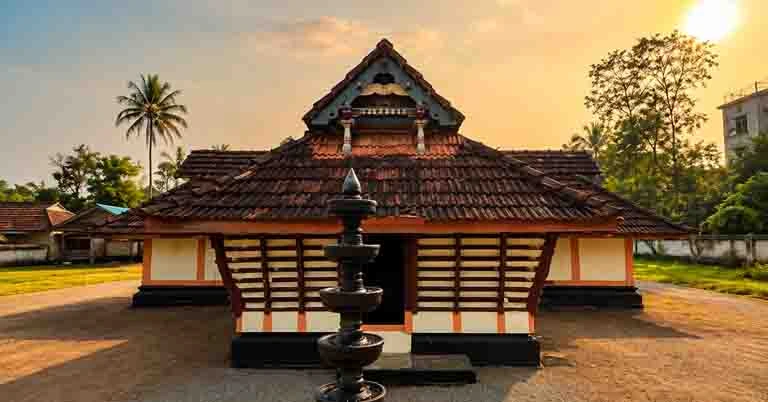


The Someswaram Mahadeva Temple, located in Cherthala, a serene town in the Alappuzha district of Kerala, is one of the oldest and most revered shrines dedicated to Lord Shiva in the region. Enveloped in divine tranquility and surrounded by lush greenery, the temple is an exquisite example of Kerala’s traditional temple architecture and sacred heritage. Its spiritual atmosphere, ancient customs, and timeless beauty make it a major pilgrimage center for devotees seeking peace, blessings, and liberation.
The name “Someswaram” originates from two Sanskrit words — Soma (Moon) and Ishwar (Lord Shiva) — meaning “the Lord of the Moon.” This title reflects one of Shiva’s most revered forms — Someswara, the compassionate deity who bears the crescent moon on his matted locks, symbolizing serenity, immortality, and the rhythm of cosmic time.
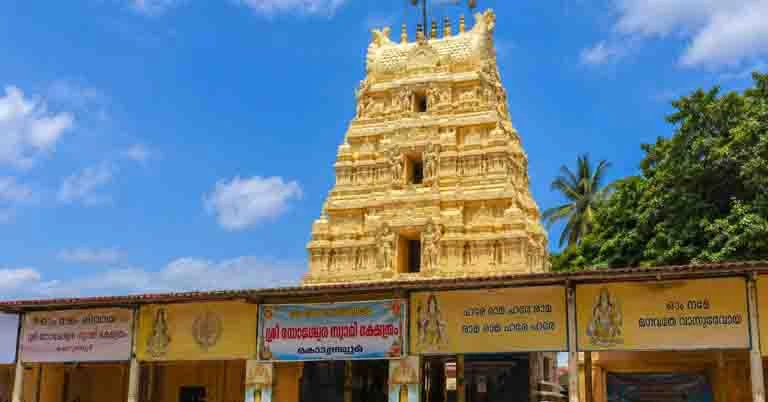
The Someswaram Mahadeva Temple is considered one among the 108 Shiva temples in Kerala, believed to have been consecrated by Lord Parasurama, the sixth incarnation of Lord Vishnu. It holds immense importance not only for its mythological association but also for its continuing role as a spiritual, cultural, and social hub in central Kerala.
Legend and Mythological Significance
The origin of the Someswaram Mahadeva Temple is steeped in legend and divine mythology. According to ancient belief, after reclaiming Kerala from the sea, Lord Parasurama installed 108 Shiva temples across the land to sanctify it and bless its people. Among these, the Someswaram temple was consecrated to represent the peaceful, benevolent form of Lord Shiva — the one who brings coolness and calmness to the mind, like the moon he wears.
The Legend of Chandra and Shiva
One of the temple’s central legends connects it directly to Lord Chandra (the Moon God). According to Hindu mythology, Chandra once suffered from a terrible curse that caused his brightness to fade away. Tormented by this, he sought refuge in Lord Shiva and performed intense penance. Pleased with his devotion, Shiva appeared before Chandra at this very site and blessed him, partially lifting the curse. Chandra regained his luminosity and offered his gratitude by worshipping Shiva as Someswara (the Lord of the Moon). It is believed that this act established the divine energy that still radiates within the temple.

The Sacred Ground of Parasurama
Another legend describes that Parasurama, after reclaiming the land of Kerala, installed the Shiva Linga here as a representation of peace and protection for the newly formed land. The deity here is believed to guard the southern regions of the reclaimed land and ensure prosperity for all its inhabitants.
Because of these divine origins, Someswaram Mahadeva Temple is regarded as a site where karma is purified, mental tranquility is attained, and spiritual healing blossoms.
Deity and Sanctity
The presiding deity of the temple is Lord Shiva, worshipped as Someswaram Mahadeva. The Shiva Linga in the Sreekovil (sanctum sanctorum) is believed to be self-manifested (Swayambhu), radiating powerful spiritual vibrations. The Linga is adorned with the crescent moon, representing eternal light and calm consciousness.
The Lord is depicted here in a meditative yet compassionate form, symbolizing balance, purity, and cosmic grace. Devotees believe that praying here helps remove the effects of planetary doshas, particularly those caused by Chandra (moon-related afflictions) and mental disturbances. The deity blesses his devotees with peace of mind, emotional stability, and mental strength.
Within the temple premises, there are also sub-shrines dedicated to other deities including Goddess Parvati, Lord Ganapathi, Lord Subramanya, Lord Sastha (Ayyappa), and Naga Devatas (serpent gods). These deities together embody the holistic essence of Hindu spirituality — unity of divine forces and balance of masculine and feminine energies.
Temple Architecture
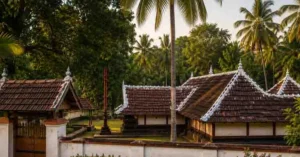
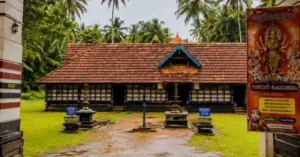
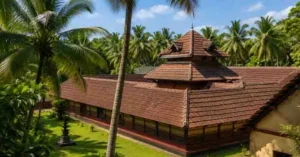
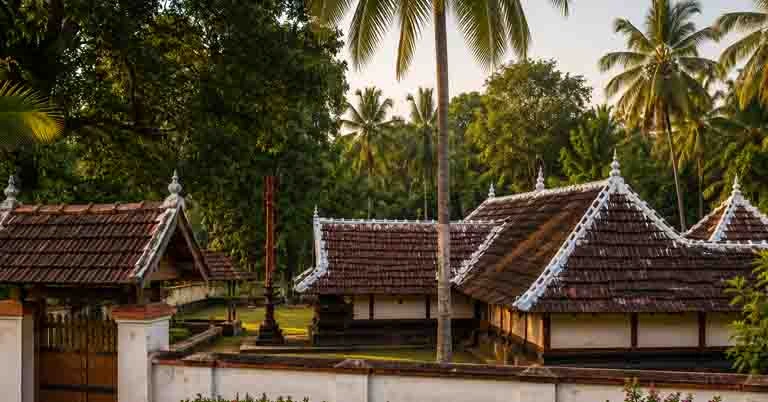
The Someswaram Mahadeva Temple is a masterpiece of Kerala temple architecture, harmonizing spirituality, craftsmanship, and nature. Its design adheres to the traditional Vastu Shastra principles and the Agama Shastra rituals of consecration, creating an environment of sacred geometry and spiritual resonance.
The Sreekovil (Sanctum Sanctorum)
The Sreekovil, where the Shiva Linga is installed, is circular in shape, reflecting the infinite and cyclical nature of the cosmos. The roof is copper-plated and shaped like a conical tower, gleaming under sunlight — symbolizing the cosmic mountain, Mount Kailasa, the divine abode of Lord Shiva. The inner walls are beautifully ornamented with oil lamp niches that illuminate the sanctum in soft, golden light during worship hours.
Namaskara Mandapam and Nalambalam
In front of the sanctum lies the Namaskara Mandapam, a square hall supported by intricately carved wooden pillars. This space is where the main poojas and rituals are conducted. The Nalambalam (outer structure) surrounds the sanctum, housing several small shrines and lamps. The corridors echo with Vedic chants during prayers, enhancing the sacred atmosphere.
Koothambalam and Outer Structures
The temple has a Koothambalam, a traditional temple theater where classical performances such as Chakyar Koothu and Koodiyattam were historically staged. These performances were not mere entertainment but sacred offerings to the deity.
Other features include:
- Dwajasthambam (flag mast) made of polished brass, representing devotion and divine connection.
- Balikkalpura (altar hall) for offering prayers to guardian deities.
- Deepastambha (lamp tower) at the temple entrance, glowing with hundreds of oil lamps during festivals.
- A holy pond (Ambalakulam) used for purification rituals.
The temple’s layout, built in perfect alignment with nature and cardinal directions, enhances its serene and meditative aura.
Daily Worship and Rituals
The daily rituals at the Someswaram Mahadeva Temple are performed with great precision and devotion under the supervision of Tantric priests. The poojas follow the Shiva Agama traditions, maintaining both Vedic and Tantric elements.
Daily Pooja Timings and Offerings
- Nirmalyam (4:30 AM) – Removal of previous day’s decorations and awakening of the deity.
- Abhishekam (5:00 AM) – Sacred bathing of the Shiva Linga with milk, ghee, honey, tender coconut water, and holy river water.
- Usha Pooja (6:00 AM) – Morning prayer accompanied by chanting of Rudram and Vedic hymns.
- Ucha Pooja (12:00 PM) – Midday offering, believed to be the most auspicious time for seeking blessings.
- Deeparadhana (6:00 PM) – Evening lamp ritual, filling the temple with glowing lamps and divine chants.
- Athazha Pooja (8:00 PM) – Night pooja before closing the sanctum, seeking forgiveness and peace for all beings.
Special Offerings
Devotees perform special poojas like Rudrabhishekam, Mrityunjaya Homam, Chandra Dosha Nivarana, and Uma-Maheswara Pooja, which are believed to bring relief from mental distress, strengthen family harmony, and ensure spiritual progress.
Mondays, Pradosham days, and Maha Shivaratri are especially auspicious for visiting the temple, as these times are dedicated to Lord Shiva’s cosmic blessings.
Festivals and Celebrations
The Someswaram Mahadeva Temple celebrates several festivals throughout the year, blending devotion, community spirit, and traditional art forms.
1. Annual Utsavam
The annual temple festival (Utsavam) is celebrated in the Malayalam month of Dhanu or Makaram (December–January) and lasts for ten days. The festival begins with the Kodiyettam (flag hoisting) and concludes with the grand Aarattu (holy bath) of the deity in a nearby pond or river. The festivities include Ezhunnallathu (procession) of the deity atop a decorated elephant, accompanied by traditional percussion like Panchavadyam and Chenda Melam.
During these ten days, the temple premises come alive with Kathakali performances, Theyyam, Ottamthullal, and Bhajan gatherings, showcasing Kerala’s cultural richness. The night skies glow with oil lamps and fireworks, symbolizing divine illumination.
2. Maha Shivaratri
The festival of Maha Shivaratri, celebrated in the month of Kumbham (February–March), is the most significant event at the Someswaram temple. Devotees observe fasting, meditation, and all-night vigil, chanting “Om Namah Shivaya.” The temple remains open throughout the night, and priests perform special abhishekams and homams to invoke the presence of Lord Shiva.
3. Pradosham and Mondays
Pradosham days, which fall twice a month, are considered highly sacred at this temple. Devotees observe special prayers to cleanse sins and seek spiritual liberation. Mondays, being Shiva’s day, attract large crowds, especially during the evening Deeparadhana.
Spiritual and Cultural Importance
The Someswaram Mahadeva Temple is not only a center for ritual worship but also a spiritual powerhouse that radiates peace, wisdom, and divine energy. The temple’s association with the moon symbolizes emotional balance and mental clarity. Devotees who suffer from anxiety, depression, or restlessness often find solace in this shrine.
The temple is also famous for its family prosperity rituals. Newly married couples and families visit to perform Uma-Maheswara Pooja, symbolizing the divine union of Shiva and Parvati, for marital harmony and happiness.
Culturally, the temple plays a significant role in preserving traditional art forms and rituals. The Koothambalam continues to host Chakyar Koothu, keeping alive Kerala’s temple storytelling tradition.
The temple’s serene environment — with its ancient trees, chirping birds, and calm pond — provides a setting ideal for meditation and spiritual rejuvenation. It stands as a living embodiment of Kerala’s heritage of simplicity, devotion, and harmony with nature.
Administration and Community Role
The Someswaram Mahadeva Temple is managed by the Travancore Devaswom Board, which oversees its daily rituals, maintenance, and festivals. The temple committee and local devotees play an active role in organizing Annadanam (free meal distribution), medical camps, and educational programs as acts of service (seva).
During festival seasons, thousands of devotees are served food in the temple courtyard, symbolizing the spirit of universal brotherhood and compassion that Shiva embodies.

Conclusion
The Someswaram Mahadeva Temple stands as a timeless symbol of Kerala’s Shaiva devotion and cultural richness. It is a place where divinity, nature, and humanity meet in perfect harmony — where Lord Shiva manifests as Someswara, the eternal light of peace and compassion.
To visit this temple is to enter a space where silence speaks, lamps whisper prayers, and the gentle rhythm of the bell echoes the heartbeat of the cosmos. The sacred presence of Lord Someswaram Mahadeva continues to bless devotees with serenity, protection, and spiritual awakening — making this temple not just a monument of faith, but a living embodiment of divine grace.
Disclaimer
The information provided by Web Arbiter (‘we’, ‘us’, or ‘our’) on https://webarbiter.in/ . The website is for general informational purposes only. All information on the Site is provided in good faith, however we make no representation or warranty of any kind, express or implied, regarding the accuracy, adequacy, validity, reliability, availability, or completeness of any information on the Site. UNDER NO CIRCUMSTANCE SHALL WE HAVE ANY LIABILITY TO YOU FOR ANY LOSS OR DAMAGE OF ANY KIND INCURRED AS A RESULT OF THE USE OF THE SITE OR RELIANCE ON ANY INFORMATION PROVIDED ON THE SITE. YOUR USE OF THE SITE AND YOUR RELIANCE ON ANY INFORMATION ON THE SITE IS SOLELY AT YOUR OWN RISK. Read Full Disclaimer