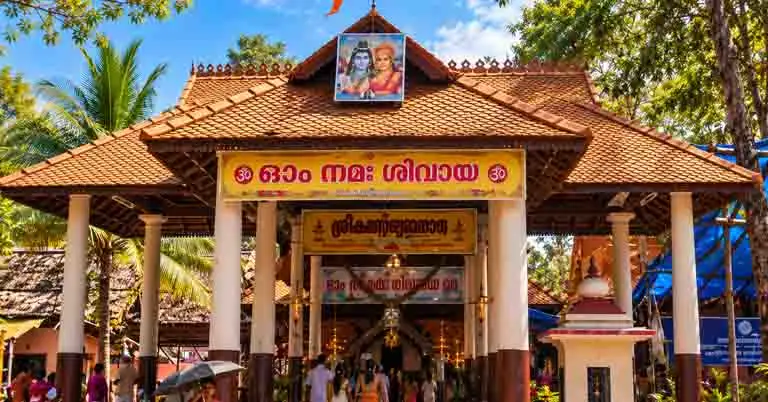

The Sreekanteswaram Mahadeva Temple, located in the heart of Thiruvananthapuram, the capital city of Kerala, is one of the most venerated temples dedicated to Lord Shiva in South India. Renowned for its ancient heritage, spiritual vibrancy, and serene atmosphere, the temple stands as a beacon of devotion and faith, attracting thousands of devotees daily. Lord Shiva here is worshipped as Sreekanteswara, the compassionate and all-powerful deity who grants peace, prosperity, and liberation to his devotees.
The temple is not only a major Shaiva shrine but also an important part of the religious and cultural landscape of Kerala. It represents the seamless blend of myth, devotion, and traditional architecture that defines Kerala’s temple culture.
Historical Background
The origins of the Sreekanteswaram Mahadeva Temple are deeply intertwined with mythology and history. While the exact date of its construction remains uncertain, it is believed to be several centuries old. Historical records and oral traditions suggest that the temple was renovated and expanded during the reign of the Travancore kings, particularly under the patronage of Maharaja Ayilyam Thirunal and Moolam Thirunal.
The name Sreekanteswaram itself derives from “Sreekanteswara,” an epithet of Lord Shiva meaning the Lord of the divine throat, referring to the mythological story of Neelakantha—Shiva who consumed poison to save the universe during the churning of the cosmic ocean (Samudra Manthanam).
The temple was originally a modest shrine but gained prominence over the centuries due to its location near the old fort area of Thiruvananthapuram and its proximity to One of the wealthiest and holiest temples in India is Padmanabhaswamy Temple. Together, these temples represent Vaishnavite and Shaivite harmony, signifying the unity of both sects of Hinduism in Kerala.

Legend and Mythological Significance
According to local legends, the temple was consecrated by a group of sages and devotees who found a self-manifested Shivalinga at the site. It is said that Lord Shiva appeared here in a peaceful form after quelling the destructive power of his cosmic dance. The idol radiates calmness and serenity, symbolizing the divine balance between creation and destruction.
Another legend associates the temple with Lord Parashurama, the sixth incarnation of Lord Vishnu, who is believed to have established several Shiva temples across Kerala to sanctify the land he reclaimed from the sea. Sreekanteswaram is said to be one among those holy sites.
The temple’s presiding deity, Lord Sreekanteswara, is also believed to have manifested to bless the people of Travancore, ensuring protection and prosperity for the kingdom. The temple later became an integral part of the region’s spiritual and social life.
Deity and Sub-Shrines
The main deity, Lord Sreekanteswara (Shiva), is enshrined in the Sreekovil (sanctum sanctorum) in the form of a Shivalinga. The idol is consecrated in the Dakshinamukha (south-facing) posture, a rare and auspicious orientation in Kerala temples. This south-facing aspect of Shiva represents his benevolent role as Mrityunjaya, the conqueror of death, and Arogya Pradayaka, the bestower of health and longevity.
The temple complex also houses several sub-shrines dedicated to various deities, enhancing its spiritual completeness. Prominent among them are:
- Lord Ganapathy, the remover of obstacles and first to be worshipped in any ritual.
- Lord Subrahmanya (Murugan), representing youth, valor, and knowledge.
- Lord Ayyappa, symbolizing devotion and detachment.
- Lord Vishnu, highlighting the harmony between Shaivism and Vaishnavism.
- Goddess Parvati, the divine consort of Lord Shiva, worshipped for grace and compassion.
- Lord Hanuman, representing unwavering faith and strength.
This combination of deities makes Sreekanteswaram Mahadeva Temple a comprehensive spiritual center, accommodating the devotion of followers from multiple traditions.
Temple Architecture
The Sreekanteswaram Mahadeva Temple is an excellent example of traditional Kerala temple architecture, which emphasizes simplicity, symmetry, and spiritual symbolism. The temple layout adheres to the Vastu Shastra principles, ensuring harmony between divine and natural energies.
The Sreekovil (inner sanctum) is square-shaped and built with stone and wood, featuring a copper-plated roof. The sanctum is surrounded by the Namaskara Mandapam, an open pavilion used for rituals and offerings. The Chuttambalam (enclosure) has beautifully carved wooden ceilings and walls, depicting scenes from Shaivite mythology.
The Gopuram (entrance tower) is modest yet elegant, adorned with intricate wooden and plaster carvings. The Dwajasthambam (flag mast) made of brass or teak wood stands in front of the sanctum, signifying divine presence and temple authority.
The temple pond, known as Ambala Kulam, lies adjacent to the main structure, serving both ritual and aesthetic purposes. It is customary for devotees to wash their hands and feet before entering the temple as an act of purification.
At night, the temple glows beautifully with rows of oil lamps illuminating the inner courtyard, creating an ambiance of deep peace and devotion.
Daily Rituals and Worship
The rituals in Sreekanteswaram Temple follow strict Tantric traditions, performed under the guidance of hereditary priests. The temple opens early in the morning and closes late in the evening, with several poojas conducted at specific times of the day.
The main daily rituals include:
- Nirmalyam – The early morning ritual of removing flowers and decorations from the previous day’s worship.
- Abhishekam – Ritual bathing of the Shiva Linga with water, milk, honey, ghee, and other sacred substances.
- Usha Pooja – Morning prayer marking the start of the day’s rituals.
- Ucha Pooja – Midday worship accompanied by Nivedyam (food offering).
- Deeparadhana – Evening lamp worship that fills the temple with divine radiance.
- Athazha Pooja – Final worship before closing the temple at night.
Special offerings such as Rudrabhishekam, Mrityunjaya Homam, Neyyabhishekam, and Choroonu (first feeding ceremony) are performed by devotees seeking blessings for health, success, and spiritual growth. Mondays, being sacred to Lord Shiva, witness an exceptionally large number of devotees.
Festivals and Celebrations
The temple celebrates numerous festivals throughout the year, each reflecting different aspects of Lord Shiva’s divinity and Kerala’s cultural richness.
1. Maha Shivaratri
The most significant festival at Sreekanteswaram Mahadeva Temple is Maha Shivaratri, observed in the Malayalam month of Kumbham (February–March). Devotees observe fasting, meditation, and night-long prayers to honor Lord Shiva, who is believed to perform the Tandava Nritya on this sacred night. The temple remains open all night, with special poojas, Rudrabhishekam, and devotional singing filling the air with spiritual energy.
2. Navaratri
Though primarily dedicated to Goddess Durga, the Navaratri festival is celebrated with equal fervor here, highlighting the unity of Shakti and Shiva. Cultural programs, bhajans, and music concerts are organized during this period.
3. Thiruvathira
Celebrated in the Malayalam month of Dhanu (December–January), Thiruvathira is a festival especially dear to women, who fast and perform traditional dances like Thiruvathirakali, praying for marital bliss and family harmony.
4. Annual Utsavam
The temple’s annual festival (Utsavam) lasts for ten days, featuring daily processions, special poojas, traditional art forms, and caparisoned elephants. The festival concludes with the Aarattu ceremony, where the idol of Lord Shiva is taken in procession to a nearby temple pond for a ritual bath, accompanied by chanting, drumming, and fireworks.
Spiritual Significance
Sreekanteswaram Mahadeva Temple represents the eternal balance of cosmic forces—creation, preservation, and destruction—embodied in Lord Shiva. Worshipping here is believed to bestow Moksha (liberation), Arogya (health), and Ayushya (long life).
Devotees also believe that offering prayers here helps overcome fear, disease, and the negative effects of planetary positions. The temple’s energy field is said to be highly potent due to centuries of uninterrupted worship, making it a powerful spiritual center.
The temple is also associated with meditation and inner peace. Many devotees and saints have attained deep spiritual realization by meditating in its serene surroundings. The rhythmic chants of “Om Namah Shivaya” and the fragrance of camphor and incense create an atmosphere conducive to introspection and divine connection.
Cultural and Social Role
Beyond being a spiritual center, the Sreekanteswaram Temple has long been a cultural and social hub in Thiruvananthapuram. It promotes traditional music, temple arts, and community welfare. The temple premises host Bhajans, Kathakali performances, and classical concerts during festive seasons, preserving Kerala’s rich artistic traditions.
he temple management also engages in charitable activities, including Annadanam (free food distribution), educational aid, and healthcare support for the underprivileged. These initiatives reflect the temple’s commitment to the principle of “Lokasangraha”—the welfare of all beings.
The Sreekanteswaram Mahadeva Temple is managed by the Travancore Devaswom Board, which oversees its administration, rituals, and finances. The board ensures that ancient customs are preserved while maintaining the temple’s infrastructure and supporting the devotees’ needs.
The temple’s priests and staff are trained in traditional Vedic and Tantric practices, ensuring that every ritual is performed with utmost devotion and precision. Regular renovation and preservation work are carried out to maintain the architectural beauty and spiritual sanctity of the temple.
Location and Accessibility
Located just 1 kilometer from the Sree Padmanabhaswamy Temple, the Sreekanteswaram Mahadeva Temple is easily accessible from all parts of Thiruvananthapuram. The Thampanoor railway station and central bus terminal are within a short distance, while the Trivandrum International Airport lies about 6 kilometers away.
The temple is open from 4:00 AM to 12:00 PM and from 5:00 PM to 8:00 PM daily. Dress codes are modest and traditional; men usually remove their shirts before entering the sanctum, and women wear traditional attire like sarees or salwar suits.

Conclusion
The Sreekanteswaram Mahadeva Temple stands as a majestic symbol of Kerala’s timeless devotion, architectural splendor, and spiritual wisdom. It embodies the essence of Lord Shiva’s universal consciousness, offering solace to the troubled, hope to the weary, and enlightenment to the seeker.
Every ritual, festival, and chant at this sacred temple echoes the eternal truth of Shiva—“He who is without beginning or end, the destroyer of ignorance, and the source of all life.”
For centuries, Sreekanteswaram has been more than a place of worship—it is a spiritual sanctuary where faith meets realization, where silence meets devotion, and where humanity connects with the divine.
Disclaimer
The information provided by Web Arbiter (‘we’, ‘us’, or ‘our’) on https://webarbiter.in/ . The website is for general informational purposes only. All information on the Site is provided in good faith, however we make no representation or warranty of any kind, express or implied, regarding the accuracy, adequacy, validity, reliability, availability, or completeness of any information on the Site. UNDER NO CIRCUMSTANCE SHALL WE HAVE ANY LIABILITY TO YOU FOR ANY LOSS OR DAMAGE OF ANY KIND INCURRED AS A RESULT OF THE USE OF THE SITE OR RELIANCE ON ANY INFORMATION PROVIDED ON THE SITE. YOUR USE OF THE SITE AND YOUR RELIANCE ON ANY INFORMATION ON THE SITE IS SOLELY AT YOUR OWN RISK. Read Full Disclaimer