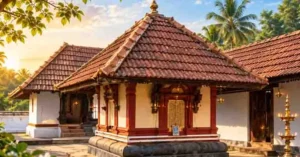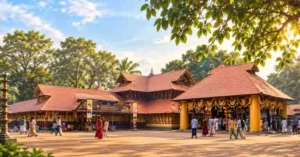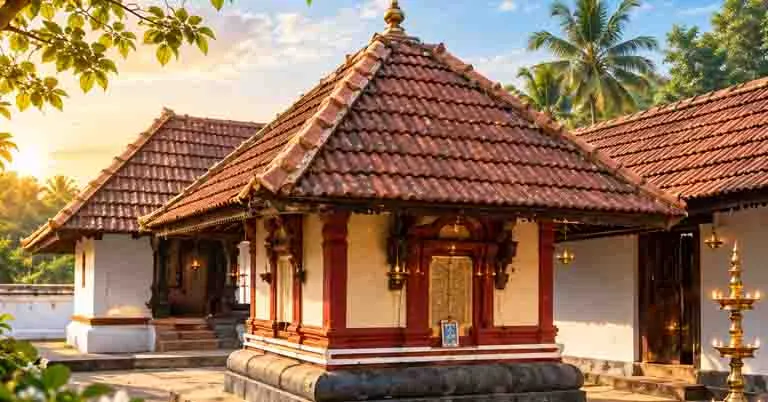


The Sringapuram Mahadeva Temple, located in the historic town of Kodungallur in the Thrissur district of Kerala, is one of the most revered ancient Shiva temples in South India. Steeped in mythology, architectural splendor, and spiritual grandeur, this temple stands as a silent witness to Kerala’s deep-rooted Shaivite traditions and its glorious past. The temple, believed to have been established centuries ago, is considered one of the 108 ancient Shiva temples consecrated by Lord Parashurama, the sixth incarnation of Lord Vishnu, who is said to have created the land of Kerala itself.
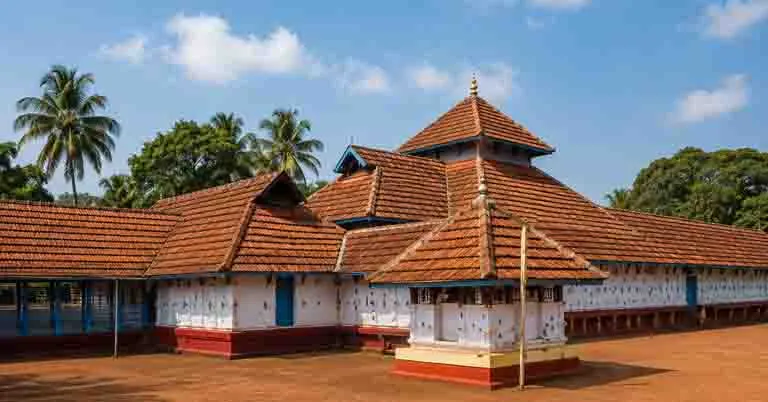
This temple is not just a sacred space of worship but also a living monument reflecting Kerala’s temple art, cultural heritage, and spiritual philosophy. The name “Sringapuram” itself is believed to have originated from the sage Rishyashringa (Sringi Maharshi), who is said to have performed great penance in this region and established the lingam of Lord Shiva here. Hence, “Sringapuram” literally translates to “the place of the horned sage” or “the abode of Rishyashringa.” Over centuries, this temple has remained a beacon of devotion, attracting thousands of devotees who seek the blessings of Lord Mahadeva.
Location and Setting
The Sringapuram Mahadeva Temple is situated about 2 kilometers from Kodungallur town center, near the western coast of Kerala. Kodungallur itself holds immense historical importance as the ancient port city of Muziris, once a flourishing trade center frequented by Arabs, Romans, and Chinese merchants. The temple lies in close proximity to the famous Kodungallur Bhagavathy Temple, one of Kerala’s most powerful Shakti shrines, symbolizing the divine balance between Shiva and Shakti within the same sacred region.
Nestled amidst lush greenery and traditional Kerala architecture, the temple’s serene environment enhances the spiritual experience of visitors. The gentle breeze from the Arabian Sea and the rhythmic chants of Vedic hymns create an atmosphere of deep peace and devotion. Surrounded by heritage structures, ponds, and traditional houses, the temple exemplifies Kerala’s timeless harmony between nature, spirituality, and architecture.

Presiding Deity and Legends
The main deity of Sringapuram Mahadeva Temple is Lord Shiva, worshipped here as Swayambhu Lingam (self-manifested form). Unlike many Shiva temples, this temple has a rare and unique distinction — there is no shrine dedicated to Goddess Parvati, the consort of Lord Shiva. This feature is deeply symbolic and rooted in ancient legend.
According to the temple’s lore, after the self-immolation of Goddess Sati at the Yajna of Daksha, Lord Shiva was overcome with intense grief. Wandering through the universe in mourning, he finally reached this spot in Kodungallur and performed deep meditation to regain peace. It is believed that the Shiva Lingam here represents the Lord in a state of Tapas (penance) and Karuna (compassion) rather than Ananda (joy). Because the Lord was mourning the loss of his beloved Sati, the shrine of Parvati is absent here — symbolizing Shiva’s solitary meditation.
Another legend attributes the temple’s origin to Sage Rishyashringa, who installed the Shiva Lingam after years of penance. The very name of the place, Sringapuram, signifies this divine association. Devotees believe that worshiping Lord Shiva here helps in removing sorrow and karmic suffering, as the deity embodies a deeply compassionate and forgiving form of Mahadeva.
Historical Significance
The Sringapuram Mahadeva Temple is one of the ancient Thali temples of Kerala. During the Chera period, “Thali” temples were major centers of both administration and spiritual learning. The temple’s history is closely connected to the Chera dynasty, which ruled over Kerala and parts of Tamil Nadu from the 9th to 12th centuries CE. Epigraphic records found on the temple walls date back nearly a thousand years, confirming its historical prominence.
Historians suggest that this temple was patronized by the rulers of Kodungallur (the ancient Mahodayapuram), the capital of the Cheras. The temple’s inscriptions detail donations, land grants, and endowments, reflecting its socio-economic importance in medieval Kerala. The temple also served as a cultural and educational hub, where scholars and priests discussed Vedic philosophy, astrology, and temple rituals.
Even today, the Sringapuram Mahadeva Temple forms part of the Muziris Heritage Project, an initiative aimed at preserving the historical and cultural legacy of Kerala’s ancient port regions. Through this project, the temple continues to receive attention for its heritage conservation and traditional ritual practices.
Architectural Splendor
The architecture of the Sringapuram Mahadeva Temple exemplifies the classic Kerala Vastu Shastra style — elegant, proportionate, and harmoniously blending with the natural surroundings. The temple layout follows the traditional Nalambalam (four-courtyard) design, featuring wooden carvings, copper-plated roofs, and beautifully sculpted granite structures.
The Sreekovil (sanctum sanctorum) faces east and enshrines the Shiva Lingam, which is adorned with rudraksha garlands and covered in sandalwood paste during abhishekam. The sanctum is circular in shape (Vatta Sreekovil), a characteristic feature of Kerala temples dedicated to Lord Shiva. The copper-plated roof and granite base ensure both beauty and durability, symbolizing spiritual stability.
Outside the sanctum lies the Namaskara Mandapam, supported by carved wooden pillars, where devotees offer prayers and perform prostrations. The Dhwaja Stambham (flag post) made of gilded brass stands tall, representing the spiritual axis connecting the heavens and the earth. The temple’s Balikkal Pura houses the Balikkallu (sacrificial stone) and several smaller shrines for subordinate deities.
There are four corner shrines (Upadevata Kshetras) within the temple compound, each dedicated to different aspects of Lord Shiva himself, reflecting the omnipresence of Mahadeva. The outer walls of the temple bear inscriptions in old Malayalam and Vattezhuthu script, detailing ancient donations and rituals. The temple pond on the northern side adds to the sacred ambience, and its water is used for purification and ritual baths.
Rituals and Worship Practices
The rituals at Sringapuram Mahadeva Temple are conducted strictly according to Tantric and Agamic traditions. The temple opens early at dawn, with the Nirmalyam ritual marking the removal of previous day’s offerings and the first darshan of the deity. This is followed by Abhishekam (ritual bathing of the lingam) using water, milk, honey, ghee, and other sacred substances.
The main daily poojas include:
- Usha Pooja (early morning)
- Ucha Pooja (midday)
- Athazha Pooja (evening)
Festivals and Celebrations
Among the many festivals celebrated here, Maha Shivaratri holds the highest importance. The temple becomes a center of grand devotion as thousands of devotees observe night-long vigil, chanting the sacred Om Namah Shivaya. The festival commemorates the cosmic dance (Tandava) of Lord Shiva and symbolizes the union of energy and consciousness.
The annual temple festival, known as Utsavam, extends for eight days during the Malayalam month of Kumbham (February–March). The celebration concludes with the Arattu ceremony, where the idol is taken for a ritual bath in the temple pond amid chants, processions, and music. The festival also features traditional art forms like Panchavadyam, Kathakali, Thayambaka, and Ezhunnallippu, making it a vibrant cultural spectacle.
Other auspicious occasions such as Thiruvathira, Pradosham, Mandala Kalam, and Vaikasi Visakam are also celebrated with devotion and rituals. On Pradosham days, devotees throng the temple to offer Vilakku (lamps) and Bilva leaves to Lord Shiva.
Cultural and Spiritual Importance
Beyond its religious value, Sringapuram Mahadeva Temple has deep philosophical significance. The absence of Parvati’s shrine is symbolic of the meditative aspect of Shiva — the inner stillness and detachment from worldly attachments. The temple teaches the path of Tapasya (austerity) and Jnana (knowledge) as the means to liberation.
In the broader Shaivite tradition, the temple represents the stage of Shiva’s renunciation — after cosmic dissolution but before the rejuvenation of creation. Devotees often describe a unique sense of tranquility and stillness in the temple’s atmosphere, believed to reflect Shiva’s inner peace after his grief.
Furthermore, the temple stands as a link between Kerala’s history and mythology. Its connection with the Chera kings and ancient Muziris port makes it a cultural bridge between Kerala’s spiritual and commercial past. The temple architecture, festivals, and rituals continue to preserve Kerala’s artistic and devotional identity.
Visitor Experience and Accessibility
The Sringapuram Mahadeva Temple is easily accessible by road from Kodungallur town. The nearest railway station is at Irinjalakuda (about 20 km away), and the nearest airport is Cochin International Airport (around 45 km). The temple remains open from early morning (around 5:00 AM) to late evening (around 8:00 PM), with intervals between poojas.
Visitors are expected to follow traditional temple customs — removing footwear before entry, dressing modestly, and maintaining silence within the sanctum area. Photography is generally restricted in the inner premises. The temple complex is well-maintained and surrounded by serene gardens and ponds, making it a pleasant spiritual retreat.
Devotees often combine their visit with nearby attractions such as the Kodungallur Bhagavathy Temple, Cheraman Juma Mosque (India’s oldest mosque), and the Muziris Heritage Museum, enriching both their spiritual and cultural experience.

Conclusion
The Sringapuram Mahadeva Temple stands as a timeless symbol of devotion, art, and philosophy. It reflects the essence of Kerala’s spiritual heritage — a place where mythology meets history, and faith meets tranquility. The temple’s serene ambiance, ancient inscriptions, and deeply philosophical worship practices make it one of the most fascinating Shiva temples in Kerala.
Here, Lord Mahadeva is worshipped not as the fierce destroyer but as the compassionate ascetic — the embodiment of peace and detachment. Visiting Sringapuram is not just a pilgrimage; it is a journey inward, a reminder of life’s transience and the eternal presence of the divine. For centuries, this temple has inspired countless devotees to seek inner calm, and even today, it continues to radiate the same divine energy that has made it sacred since time immemorial.
Disclaimer
The information provided by Web Arbiter (‘we’, ‘us’, or ‘our’) on https://webarbiter.in/ . The website is for general informational purposes only. All information on the Site is provided in good faith, however we make no representation or warranty of any kind, express or implied, regarding the accuracy, adequacy, validity, reliability, availability, or completeness of any information on the Site. UNDER NO CIRCUMSTANCE SHALL WE HAVE ANY LIABILITY TO YOU FOR ANY LOSS OR DAMAGE OF ANY KIND INCURRED AS A RESULT OF THE USE OF THE SITE OR RELIANCE ON ANY INFORMATION PROVIDED ON THE SITE. YOUR USE OF THE SITE AND YOUR RELIANCE ON ANY INFORMATION ON THE SITE IS SOLELY AT YOUR OWN RISK. Read Full Disclaimer