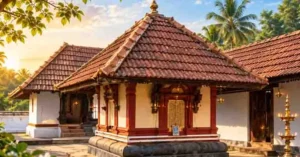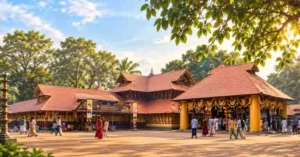


The Taliparamba Rajarajeshwara Temple, located in the Kannur district of Kerala, is one of the most ancient and revered temples dedicated to Lord Shiva in South India. Known for its grandeur, sanctity, and unique customs, the temple stands as a powerful symbol of Shaivism in Kerala. It is also one of the 108 ancient Shiva temples believed to have been consecrated by Lord Parashurama, the mythical creator of Kerala. The presiding deity here is worshipped as Sri Rajarajeshwara, meaning the King of Kings — a form of Lord Shiva representing supreme authority, power, and compassion.
This temple is not only a spiritual center but also an architectural masterpiece and a cultural hub that reflects Kerala’s devotion, heritage, and artistic excellence. The temple’s divine aura is such that devotees believe one cannot visit it unless blessed by Lord Shiva himself.
Mythological Significance
The temple’s mythological background is deeply rooted in Hindu lore. It is said that after the Daksha Yaga, when Goddess Sati immolated herself, Lord Shiva, in his grief and anger, performed the Rudra Tandava, carrying her body. To calm him, Lord Vishnu used his Sudarshana Chakra to dismember her body into several parts, which fell across the Indian subcontinent, forming the Shakti Peethas. The head of Goddess Sati is believed to have fallen at Taliparamba, sanctifying this land and making it one of the most sacred spots for both Shaiva and Shakta traditions.
According to another legend, Lord Shiva himself appeared here and blessed his devotee Sage Parashurama, who then consecrated the Shiva Linga at Taliparamba to enshrine the divine energy permanently. The Linga installed here is believed to be self-manifested (Swayambhu) and among the most powerful Shiva Lingas in the world.
There is also a legend involving King Muchukunda, a righteous ruler who meditated upon Lord Shiva at this spot. Pleased with his penance, Shiva granted him the boon that anyone visiting this temple with sincere devotion would attain liberation (moksha).
Historical Background
Historically, the Taliparamba Rajarajeshwara Temple dates back over 2,000 years and has been a major center of Shaiva worship since ancient times. The temple has undergone several reconstructions due to invasions and natural calamities but has retained its sacred essence.
During the Chera and Kolathiri dynasties, the temple was a royal shrine and enjoyed patronage from the local rulers. The name Rajarajeshwara itself symbolizes the connection between the divine and royal power — indicating that the deity was considered the ultimate overlord, even above kings.
The temple’s architecture, inscriptions, and cultural influence suggest that it was also a center of Tantric worship, where ancient rituals and philosophies flourished. The temple has maintained its traditional customs without dilution, preserving rituals that date back to pre-Sangam times.

Deity and Spiritual Concept
The presiding deity, Sri Rajarajeshwara, represents Lord Shiva in his form as the Supreme Ruler of the Universe. The Shiva Linga here is Swayambhu (self-manifested) and believed to radiate an extraordinary divine energy. The deity is considered the embodiment of power (Shakti) and compassion (Karuna), simultaneously fierce and benevolent.
The temple also houses other deities within its premises:
• Lord Vishnu – symbolizing balance and preservation.
• Lord Ganapathi (Ganesha) – the remover of obstacles.
• Lord Ayyappa – the protector and symbol of discipline.
• Goddess Parvati (Sree Rajarajeswari) – the divine consort of Shiva, whose presence balances the temple’s energy.
The combination of Shiva and Shakti worship makes this temple spiritually powerful and harmoniously complete.
Architectural Grandeur
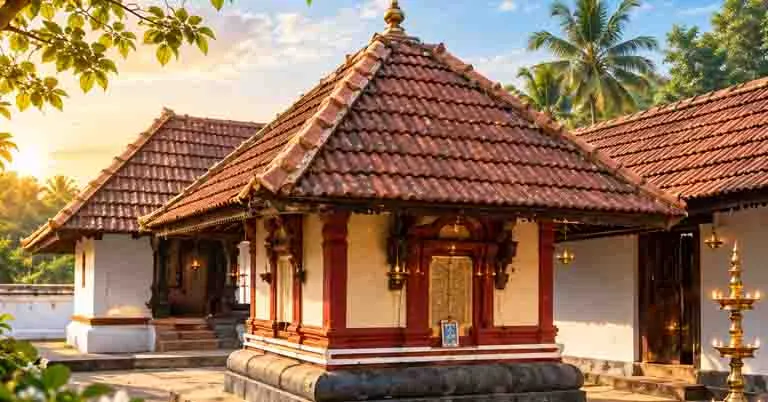
The Taliparamba Rajarajeshwara Temple is a brilliant example of Kerala’s classical temple architecture, harmoniously blending aesthetics, symbolism, and functionality.
1. The Sanctum Sanctorum (Sreekovil)
- The sanctum houses the Shiva Linga, which is said to be one of the tallest among all in Kerala.
- The Sreekovil is two-tiered, built in the rectangular (Dwi-tala Vimana) style, representing both material and spiritual realms.
- The roof is covered with gold-plated copper sheets, enhancing the temple’s majestic appearance.
- The interior is dimly lit with oil lamps, creating a serene and powerful spiritual ambiance.
2. The Namaskara Mandapam and Dwajasthambam
In front of the sanctum lies the Namaskara Mandapam, a hall with beautifully carved wooden ceilings and granite pillars. The Dwajasthambam (flagstaff), made of gold-plated metal, stands tall in front of the sanctum, symbolizing divine presence and inviting devotees to surrender their egos before entering the sacred space.
3. The Outer Structure and Compound
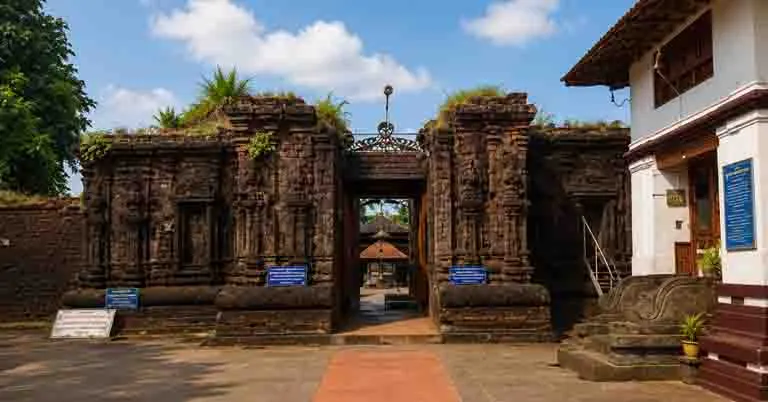
- The temple’s walls are built of laterite stones, surrounded by a massive compound that signifies protection and stability.
- The eastern entrance is the main Gopuram, decorated with wooden carvings and murals depicting various mythological stories.
- There are separate shrines for the sub-deities within the temple complex.
- The temple tank (Theertham) nearby is used for ritual purification before entering the sanctum.
The architectural proportions and alignments follow Vastu Shastra principles, ensuring a powerful spiritual vibration that can be felt even by casual visitors.
Unique Customs and Traditions
The Rajarajeshwara Temple is known for its distinct customs that set it apart from other temples in Kerala.
- Only Men Can Enter the Inner Sanctum:
Traditionally, only men are permitted to enter the sanctum and perform offerings directly before the deity. However, women are allowed to enter the temple precincts and can have darshan from outside the sanctum.
It is believed that Goddess Parvati resides in the temple’s nearby shrine and that women are spiritually represented by her during the rituals. - Divine Permission Ritual:
Before performing any major offering (Vazhipadu), devotees must seek permission through an oracle or the temple priest. It is said that unless Lord Shiva permits, offerings do not reach him spiritually. - The Lamp Tradition:
The sanctum is illuminated with thousands of oil lamps, creating a mystical aura. Lighting a lamp here is considered highly auspicious and symbolizes the light of divine wisdom. - Prohibition of Drums During Evening:
Uniquely, percussion instruments like Chenda are not played in the temple during evening poojas, maintaining a deep meditative silence that symbolizes the calm aspect of Shiva.
Daily Rituals and Offerings
The temple follows Tantric and Agamic traditions of worship, with elaborate poojas performed daily. The rituals begin early in the morning and continue till night, with specific offerings marking different times of the day.
Daily Ritual Schedule
- Usha Pooja – Performed at dawn to invoke Shiva’s blessings.
- Pantheeradi Pooja – Conducted after sunrise with special offerings.
- Ucha Pooja – Midday worship, considered the most auspicious.
- Athazha Pooja – Evening worship symbolizing divine rest and fulfillment.
Popular Offerings (Vazhipadus)
- Dhara (continuous pouring of holy liquids)
- Rudrabhishekam (ritual bath with Vedic chants)
- Palabhishekam (milk offering)
- Chandanam (sandal paste offering)
- Pradakshinam (circumambulation)
Devotees believe that sincere prayer here removes obstacles, cures ailments, grants progeny, and brings peace and prosperity.
Festivals and Celebrations
The temple celebrates numerous festivals throughout the year, the most prominent being the Maha Shivaratri and Ratholsavam (Chariot Festival).
1. Maha Shivaratri
Celebrated with grandeur, this festival marks the night when Lord Shiva performed the cosmic dance of creation and destruction. Devotees observe fasting and night-long vigil with chanting of Om Namah Shivaya. Thousands gather to witness the Rudrabhishekam, a powerful ritual invoking Shiva’s blessings.
2. Ratholsavam (Chariot Festival)
This spectacular event involves the ceremonial procession of the deity on a grand chariot pulled by devotees. The festival symbolizes the divine journey of Shiva blessing the entire community. Traditional art forms like Chenda Melam, Panchavadyam, and Theyyam performances accompany the celebration.
3. Deepam Festival
During this festival, thousands of oil lamps are lit throughout the temple complex, creating a breathtaking sea of light. The illumination signifies the victory of light over darkness and knowledge over ignorance.
Cultural and Spiritual Importance
The Taliparamba Rajarajeshwara Temple is not merely a place of worship but a spiritual powerhouse. It has been a center for meditation, learning, and cultural expression for centuries.
- Spiritual Power:
The temple is said to radiate an immense spiritual energy. Devotees often report a sense of deep calm and bliss during their visit. The Shiva Linga is believed to embody cosmic consciousness, providing liberation to those who worship sincerely. - Cultural Hub:
The temple has nurtured Kerala’s traditional art forms such as Kathakali, Chenda Melam, Ottanthullal, and Theyyam. During festivals, these performances transform the temple into a vibrant cultural arena. - Philosophical Depth:
The temple’s rituals follow Shaiva-Siddhanta and Tantric philosophies, symbolizing the union of Shiva (consciousness) and Shakti (energy). The atmosphere encourages introspection and spiritual awakening.
Accessibility and Visitor Information
- Location: Taliparamba town, Kannur District, Kerala – approximately 22 km from Kannur city.
- Nearest Railway Station: Kannur Railway Station (22 km).
- Nearest Airport: Kannur International Airport (40 km).
- Timings:
- o Morning: 4:00 AM – 12:00 Noon
- o Evening: 5:00 PM – 8:00 PM (approximate; may vary on festival days)
- Dress Code: Traditional attire is mandatory. Men must wear mundu; shirts are to be removed before entering the sanctum. Women may wear sari or traditional dresses.

Conclusion
The Taliparamba Rajarajeshwara Temple stands as one of Kerala’s most sacred and powerful abodes of Lord Shiva — a place where spirituality, history, and architecture converge. The divine presence of Sri Rajarajeshwara transcends human boundaries of faith, granting solace, strength, and enlightenment to millions of devotees who come seeking blessings.
From its mythical origins tied to Parashurama and Sati, to its majestic architecture and timeless customs, the temple continues to uphold Kerala’s spiritual heritage. The rhythmic chants, flickering oil lamps, fragrance of incense, and the overwhelming stillness within its sanctum all merge to create an atmosphere of profound divinity.
Visiting Taliparamba Rajarajeshwara Temple is not just a pilgrimage — it is a journey into the heart of cosmic consciousness, where the supreme power of Lord Shiva manifests in eternal serenity and boundless grace.
Disclaimer
The information provided by Web Arbiter (‘we’, ‘us’, or ‘our’) on https://webarbiter.in/ . The website is for general informational purposes only. All information on the Site is provided in good faith, however we make no representation or warranty of any kind, express or implied, regarding the accuracy, adequacy, validity, reliability, availability, or completeness of any information on the Site. UNDER NO CIRCUMSTANCE SHALL WE HAVE ANY LIABILITY TO YOU FOR ANY LOSS OR DAMAGE OF ANY KIND INCURRED AS A RESULT OF THE USE OF THE SITE OR RELIANCE ON ANY INFORMATION PROVIDED ON THE SITE. YOUR USE OF THE SITE AND YOUR RELIANCE ON ANY INFORMATION ON THE SITE IS SOLELY AT YOUR OWN RISK. Read Full Disclaimer