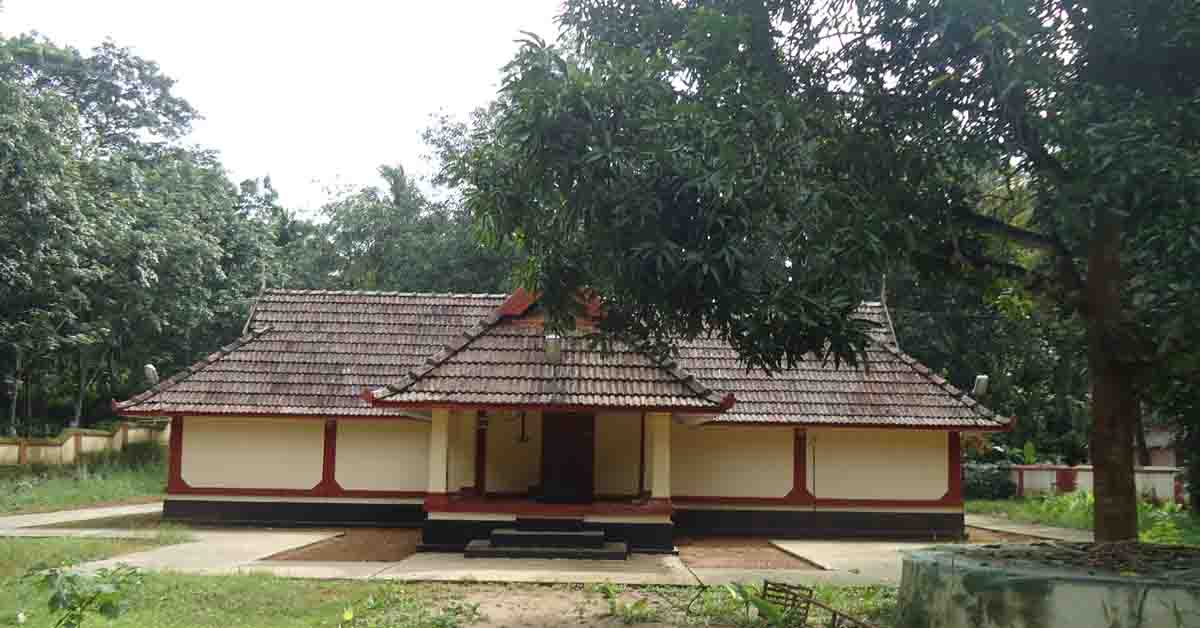
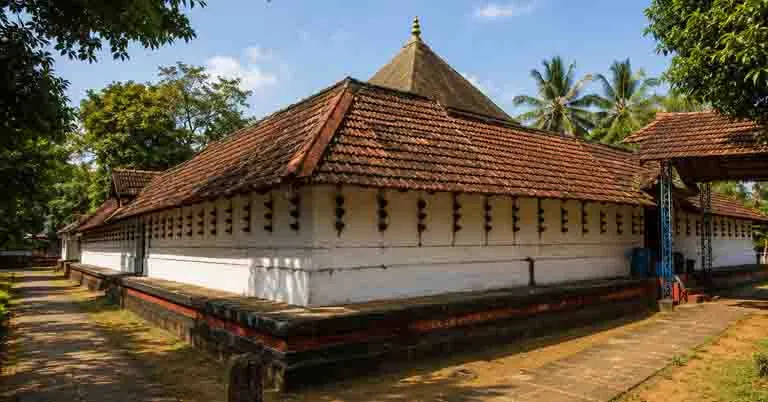
Perched atop a gentle hill in the historic town of Angadippuram, in Malappuram district, Kerala, the Thirumandhamkunnu Temple stands as one of the most spiritually powerful and historically significant temples in South India. Dedicated primarily to Bhagavathi (Goddess Durga) and Lord Shiva, this temple is celebrated as one of the 108 Durga temples and also among the 108 Shiva temples consecrated by Lord Parasurama, the legendary creator of Kerala.
Thirumandhamkunnu Temple is not just a site of worship—it is a symbol of Kerala’s deep-rooted culture, religious harmony, and timeless traditions. Its rich history, mythological associations, and annual festivals attract devotees and scholars alike, making it one of the most important pilgrimage destinations in North Kerala.
Location and Setting
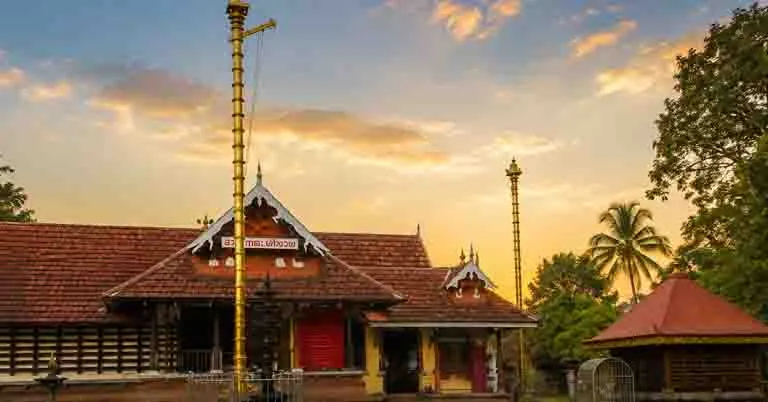
The temple is located in Angadippuram, near Perinthalmanna, about 12 kilometers from Malappuram town. Built atop the Thirumandhamkunnu Hill, the temple offers a panoramic view of the surrounding lush green landscapes and small villages that dot the valley below.
The temple’s elevated position symbolizes spiritual ascent — a climb towards enlightenment and divine union. The cool breeze, the sound of temple bells, and the distant chanting of hymns create a serene, mystical atmosphere that instantly fills one’s mind with peace.
Historical Background
The Thirumandhamkunnu Temple has an illustrious history that spans more than a thousand years. It is believed to date back to the Chera dynasty, during which many major temples of Kerala were built. The temple was under the royal patronage of the Valluvanad rulers, a powerful Nair chieftain family who considered the presiding deity, Thirumandhamkunnil Amma, as their Kuladevata (family goddess).
In fact, the goddess of this temple was believed to be the guardian deity of Valluvanad, and her blessings were sought before battles and major events. Historical references suggest that the temple also played a central role in the Mamankam festival, a grand medieval assembly held once every 12 years on the banks of the Bharathapuzha River.
Even today, the rituals and customs followed in Thirumandhamkunnu Temple preserve the essence of Kerala’s ancient Shaiva and Shakti traditions.

Mythological Significance
The mythology of Thirumandhamkunnu is both fascinating and profound, rooted in the cosmic relationship between Lord Shiva and Goddess Parvati.
According to legend, Lord Shiva was performing penance at Mandhamala Hill (the ancient name of Thirumandhamkunnu) when King Mandhata, a devout ruler from the Solar Dynasty, prayed intensely to Lord Shiva for a divine blessing. Impressed by his devotion, Lord Shiva gifted him the Swayambhu (self-manifested) Shiva Lingam — the same one worshipped at Mount Kailash.
King Mandhata brought the Lingam to earth and installed it at this hilltop. However, when Goddess Parvati, consort of Shiva, realized that her divine counterpart had been separated from her, she descended to the earth with her army to reclaim the Lingam. What followed was a celestial battle between Parvati’s divine forces and King Mandhata’s devotion.
After a long standoff, Lord Shiva intervened, pacifying both sides. The Lingam split into two parts — one representing Lord Shiva and the other Goddess Parvati (Bhagavathi). Both deities were then installed together at the temple, facing west and east respectively, symbolizing the eternal union of Purusha (consciousness) and Prakriti (energy).
Thus, Thirumandhamkunnu became one of the rare temples in India where Lord Shiva and Goddess Parvati coexist in the same sanctum, representing the balance of masculine and feminine energies of the universe.
Temple Architecture
The architecture of Thirumandhamkunnu Temple is a remarkable example of Kerala’s traditional temple design, known for its simplicity, symmetry, and spiritual symbolism. Constructed mainly using laterite stone, teak wood, and copper sheets, the temple exudes an aura of ancient elegance.
1. The Gopuram (Entrance Tower)
The temple has a beautiful two-storied gopuram adorned with wooden carvings depicting scenes from Hindu epics such as the Devi Mahatmya and Shiva Purana. The gopuram opens to a wide stone-paved courtyard filled with devotees during festival seasons.
2. The Sreekovil (Sanctum Sanctorum)
The main sanctum houses the divine Shiva Lingam with the Bhagavathi positioned nearby. The sanctum is circular (Vatta Sreekovil), which is symbolic of eternity and cosmic completeness. The roof is copper-plated and supported by intricately carved wooden beams.
Inside the sanctum, the presence of both Shiva and Bhagavathi creates a powerful spiritual vibration. The temple priests perform daily poojas in strict accordance with the Tantric traditions of Kerala.
3. Sub-Shrines
In addition to the main deity, there are several smaller shrines dedicated to:
- Lord Ganapathi (Ganesha) – remover of obstacles
- Lord Ayyappa – the youthful warrior deity
- Lord Subramanya (Murugan) – symbol of courage and wisdom
- Naga Devatas (Serpent Gods) – worshipped for fertility and prosperity
- Vettakkorumakan – a local deity associated with hunting and protection
The temple also has a sacred pond (Ambalakkulam), used for ritual purification before entering the sanctum.
Daily Rituals and Worship
The Thirumandhamkunnu Temple follows a rich schedule of daily poojas and Tantric rituals, conducted by Namboothiri priests in accordance with the Agama Shastra.
The major daily rituals include:
- Nirmalyam – early morning opening of the sanctum and removal of old offerings
- Usha Pooja – morning worship accompanied by chanting of Durga Suktam and Rudram
- Ucha Pooja – noon offering, including Pushpanjali and Naivedyam
- Deeparadhana – evening lamp ceremony illuminating the temple courtyard
- Athazha Pooja – night worship marking the end of the day’s rituals
Devotees believe that witnessing the Deeparadhana at dusk fulfills one’s desires and brings peace to the mind. Mondays and Fridays are considered particularly auspicious for worshipping the goddess.
Festivals and Celebrations
The annual festival (Pooram Mahotsavam) of Thirumandhamkunnu Temple is one of the grandest temple festivals in Kerala, celebrated with unmatched devotion and splendor.
1. Thirumandhamkunnu Pooram
This 11-day festival, held in the Malayalam month of Meenam (March–April), commemorates the divine victory of Bhagavathi. The festival begins with Kodiyettam (flag hoisting) and culminates with Aarattu, the ceremonial bathing of the deity.
The highlight of the festival is the Ezhunnallathu — a grand procession of the goddess on a caparisoned elephant, accompanied by Panchavadyam (traditional temple orchestra), Chenda Melam, and dazzling fireworks. Thousands of devotees gather to witness the goddess’s majestic procession through the streets of Angadippuram.
2. Mangalya Pooja
Another unique ritual here is the Mangalya Pooja, dedicated to unmarried women seeking good marital alliances. Conducted every Friday, this ritual symbolizes the divine marriage between Shiva and Parvati and is believed to remove obstacles in finding a life partner.
3. Navarathri and Shivaratri
The Navarathri festival, dedicated to the nine forms of Goddess Durga, is celebrated with deep devotion. Each day is marked by special poojas, recitations, and cultural performances. Maha Shivaratri, the great night of Lord Shiva, is also celebrated with fasting, meditation, and all-night prayers.
These festivals are not just religious ceremonies—they serve as vibrant cultural gatherings showcasing Kerala’s traditional art forms such as Kathakali, Ottanthullal, Chakyarkoothu, and Theyyam.
Spiritual Significance
The Thirumandhamkunnu Temple represents the union of divine forces — Shiva’s meditative stillness and Parvati’s dynamic energy. Together, they symbolize the balance of creation and destruction, knowledge and compassion, power and peace.
Devotees believe that praying at this temple fulfills wishes, removes negativity, and brings spiritual enlightenment. The powerful aura of the deity is said to awaken inner strength and confidence in devotees, helping them overcome life’s challenges.
The temple’s sanctity is also linked to Goddess Bhadrakali, an aspect of Durga who destroyed demons and restored cosmic order. Hence, the temple embodies the eternal truth that divine energy always triumphs over evil.
Cultural and Social Influence
For centuries, the Thirumandhamkunnu Temple has served as the spiritual and cultural nucleus of the Malappuram region. Its festivals unite people from different backgrounds, transcending caste and social divisions.
The temple also engages in charitable and social welfare activities — including Annadanam (feeding the poor), scholarships for students, and healthcare aid. This reinforces the temple’s message of compassion and service, central to Hindu philosophy.
Visiting Information
- Location: Thirumandhamkunnu Temple, Angadippuram, Malappuram District, Kerala
- Nearest Railway Station: Angadippuram Railway Station (about 1 km)
- Nearest Airport: Calicut International Airport (approx. 40 km)
- Temple Timings:
- Morning: 4:30 AM – 11:30 AM
- Evening: 5:00 PM – 8:00 PM
- Dress Code: Traditional attire required (Men – Mundu, Women – Saree/Set Mundu)
The ideal time to visit is during Pooram or Navarathri, when the temple glows with divine energy and cultural festivities.

Conclusion
The Thirumandhamkunnu Temple is not merely a place of worship—it is a living legend, a sacred epic etched in stone and spirit. Its mythology, architecture, and rituals embody the timeless principles of Hinduism — devotion, balance, and the eternal victory of light over darkness.
From the divine union of Shiva and Parvati to the echoing chants of “Amme Narayana, Devi Narayana”, everything about this temple radiates spiritual power. The hill on which it stands seems to pulsate with the presence of the goddess herself — a reminder that the divine is ever-present, protecting and guiding her devotees.
For seekers of peace, strength, and divine wisdom, the Thirumandhamkunnu Temple offers not just blessings — but a profound journey into the heart of devotion.
Disclaimer
The information provided by Web Arbiter (‘we’, ‘us’, or ‘our’) on https://webarbiter.in/ . The website is for general informational purposes only. All information on the Site is provided in good faith, however we make no representation or warranty of any kind, express or implied, regarding the accuracy, adequacy, validity, reliability, availability, or completeness of any information on the Site. UNDER NO CIRCUMSTANCE SHALL WE HAVE ANY LIABILITY TO YOU FOR ANY LOSS OR DAMAGE OF ANY KIND INCURRED AS A RESULT OF THE USE OF THE SITE OR RELIANCE ON ANY INFORMATION PROVIDED ON THE SITE. YOUR USE OF THE SITE AND YOUR RELIANCE ON ANY INFORMATION ON THE SITE IS SOLELY AT YOUR OWN RISK. Read Full Disclaimer