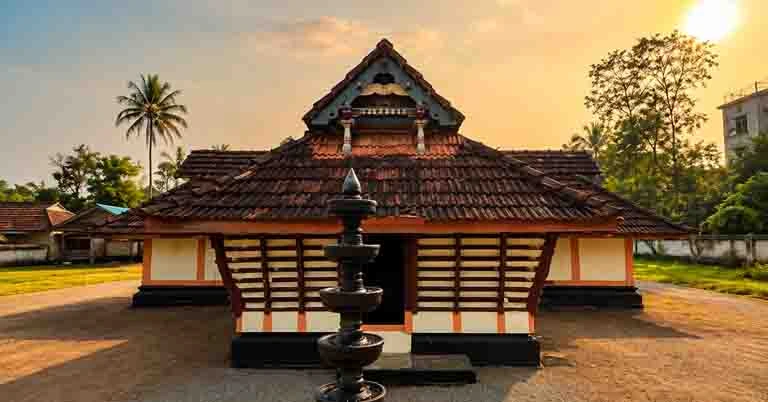


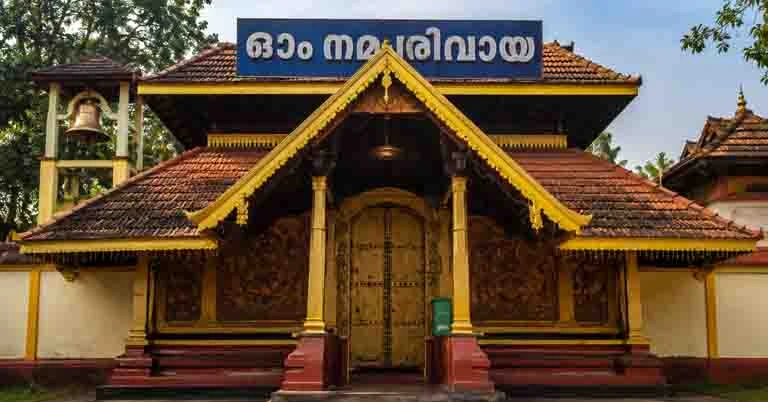
Located in the very heart of Kottayam town in Kerala, the Thirunakkara Sree Mahadevar Temple stands as one of the most revered and architecturally splendid Shiva temples in the state. Dedicated to Lord Mahadeva (Shiva), the temple is not only a spiritual landmark but also a cultural nucleus that reflects the harmony of devotion, art, and history.
Perched atop the small hillock known as Thirunakkara, this ancient temple is a serene oasis amidst the vibrant bustle of Kottayam city. The temple, believed to be over 1,500 years old, is renowned for its majestic murals, intricate wooden carvings, grand festivals, and its profound sanctity that continues to draw devotees and visitors alike.
Etymology and Significance
The name “Thirunakkara” is derived from two Malayalam words – Thiru, meaning “sacred,” and Nakkara, meaning “hill” – hence, Thirunakkara literally translates to “the sacred hill.” This aptly describes the temple’s location on a slightly elevated terrain that has been regarded as holy ground since ancient times.
The presiding deity, Lord Shiva, is worshipped here as Mahadevar, the Supreme Lord who embodies the infinite aspects of creation, preservation, and dissolution. The temple is believed to hold immense spiritual energy, making it one of the 108 revered Shiva temples installed by Lord Parasurama, the legendary sage-warrior who is said to have taken back Kerala’s territory from the ocean.
Historical Background
The Thirunakkara Mahadevar Temple has deep historical roots dating back to the early medieval period. It was built approximately 500 years ago by Thekkumkoor Raja, the ruler of the region before the formation of the Travancore kingdom. Thekkumkoor was once a powerful principality in central Kerala, and its rulers were ardent devotees of Lord Shiva.
According to temple records and oral tradition, Thekkumkoor King had a divine vision of Lord Shiva instructing him to construct a grand temple on Thirunakkara hill. Following this vision, the king commissioned the temple’s construction under the supervision of master architects and artisans of that era. The temple later became a center of political, cultural, and spiritual life in the region.

When Marthanda Varma, the great ruler of Travancore, annexed Thekkumkoor in the 18th century, the temple was taken under royal patronage and received generous endowments. It has since remained one of the most significant temples under the administration of the Travancore Devaswom Board.
Deity and Spiritual Concept
The presiding deity of Thirunakkara Temple is Lord Mahadeva (Shiva) in the form of a Swayambhu (self-manifested) Shivalinga, facing east. The sanctum’s aura is deeply meditative, symbolizing Shiva as the eternal cosmic power who governs life and death.
In Shaiva philosophy, Shiva represents the union of consciousness and energy, and at Thirunakkara, this union is powerfully felt. Devotees believe that worshipping the deity here removes sins, grants peace of mind, and ensures spiritual liberation (moksha).
The temple also houses several Upa-devatas (sub-deities) such as Ganapathi, Sastha (Ayyappa), Dakshinamurthy, Goddess Parvathi, and Naga Devatas, creating a divine environment that encompasses the entire Shaiva family and cosmic energy.
Temple Architecture
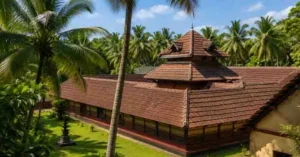
The Thirunakkara Sree Mahadevar Temple is an exquisite example of Kerala’s traditional temple architecture, blending simplicity with grandeur. Built primarily from laterite, granite, and teak, the temple displays the hallmark features of medieval Kerala craftsmanship.
1. Sreekovil (Sanctum Sanctorum)
The sanctum is circular (Vatta Sreekovil), symbolizing eternity. The roof, covered with copper plates, is supported by beautifully carved wooden rafters. Inside the sanctum rests the Shivalinga, adorned with sacred ashes (vibhuti), flowers, and lamps. The sanctum is illuminated by the soft glow of oil lamps, creating a mystical aura that invokes deep devotion.
2. Namaskara Mandapam
In front of the sanctum lies the Namaskara Mandapam, an exquisitely crafted wooden hall used for rituals and offerings. The wooden ceilings and pillars are intricately carved with depictions of celestial beings, lotus motifs, and mythological stories from the Puranas.
3. Koothambalam
One of the most striking features of the temple is its Koothambalam (temple theatre) — a structure dedicated to performing Koothu and Koodiyattam, the classical Sanskrit theatre of Kerala. The Koothambalam here is regarded as one of the finest in Kerala and continues to host performances during major festivals, particularly Koodiyattam, which is recognized by UNESCO as an intangible cultural heritage.
4. Chuttambalam and Gopuram
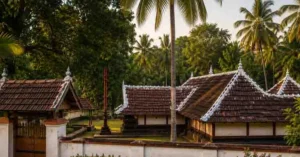
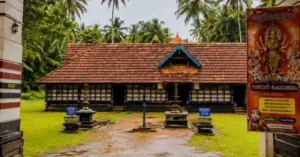
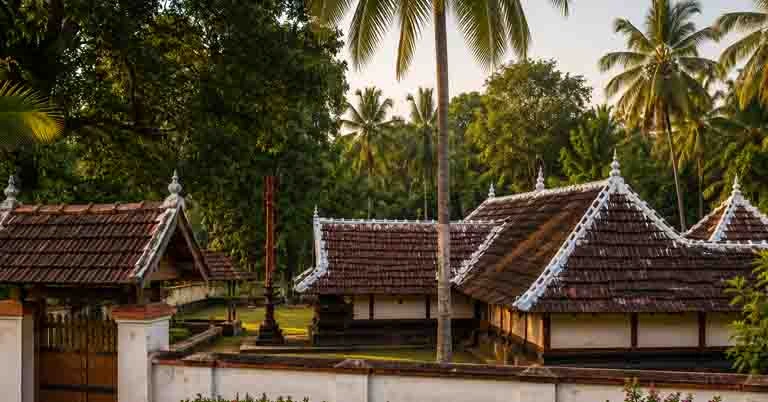
The temple is enclosed by a Chuttambalam (outer wall) with a tiled roof and an entrance tower (Gopuram) built in the traditional Kerala style. The eastern gate is the main entrance, and the temple pond (Ambala Kulam) is located nearby, used for purification rituals.
5. Murals and Carvings
The temple’s inner walls are adorned with beautiful murals that depict stories from the Shiva Purana, Ramayana, and Mahabharata. These paintings, centuries old, display the vibrant colors and detailing characteristic of Kerala’s mural art tradition.
Daily Worship and Rituals
The daily poojas at Thirunakkara Mahadevar Temple are conducted with utmost devotion and precision according to Tantric and Agamic traditions. The rituals follow the three main daily pooja pattern observed in Shaiva temples:
- Usha Pooja (Morning Ritual)
Begins at dawn with Nirmalyam and Abhishekam (bathing the deity with holy water, milk, ghee, honey, and sandal paste). - Ucha Pooja (Noon Ritual)
Midday offering symbolizing the sustenance of life. - Athazha Pooja (Evening Ritual)
Evening worship with Deepa Aradhana and closing prayers.
Special poojas include:
- Rudrabhishekam – for purification and protection.
- Pradosha Pooja – observed every fortnight for the removal of sins.
- Mrityunjaya Homam – for good health and longevity.
- Shivaratri Abhishekam – performed through the night during Maha Shivaratri.
Devotees often offer Bilwa leaves, coconuts, ghee lamps, and flowers as part of their personal worship.
Festivals and Celebrations
The Thirunakkara Arattu Festival is one of the grandest and most colorful temple festivals in Kerala, celebrated during the Malayalam month of Meenam (March–April). The festival lasts for ten days, drawing thousands of devotees, pilgrims, and tourists to Kottayam.
Key Highlights of the Festival:
- Kodiyettam (Flag Hoisting):
Marks the beginning of the festival with the hoisting of the sacred flag on the temple’s flagpole (Dwajastambham). - Ritual Ceremonies:
Each day of the festival is marked by traditional rituals such as Utsavabali, Pallivetta (symbolic royal hunt), and Sreebali (ritual circumambulation). - Ezhunnallathu (Procession):
The highlight of the festival is the grand procession of the deity on caparisoned elephants, accompanied by traditional percussion ensembles like Panchavadyam, Chenda Melam, and Nadaswaram. The rhythmic beats, combined with the sight of the deity, create an atmosphere of divine celebration. - Arattu (Holy Bath):
On the final day, the idol of Lord Shiva is ceremoniously taken to the Arattu Kadavu (bathing ghat) for the ritual cleansing in the nearby river, symbolizing purification and renewal. - Cultural Events:
The festival also features classical performances such as Kathakali, Koodiyattam, Ottamthullal, and Chakyarkoothu, highlighting Kerala’s deep cultural connection with its temples. - Maha Shivaratri:
Apart from the annual festival, Maha Shivaratri is celebrated with great devotion. Devotees fast, chant Om Namah Shivaya, and participate in all-night prayers and Rudrabhishekam ceremonies.
Sub-Deities and Shrines
Within the temple complex, there are several smaller shrines dedicated to other deities, symbolizing the temple’s inclusivity and balance of divine energies. These include:
- Lord Ganapathi – the remover of obstacles.
- Lord Sastha (Ayyappa) – representing divine discipline and balance.
- Goddess Parvathi – the embodiment of love and divine feminine energy.
- Naga Deities – worshipped for prosperity and protection.
- Lord Dakshinamurthy – the divine teacher seated under a banyan tree, symbolizing wisdom.
Each sub-shrine is integrated harmoniously within the temple compound, making it a holistic center for Shaiva worship.
Cultural and Artistic Importance
The Thirunakkara Mahadevar Temple is not only a religious sanctuary but also a beacon of traditional art and culture. The Koothambalam continues to preserve and promote Kerala’s oldest performing arts — Koothu and Koodiyattam. During festivals, the temple becomes a vibrant stage for classical art forms like Kathakali, Mohiniyattam, and Panchavadyam.
The murals within the temple are also of great historical importance, depicting themes like Shiva’s cosmic dance (Tandava), Tripurantaka (destroyer of the three cities), and Ardhanarishvara (union of male and female principles).
These artistic expressions transform the temple into a living museum of Kerala’s cultural heritage.
Temple Administration and Preservation
The temple is presently managed by the Travancore Devaswom Board, which oversees the conduct of daily rituals, festivals, and conservation activities. The board has taken measures to preserve the temple’s ancient wooden structures, murals, and Koothambalam.
The temple authorities maintain strict adherence to traditional customs and purity regulations. Women are permitted to enter all areas except the sanctum, and visitors are required to dress modestly. Modern amenities like lighting and drainage have been carefully integrated without disturbing the temple’s traditional aesthetics.
Spiritual Experience
A visit to Thirunakkara Sree Mahadevar Temple is a deeply transformative experience. The tranquil surroundings, the rhythmic chanting of mantras, and the glow of thousands of oil lamps create an atmosphere that touches the soul.
Devotees describe the sanctum’s energy as powerful yet soothing — a place where time seems to stand still, and the boundary between the physical and spiritual worlds dissolves. Offering prayers to Lord Mahadeva here is believed to bring mental peace, health, prosperity, and spiritual awakening.
The temple’s central location makes it easily accessible, yet its spiritual vibration sets it apart from the urban chaos, offering a peaceful refuge in the heart of Kottayam.

Conclusion
The Thirunakkara Sree Mahadevar Temple stands as a magnificent blend of devotion, architecture, and cultural splendor. Rooted in centuries of faith, it continues to be the spiritual nucleus of Kottayam, drawing thousands of devotees and visitors each year.
From the resonating chants of Om Namah Shivaya to the dazzling spectacle of the annual Arattu festival, every aspect of the temple reflects the eternal glory of Lord Shiva — the cosmic Lord who dances in the rhythm of creation and dissolution.
To the devotee, Thirunakkara is not merely a temple; it is an experience — a journey inward toward the divine presence that dwells within every heart. With its ancient wisdom, sacred rituals, and timeless beauty, Thirunakkara Mahadevar Temple continues to stand as a shining testament to Kerala’s enduring spiritual and cultural legacy.
Disclaimer
The information provided by Web Arbiter (‘we’, ‘us’, or ‘our’) on https://webarbiter.in/ . The website is for general informational purposes only. All information on the Site is provided in good faith, however we make no representation or warranty of any kind, express or implied, regarding the accuracy, adequacy, validity, reliability, availability, or completeness of any information on the Site. UNDER NO CIRCUMSTANCE SHALL WE HAVE ANY LIABILITY TO YOU FOR ANY LOSS OR DAMAGE OF ANY KIND INCURRED AS A RESULT OF THE USE OF THE SITE OR RELIANCE ON ANY INFORMATION PROVIDED ON THE SITE. YOUR USE OF THE SITE AND YOUR RELIANCE ON ANY INFORMATION ON THE SITE IS SOLELY AT YOUR OWN RISK. Read Full Disclaimer