Kerala, the land of lush greenery and divine serenity, is home to countless ancient temples that embody the region’s cultural and spiritual richness. Among them, the Triprangode Siva Temple, located in Malappuram district, stands as a magnificent testimony to Kerala’s age-old Shaivite traditions. Revered as one of the oldest and most powerful Shiva temples in the state, Triprangode holds a special place in mythology and devotion.
Known locally as Thirupurankodu Mahadeva Temple, it is believed to be the place where Lord Shiva manifested his wrath to destroy Lord Vishnu’s avatar, Mahabali, after the famous Vamana episode. This temple thus intertwines myth, history, and architectural brilliance, making it a vital spiritual center in Kerala.
Historical Background
The Triprangode Siva Temple has deep historical roots that trace back over a thousand years. Ancient inscriptions and copper plates discovered in the area suggest that the temple flourished during the Chera and Kulasekhara dynasties (9th–12th centuries CE).
It is said that the temple was patronized by several rulers, including the Zamorins of Calicut (Samuthiri dynasty), who contributed to its expansion and maintenance. The temple’s architectural style, murals, and layout reflect the medieval Kerala temple design typical of that period.
Over centuries, the temple evolved not only as a place of worship but also as a cultural and community center, where classical art, music, and rituals were preserved and passed down through generations.
Mythological Significance
The Triprangode Siva Temple is deeply linked to the legend of Mahabali and Vamana, one of the most well-known episodes in Hindu mythology.
According to legend, King Mahabali, the benevolent Asura ruler of Kerala, performed a great sacrifice (Yajna) to gain supremacy over the three worlds. The gods, feeling threatened by his growing power, sought the help of Lord Vishnu, who incarnated as Vamana, a dwarf Brahmin.
Vamana approached Mahabali and asked for three paces of land. The king, known for his generosity, agreed. Instantly, Vamana grew to cosmic size, covering the earth and the heavens with two strides. Having no space left, Mahabali offered his head for the third step, and Vishnu sent him down to the underworld (Patala).
However, Lord Shiva, who was fond of Mahabali’s devotion and righteousness, was angered by this act. In his fury, he is said to have appeared at Triprangode to confront Lord Vishnu. The divine confrontation between Shiva and Vishnu (as Vamana) took place here, marking Triprangode as a site of immense cosmic energy.
This mythological association makes the temple one of the most sacred Shiva shrines in Kerala, as it represents Shiva’s justice, compassion, and cosmic balance.

Architectural Splendor
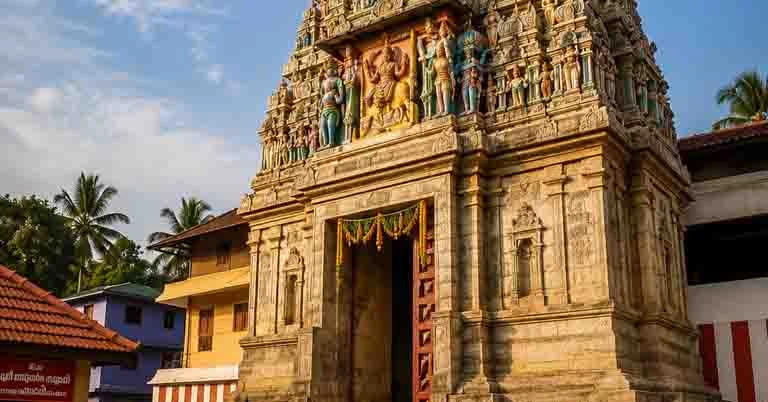
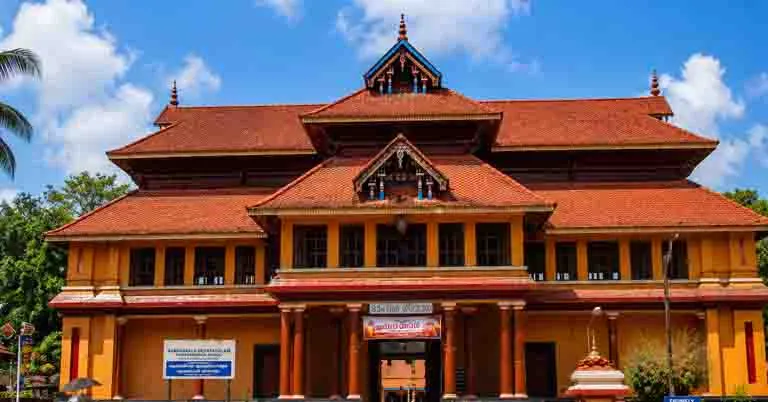
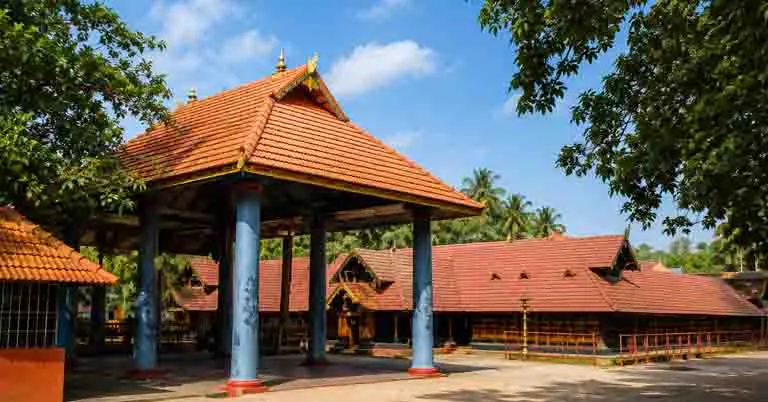
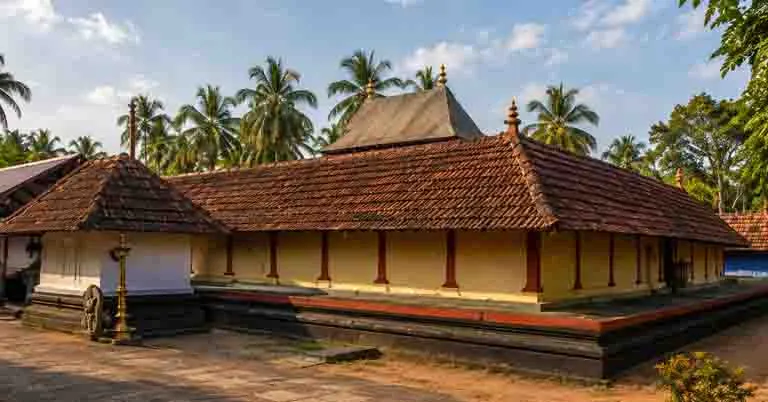
The Triprangode Siva Temple is a brilliant example of Kerala-style temple architecture, combining spiritual symbolism with structural beauty. The temple’s layout follows the Vastu Shastra principles, emphasizing harmony with nature, symmetry, and divine geometry.
1. Temple Complex
The temple complex is vast and surrounded by a tall laterite stone wall (prakaram). The lush surroundings, filled with coconut groves and temple ponds, enhance its sacred atmosphere. The temple entrance is marked by an ornate gopuram (gateway tower) decorated with wooden carvings and traditional motifs.
2. Sreekovil (Sanctum Sanctorum)
At the heart of the temple lies the Sreekovil, housing the main deity, Lord Shiva, in the form of a lingam. The sanctum is circular in shape—a distinct feature of Kerala temples—and capped with a copper-plated conical roof. The sanctum’s inner walls are adorned with mural paintings depicting scenes from Hindu mythology, especially the stories of Shiva’s cosmic dance (Ananda Tandava) and his union with Parvati.
3. Sub-Shrines and Deities
In addition to the main Shiva shrine, the temple also houses several sub-deities:
- Parvati Devi, representing feminine energy and grace
- Lord Ganapathi, the remover of obstacles
- Lord Ayyappa, symbolizing youthful energy and asceticism
- Lord Subrahmanya (Murugan)
- Naga Devatas (Serpent Gods), worshipped for fertility and protection
- Bhagavathi, the fierce mother goddess
These deities together reflect the temple’s vision of cosmic harmony and balance.
4. Temple Tank (Theertham)
Adjacent to the temple lies a large sacred pond known as the Agni Theertham, believed to purify one’s sins when bathed in. Devotees consider this water holy, as it is said to have been sanctified by Shiva himself after his fiery battle with Vishnu.
Rituals and Daily Worship
The rituals of Triprangode Siva Temple follow the Tantric tradition of Kerala, adhering to the Shaiva Agama texts. The day begins with the Nirmalyam ritual, followed by Abhishekam (holy bathing of the lingam) with water, milk, ghee, and honey. The daily worship cycle includes:
- Usha Pooja (morning)
- Ucha Pooja (noon)
- Deeparadhana (evening lamp worship)
- Athazha Pooja (final night offering)
Special pujas are conducted on Mondays, Pradosham days, and Maha Shivaratri, when thousands of devotees gather for night-long prayers and abhishekams.
The temple is also known for its Rudrabhishekam—a powerful ritual invoking Lord Shiva’s blessings for peace and prosperity.
Festivals and Celebrations
The annual festival (Utsavam) of the Triprangode Siva Temple is a grand celebration that lasts for seven to ten days, typically held in the Malayalam month of Meenam (March–April). The festival begins with the Kodiyettam (flag hoisting) and concludes with the Aarattu (holy bath of the deity).
During the festival, the temple becomes vibrant with traditional music, art, and dance performances, including Chenda Melam, Panchavadyam, Kathakali, and Ottanthullal. Devotees participate in large numbers, offering prayers, lamps, and flower garlands.
The temple also celebrates:
- Maha Shivaratri – The great night of Shiva
- Thiruvathira – Celebrating the cosmic union of Shiva and Parvati
- Navarathri – Honoring the goddess energy within the temple complex
During these festivals, the temple is illuminated with thousands of oil lamps, creating a mesmerizing spiritual atmosphere.
Spiritual Importance
The Triprangode Siva Temple holds immense spiritual significance. It represents Shiva as the embodiment of divine justice and compassion, balancing cosmic forces. Devotees believe that prayers here can remove negative karma, cure ailments, and bring peace of mind.
The temple also symbolizes the eternal relationship between Shiva and Vishnu—where divine energies, though appearing opposed, ultimately act in harmony for the preservation of cosmic order.
Meditation and chanting inside the temple premises are said to elevate one’s spiritual consciousness, making Triprangode a place not only for worship but for inner awakening.
Cultural Role and Temple Management
Beyond its religious significance, the temple serves as a cultural hub for local communities. It promotes classical art forms, music, and Sanskrit education. The temple management conducts annadanam (free meal service), supporting hundreds of devotees daily, especially during festivals.
The temple is governed by a Devaswom Board, ensuring its maintenance and preservation. Renovation projects over the years have restored the temple’s murals, wooden carvings, and copper roofing, keeping its ancient charm intact.
Architectural and Artistic Heritage
The temple’s wooden carvings and mural paintings are masterpieces of Kerala’s classical art. The carvings depict mythological tales—such as Shiva’s marriage to Parvati, his dance as Nataraja, and his battle with Vishnu. These artworks not only serve as religious symbols but also as priceless cultural records of Kerala’s artistic evolution.
The chuttambalam (outer corridor) and balikkal (altar stone) showcase fine sculptural details, while the temple lamps, brass fittings, and oil lamps reflect the craftsmanship of traditional artisans.
Location and Access
The Triprangode Siva Temple is located about 5 km from Tirur town in Malappuram district, Kerala. The nearest railway station is Tirur Railway Station, while the nearest airport is Calicut International Airport.
Visitors can reach the temple easily via roadways, with frequent buses and taxis available. The temple opens early in the morning and remains accessible till evening, closing during noon hours for rituals.
The tranquil surroundings, with ponds and coconut groves, offer a peaceful retreat for pilgrims and travelers alike.

Conclusion
The Triprangode Siva Temple is not merely a place of worship but a living monument of Kerala’s divine heritage. It stands as a reminder of the profound spiritual relationship between man, nature, and the divine.
Through its legends, rituals, and architectural grandeur, the temple continues to inspire devotion and awe. The presence of Lord Shiva in Triprangode is believed to be eternal—ever watchful, ever compassionate, guiding devotees toward enlightenment.
For pilgrims, a visit to Triprangode is not just a journey of faith, but a spiritual awakening—a timeless experience that connects the mortal soul with the infinite consciousness of Lord Mahadeva.
Disclaimer
The information provided by Web Arbiter (‘we’, ‘us’, or ‘our’) on https://webarbiter.in/ . The website is for general informational purposes only. All information on the Site is provided in good faith, however we make no representation or warranty of any kind, express or implied, regarding the accuracy, adequacy, validity, reliability, availability, or completeness of any information on the Site. UNDER NO CIRCUMSTANCE SHALL WE HAVE ANY LIABILITY TO YOU FOR ANY LOSS OR DAMAGE OF ANY KIND INCURRED AS A RESULT OF THE USE OF THE SITE OR RELIANCE ON ANY INFORMATION PROVIDED ON THE SITE. YOUR USE OF THE SITE AND YOUR RELIANCE ON ANY INFORMATION ON THE SITE IS SOLELY AT YOUR OWN RISK. Read Full Disclaimer