

Nestled in the serene and culturally rich village of Trithala, in the Palakkad district of Kerala, the Trithala Maha Siva Temple stands as a magnificent testament to Kerala’s deep-rooted Shaivite tradition and spiritual grandeur. Dedicated to Lord Shiva, this ancient temple is one of the prominent Shiva temples in Kerala, believed to have been established by Lord Parasurama, the sixth incarnation of Lord Vishnu, as part of the 108 famous Shiva temples of Kerala.
Surrounded by fertile paddy fields, tranquil ponds, and lush greenery, the temple exudes an aura of peace and divinity that draws devotees and spiritual seekers from across the state. Trithala, historically renowned for its contributions to culture, literature, and temple traditions, holds the Maha Siva Temple at its spiritual core.
Historical Background
The Trithala Maha Siva Temple is believed to have an antiquity of over a thousand years. According to local legends, it was one of the temples consecrated by Lord Parasurama to establish Lord Shiva’s energy across the newly formed land of Kerala. The temple finds mention in old palm-leaf manuscripts and traditional Deva Prashnam (astrological consultations), confirming its sacred status as one of the divine centers of worship from ancient times.
Inscriptions and oral histories suggest that the temple was a key spiritual hub during the rule of the Chera and Perumal dynasties, who generously supported the temple with land grants, gold, and resources for its rituals. The temple was also associated with nearby Brahmin settlements (Agraharams), where Vedic studies, astrology, and traditional arts flourished.
Over the centuries, the temple has undergone several renovations, yet it continues to preserve the classic Kerala-style temple architecture and sacred atmosphere that make it a unique spiritual destination.
Presiding Deity – Lord Shiva
The presiding deity of Trithala Maha Siva Temple is Lord Shiva, worshipped in the form of a Shivalinga, facing east. The idol is believed to be Swayambhu (self-manifested), radiating powerful spiritual vibrations. The Lord here is affectionately known as Trithaleswara Mahadeva, symbolizing the infinite consciousness that pervades the universe.
Devotees believe that the Lord’s presence at Trithala is particularly potent in dispelling ignorance, granting peace of mind, and bestowing spiritual enlightenment. Worshippers seek his blessings for health, prosperity, wisdom, and liberation (moksha).
The sanctum also houses sub-deities including Parvathi Devi, Ganapathi, Subramanya, Ayyappa, Durga, and Naga Devatas, completing the divine family. Together, they represent the cosmic balance of masculine and feminine energies and the unity of creation and destruction — the essence of Shaivism.
Temple Architecture
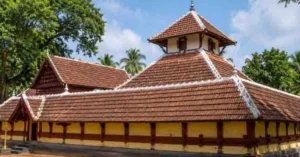
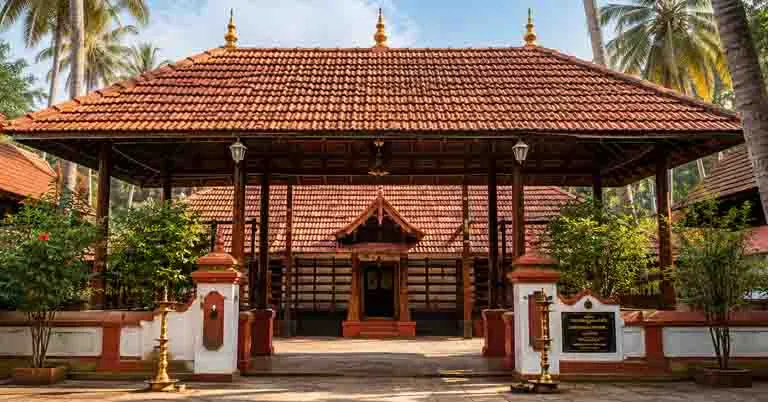
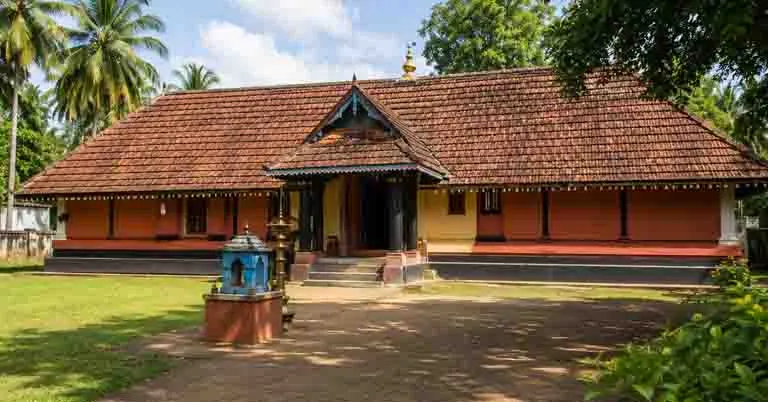
The architecture of Trithala Maha Siva Temple reflects the traditional Dravidian-Kerala style, which is both functional and deeply symbolic. Built mainly with laterite stones, timber, and copper-tiled roofing, the temple complex harmonizes perfectly with Kerala’s tropical environment and Vastu Shastra principles.

The sanctum sanctorum (Sreekovil) is circular (Vatta Sreekovil), an architectural form symbolic of the cosmic cycle and eternity — aligning perfectly with the philosophy of Lord Shiva, the infinite one. The inner sanctum is simple yet profound, housing the Shivalinga, which is adorned daily with Bilva leaves, sandalwood paste, and holy ash.
Outside the sanctum lies the Namaskara Mandapam, supported by carved wooden pillars. The mandapam is adorned with intricate wood and stone carvings that depict scenes from Shiva Purana, Ramayana, and Mahabharata. The Dwajasthambam (flagstaff), made of polished brass and encased in gold plating during festivals, stands majestically before the sanctum as a spiritual axis connecting the deity to the cosmos.
The temple’s Chuttambalam (outer hall) surrounds the sanctum, providing space for devotees to perform Pradakshinam (circumambulation). The inner walls display ancient mural paintings that narrate divine episodes such as Daksha Yaga, Kirata Arjuna, Tripurantaka, and Gajasura Samhara.
A large temple pond (Ambala Kulam) near the eastern gate serves for ritual purification and daily temple needs. The lush banyan trees, lamp posts, and stone pathways within the compound add to the temple’s timeless serenity.
Legends and Mythological Significance
The Trithala Maha Siva Temple is steeped in mythological lore that enhances its spiritual charm. According to one legend, the sage Atri Maharishi once meditated here to attain the divine vision of Lord Shiva. Pleased by his penance, Lord Shiva manifested in a radiant form, blessing the sage and declaring the place as Thapovana — a sacred land of meditation.
Another local legend connects the temple to Markandeya Rishi, the immortal devotee of Lord Shiva. It is believed that the Kala Bhairava aspect of Lord Shiva who protected Markandeya is spiritually present in this temple’s Shivalinga, radiating an energy that safeguards devotees from untimely death and fear.
The temple’s name “Trithala” itself is believed to come from the Sanskrit word Tritha, meaning “holy waters” — symbolizing the confluence of divine energies and purity of the place.
Rituals and Daily Worship
The rituals at Trithala Maha Siva Temple are conducted with utmost precision according to the Tantric and Vedic traditions of Kerala. The temple opens early in the morning with Nirmalyam, the sacred ritual of removing the previous night’s offerings, followed by Abhishekam (ritual bathing) with water, milk, honey, and other auspicious items.
The main poojas of the day include:
- Usha Pooja (Morning) – for divine blessings at dawn.
- Ucha Pooja (Midday) – symbolizing energy and protection.
- Deeparadhana (Evening Lamp Offering) – performed at sunset.
- Athazha Pooja (Night Offering) – signifying peace and fulfillment.
The temple follows the Panchagni rituals during auspicious days and conducts Rudrabhishekam, Mrityunjaya Homam, and Shivarchana regularly. Devotees offer Vilwa leaves, ghee lamps, Dhara (continuous pouring of water or milk on the Lingam), and Archana as part of their prayers.
Mondays and Pradosham days hold special significance, attracting hundreds of devotees who seek Lord Shiva’s grace for health, harmony, and spiritual progress.
Festivals and Celebrations
The temple’s festivals reflect the devotion, art, and culture of Kerala. The grandest celebration is Maha Shivaratri, observed with great fervor. The temple remains open throughout the night, and the air resonates with chants of “Om Namah Shivaya” and Vedic hymns. The deity is bathed with sacred waters, milk, honey, and tender coconut, and elaborate Rudrabhishekam and Alankaram rituals are performed.
Other important festivals include:
• Pradosham: Bi-monthly observance that emphasizes atonement and spiritual purification.
• Thiruvathira: A celebration dedicated to Parvathi Devi’s devotion to Lord Shiva, highlighted by Thiruvathirakali, a traditional dance performed by women devotees.
• Navarathri and Mandala Pooja: Dedicated to spiritual discipline and inner transformation.
• Annual Festival (Utsavam): A seven- to ten-day celebration featuring Ezhunnallathu (procession), Panchavadyam (temple orchestra), Kathakali, and Chenda Melam.
During these festivals, the temple and surrounding areas come alive with lights, flowers, and cultural performances. The holy flag hoisting (Kodiyettam) marks the beginning of the annual festival, symbolizing the invocation of divine energies.
Spiritual Significance
Trithala Maha Siva Temple holds immense spiritual importance for devotees. Worshipping here is believed to remove karmic burdens, purify the soul, and bestow peace and enlightenment. Many devotees testify that regular visits to the temple have brought divine protection, success in endeavors, and inner calmness.
The temple is also considered a Jnana Kshetram (Abode of Wisdom), where Lord Shiva is worshipped as Dakshinamurthy, the cosmic teacher who imparts knowledge through silence. It is said that meditating here during the Brahma Muhurta (early dawn) helps awaken higher consciousness and spiritual insight.
Cultural Role and Community Involvement
The temple has always been a center of social harmony and cultural preservation. Historically, it supported temple arts, Sanskrit learning, and Vedic chanting. Local festivals hosted by the temple promote traditional Kerala art forms such as Kathakali, Ottamthullal, and Theyyam.
The temple also organizes Annadanam (free food distribution), especially during festivals, symbolizing selfless service and compassion. Local communities actively participate in the temple’s upkeep, repairs, and daily operations, reflecting the spirit of unity and devotion.
Renovations and Preservation
Like most ancient temples, the Trithala Maha Siva Temple has undergone renovations over time. Careful restoration work has been done to maintain its architectural authenticity. The wooden carvings, murals, and copper roofing are periodically maintained by traditional craftsmen using ancient methods.
Modern facilities such as lighting, rest areas, and pathways have been integrated thoughtfully to ensure comfort for devotees while preserving the temple’s spiritual atmosphere. Efforts by the Devaswom Board and local devotees ensure that the temple continues to thrive as both a spiritual and heritage site.
The Divine Experience
Visiting the Trithala Maha Siva Temple is a deeply transformative experience. As one steps into the temple complex, the rhythmic sound of temple bells, the fragrance of sandalwood, and the soft chanting of mantras create an atmosphere of sacred tranquility. Standing before the Shivalinga, one can feel an overwhelming sense of peace and divine presence.
Many devotees meditate under the ancient banyan tree near the temple pond, where the calm environment encourages introspection and spiritual connection. The temple’s simplicity, serenity, and spiritual vibration make it a place where the seeker’s heart naturally turns inward toward the divine.

Conclusion
The Trithala Maha Siva Temple is not merely an architectural marvel or a historical monument — it is a living temple, pulsating with the divine energy of Lord Shiva. Through centuries of devotion, rituals, and cultural activities, it continues to be a beacon of spirituality for the people of Kerala.
With its timeless legends, sacred rituals, and architectural splendor, the temple stands as a symbol of Kerala’s religious harmony, Vedic tradition, and artistic heritage. For every devotee who visits, the temple offers not just blessings but also an opportunity to experience the divine truth — that Lord Shiva is both the destroyer of ignorance and the source of eternal wisdom.
As the chants of “Harahara Mahadeva” echo through the sanctum and the lamps flicker gently in the dusk, the Trithala Maha Siva Temple reminds all who visit that within every heart resides the eternal light of Lord Shiva — the consciousness that pervades the entire universe.
Disclaimer
The information provided by Web Arbiter (‘we’, ‘us’, or ‘our’) on https://webarbiter.in/ . The website is for general informational purposes only. All information on the Site is provided in good faith, however we make no representation or warranty of any kind, express or implied, regarding the accuracy, adequacy, validity, reliability, availability, or completeness of any information on the Site. UNDER NO CIRCUMSTANCE SHALL WE HAVE ANY LIABILITY TO YOU FOR ANY LOSS OR DAMAGE OF ANY KIND INCURRED AS A RESULT OF THE USE OF THE SITE OR RELIANCE ON ANY INFORMATION PROVIDED ON THE SITE. YOUR USE OF THE SITE AND YOUR RELIANCE ON ANY INFORMATION ON THE SITE IS SOLELY AT YOUR OWN RISK. Read Full Disclaimer