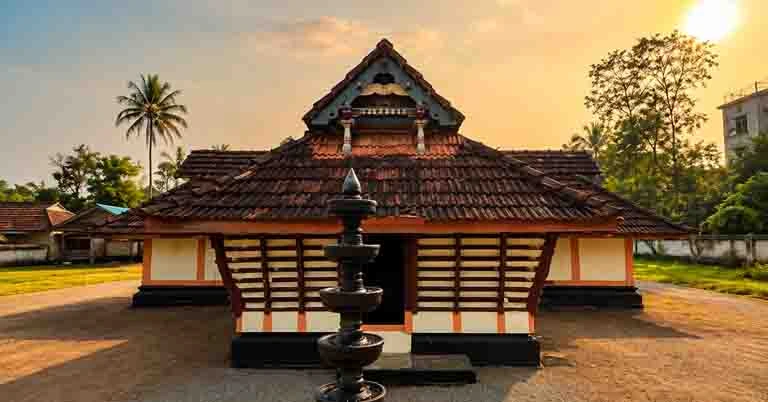


The Uliyannoor Mahadeva Temple, located in Uliyannoor village near Aluva in Ernakulam district, Kerala, is one of the most revered and historically significant temples dedicated to Lord Shiva. Steeped in mythological glory and architectural brilliance, the temple is not only a sacred place of worship but also an important landmark that connects Kerala’s spiritual, artistic, and cultural traditions.
This ancient temple, nestled on the serene banks of the Periyar River, exudes tranquility and divinity. It is believed to have been constructed by Perumthachan, the legendary master craftsman of Kerala, who is said to be an incarnation of Lord Vishwakarma, the celestial architect. The temple’s unique architectural features and spiritual significance make it one of the most remarkable Shiva temples in the state.
Historical and Mythological Background
The origins of the Uliyannoor Mahadeva Temple date back several centuries and are deeply intertwined with Kerala’s mythological history. According to legend, the temple was established during the time of Sage Parashurama, who reclaimed the land of Kerala from the sea and consecrated 108 Shiva temples across the region. Uliyannoor Mahadeva Temple is believed to be one among these 108 Shivalayas, each radiating unique spiritual energy.
However, what truly distinguishes this temple is its association with Perumthachan, the master architect and carpenter mentioned in folklore as the son of Vishwakarma. Perumthachan is credited with constructing several architectural marvels across Kerala, and the Uliyannoor Mahadeva Temple is said to be one of his most exquisite creations.
Local tradition holds that the temple was built under divine inspiration. It is said that Perumthachan, in his later years, resided near Uliyannoor and offered his final masterpiece to Lord Shiva as an act of devotion. The temple’s elegant design, intricate woodwork, and perfect geometrical proportions are believed to reflect his unmatched craftsmanship.
The village of Uliyannoor itself derives its name from “Uli,” meaning chisel, symbolizing the artistic legacy of the great architect whose divine tools were said to have shaped this masterpiece.

Legend and Spiritual Significance
There are several captivating legends surrounding the Uliyannoor Mahadeva Temple. One of the most popular beliefs is that the Shivalinga enshrined in the sanctum is Swayambhu (self-manifested), discovered by a group of ascetics who were meditating near the Periyar River. It is said that the Linga radiated a divine light, and Lord Shiva appeared before them, blessing the land and promising eternal protection to the devotees.
Another legend associates the temple with Lord Parashurama and Sage Vyasa, who are believed to have performed penance here to seek Lord Shiva’s blessings. The energy of their penance is said to have sanctified the entire region, making it a spiritually charged space.
Local lore also connects the temple to the story of Perumthachan’s devotion. It is believed that Perumthachan designed the temple so meticulously that it became a perfect symbol of divine geometry (Vastu Shastra). When the people praised his work as equal to heaven’s architecture, Perumthachan humbly broke his chisel, declaring that no mortal hand could ever equal the perfection of the divine. The broken chisel (Uli) is said to have given the place its name — Uliyannoor.
Architectural Grandeur
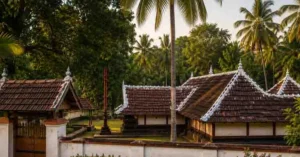
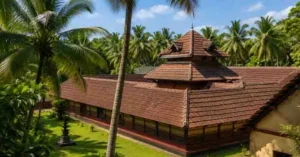
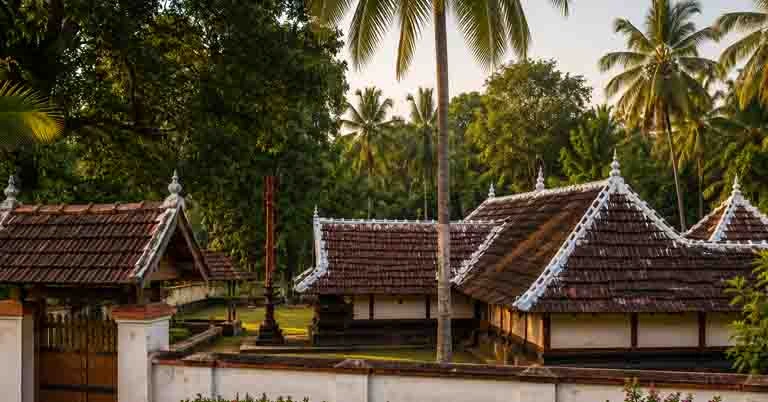
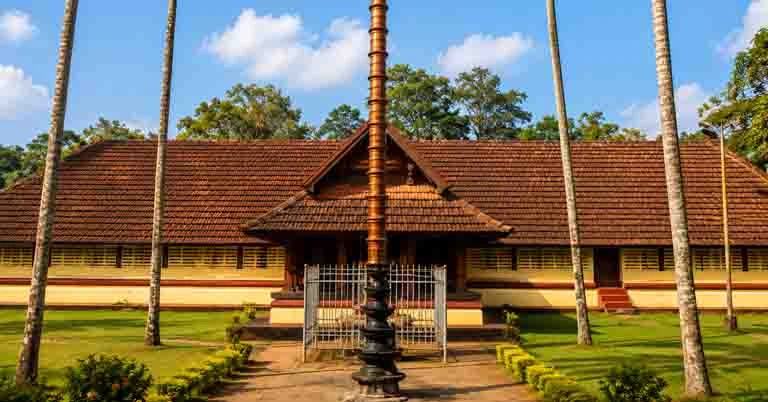
The Uliyannoor Mahadeva Temple stands as an exquisite example of traditional Kerala temple architecture, combining spiritual symbolism with architectural precision. Every element of the temple’s structure — from the sanctum to the outer walls — reflects a deep understanding of proportion, symmetry, and spiritual alignment.
The Sreekovil (Sanctum Sanctorum) is circular (Vatta Sreekovil), a style commonly seen in ancient Shiva temples of Kerala. The sanctum is constructed using laterite stones, wooden panels, and copper-plated roofing. The conical roof gleams in the sunlight, symbolizing divine energy radiating from the deity within.
The Shivalinga, the presiding deity, is a magnificent Swayambhu form, believed to possess immense spiritual power. The deity is worshipped as Mahadeva, representing the all-pervading consciousness and the ultimate destroyer of ignorance.
In front of the sanctum lies the Namaskara Mandapam, a square hall with intricately carved wooden pillars and a beautifully designed wooden ceiling depicting celestial motifs. The Chuttambalam (enclosure) that surrounds the sanctum provides space for devotees to perform pradakshina (circumambulation), which is considered highly auspicious.
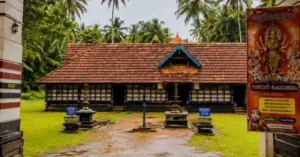
The temple’s Dwajasthambam (flagstaff), made of brass and encased in gold plating, stands tall in front of the sanctum, symbolizing a spiritual connection between heaven and earth. The Balikkal (sacrificial stone) and Deepasthambam (lamp tower) add grandeur to the temple courtyard.
One of the most striking features of the temple is its wooden carvings, believed to be crafted by Perumthachan himself. These carvings depict scenes from Hindu epics such as the Mahabharata and Ramayana, alongside intricate floral patterns, divine beings, and geometric designs — all reflecting unmatched craftsmanship and devotion.
The temple pond (Ambalakkulam), located nearby, serves as the venue for holy baths (Aarattu) and ritual purification. The pond, surrounded by lush greenery and coconut palms, enhances the serene ambiance of the temple premises.
Deities and Sub-Shrines
While Lord Shiva is the principal deity, the Uliyannoor Mahadeva Temple also houses several sub-deities (Upa-Devatas), forming a divine family within the temple complex. The main sub-shrines include:
- Lord Ganapathy (Vinayaka) – The remover of obstacles, worshipped before all rituals.
- Lord Subrahmanya (Murugan) – The son of Shiva and Parvati, symbolizing divine wisdom and valor.
- Goddess Parvati (Devi Parameswari) – Representing Shakti, the feminine aspect of divine energy.
- Lord Ayyappa, Naga Devata (Serpent Gods), and Bhagavathy – revered by devotees seeking fertility, prosperity, and protection.
This divine assemblage of deities makes the temple a place where the balance of cosmic energy — masculine and feminine, creation and dissolution — is beautifully maintained.
Daily Rituals and Worship Practices
The Uliyannoor Mahadeva Temple follows the Tantric traditions of Kerala, adhering to ancient customs passed down through generations. Worship is performed by priests belonging to the Thanthri and Namboothiri families.
The temple opens early in the morning with Nirmalya Darshanam, where devotees witness the deity adorned with flowers and offerings from the previous night. The main poojas include:
- Usha Pooja – Morning worship after sunrise.
- Ucha Pooja – Midday ritual offering.
- Deeparadhana – Evening worship with lamps.
- Athazha Pooja – Final offering before closing the sanctum.
Special rituals like Abhishekam, Dhara, Rudrabhishekam, and Mrityunjaya Homam are performed to invoke divine blessings, remove negativity, and promote longevity. Mondays, being sacred to Lord Shiva, attract large numbers of devotees.
The temple also conducts Pradosham Pooja, observed twice a month, which is believed to absolve devotees of sins and grant them spiritual upliftment.
Festivals and Celebrations
The annual festival (Utsavam) of the Uliyannoor Mahadeva Temple is a grand celebration that reflects both spiritual devotion and cultural vibrancy. The festival typically falls in the Malayalam month of Meenam (March–April) and lasts for several days.
Key Highlights of the Festival:
- Kodiyettam (Flag Hoisting): Marks the beginning of the festival.
- Utsava Bali and Sreebhootha Bali: Ritual offerings performed to invoke the temple’s guardian deities.
- Caparisoned Elephant Processions: Accompanied by Panchavadyam (traditional orchestra), mbolizing divine splendor.
- Aarattu (Holy Bath): The concluding ritual where the deity is ceremonially bathed in the temple pond, accompanied by grand processions and chanting of mantras.
Additionally, the temple enthusiastically commemorates Maha Shivaratri.On this night, devotees observe fasting, meditation, and night-long worship of Lord Shiva. The temple is beautifully illuminated with oil lamps, creating an atmosphere of divine energy and devotion.
Other important observances include Pradosham, Thiruvathira, and Navaratri, each celebrated with traditional poojas, music, and cultural performances.
Cultural and Social Importance
The Uliyannoor Mahadeva Temple is not merely a spiritual hub but also a vital cultural center for the local community. The temple plays a key role in preserving Kerala’s traditional arts, music, and performing rituals. During festivals, the temple grounds become vibrant with Kathakali, Ottanthullal, Thayambaka, and Chenda Melam performances that attract art lovers and devotees alike.
The temple also engages in social and charitable activities, such as Annadanam (free food distribution) and educational assistance to underprivileged students. It stands as a center for promoting unity, compassion, and service among devotees.
Spiritual Experience and Atmosphere
Visiting the Uliyannoor Mahadeva Temple is an experience of profound serenity. The tranquil river flowing nearby, the rhythmic chants of priests, and the fragrance of sandalwood and incense create an aura of peace and divinity.
As devotees step into the Sreekovil, they are enveloped by a sense of timeless spirituality — as though the air itself vibrates with the mantra “Om Namah Shivaya.” The temple’s calm surroundings make it an ideal place for meditation and introspection.
Pilgrims who visit the temple often speak of an overwhelming sense of inner peace and energy, believing that Lord Shiva’s grace here removes negative influences and blesses them with strength, clarity, and wisdom.

Conclusion
The Uliyannoor Mahadeva Temple stands as a magnificent symbol of Kerala’s spiritual heritage and artistic mastery. Dedicated to Lord Shiva, it represents the harmony between divinity, craftsmanship, and devotion. The temple not only showcases the brilliance of Perumthachan’s architectural genius but also serves as a timeless reminder of Kerala’s sacred traditions.
Through centuries, it has remained a place of solace, devotion, and enlightenment — a sanctum where the mortal connects with the divine. Whether one comes seeking blessings, architectural wonder, or spiritual awakening, the Uliyannoor Mahadeva Temple offers an experience that transcends the ordinary, guiding the devotee toward the eternal truth —
“Shivoham – I am Shiva.”
Disclaimer
The information provided by Web Arbiter (‘we’, ‘us’, or ‘our’) on https://webarbiter.in/ . The website is for general informational purposes only. All information on the Site is provided in good faith, however we make no representation or warranty of any kind, express or implied, regarding the accuracy, adequacy, validity, reliability, availability, or completeness of any information on the Site. UNDER NO CIRCUMSTANCE SHALL WE HAVE ANY LIABILITY TO YOU FOR ANY LOSS OR DAMAGE OF ANY KIND INCURRED AS A RESULT OF THE USE OF THE SITE OR RELIANCE ON ANY INFORMATION PROVIDED ON THE SITE. YOUR USE OF THE SITE AND YOUR RELIANCE ON ANY INFORMATION ON THE SITE IS SOLELY AT YOUR OWN RISK. Read Full Disclaimer