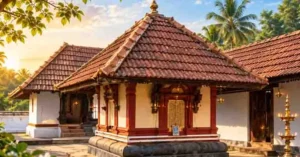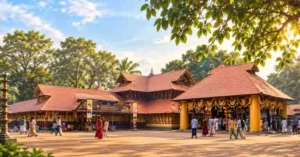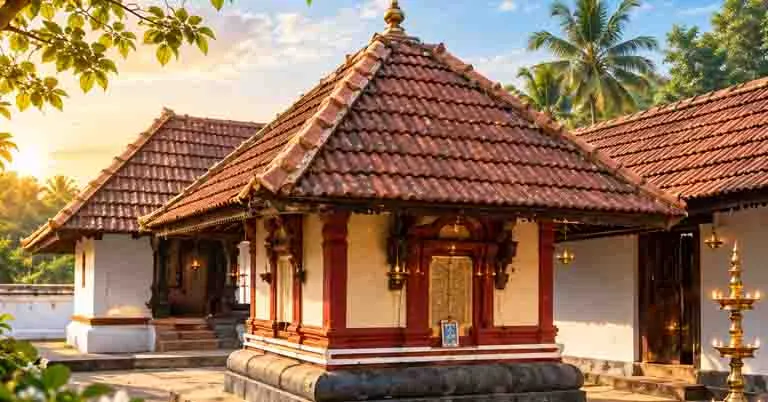


In the heart of Thrissur, often called the Cultural Capital of Kerala, stands one of the oldest and most revered temples in South India — the Vadakkunnathan Temple. Dedicated to Lord Shiva, the destroyer and transformer among the Hindu Trinity, this magnificent structure is not merely a place of worship but a symbol of Kerala’s cultural, spiritual, and architectural heritage.
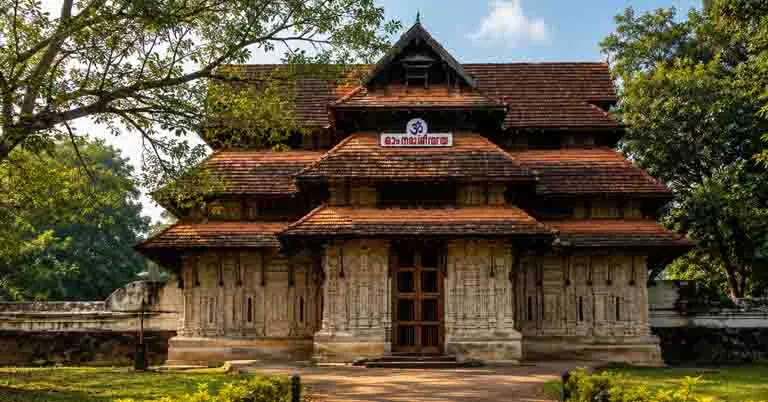
Encircled by high stone walls, with monumental gopurams (gateways) and a serene ambience, Vadakkunnathan Temple stands atop the Thekkinkadu Maidanam, a hillock that forms the cultural and spiritual nucleus of Thrissur city. Believed to have been built by Parashurama, the sixth incarnation of Lord Vishnu, the temple is a UNESCO World Heritage Site (tentatively listed) and one of the finest examples of the classical Kerala temple architecture.
Historical Background
The history of Vadakkunnathan Temple stretches back over 1,000 years, with deep roots in mythology, devotion, and dynastic patronage.
Mythological Origins
According to ancient legend, Parashurama, after reclaiming the land of Kerala from the sea by throwing his divine axe, sought to consecrate a Shiva temple as an act of gratitude. He installed a Shiva Lingam on the hill now known as Thekkinkadu and consecrated it as Vadakkunnathan, meaning Lord of the North. The site was later developed by local rulers and devotees into the grand complex seen today.

Historical Significance
- The temple is mentioned in the Sangam literature and ancient texts, confirming its antiquity.
- The Chera and Zamorin dynasties contributed to its development, making it an important seat of Shaivism in Kerala.
- The temple also finds mention in the Perumpadappu Grandhavari and Keralolpathi, ancient Malayalam chronicles.
Vadakkunnathan Temple not only became a major religious center but also played a pivotal role in Kerala’s cultural evolution, hosting traditional art forms, rituals, and festivals that continue to this day.
Architectural Grandeur
Vadakkunnathan Temple is a masterpiece of traditional Kerala architecture, known for its simplicity, harmony, and adherence to the natural environment. The temple complex covers approximately 9 acres, surrounded by massive walls and monumental gateways.
1. Gopurams (Gateways)
There are four main gopurams — one in each cardinal direction (East, West, North, and South).
- Each gateway is built in the multi-tiered wooden style typical of Kerala temples.
- They are adorned with wooden carvings, murals, and copper-plated roofs, adding elegance and grandeur.
- The eastern gopuram is the main entrance, through which devotees enter to offer prayers to Lord Shiva.
2. The Sanctum (Sreekovil)
The sanctum houses the Shiva Lingam, which is not visible as a solid idol but is covered with layers of ghee (clarified butter) due to centuries of daily abhishekam (ritual bathing).
- The ghee never melts despite the tropical climate — a phenomenon considered miraculous.
- The sanctum is circular in design, symbolizing eternity and perfection, a hallmark of Kerala’s temple design.
3. Other Shrines Within the Complex
Vadakkunnathan Temple is unique because it houses multiple deities within its compound:
- Lord Shiva (Vadakkunnathan) — The presiding deity.
- Lord Rama — Represented as a Chaturbhuja (four-armed) form.
- Lord Shankaranarayana — A composite deity uniting Shiva and Vishnu.
- Goddess Parvati — The consort of Lord Shiva.
- Lord Ganapathy (Ganesha) — Situated near the main entrance, worshipped first before any ritual.
Each shrine has distinct architectural and symbolic significance, making the temple a center of diverse Hindu traditions.
4. Murals and Art
The temple walls are adorned with ancient murals, among the finest in Kerala.
- These depict episodes from the Mahabharata, Ramayana, and Shiva Purana.
- The Mahabharata mural, painted on the inner walls of the temple, is particularly famous for its artistic depth and storytelling detail.
- The paintings use natural pigments and have survived centuries without significant fading.
5. The Koothambalam (Temple Theatre)
A hallmark of Kerala temples, the Koothambalam at Vadakkunnathan is renowned for its intricate wooden craftsmanship.
- It serves as a performance hall for Koothu and Koodiyattam, ancient Sanskrit theater forms.
- The structure is richly decorated with wooden carvings depicting celestial beings and mythological stories.
This blending of devotion and performance art underscores the temple’s role as a cultural epicenter.
Spiritual Significance
Vadakkunnathan Temple is not merely a place of worship — it embodies centuries of spiritual energy, devotion, and divine vibrations.
1. The Lord Shiva Connection
Lord Shiva at Vadakkunnathan is worshipped in his peaceful and meditative form, unlike other temples where he is portrayed in his fierce Rudra aspect.
Devotees believe the temple radiates tranquility and inner calm, making it an ideal place for meditation and self-realization.
2. The Sacred Ghee Phenomenon
The Shiva Lingam covered with ghee is one of the temple’s greatest mysteries. Despite being covered continuously for centuries:
- The ghee never decomposes or emits foul odor.
- The layers of solidified ghee are considered holy and distributed as prasadam during special occasions.Scientists have studied this phenomenon, but the exact cause remains unexplained, deepening the temple’s aura of mysticism.
3. Ritual Practices
The temple follows the Tantric and Vedic traditions of Kerala’s Shaiva worship. Daily rituals include:
- Nirmalyam (early morning abhishekam)
- Usha Pooja (morning worship)
- Ucha Pooja (midday offering)
- Deeparadhana (evening lamp ritual)
These are conducted by trained Thantris and Namboothiri priests, maintaining ancient ritual purity.
Festivals and Celebrations
Vadakkunnathan Temple is the heart of Thrissur’s cultural identity, especially as the focal point of the world-famous Thrissur Pooram Festival.
1. Thrissur Pooram – The Grand Festival
Celebrated in April–May, Thrissur Pooram is one of the largest temple festivals in India.
- Initiated by Sakthan Thampuran, the Maharaja of Cochin, in the 18th century, this festival unites temples around Thrissur under the leadership of Vadakkunnathan.
- It features:
- Caparisoned elephants, richly decorated with gold ornaments.
- Panchavadyam (five-instrument orchestral music).
- Fireworks display that lights up the entire city.
- Exchange of umbrellas between elephant processions of Paramekkavu and Thiruvambady temples — the festival’s highlight.
Interestingly, no rituals or celebrations take place inside Vadakkunnathan Temple during Pooram. The temple acts as a divine witness, emphasizing unity and inclusiveness among various deities and devotees.
2. Mahashivaratri
This is another major festival celebrated with great devotion.
- Thousands of devotees perform night-long bhajans, meditation, and abhishekams.
- The temple premises glow with oil lamps, symbolizing victory over darkness and ignorance.
3. Aanayoottu (Feeding of Elephants)
An annual ritual where elephants are fed with special Ayurvedic food as an offering to Lord Ganesha. It attracts animal lovers, tourists, and devotees alike.
Cultural and Educational Importance
Vadakkunnathan Temple stands as a cultural and educational beacon for Kerala’s spiritual arts:
- The Koothambalam continues to host traditional performances, keeping Sanskrit theater and temple arts alive.
- The temple also supports Vedic studies and traditional music, nurturing the next generation of scholars and artists.
Thrissur’s identity as a cultural hub is deeply intertwined with the temple’s legacy — it is not only a center of worship but also of knowledge, art, and moral values.
UNESCO Recognition and Preservation
In recognition of its architectural brilliance and historical significance, the Vadakkunnathan Temple was included in UNESCO’s tentative list of World Heritage Sites.
Efforts are continuously made to:
- Preserve its wooden structures and murals using traditional methods.
- Maintain the natural balance around the temple by protecting Thekkinkadu Maidanam.
- Ensure that modernization does not erode its spiritual and cultural integrity.
Organizations such as the Archaeological Survey of India (ASI) and local temple boards actively oversee its conservation.
Unique Features and Mysteries
Vadakkunnathan Temple possesses several unique and mysterious features that add to its allure:
- Ghee-Layered Lingam – The ever-preserved ghee is one of India’s great spiritual mysteries.
- No Direct Worship of Shiva by Outsiders – Non-Hindus are not permitted inside the sanctum, maintaining traditional sanctity.
- Absence of Commercialization – Unlike many modern temples, Vadakkunnathan has no commercial vendors or donation counters inside the premises, preserving its purity.
- Natural Serenity – Despite being in the city center, the temple exudes calmness and silence, symbolizing divine energy amidst chaos.
Legends and Beliefs
Numerous legends surround Vadakkunnathan Temple:
- It is believed that Adi Shankaracharya, the great philosopher and founder of Advaita Vedanta, was born in Kalady near the temple and took his Samadhi (final rest) here under a huge banyan tree within the premises.
- Devotees believe that praying here removes the effects of sins and grants spiritual wisdom.
- During temple processions, the divine aura is said to be so powerful that it cleanses the entire city of negative energies.
Visitor Experience
Visitors to Vadakkunnathan Temple often describe it as a journey into serenity and divine timelessness.
The rhythmic chants, aroma of incense, sound of temple bells, and the sight of towering gopurams create a deeply spiritual atmosphere.
Photography is restricted, and visitors are encouraged to maintain silence, ensuring that the sanctity and sacred aura remain undisturbed.

Conclusion
The Vadakkunnathan Temple is more than a sacred site — it is a living monument of spirituality, culture, and heritage. Its timeless rituals, ancient architecture, and deep-rooted legends embody the essence of Kerala’s spiritual consciousness.
Standing tall through centuries of change, the temple continues to inspire faith, art, and unity among millions. Whether viewed as an architectural wonder, a symbol of divine devotion, or a serene refuge for the soul, Vadakkunnathan remains a shining jewel of India’s sacred landscape.
It is said that those who visit Vadakkunnathan do not merely see a temple — they experience a living presence of divinity that transcends time and space.
Disclaimer
The information provided by Web Arbiter (‘we’, ‘us’, or ‘our’) on https://webarbiter.in/ . The website is for general informational purposes only. All information on the Site is provided in good faith, however we make no representation or warranty of any kind, express or implied, regarding the accuracy, adequacy, validity, reliability, availability, or completeness of any information on the Site. UNDER NO CIRCUMSTANCE SHALL WE HAVE ANY LIABILITY TO YOU FOR ANY LOSS OR DAMAGE OF ANY KIND INCURRED AS A RESULT OF THE USE OF THE SITE OR RELIANCE ON ANY INFORMATION PROVIDED ON THE SITE. YOUR USE OF THE SITE AND YOUR RELIANCE ON ANY INFORMATION ON THE SITE IS SOLELY AT YOUR OWN RISK. Read Full Disclaimer