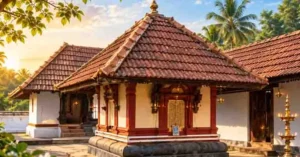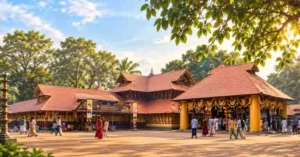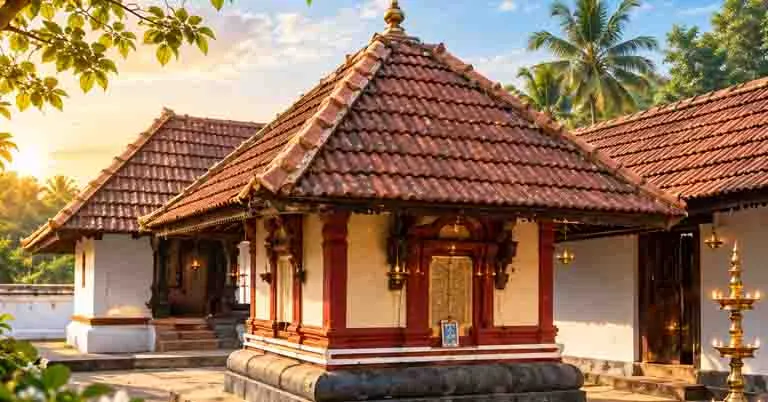


The Venganellore Thiruvimbilappan Temple, located in Venganellore village near Thrissur, Kerala, is one of the ancient and revered temples dedicated to Lord Shiva, worshipped here as Thiruvimbilappan. Set amidst lush greenery, serene paddy fields, and the tranquil charm of Kerala’s countryside, the temple exudes an aura of divine peace and spiritual energy. It stands as a significant center of Shaivite worship and is deeply rooted in Kerala’s temple tradition, culture, and mythology.
The presiding deity, Thiruvimbilappan, is a benevolent form of Lord Shiva, enshrined as a magnificent Shiva Linga within the sanctum. The temple is not only a place of worship but also a site of cultural and architectural heritage, reflecting the ancient wisdom and spiritual devotion that has shaped Kerala’s sacred landscape for centuries.
Etymology and Meaning
The name Thiruvimbilappan carries deep spiritual meaning. In Malayalam, “Thiru” denotes sacredness or divinity, while “Vimbilappan” refers to the Lord manifested in reflection or image. According to legend, the deity here manifested himself in reflection form (Vimbam), symbolizing the omnipresence of Lord Shiva — the cosmic consciousness that exists within and beyond all creation. Hence, the temple is called Thiruvimbilappan Temple, emphasizing Shiva’s presence as the Self within all beings.
Legend and Mythology
Like many ancient temples in Kerala, the Venganellore Thiruvimbilappan Temple is surrounded by captivating legends that blend history, faith, and divinity.
According to local tradition, the temple was established by Lord Parasurama, the sixth incarnation of Lord Vishnu, who is believed to have created the land of Kerala from the sea and consecrated 108 Shiva temples across the region to sanctify it. The Thiruvimbilappan Temple is considered one among these 108 sacred Shiva shrines.
Another legend tells of a sage who performed intense penance in Venganellore, meditating upon Lord Shiva with unwavering devotion. Pleased with his austerities, Lord Shiva appeared before him as a radiant reflection in a pond, blessing him with divine wisdom and peace. The sage requested the Lord to remain in that place for the benefit of humanity, and thus the reflection (Vimbam) was consecrated as Thiruvimbilappan, representing the self-revealed form of the divine.
A popular belief also connects the temple with the celestial event of Pradosham — the twilight period between day and night, when Lord Shiva performed the cosmic dance of grace (Ananda Tandavam) to bless all beings. Devotees believe that prayers offered at Thiruvimbilappan Temple during Pradosham cleanse sins and remove obstacles in life, helping them attain moksha (liberation).

Deity and Spiritual Significance
The presiding deity, Lord Shiva, is worshipped as Thiruvimbilappan, in the form of a Shiva Linga that is said to be self-manifested (Swayambhu). The Linga radiates immense spiritual energy and is symbolic of the formless and infinite aspect of Lord Shiva.
The deity is believed to embody a peaceful, meditative aspect of Shiva — a balance between creation and dissolution. Devotees revere him as the protector of truth, the destroyer of ignorance, and the giver of inner peace.
The divine consort of the Lord, Goddess Parvati, is also worshipped in a separate shrine within the temple complex. Together, they represent Ardhanarishwara, the unity of masculine and feminine cosmic forces.
Sub-shrines within the temple are dedicated to Lord Ganapathi, Subramanya, Ayyappa, Naga Devatas, and Bhagavathy, symbolizing the temple’s inclusive spiritual philosophy that honors multiple deities under the umbrella of divine oneness.
Temple Architecture
The Venganellore Thiruvimbilappan Temple is a splendid example of Kerala’s classical temple architecture, which harmonizes artistry, symbolism, and spiritual science. Every structure within the temple complex is built according to the principles of Vastu Shastra and Tantric Agamas, ensuring that energy flows in alignment with cosmic vibrations.
Sreekovil (Sanctum Sanctorum)
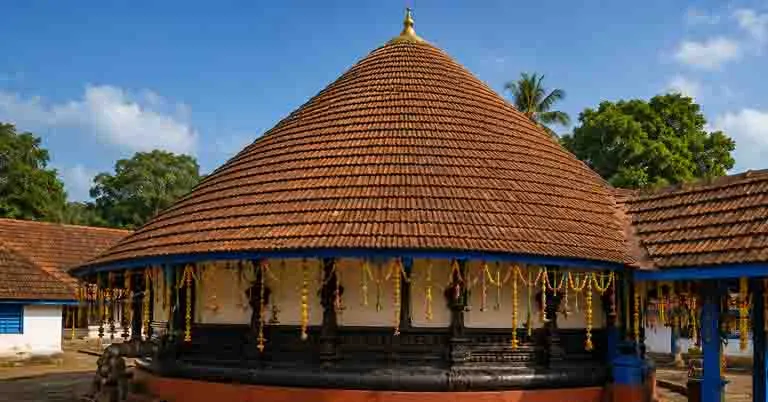
The Sreekovil houses the self-manifested Shiva Linga. Built in the circular (Vatta) architectural style typical of Kerala, the sanctum has a copper-plated conical roof representing the cosmic mountain Kailasa, the divine abode of Shiva. The sanctum’s walls are adorned with oil lamps, which, when lit, bathe the idol in a golden glow, symbolizing the eternal flame of consciousness.
The Sreekovil is accessible only to priests, as it is considered the energetic center of the temple where divine vibrations are most concentrated.
Namaskara Mandapam and Nalambalam
In front of the sanctum lies the Namaskara Mandapam, supported by intricately carved wooden pillars. This is where daily rituals and offerings are performed. Surrounding it is the Nalambalam, a rectangular structure that encloses the sanctum, housing several sub-shrines and sacred lamps.
The Chuttambalam (outer corridor) provides space for circumambulation (Pradakshina), symbolizing the devotee’s journey around cosmic truth.
Other Architectural Elements
- The Dwajasthambam (flag mast) made of brass signifies the devotee’s surrender to divine authority.
- The Deepastambha (lamp tower), located near the entrance, is lit during festivals, creating a mesmerizing display of devotion.
- The Balikkalpura (offering hall) and Koothambalam (temple theater) are integral parts of the temple, representing ritual and cultural expression.
The temple pond, known as Ambalakulam, lies adjacent to the shrine and is used for purification rituals. Its waters are believed to have healing powers, blessed by the reflection (Vimbam) of Lord Shiva himself.
Daily Worship and Rituals
The temple’s worship follows the Shaiva Agama traditions and is conducted under the guidance of Tantric priests. The daily rituals reflect discipline, devotion, and reverence toward Lord Shiva, symbolizing the rhythm of the cosmos.
Daily Poojas
- Nirmalyam (4:30 AM) – Removal of previous day’s decorations, signifying renewal.
- Abhishekam (5:00 AM) – Holy bathing of the Shiva Linga with ghee, milk, honey, sandal paste, and tender coconut water.
- Usha Pooja (6:30 AM) – Morning worship accompanied by Vedic chants, invoking the Lord’s grace for the day.
- Ucha Pooja (12:00 PM) – Midday offering believed to be the most auspicious time to seek Shiva’s blessings.
- Deeparadhana (6:00 PM) – Evening lamp ceremony, symbolizing the victory of light over darkness.
- Athazha Pooja (8:00 PM) – Final worship before closing, offering gratitude to the Lord.
Special Offerings
Devotees perform rituals like Rudrabhishekam, Mrityunjaya Homam, Pradosha Pooja, and Uma-Maheswara Pooja for spiritual growth, healing, and family welfare. Mondays and Pradosham days are particularly auspicious for worship.
Many devotees also perform Chandra Dosha Nivarana Pooja here, as the temple’s association with reflection (moon symbolism) is believed to calm emotional turbulence and bring mental clarity.
Festivals and Celebrations
The Venganellore Thiruvimbilappan Temple celebrates several vibrant festivals that reflect both its spiritual depth and cultural heritage.
1. Annual Utsavam
The temple’s annual festival is celebrated in the Malayalam month of Meenam (March–April). The festival begins with the Kodiyettam (flag hoisting) and concludes with the grand Aarattu (holy bath). Over ten days, the temple comes alive with lights, rituals, and cultural programs.
Each day features special poojas, processions, and traditional art performances such as Kathakali, Ottamthullal, Chakyar Koothu, and Panchavadyam. The Ezhunnallathu (procession) of the deity atop a caparisoned elephant, accompanied by temple drums and torches, is a divine spectacle that draws thousands of devotees.
2. Maha Shivaratri
Maha Shivaratri, the Great Night of Lord Shiva, is the most sacred day for devotees. The temple remains open throughout the night, with continuous chanting of “Om Namah Shivaya” and Abhishekams performed every few hours. Fasting, meditation, and spiritual discussions mark the day, culminating in a powerful Rudrabhishekam ceremony at dawn.
3. Pradosham
Observed twice a month, Pradosham rituals at Thiruvimbilappan Temple are deeply revered. Devotees believe that circumambulating the temple during Pradosham removes sins and grants divine grace.
Cultural and Social Significance
The Venganellore Thiruvimbilappan Temple is not only a spiritual center but also a cultural nucleus for the local community. The temple supports and preserves Kerala’s traditional art forms, rituals, and festivals.
The Koothambalam serves as a venue for Chakyar Koothu and Koodiyattam, classical art forms that combine storytelling and theater. During festivals, the temple hosts performances of Kathakali, Tholpavakoothu (shadow puppetry), and Devotional music, ensuring that ancient traditions continue to thrive.
The temple also engages in Annadanam (free meal service), medical camps, and charitable activities as part of its community outreach. This reflects the temple’s broader spiritual vision — service to humanity as service to God.
Architecture and Environment in Harmony
One of the most remarkable aspects of the Venganellore Thiruvimbilappan Temple is its harmonious relationship with nature. The temple complex is surrounded by sacred trees, including bilva, peepal, and jackfruit, all associated with Shiva worship. The tranquil pond and surrounding groves create an atmosphere ideal for meditation and introspection.
The chirping of birds, rustling of leaves, and the rhythmic sound of temple bells together form a symphony of serenity, reminding visitors of Shiva’s eternal presence in nature. The temple thus embodies the philosophical essence of Shaivism — the unity of the microcosm and macrocosm, of the individual and the divine.
Administration and Devotee Involvement
The temple is managed by a local Devaswom committee under the supervision of traditional families and priests who have served for generations. The administration ensures that rituals, festivals, and charitable activities are conducted according to scriptural norms.
Devotees actively participate in temple maintenance, flower offerings, lamp donations, and voluntary service during festivals. This strong community involvement keeps the spiritual flame of the temple ever alive.
Spiritual Experience and Pilgrimage Importance
Pilgrims who visit the Venganellore Thiruvimbilappan Temple often describe it as a profoundly calming and uplifting experience. The deity’s presence is believed to dispel negativity and awaken inner awareness. Meditating in the temple courtyard, listening to Vedic chants, or witnessing the Deeparadhana at dusk brings a deep sense of divine connection.
The temple is also a vital stop in the 108 Shiva Temple pilgrimage circuit, making it a sacred destination for Shaiva devotees across Kerala and South India.

Conclusion
The Venganellore Thiruvimbilappan Temple is more than just a structure of worship — it is a living spiritual heritage, a meeting point of devotion, art, and nature. Dedicated to Lord Shiva, the temple stands as a timeless reminder of Kerala’s deep-rooted spirituality and cultural legacy.
Here, amidst the soft glow of oil lamps, the gentle chant of “Om Namah Shivaya,” and the fragrance of incense, one feels the living presence of Thiruvimbilappan, the Lord who manifests as reflection, light, and consciousness.
The temple continues to inspire generations of devotees to seek inner peace, wisdom, and the ultimate truth — that the divine resides within every heart, reflected eternally like the moon on still water.
Disclaimer
The information provided by Web Arbiter (‘we’, ‘us’, or ‘our’) on https://webarbiter.in/ . The website is for general informational purposes only. All information on the Site is provided in good faith, however we make no representation or warranty of any kind, express or implied, regarding the accuracy, adequacy, validity, reliability, availability, or completeness of any information on the Site. UNDER NO CIRCUMSTANCE SHALL WE HAVE ANY LIABILITY TO YOU FOR ANY LOSS OR DAMAGE OF ANY KIND INCURRED AS A RESULT OF THE USE OF THE SITE OR RELIANCE ON ANY INFORMATION PROVIDED ON THE SITE. YOUR USE OF THE SITE AND YOUR RELIANCE ON ANY INFORMATION ON THE SITE IS SOLELY AT YOUR OWN RISK. Read Full Disclaimer